

Airplane seats A, B, C: how the seats are distributed by letters and where to sit during the flight
Table of contents
- How does the seat designation system work?
- The order of letters in the cabin: what do A, B, C, D, and so on mean?
- Does the seat assignment by letter depend on the aircraft model?
- What row is better to sit in on an airplane: what affects comfort
- What is the difference between seats in different classes?
- What are the most comfortable seats on an airplane?
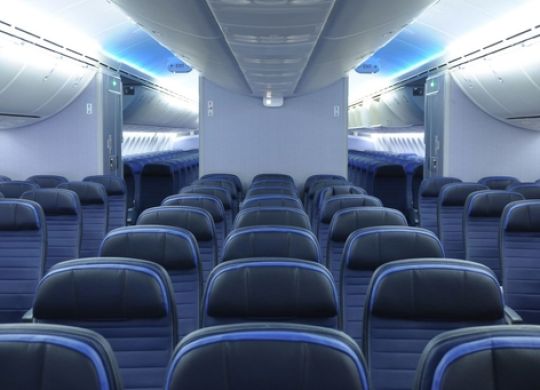
The letters A, B, and C on your boarding pass are not random symbols, but a hint as to where you will sit in the cabin: by the window, in the aisle, or in the middle. Understanding this system will help you avoid uncomfortable seats and make your flight more comfortable, even in economy class. Find out more about how to choose the right seat on an airplane and what to look for before flying

When booking a ticket or checking in online, passengers often see a combination of a number and a letter, such as 12A or 24C. Most people know that the number stands for a row, but not everyone understands what exactly is “hidden” behind the letters and why some seats are more comfortable than others.
In fact, the letters on an airplane have a clear logic: they tell you where the window is, where the aisle is, and where the middle seat is. However, the location of the letters may vary depending on the type of aircraft and cabin layout, so the same symbol does not always mean the same comfort on different flights.
In this article, we'll explain how the airplane seat designation system works, what the letters A, B, C, and others mean, and tell you which row and which seats are usually more comfortable for short and long-haul flights.
Planning a trip abroad and want to protect yourself from unforeseen situations?
Travel insurance from Visit World will cover medical expenses, flight delays, and lost luggage in any country. Get a policy online in a few minutes and travel with confidence!

How does the seat designation system work?
Each seat on an airplane is designated by a combination of a number and a letter. This system is used by all airlines, regardless of flight direction or class of service, and helps passengers quickly navigate the cabin during boarding.
The number indicates the row number in which the seat is located. The smaller the number, the closer you are to the front of the aircraft. The letter indicates a specific seat in this row - near a window, aisle, or between them. Letters often determine the level of comfort during the flight.
Thanks to the alphanumeric system, boarding is organized: passengers find their seats faster, get less confused in the cabin, and it is easier for the crew to control the seating arrangement.
The order of letters in the cabin: what do A, B, C, D, and so on mean?
In most commercial aircraft, seats are arranged in rows: each row has a number, and each seat in the row has a letter. The letters go from left to right when looking in the direction of flight and tell you where you will be sitting - near a window, aisle, or in between. This allows you to quickly find your way around when choosing a seat at online check-in.
- Letter A is a window seat on the left side of the aircraft.
- Letter B is the middle seat between the window (A) and the aisle (C) in a three-row configuration.
- Letter C is the aisle seat on the left side of the aircraft.
In wider aircraft, where there are more than three seats in one row, C is followed by the next letter of the alphabet. On long-haul flights with a central seat block (for example, in 3-4-3 or 2-4-2 configurations), the designations look like this:
- The letter D is an aisle seat on the left side of the center block.
- Letters E and F - middle seats in the central block.
- The letter G is a seat near the aisle on the right side of the central block.
It is also important to know that in many aircraft, the letters I, O, and S are deliberately omitted so that they are not confused with the numbers 1 and 0. Therefore, the absence of some letters in the cabin layout is normal and does not mean an error.
Earlier, we told you that European low-cost airlines have announced lucrative offers for spring and summer flights.
Does the seat assignment by letter depend on the aircraft model?
The distribution of letters in the cabin is not the same for all aircraft. It depends on the type of aircraft and the seat layout chosen by the airline for a particular flight. The principle of seat designation remains the same, but the number of letters in a row and their location may differ.
Most often, the difference is noticeable between narrow-body and wide-body aircraft. The former usually use a 3-3 layout, so the letters are limited to A-F. Large airplanes for long-haul flights may have central seat blocks, which is why additional letters appear, and the outermost seats remain near the windows.
In order not to make a mistake with the choice of seat, you should check the cabin layout of the aircraft that will be on your flight before booking. This will help you to:
1. Understand where the windows and aisles are actually located;
2. Not to choose a middle seat in the central block if you are flying for a long time;
3. Avoid seats next to toilets or the crew's kitchen.
Rating of the safest airlines in 2026 — find it here.
What row is better to sit in on an airplane: what affects comfort
Comfort during a flight depends not only on the letter of the seat, but also on the row you sit in. Even within the same class of service, different rows may differ in terms of noise level, legroom, and ease of exiting the aircraft.
Most often, the following factors influence the choice of row:
1. Distance between seats - some rows have more legroom, especially near partitions or emergency exits;
2. Noise and vibrations - closer to the engines and tail is usually louder;
3. The ability to recline the backrest - in the rows in front of emergency exits or near partitions, the backrest may not recline;
4. Proximity to the crew's toilets and kitchen - there is more traffic and queues, which interferes with rest.
A practical rule of thumb: for long flights, it is better to avoid the last rows and seats next to the toilets, and for a quick exit from the plane, it is more convenient to sit closer to the front of the cabin. If a restful sleep is important, choose rows away from the crew's kitchen and aisles with constant passenger traffic.
For information about carry-on baggage and what is prohibited from being taken on board the aircraft in 2026, follow the link.
What is the difference between seats in different classes?
The class of service directly affects the comfort of the seats on the plane. Not only the width of the seats and the distance between the rows differ, but also the level of service, boarding priorities, and available cabin amenities. Therefore, the choice of class often determines how comfortable your flight will be - especially on long-haul routes.
Here are the main differences between classes:
1. Economy class - minimal legroom, limited recline, standard service. Suitable for short flights or budget travel.
2. Premium Economy - more legroom and wider seats, usually better service and additional small amenities.
3. Business class - seats that convert to a full bed, increased comfort, priority boarding and service.
4. First class - the maximum level of privacy and comfort, separate cabins or semi-closed suites on long-haul flights.
Even within the same class, seats can vary significantly in terms of comfort. For example, the first row of economy class often has more legroom, but limited space for hand luggage under the seat. Therefore, when choosing a class, you should immediately look not only at the ticket category, but also at a specific row and seat in the cabin.
What are the most comfortable seats on an airplane?
Even within the same class of service, the comfort of seats can vary. It all depends on what is more important to you during the flight: the ability to get up quickly, a good night's sleep, or a view from the window. There are no universally “perfect” seats, but there are options that most passengers find more comfortable than others.
1. Aisle seats - it is convenient to get up without disturbing your neighbors, easier to get things from the top shelf, and faster to get off the plane after landing. Cons: constant movement of people nearby, crew carts, and less privacy.
2. Window seats - comfortable to lean on while sleeping, nice view and less traffic nearby. Cons: it is more difficult to go out into the aisle, you have to disturb your neighbors.
3. Seats above the wing - usually less turbulence and a little quieter than in the tail. Cons: the wing partially blocks the view from the window, and in some airplanes the seat back can be reclined to a limited extent.
No matter how well thought out your itinerary is, there is always room for force majeure when traveling. Unexpected medical expenses, transportation delays, or problems with luggage can ruin your plans and budget. Travel insurance helps you avoid unnecessary worries in such situations. You can apply for a travel insurance policy for a specific trip online at Visit World - quickly and without unnecessary bureaucracy!
Take out a policy online at Visit World and enjoy your trip without any unnecessary worries!
Reminder! In February and early March, flight delays and cancellations are possible in Italy due to strikes by aviation industry workers and related services. Several European media outlets and Italian news agencies are warning passengers about the risks. We discussed the strikes at Italian airports in more detail in our previous article.
Products from Visit World for a comfortable trip:
Travel guide for 200 countries;
Legal advice from a local specialist on visa and migration issues;
Travel insurance around the world (please select the country of interest and citizenship to receive services);
Medical insurance all over the world.
We monitor the accuracy and relevance of our information, so if you notice any errors or inconsistencies, please contact our hotline
Frequantly
asked questions
Does the letter A always mean window seat?
Why are there no I, O, or S letters on some airplanes?
Are the seats with the same lettering located in the same way on different aircraft?
Which seats are better for long flights?
Can I change my seat on the plane after online check-in?
Recommended articles
2 min
Air travel
European low-cost airlines have announced attractive offers for spring and summer flights
European airlines have launched seasonal promotions that open up more opportunities for budget travel in the coming months. Special fares and promo codes allow you to plan trips in the spring and early summer at minimal cost, if you manage to take advantage of the offers. Learn more about current discounts on airline tickets and booking conditions from Europe's leading low-cost airlines
11 Feb. 2026
More details2 min
Air travel
Wizz Air will have a “business class” on all routes: what is included in Wizz Class
Wizz Air is expanding its Wizz Class service to all its flights, effectively introducing a conditional “business class” format in the low-cost segment. Passengers will receive more space and comfort without a full-fledged upgrade. Learn more about the new Wizz Class service
13 Feb. 2026
More details2 min
Air travel
Which airlines allow you to take pets on board: what you need to know before flying
Traveling with pets is becoming more and more popular, but the rules for transporting pets in the cabin vary from airline to airline and from route to route. It's important to know not only who allows cats and dogs on board, but also what weight, container, and document requirements apply. Learn more about which airlines allow pets in the cabin and how to prepare your pet for the flight
16 Feb. 2026
More details3 min
Air travel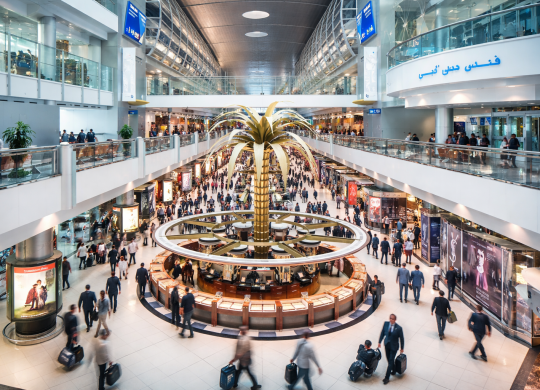
The world's busiest airport in 2026: who topped the ranking and why
Global airports are once again operating at full capacity: passenger traffic is growing, and the largest hubs are recording record numbers. The leader of the ranking not only retained its top spot, but also significantly increased traffic compared to previous years. Find out more about the world's busiest airports and who is in the top 10
18 Feb. 2026
More detailsAll materials and articles are owned by VisitWorld.Today and are protected by international intellectual property regulations. When using materials, approval from VisitWorld.Today is required.