

The EU will launch the EES in full operation starting in April 2026: new border crossing rules
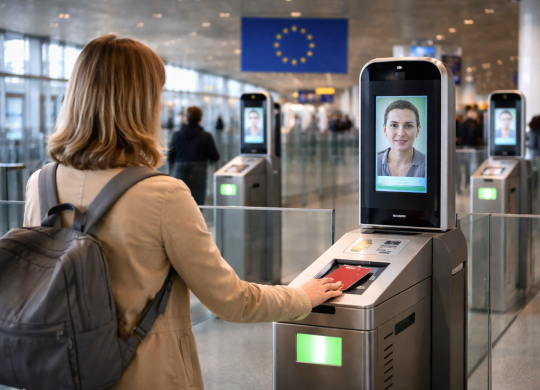
The European Union is finalizing the rollout of a new border control system—the Entry/Exit System (EES)—which will be fully operational starting in April 2026. It replaces passport stamps with digital records and biometric data. Learn more about how the border crossing process will change and what you need to consider before your trip

The European Union is finalizing one of the most significant border control reforms in recent years. Starting in April 2026, the Entry/Exit System (EES) will become fully mandatory for all Schengen Area countries, replacing traditional passport stamps with digital records and biometric data. The system began to be implemented back in October 2025 and is now transitioning to full-scale operation.
In the previous article, we talked about the TOP-10 tourist destinations according to Time Out, which are definitely worth visiting in 2026.
Discovering a new country for yourself without the help of travel agents or intermediaries is very simple. All you need is a checklist or a “Travel Guide” from Visit World – a step-by-step guide with all the key information for your trip.
The guide contains information on visa requirements, visa-free entry rules, permitted periods of stay and a list of required documents.
After completing the form, the guide will be sent to your email in PDF format in just a few minutes.
Choose a country and get your travel guide today.

What is the EU Entry/Exit System (EES)
The Entry/Exit System (EES) is a digital border control system being implemented in Schengen Area countries to track the entries and exits of third-country nationals. It applies to travelers visiting Europe for a short period and is gradually replacing the traditional passport stamp system.
The main goal of the EES is to enhance security and make the border crossing process faster and more accurate. Thanks to automation, border authorities can more efficiently verify documents, detect violations, and prevent the use of fake or stolen passports.
Another important function of the system is monitoring compliance with Schengen Zone stay regulations. Since all data is stored electronically, authorities can easily track whether a traveler has exceeded the permitted length of stay.
In practice, this means that instead of physical stamps in the passport, all travel information will be recorded digitally and used during every subsequent border crossing.
Learn more about the new UK border crossing rules and the introduction of the ETA by following the link.
What data will be collected from travelers?
One of the key changes with the launch of the EES is the transition to fully digital collection of traveler information. Instead of a simple stamp in the passport, border services will now record significantly more data, including biometric information. This allows for more accurate identification of individuals and reduces the risk of using forged or stolen documents.
Under the new rules, the system will collect the following data:
- Facial photo
- Fingerprints
- Passport details
- Dates of entry and exit
- Information on entry refusals (if any)
All this information will be stored in an electronic system and checked every time a border is crossed. This means that travel history will become fully transparent to EU border authorities.
In our previous article, we discussed new travel rules for 2026: ETIAS, ETA, visa-free travel, and digital arrival cards.
How the EES system works step by step
To better understand exactly how the border crossing process will change, it’s worth looking at how the EES system works in practice. Although the process itself looks more high-tech, for the traveler it remains quite simple and logical.
Arrival at the border
Upon arrival in a Schengen Area country, your passport is scanned at border control.
This replaces manual verification and stamping.
Collection of biometric data
At this stage, the system captures your biometric data—a facial photo is taken and your fingerprints are scanned. This is necessary for accurate identification and to prevent the use of someone else’s documents.
Digital entry record
All data is automatically entered into the EES system. Instead of a stamp in your passport, an electronic record of your entry into the country is created.
Exit recording
When you leave the EU, the system automatically records your exit. This allows for accurate tracking of the duration of your stay.
Faster future trips
During future trips, your data will already be in the system, so checks can be faster, especially at airports with automated checkpoints.
Learn more about how the EES system works and the registration procedure by following the link.
First results following the system’s launch
Although the full launch of the EES is scheduled for April 2026, the system has been partially operational since October 2025. And even during this relatively short period, it has had a tangible impact on security and border control within the EU.
According to official data, over 45 million border crossings were recorded during the phased rollout. This has enabled border authorities to gather significantly more information about travelers’ movements and detect potential violations more quickly.
In addition, the system has already helped identify thousands of problematic cases:
- Over 24,000 travelers were denied entry
- Approximately 600 individuals were identified as potential security risks
Reasons for denial can vary: from incomplete documentation to suspicion of using false information or a discrepancy in the purpose of travel.
Particularly telling are cases where the system helps identify people attempting to cross the border under different names. For example, border guards in Romania were able to identify a person who used various documents with different names. Thanks to biometric data, it was discovered that this individual had already been denied entry three times in different Schengen Area countries.
Without the use of biometrics, such cases would be much more difficult to detect. That is why the EES is considered one of the key tools for combating fraud and enhancing security in Europe.
What will change for travelers starting in April 2026
The full launch of the EES system means that the process of crossing the EU border will change for all travelers from non-EU countries. Some changes will be noticeable immediately, while others will be felt gradually as the system is adapted.
The most obvious change is the elimination of passport stamps. From now on, all entry and exit data will be recorded electronically only. This means that physical stamps will no longer serve as proof of stay in the EU.
Another important change is mandatory biometric verification. Upon their first entry into Europe, travelers will be required to provide fingerprints and have their photo taken. This data will subsequently be used for faster identification during future trips.
The control process itself will also change:
- Checks will become more automated
- More electronic checkpoints will appear at major airports
- In the long term, this should reduce queues
At the same time, some delays are possible in the initial phase, as the system is just beginning to operate at full capacity, and staff and travelers are adapting to the new procedures.
It’s also worth noting that the EES will become part of a broader EU border control system. In the future, it will work alongside the Electronic Travel Authorization System (ETIAS), which will be mandatory for citizens of visa-waiver countries.
As a result, travel to Europe will become more digital: fewer paper-based procedures, but more automated checks and controls.
What should you consider before traveling to Europe in 2026?
The launch of the EES means that preparing for a trip to Europe will become slightly more demanding than before. Although the process will remain straightforward for most travelers, it is important to keep a few key points in mind to avoid issues at the border.
First and foremost, make sure your documents are in order. Since the system automatically verifies all data, any errors or discrepancies could result in delays or even denial of entry.
It is equally important to be prepared for biometric checks. This is a mandatory part of the process, and without it, crossing the border will be impossible. Keep in mind that the procedure may take a little longer during your first entry.
You must also strictly adhere to the rules for short-term stays in the EU. Thanks to the EES, border services receive accurate information about entry and exit dates, so exceeding the permitted length of stay without consequences is no longer possible.
To avoid unpleasant situations, before your trip, you should:
1. Check your passport’s validity and condition
2. Prepare proof of your travel purpose (reservations, tickets, invitations)
3. Make sure you haven’t exceeded the permitted stay period on previous trips
4. Be prepared for additional questions at the border
Separately, you should take into account the upcoming launch of the ETIAS system, which will become another mandatory step for travelers from visa-free countries. Combined with the EES, this creates a more comprehensive control system where all travel data will be interconnected.
The EES system is a new stage in the development of border control in Europe, making travel more digital and regulated. To avoid surprises and prepare for the new rules, it is important to familiarize yourself with the requirements in advance and plan your trip properly. On the Visit World portal, you can always find up-to-date information on entry rules, documents, and preparing for international travel.
Are you planning a trip and want to prepare without unnecessary stress? Visit World's travel guide contains key tips for travelers: rules of entry and stay, current requirements for tourists, basic safety, transportation and accommodation. Such a guide will help you quickly navigate a new country, avoid common mistakes during your trip, and plan your route taking into account practical nuances that often go unnoticed by tourists.
Products from Visit World for a comfortable trip:
Travel guide for 200 countries;
Legal advice from a local specialist on visa and migration issues;
Travel insurance around the world (please select the country of interest and citizenship to receive services);
Medical insurance all over the world.
We monitor the accuracy and relevance of our information, so if you notice any errors or inconsistencies, please contact our hotline
Frequantly
asked questions
Do I need to undergo biometric verification every time I enter the EU?
Will passport stamps be used after the EES is launched?
Who does the EES system apply to?
Can the EES lead to a refusal of entry?
Will border crossings become faster?
Recommended articles
2 min
Travels
EES system (Schengen Entry and Exit System): what is it, who needs it and the registration procedure
The new EES entry-exit system will be operational in Europe from October 12, 2025. Find out who needs to register, what biometric data is collected, how the control process works, how to prepare for your trip and much more useful information
11 Oct. 2025
More details1 min
Travels
New travel rules in 2026: ETIAS, ETA, visa-free travel and digital arrival cards
Many countries will introduce new requirements for tourists in 2026: ETIAS in the EU, ETA in the UK, updated ESTA for the US and digital arrival cards. Find out what will change and how to prepare for your travels in advance
25 Jan. 2026
More details2 min
Travels
The implementation of the new EU border control system EES has been postponed until the fall of 2026
The EU has postponed the full implementation of the new EES border control system due to the risks of a transport collapse at airports and checkpoints during the peak tourist season. The system is already being tested, but its operation will be partially suspended. Learn more about how the EU entry rules for tourists will change in 2026
06 Feb. 2026
More details3 min
Popular
New UK border crossing rules: how ETA works from 25 February 2026
Starting today, new requirements for traveling to the United Kingdom are in place with the electronic travel authorization ETA. Without this permit, some passengers may not be allowed to board flights or other transportation. Learn more about who is affected by the new rules and what you need to check before traveling
25 Feb. 2026
More detailsAll materials and articles are owned by VisitWorld.Today and are protected by international intellectual property regulations. When using materials, approval from VisitWorld.Today is required.