

The Best Cities in Switzerland for Expats to Live in 2026
Table of contents
- Zurich: The Strongest Job Market and the Toughest Housing Search
- Geneva: International Careers and Life Near the French Border
- Basel: A Pharmaceutical Hub at the Border of Three Countries
- Bern: Stable Employment and Lower Costs Than in Zurich
- Lausanne: Science, Technology, and Careers in French-Speaking Switzerland
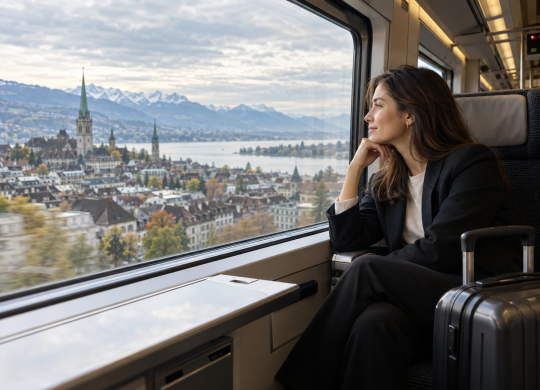
The choice of city in Switzerland determines not only the cost of rent, but also taxes, the working language, and the job market. Learn more about life, salaries, housing, and conditions for families in the country’s five largest cities

In Switzerland, a difference of just a few dozen kilometers can change the language, tax burden, and job prospects. The best cities for expats remain Zurich, Geneva, Basel, Bern, and Lausanne. Zurich offers the most international job openings, Geneva offers careers in diplomacy and global organizations, and Basel boasts a strong pharmaceutical sector. Bern is ideal for a quieter family life, while Lausanne combines a French-speaking environment with technology, science, and education.
Are you planning to move to Switzerland and want to avoid mistakes when filling out documents?
A migration lawyer from the Visit World portal will analyze your situation, select the optimal type of permit, and help you prepare your application.

Zurich: The Strongest Job Market and the Toughest Housing Search
Zurich is located on the northern shore of Lake Zurich, near the source of the Limmat River. It is Switzerland’s largest city and the country’s main financial center. The international airport is about a 10–15-minute train ride away, and direct rail routes connect Zurich to Bern, Basel, Geneva, Munich, and Milan.
The city is compact, safe, and convenient for living without a car. At the same time, moving to Zurich requires a substantial initial budget. The biggest challenge is finding an apartment: in 2026, there were only 252 vacant units in the city, and the vacancy rate stood at 0.11%.
Housing and Monthly Expenses
The average rent under existing leases does not reflect the costs for new residents. According to city statistics, a typical new lease for a 75 m² apartment in an older building costs about CHF 2,287 per month, while housing in a new building costs about CHF 2,907. In the Old Town, a similar apartment costs approximately CHF 2,832, while in Affoltern it costs CHF 1,611.
Newcomers should consider Oerlikon, Seebach, Altstetten, Affoltern, and Schwamendingen. These neighborhoods are located away from the historic center but have direct train or tram connections. To sign a lease, you’ll often need proof of income, a credit report, and a security deposit of up to three months’ rent.
Estimated budget for one person:
- Rent for a one-bedroom apartment – CHF 2,000–3,000
- Room in a shared apartment – CHF 900–1,500
- Groceries – CHF 500–750
- Mandatory health insurance – CHF 350–550
- Utilities, internet, and cell phone service – CHF 250–400
- City transit pass – about CHF 90
- Total budget without excessive spending – CHF 4,200–5,800 per month
Health insurance is not included in taxes or rent. You must arrange it yourself within three months of moving.
The premium amount depends on the insurance company, coverage plan, and deductible.
Salaries and Employment
Zurich has Switzerland’s largest selection of job openings in banking, insurance, fintech, IT, consulting, and asset management. Engineering, telecommunications, medical technology, scientific research, and aviation services are also well-developed.
The median gross monthly salary in the canton is CHF 7,500. This high figure is due to the concentration of banks, insurance companies, technology corporations, and international headquarters. The average salary for a software engineer is approximately CHF 105,000 per year, while experienced professionals in finance, cybersecurity, and risk management can earn CHF 120,000–160,000 or more.
For a comfortable lifestyle for a single person, a gross annual salary of CHF 90,000–100,000 is recommended. A family with children typically needs a combined income of CHF 140,000–170,000, especially if they rent a three-bedroom apartment and pay for daycare.
In tech companies, financial groups, and research institutions, some teams operate internationally. However, knowing German significantly expands your job options. It is nearly mandatory in medicine, education, government agencies, retail, and when working with local clients.
Transportation, Language, and Family-Friendly Conditions
The transportation system includes trams, buses, S-Bahn city trains, commuter routes, and lake boats. Zurich Main Station (Zürich HB) is the country’s largest railway hub. Within the city, most daily trips take 15–30 minutes, so a car often costs more than it’s worth.
The official language is German, but Swiss German is the predominant dialect in everyday life. Official documents, school instruction, and written communication are conducted in standard German. For long-term integration and career advancement, a language proficiency level of at least B1–B2 is recommended.
Zurich is a great place for families thanks to its safe neighborhoods, public schools, parks, sports centers, and proximity to nature. Public education is free, but instruction is in German. International schools can cost CHF 25,000–40,000 per year, and a full day at a private preschool costs approximately CHF 2,500–3,500 per month. Subsidies are available depending on income and place of residence.
In our previous article, we discussed what drivers need to know in Switzerland in 2026: the vignette, traffic rules, and fines.
Geneva: International Careers and Life Near the French Border
Geneva lies on the western shore of Lake Geneva, almost entirely surrounded by French territory. Lausanne is about a 40-minute train ride away, and the French towns of Annemasse and Saint-Julien-en-Genevois are accessible by public transportation. The airport is less than a ten-minute drive from the central train station.
The city is home to the European headquarters of the UN, the WHO, the WTO, the International Committee of the Red Cross, banks, commodity traders, and hundreds of nongovernmental organizations. As a result, Geneva attracts diplomats, financiers, lawyers, translators, and international development specialists. At the same time, the cost of living in Geneva is high, and competition for apartments and prestigious jobs remains fierce.
Housing and Monthly Expenses
Geneva’s rental market is among the tightest in the country. In June 2026, there were only 793 vacant apartments in the canton, and the vacancy rate stood at 0.31%. In the city itself, the rate reached 0.37%.
The most expensive apartments are concentrated in the Eaux-Vives, Champel, and Florissant neighborhoods and along the waterfront. Slightly more affordable options can be found in Vernier, Meyrin, Onex, Lancy, and Thônex. Some workers choose to live in the French towns of Annemasse, Ferney-Voltaire, or Saint-Julien-en-Genevois, but this option requires consideration of taxes, health insurance, and regulations for cross-border workers.
Estimated monthly expenses per person:
- One-bedroom apartment – CHF 2,200–3,200
- Room in a shared apartment – CHF 1,000–1,600
- Groceries – CHF 550–800
- Mandatory health insurance – CHF 400–600
- Utilities, internet, and cell phone service – CHF 250–400
- Monthly public transportation pass – CHF 70
- Total comfortable budget – CHF 4,400–6,000 per month
Landlords often require an income at least three times higher than the monthly rent. You’ll need to include an employment contract, a residence permit or proof of its application, a document confirming you have no outstanding debts, and a reference from a previous landlord with your application. The security deposit may be equal to three months’ rent.
Salaries and Employment
The median gross monthly salary in the canton is CHF 7,893. In the financial sector, the median is CHF 12,682; in telecommunications, CHF 10,828; and in scientific research, CHF 9,775. In the hospitality industry, the figure is significantly lower—CHF 4,745.
The main areas of employment include private banking,
asset management, compliance, international trade, diplomacy, pharmaceuticals, and the humanitarian sector. The average annual salary for a compliance officer is approximately CHF 115,000–120,000. Experienced financiers, lawyers, and managers of international programs can earn CHF 120,000–160,000 or more.
Getting a job at the UN or a major international organization is more difficult than it might seem. Most professional positions require a relevant master’s degree, several years of experience, and proficiency in at least two working languages. Contracts at nongovernmental organizations are often fixed-term, and salaries may be lower than those in banking and commodity trading.
French is required for most local job openings, government services, and everyday communication. In international institutions, English is often the working language, but French significantly broadens your job options. It is practically mandatory for working in Switzerland in the service, medical, or education sectors.
Transportation, Language, and Family-Friendly Conditions
The city’s public transit network consists of trams, buses, Léman Express trains, and Mouettes Genevoises passenger boats. A unireso pass covering the entire metropolitan area costs CHF 70 per month or CHF 500 per year. A single ticket is valid for 60 minutes and costs CHF 3. For cross-border travel, you’ll need a Léman Pass, with fares depending on the route.
The Léman Express has made daily commutes from France easier, but popular cross-border routes are crowded during rush hour. Driving isn’t always the solution due to traffic jams, a lack of parking, and high parking costs in the city center.
For families, Geneva offers free public schools, a high level of safety, and plenty of green spaces. Instruction is in French, and integration classes are available for newly arrived children. International schools cost approximately CHF 20,000–50,000 per year, depending on the child’s age and the program.
The cost of a municipal daycare center depends on the family’s income and the number of days attended. The main challenge is not only the price but also the shortage of spots. It’s best to submit an application as early as possible, sometimes even before moving.
Previously, we discussed residence permits in Switzerland: how to obtain them, types of permits, and requirements for 2026.
Basel: A Pharmaceutical Hub at the Border of Three Countries
Basel is located on the Rhine, at the point where Switzerland, Germany, and France meet. The city forms a joint cross-border metropolitan area with Weil am Rhein in Germany and Saint-Louis in France. Tram routes cross the national border, and EuroAirport is about a 20-minute bus ride away.
It is Switzerland’s leading center for pharmaceuticals and biotechnology. Roche and Novartis have their headquarters here, and the surrounding area is home to medical equipment manufacturers, laboratories, research centers, and contract manufacturing organizations. Therefore, jobs in Basel offer the best prospects for scientists, engineers, chemists, medical professionals, and regulatory affairs specialists.
Housing and Monthly Expenses
Rent in Basel is cheaper than in Zurich and Geneva, but there aren’t many vacant apartments. In 2026, the vacancy rate was 0.78%. In the central districts of Wettstein, St. Alban, and Altstadt, the selection is particularly limited.
More affordable apartments can be found in Klybeck, Kleinhüningen, Gundeldingen, and parts of Iselin. Families often choose the quieter neighborhoods of Riehen, Binningen, Allschwil, or Liestal. The latter three are located in the canton of Basel-Landschaft, so taxes, daycare fees, and certain administrative rules differ.
Estimated monthly expenses for one person:
- One-bedroom apartment – CHF 1,600–2,300
- Room in a shared apartment – CHF 800–1,300
- Groceries – CHF 450–700
- Mandatory health insurance – CHF 350–550
- Utilities, internet, and cell phone service – CHF 230–380
- Public transportation pass – approximately CHF 86–111
- Total comfortable budget – CHF 3,500–4,800 per month
Housing in France or Germany may be cheaper. However, these savings must be weighed against travel costs, cross-border insurance, and tax regulations. Third-country nationals should also verify whether their status allows them to reside outside Switzerland and work in Basel.
Salaries and Employment
The median gross monthly salary in Northwestern Switzerland, which includes Basel, is approximately CHF 7,156. The chemical and pharmaceutical industries pay the highest salaries, while retail, hospitality, and personal services offer significantly lower earnings.
Experienced professionals in pharmaceutical manufacturing, clinical research, quality assurance, and regulatory affairs can earn CHF 100,000–150,000 per year. For laboratory specialists and junior researchers, a typical salary range is CHF 75,000–105,000. Salaries for experienced engineers often exceed CHF 110,000.
In addition to the life sciences, job openings are available in logistics, international trade, finance, insurance, and the arts. Basel’s river port handles import and export cargo, and its location near two borders drives demand for specialists in logistics and customs procedures.
In international pharmaceutical companies, many teams work in English. German is required for most administrative positions, as well as in medicine, education, sales, and when working with local contractors. In everyday life, the Basel variant of Swiss German is widely spoken, but documents and official correspondence are written in standard German.
Transportation, Language, and Conditions for Families
Basel has an extensive network of trams, buses, and S-Bahn commuter trains.
The U-Abo pass covers the entire public transit network of Northwestern Switzerland. Its price depends on the type of pass and place of residence. Employers participating in the Jobticket program can reduce the cost of transit for employees to as low as CHF 57 per month.
Trains to Zurich and Bern take about an hour. Freiburg, Germany, can be reached in less than an hour, and Mulhouse, France, in about 25 minutes. It’s convenient to get around the city by bike: outlying residential areas are located 15–25 minutes’ ride from the center.
Public schools are free, and instruction is in German. Additional language support is provided for children who do not speak the language. The Basel International School offers the IB program, but tuition for the 2026–2027 school year ranges from CHF 23,980 to CHF 34,700, depending on the child’s age.
The canton subsidizes childcare based on parents’ income and employment status. At participating facilities, full-day care costs a family a maximum of CHF 1,600 per month. This is significantly less than the market rate for private preschools in Zurich or Geneva.
Learn more about options for obtaining Swiss citizenship by following the link.
Bern: Stable Employment and Lower Costs Than in Zurich
Bern is located in the central part of the country, on a bend in the Aare River. The city serves as the federal capital, although it officially holds the status of a “federal city.” Zurich, Basel, and Lausanne are all about an hour away by train. This location is convenient for people who need to travel regularly to different regions of Switzerland.
Bern is significantly smaller and quieter than Zurich or Geneva. The main employers are federal agencies, Swiss Post, SBB, Swisscom, the University of Bern, and Inselspital Hospital. Life in Bern is well-suited for families, civil servants, healthcare professionals, and specialists who value short commutes and a stable job market.
Housing and Monthly Expenses
Rents in Bern are lower than in Zurich or Geneva, but supply remains limited. In June 2026, there were only 351 vacant apartments in the city. The vacancy rate stood at 0.44% and remained unchanged from the previous year.
The most expensive areas are Altstadt, Kirchenfeld, Länggasse, and the neighborhoods along the Aare. More affordable options can be found in Bümpliz, Bethlehem, Weissenbühl, and parts of Breitenrain. The towns of Köniz, Ostermundigen, Zollikofen, and Ittigen are technically located outside Bern but have direct transportation links to the city center.
Estimated monthly expenses for one person:
- One-bedroom apartment – CHF 1,600–2,300
- Room in a shared apartment – CHF 800–1,300
- Groceries – CHF 450–700
- Mandatory health insurance – CHF 350–550
- Utilities, internet, and cell phone service – CHF 230–380
- Public transportation pass – about CHF 80–90
- Total comfortable budget – CHF 3,400–4,700 per month
The rental market in Bern is less competitive than Zurich’s, but good apartments still receive dozens of applications. To sign a lease, you’ll need proof of income, a credit report, and a security deposit of up to three months’ rent.
Salaries and Employment
The median salary in the Espace Mittelland region, which includes Bern, is approximately CHF 6,400–6,700 gross per month. In public administration, telecommunications, IT, medicine, and engineering, experienced employees often earn CHF 85,000–120,000 per year.
The most distinctive feature of the local job market is the high proportion of stable positions in the public and quasi-public sectors. Job openings are available in federal departments, transportation companies, the university, hospitals, the postal service, and telecommunications. Compared to Geneva, there are fewer international organizations here, and compared to Zurich, there are fewer banks and global technology companies.
Most local positions require German proficiency at least at the B2 level. French is also often valued in the federal administration. Some positions require proficiency in two or three of the country’s official languages. Without German, realistic opportunities are largely limited to academia, IT, and international projects.
Bern has a stable job market, but there are fewer job openings than in Zurich. Therefore, it makes more sense to plan a move to Switzerland specifically to this city after receiving a job offer, especially for people without German language skills or experience in the local public sector.
Transportation, Language, and Family-Friendly Conditions
Bern has a compact city center and a well-developed network of trams, buses, and commuter trains. A standard ticket for city zones 100 and 101 costs CHF 5.20 and is valid for 60 minutes. Most residential areas are within a 15–25-minute bike ride of the city center.
A car is mainly needed by residents of outlying suburbs. Parking in central areas is limited, and trains provide direct connections to all major cities in the country. The most convenient way to reach international destinations is via the airports in Zurich, Basel, or Geneva.
German is the language of education and administration, while the Bernese dialect of Swiss German predominates in everyday life. Public schools are free. Children who do not speak German are provided with additional language classes and integration support.
As of August 2026, the full daily cost at a municipal daycare center is CHF 172 for children under 18 months and CHF 145 for older preschoolers. Families pay less thanks to cantonal and municipal vouchers. Households with an estimated annual income of up to CHF 170,000 are eligible for assistance.
In our previous article, we provided a detailed guide to moving to Switzerland in 2026: visas, costs, taxes, and tips for immigrants.
Lausanne: Science, Technology, and Careers in French-Speaking Switzerland
Lausanne is built on the slopes overlooking Lake Geneva, between Geneva and Montreux. The train ride to Geneva takes about 40 minutes, and to the airport—about 50 minutes. The city is small in area, but the elevation difference between the Ushi waterfront and the northern districts exceeds 300 meters. This directly affects housing choices and daily commutes.
Lausanne’s economic profile is shaped by EPFL, the University of Lausanne, the CHUV university hospital, and the International Olympic Committee. Surrounding these institutions are startups, research laboratories, sports federations, and companies in the fields of medical technology, cybersecurity, and clean energy. As a result, job opportunities in Lausanne are most abundant for scientists, IT professionals, engineers, medical professionals, and those working in the sports industry.
Housing and Monthly Expenses
Rent here is cheaper than in Geneva, but a housing shortage affects the entire canton of Vaud. In 2026, the vacancy rate was only 0.87%, whereas a rate of around 1.5% is considered balanced. Of the 3,907 available properties in the canton, 2,735 were for rent.
Ouchy, Sous-Gare, Montchoisi, and the central neighborhoods remain the most expensive. More affordable options can be found in the northern part of the city or in the neighboring towns of Renens, Prilly, Ecublens, and Crissier. Renens and Ecublens are particularly convenient for employees and students of EPFL and the University of Lausanne.
Estimated monthly expenses for one person:
- One-bedroom apartment – CHF 1,700–2,400
- Room in a shared apartment – CHF 850–1,350
- Groceries – CHF 500–750
- Mandatory health insurance – CHF 380–580
- Utilities, internet, and cell service – CHF 230–380
- Public transportation pass for urban areas – about CHF 78
- Total comfortable budget – CHF 3,700–5,000 per month
When choosing an apartment, it’s important to consider not only the distance to work but also the elevation of the neighborhood. Two buildings may be located just one kilometer apart, but walking between them might involve a long, steep climb. Housing near a subway station often justifies a slightly higher rent.
Salaries and Employment
The median gross monthly salary in the Canton of Vaud is CHF 6,810. In the information technology sector, it reaches CHF 9,700, while in the hospitality sector, it is only CHF 4,610.
The annual salary for an experienced software engineer or data scientist typically ranges from CHF 95,000 to 135,000. In biotechnology, medical research, and engineering, the typical range is CHF 85,000–125,000. Earnings for young researchers and university project staff may be lower, especially under fixed-term contracts.
The International Olympic Committee and dozens of sports federations constitute a separate segment of the local market. They hire specialists in law, communications, event management, finance, digital products, and sports management. The number of such positions is limited, and competition is international.
At EPFL, research laboratories, and tech startups, some teams work in English. French is required for medicine, education, government agencies, sales, and local services. A B2 level significantly expands employment opportunities in Switzerland and simplifies everyday communication.
Transportation, Language, and Family-Friendly Conditions
Lausanne has two metro lines. The M1 connects the city center with the UNIL and EPFL campuses and the suburb of Renens. The automated M2 line runs from the Ushi waterfront through the train station and the city center to the northern Croisettes district. It is this line that compensates for the city’s challenging terrain.
The metro, buses, and commuter trains operate under the unified Mobilis fare system. For Lausanne, Zones 11 and 12 are primarily relevant. A single pass allows you to use all forms of public transportation within the selected zones.
Public schools are free and conduct classes in French. Newly arrived students can receive additional language instruction. The International School of Lausanne offers the IB program, but tuition for the 2026–2027 school year ranges from CHF 28,490 to CHF 39,380 per year, depending on the grade.
Municipal daycare centers charge fees based on family income. Spots are allocated through a centralized system, so the wait can be long. The full cost of private childcare without subsidies often exceeds CHF 2,500 per month.
Moving to Switzerland requires careful preparation, from choosing the type of permit to registration, insurance, and finding accommodation. It can be difficult to understand all the nuances on your own, as the country's immigration laws have many details that depend on citizenship, canton of residence, and purpose of relocation. A migration lawyer from the Visit World portal will help you assess your chances of obtaining a permit, prepare documents, and accompany you at every stage of the process.
Order a consultation with a Visit World migration lawyer to plan your move to Switzerland competently and without unnecessary risks!
We remind you! The ability to receive quality medical care in Switzerland is an important element of a successful move. How the healthcare system works in Switzerland, how much medical insurance costs, what a basic policy covers, and how expats can avoid costly mistakes after moving — find out more at the link.
We monitor the accuracy and relevance of our information. Therefore, if you see any error or discrepancy, please write to our hotline.
Frequantly
asked questions
Which Swiss city is the cheapest to live in among those considered?
What salary is needed to live comfortably in Switzerland?
Is it possible to find a job in Switzerland without knowing German or French?
Which Swiss city is best suited for families?
What expenses do you need to pay immediately after moving?
Recommended articles
2 min
Expats
Swiss Citizenship: how to get Europe’s toughest passport in 2024?
Swiss citizenship has numerous advantages, because the country is distinguished by a good level of economic development, a strong social sphere and a high level of security. Find out how to get Swiss citizenship in 2024 and how they plan to simplify the naturalization procedure in the country
08 Nov. 2024
More details4 min
Expats
Moving to Switzerland in 2026: visas, costs, taxes, and tips for immigrants
Switzerland attracts immigrants from all over the world with high salaries, safety, and quality of life, which consistently ranks among the highest. At the same time, moving to this country requires serious preparation — from obtaining a residence permit to choosing a canton with optimal taxes. Learn more about visas, cost of living, finding housing, and cultural adaptation in Switzerland in 2026
09 Mar. 2026
More details2 min
Residence permit
Residence Permit in Switzerland: How to Get a Swiss Permit, Types and Requirements in 2026
Switzerland attracts expats with its high standard of living and stability. Find out how to get a residence permit, what types of permits exist, requirements, documents and immigration features
06 Apr. 2026
More details3 min
Transport
What Drivers Need to Know in Switzerland in 2026: Vignette, Traffic Rules, and Fines
Switzerland has an annual vignette with no short-term options, strict speeding fines, and specific rules for mountain routes. Add to that toll tunnels, car transport trains, and seasonal closures of mountain passes. Learn more about Switzerland’s traffic laws in 2026, road tolls, parking, and winter requirements
17 Sep. 2026
More detailsAll materials and articles are owned by VisitWorld.Today and are protected by international intellectual property regulations. When using materials, approval from VisitWorld.Today is required.