

GCC Unified Tourist Visa: How One Permit Will Open Six Gulf Countries
Table of contents
- What is the GCC Unified Tourist Visa and which countries does it cover?
- Who approved the unified Gulf visa and who is preparing it?
- When will the GCC tourist visa launch?
- How does the visa fit the Gulf Tourism Strategy 2023–2030?
- What will tourists be able to see with one Gulf visa?
- How will the visa change transport across the Gulf?
- What happens if a tourist overstays the unified visa?
- How will airlines and border checks work?
- What this means for travellers now
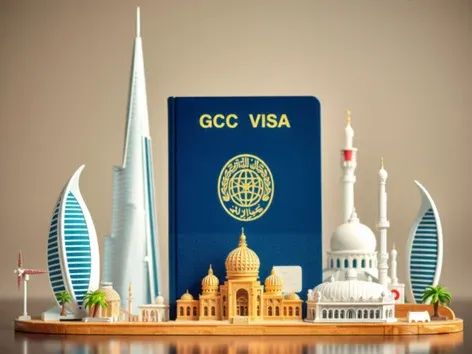
The GCC Unified Tourist Visa is set to let visitors travel across the UAE, Saudi Arabia, Qatar, Oman, Kuwait and Bahrain on a single permit. Learn more about the launch status, the Gulf Tourism Strategy targets, the overstay rules and what travellers should plan for

The six Gulf Cooperation Council states are preparing a single tourist permit, the GCC Unified Tourist Visa, also known as the GCC Grand Tours visa. It will cover the United Arab Emirates, Saudi Arabia, Qatar, Oman, Kuwait and Bahrain. According to Travel And Tour World, the permit moves the region towards an integrated tourism framework, often described as a Schengen-style Gulf visa.
For travellers, the unified Gulf visa matters because it would replace six separate national visas for a multi-country trip. It also brings shared rules: an overstay in one country would have consequences in all six.
Planning a trip that crosses several Gulf borders?
A route through Dubai, Riyadh, Doha and Muscat means several flights, hotels and border checks, and an illness or delay can change the plan at any stage. Travel insurance from Visit World helps cover medical expenses and unexpected situations abroad. Get your policy online before you leave.

What is the GCC Unified Tourist Visa and which countries does it cover?
The GCC Unified Tourist Visa is one permit for tourists that is valid across all six member states of the Gulf Cooperation Council. Instead of applying for a separate visa in each country, a visitor would hold a single document for the whole region.
The idea behind the permit is to market the Gulf as one destination. International travellers would be able to book itineraries covering several countries without paying for six national visas.
Who approved the unified Gulf visa and who is preparing it?
The project was approved in December 2023 at the 44th GCC Supreme Council Summit. State news agencies reported that the decision was unanimous.
The Supreme Council is the highest decision-making body of the Gulf Cooperation Council and consists of the heads of the member states. After the summit, it handed executive authority to the Committee of Interior Ministers, which was tasked with drafting the operational framework. The interior ministries hold the legal mandate to run the border system.
The leadership of Qatar Tourism described the visa as a fundamental step towards integration: separate national systems are expected to merge gradually, and regional travel should become one connected experience.
When will the GCC tourist visa launch?
The launch dates have shifted several times. According to Travel And Tour World, the timeline so far looks like this:
- the UAE Minister of Economy told the Emirates News Agency (WAM) about a flexible launch window in 2024–2025;
- by late 2024, technical assessments were well under way;
- in 2025, the GCC Secretary-General spoke of "continued efforts" towards the launch;
- as of 2025, the interior ministries were in the final technical phases of synchronising their systems before a public rollout.
Specialised technical committees are drafting the logistical requirements. They have to align security protocols at the borders of six sovereign states and build a shared digital infrastructure for passenger clearance, including an online visa portal. The source does not give a confirmed date for the public launch.
About the delay of the GCC Grand Tours visa until late 2026 — read more at the link.
How does the visa fit the Gulf Tourism Strategy 2023–2030?
The unified permit is the centrepiece of the Gulf Tourism Strategy 2023–2030, a multilateral economic pact that aims to turn the GCC into a single, globally competitive tourism destination by 2030 and reduce the region's dependence on oil.
The strategy sets these targets:
- 128.7 million inbound arrivals by 2030;
- a baseline of 39.8 million arrivals recorded in 2022;
- 7% annual growth in inbound travel, with every member state contributing.
The strategy goes beyond border paperwork. It includes the "Our Gulf" initiative promoting shared heritage and a new regional platform for tourism statistics, which is due to launch soon.
Visit World services for tourists, migrants, and expats: Insurance | Guides | Legal advice
What will tourists be able to see with one Gulf visa?
According to the UAE Ministry of Economy, the GCC countries have 837 recognised tourist sites, and 399 of them are in the UAE. A single permit would let visitors move between these sites without applying for a new visa at each border.
Longer stays across several countries are expected to raise tourist spending. Travellers would spread their holiday time between several capitals, which should increase demand for both luxury and mid-scale hotels across borders.
How will the visa change transport across the Gulf?
A single visa is expected to encourage cross-border travel by air and, in future, by rail. Regional airlines anticipate higher ticket sales, and the proposed GCC rail network depends on border crossings without extra formalities.
Travel And Tour World notes that the aviation and hospitality sectors expect major operational changes. A unified market of about 128 million visitors is also seen as more attractive to global hospitality investors than six separate markets, which could speed up investment in large resorts and transport.
The corridor between the UAE and Saudi Arabia is expected to feel the changes first.
About the instant tourist e-visa system in Saudi Arabia — read more at the link.
What happens if a tourist overstays the unified visa?
An overstay in one member state creates a legal liability in all six countries and could lead to immigration penalties across the GCC. Each country's interior ministry keeps full authority over deportations.
The main rules for visa holders, as described by the source:
- shared databases record the exact times of entry and exit at each border;
- the visitor alone is responsible for tracking when the regional visa expires;
- employment is strictly prohibited on the tourist permit.
How will airlines and border checks work?
Airlines will have to adapt their Advance Passenger Information (API) screening to the new system. If border technology fails and passengers have to be rerouted, this creates liabilities for carriers. Civil aviation authorities of the member states are expected to monitor closely how airlines meet their duty of care to passengers.
Regional transport bodies also warn of possible bottlenecks: high volumes of travel could put pressure on transit and accommodation, especially in the peak winter season.
What this means for travellers now
Until the unified permit goes live, each Gulf country applies its own entry rules. Travellers planning a multi-country trip should keep the following in mind:
- check the current national visa requirements for every country on the route, as the launch date of the GCC visa has not been confirmed;
- once the unified visa is available, note its expiry date carefully, since an overstay in one country affects the whole region;
- do not take up any paid work on a tourist permit;
- book flights and hotels early for winter trips, when transport and accommodation may be overloaded.
A trip across several Gulf countries means more flights and more chances of delays or medical bills far from home. Choose Travel insurance for every country on your route and buy your policy online in a few minutes.
We remind you! In our previous article, we wrote about the new Dubai tourist program with five-year visas and bonuses.
Products from Visit World for a comfortable trip:
Travel guide for 200 countries;
Legal advice from a local specialist on visa and migration issues;
Travel insurance around the world (please select the country of interest and citizenship to receive services);
Medical insurance all over the world.
We monitor the accuracy and relevance of our information, so if you notice any errors or inconsistencies, please contact our hotline.
© 2018-2026, Visit World. Use, copying or reprinting of materials on this site is permitted only with a link (hyperlink for online publications) to Visit World. All rights reserved.
Frequantly
asked questions
Which countries does the GCC Unified Tourist Visa cover?
When was the GCC unified tourist visa approved?
When will the GCC Grand Tours visa launch?
What happens if a tourist overstays the unified Gulf visa?
Can holders of the GCC tourist visa work in the Gulf?
How many tourists does the Gulf Tourism Strategy aim to attract?
Recommended articles
1 min
Travels
GCC Grand Tours Unified Tourist Visa Delayed Until Late 2026
Gulf countries have postponed the launch of the joint GCC Grand Tours tourist visa until 2026. Learn about the reasons for the delay, the implications for travelers, and what to expect next
31 Jan. 2026
More details1 min
Travels
Visa by Profile in Saudi Arabia: how will the new instant tourist e-visa system work?
Saudi Arabia launches revolutionary digital visa application system – Visa by Profile. Find out how the new instant e-visa format works for Visa cardholders, who will be able to benefit from simplified access to the Kingdom, when the program starts, as well as what benefits, requirements and practical tips to consider before traveling
20 Nov. 2025
More details7 min
Travels
Dubai Launches New Tourist Program with 5-Year Visas and Bonuses
Dubai plans a five-year multiple-entry visa, AED 2,000 credit and a free SIM for invited tourists, plus easier visa applications. Who qualifies?
05 Nov. 2026
More details4 min
Travels
Fodor's No List 2027: 8 Popular Places to Skip and Where to Go Instead
Fodor's has published its No List 2027 with eight overcrowded destinations, from the Albanian Riviera and the Amalfi Coast to Kyoto and Sedona. Learn more about why each place made the list, how to visit them more responsibly and which destinations Fodor's recommends instead
11 Nov. 2026
More detailsAll materials and articles are owned by VisitWorld.Today and are protected by international intellectual property regulations. When using materials, approval from VisitWorld.Today is required.