

The best cities in Europe to live in 2026: 5 great places to move to
Table of contents
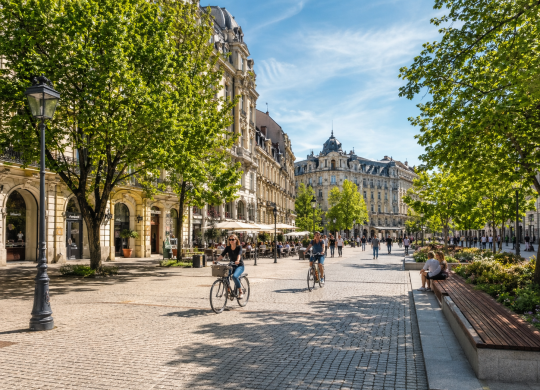
European cities have traditionally dominated global quality-of-life rankings thanks to their safety, well-developed infrastructure, access to healthcare, and high standard of daily living. In 2026, the top-ranked cities are those that combine a strong economy, convenient transportation, a clean environment, and stable conditions for work and life. Learn more about the 5 most livable cities in Europe in 2026, their advantages, cost of living, and key features

Europe remains one of the most attractive regions in the world to live in, but a city’s true livability is determined not by pretty postcards, but by very specific indicators: safety, access to healthcare, rent costs, transportation, air quality, purchasing power, and even climate. In 2026, the top of the European quality of life ranking was dominated by cities that offer not only stable infrastructure but also a strong balance between income, daily expenses, and overall well-being.
According to Numbeo, The Hague ranked first in Europe on the 2026 Quality of Life Index, Luxembourg sixth, Vienna seventh, and Ghent made the top ten. Malaga ranked lower but maintains a strong position thanks to its mild climate, good transport links, and relatively moderate cost of living.
Earlier we told you that the EU has approved the first ever visa policy strategy.
Are you planning to move, work or stay in the EU for a long time and don't know where to start?
To avoid getting lost in the changes to visa and migration policy, use the immigration guide from Visit World. It contains up-to-date information on obtaining a residence permit and citizenship in different countries, step-by-step instructions, requirements for applicants, a list of documents, deadlines and costs. The guide will be sent to your email in PDF format in just a few minutes and will help you plan your legal move without unnecessary stress.

The Hague, Netherlands
In 2026, The Hague ranks first in Numbeo’s European and global quality of life rankings with a score of 230.1. The city has a very strong balance of key indicators: purchasing power here is 153.3, the safety index is 80.0, healthcare is 84.0, and climate is 90.6. This is precisely why The Hague is consistently named one of the most comfortable places to live in Europe.
One of the city’s main advantages is its international environment. The Hague is the political center of the Netherlands and an important hub for international organizations, and about 58% of its approximately 560,000 residents have an immigrant background. For foreigners, this is a major plus: the city is better adapted to expat life, it’s easier to integrate here, and English is widely used in everyday life.
The cost of living in The Hague is high, but it matches the city’s level of comfort. According to Numbeo estimates, a single person needs about 1,051 euros per month excluding rent, and the cost-of-living index is 72.3. Housing accounts for the largest financial burden, so the city is best suited for those planning long-term residence and having a stable income.
Daily comfort in The Hague is enhanced by well-organized public transportation, the city’s compact layout, proximity to the sea, and low pollution levels. In Numbeo’s ranking, the pollution index here is only 17.6, and the traffic congestion index is 20.1—a very good result for a major European city.
All of this makes The Hague a convenient option not only for work but also for a peaceful everyday life.
Learn more about the top 5 cities in the Netherlands with the best infrastructure and logistics for living in 2026 by following the link.

Luxembourg, Luxembourg
In 2026, Luxembourg ranks among the most livable cities in Europe thanks to a very strong combination of safety, income, and the quality of urban services. According to Numbeo, the city has a Quality of Life Index of 211.5, a purchasing power index of 161.4, a safety index of 71.8, and a pollution index that remains low at 21.6. For a European capital, this is a very strong set of indicators, especially when you also consider the short average commute time.
One of the main reasons for Luxembourg’s popularity is income levels. According to STATEC, the average annual gross salary for full-time employment in industry and the service sector in 2023 was €75,346, and in the service sector—€77,279. This explains why, even with high prices, the city maintains very high purchasing power and attracts international professionals. The country is distinguished by a high quality of life, a safe environment, and attractive salaries for skilled workers.
At the same time, Luxembourg remains one of the most expensive cities in Europe. In Numbeo’s global ranking of the cost of living in 2026, the city has a Cost of Living Index of 80.6, a Rent Index of 54.8, and ranks 33rd among cities worldwide. According to the platform’s estimates, a single person needs about 1,100 euros per month excluding rent, so the main financial burden here, as in many comfortable European cities, falls on housing.
A distinct advantage of Luxembourg is its transportation. Since March 1, 2020, all public transportation in the country has been free: this applies to buses, trams, and second-class trains within the national territory. For residents, this is not just a nice bonus but a real daily savings, especially given the generally high cost of living. Added to this is a very low commute time index—25.9—which makes the city convenient for work and daily travel.
Another strength of the city is its international character. The proportion of foreigners in the country’s population has been growing for decades and reached 47.4% as of 2020. For the capital, this means a highly multicultural environment, wider use of foreign languages, and a higher level of adaptation for expats than in many other European cities.
In the previous article, we provided information on the most expensive cities in the world to live in in 2026 according to Numbeo.

Vienna, Austria
Vienna has remained one of Europe’s leading benchmarks for quality of life for many years.
In the 2026 Numbeo ranking, the city ranks 7th in the world with a score of 209.7 and also has very strong related indices: purchasing power – 135.6, safety – 74.3, healthcare – 81.5, climate – 82.6. In addition, Vienna continues to hold strong positions in global livability rankings: in the 2024 Mercer study, the city ranked second in the world, and in the 2025 EIU index, it also ranked second after Copenhagen.
One of the key reasons for this stability is the city’s very strong infrastructure. Vienna is known for its high-quality healthcare, well-designed public transportation, numerous green spaces, and an overall very predictable urban environment. For residents, this means not only a high level of services but also comfort in everyday life: the city is well-suited for families, students, and professionals relocating for the long term.
In terms of cost of living, Vienna remains expensive, but not as much as some other top European capitals. According to Numbeo, a single person needs about €1,067.70 per month excluding rent. This makes the city quite expensive for daily living, but the costs are partially offset by a strong labor market and generally high incomes in Austria. The average annual net income for workers is €31,730, and the median is €27,146.
Transportation deserves special mention, as it is one of the city’s strongest assets. As of January 1, 2026, a digital annual pass in Vienna costs €461, and a standard one costs €467, which remains a relatively affordable price for such a large European city. It is the combination of affordable transportation, low pollution levels, high-quality healthcare, and stable urban infrastructure that makes Vienna one of the most comfortable places to live in Europe.
In our previous article, we discussed options for legally moving to Austria, types of visas, and required documents.

Ghent, Belgium
In 2026, Ghent ranks among the top ten most livable cities in the world. In the Numbeo ranking, it holds 9th place with a score of 208.7, and also boasts strong indices for safety (76.2), healthcare (83.0), purchasing power (127.1), and climate (88.7). For a city that is not a capital, this is a very high result.
One of Ghent’s main advantages is the combination of a comfortable urban environment and a more relaxed pace of life than in major capitals. It is an important student and international hub in Flanders: over 75,000 students study in the city, and the foreign population accounts for about 15%.
That is why Ghent is often considered a convenient city for young professionals, students, and expats.
In terms of cost of living, Ghent is not cheap, but it appears more balanced than some of the top cities in Western Europe. According to Numbeo, a single person needs about €988 per month excluding rent, and the cost-of-living index is around 73. At the same time, the housing-to-income ratio here is 6.5, which is a good indicator for a city with such a high quality of life.
Another major plus is everyday convenience. The commute time index in Ghent is 25.2, and pollution levels remain relatively low. Combined with the city’s compact size, cycling infrastructure, and strong municipal services, this makes Ghent one of the most comfortable places to live in Belgium.
In the previous article, we have discussed in detail the advantages and disadvantages of moving to Brussels.

Malaga, Spain
In 2026, Malaga does not rank among the absolute top European cities for quality of life, but it remains one of the most comfortable options in Southern Europe. According to Numbeo, the city has a Quality of Life Index of 180.4, a climate index of 97.0, a safety index of 68.8, a healthcare index of 71.0, and a commute time of just 25.2 minutes. Within Spain, Málaga ranks among the top three cities for quality of life, following Valencia and Madrid.
The city’s main advantages are its climate and overall pace of life. Málaga has about 300 sunny days a year and only about 50 days with precipitation, so the city remains comfortable to live in practically all year round. This is one of the factors that consistently makes Málaga attractive to expats, remote workers, and retirees.
In terms of cost of living, Málaga is significantly more affordable than many cities in Western Europe. A single person needs about 724 euros per month excluding rent, and the cost-of-living index is 52.4. At the same time, the housing-to-income ratio is 11.1, so the main financial challenge for moving remains renting or buying property.
Another major advantage is transportation accessibility. Málaga-Costa del Sol Airport served 26.8 million passengers in 2025, 22.3 million of whom were international travelers. This is a very strong figure for the city, indicating good connections with other European countries and convenience for those who frequently travel or work across multiple countries.

Planning to move or legalise your status? Use our proven guide!
To live legally in another country, expats need to obtain a residence permit, which may eventually entitle them to citizenship. The procedures, requirements and deadlines vary depending on the country and the reason for moving.
You can find up-to-date and structured information on obtaining a residence permit or citizenship in any country in the immigration guide from Visit World. In PDF format, you will receive step-by-step instructions, a list of documents, costs and processing times, applicant requirements, rules for filling out forms, practical advice and status benefits — all delivered to your email in just a few minutes.
If you are considering moving or staying abroad for a long time, purchase the immigration guide from Visit World and prepare in advance!
We remind you! Electronic travel authorisations, extended visa-free travel, digital arrival cards instead of paper forms — in 2026, border crossing rules in many countries will change again. Travel will not become more difficult, but it will require more advance preparation. Read about the new travel rules in 2026 at the link.
Products from Visit World for a comfortable trip:
Travel guide for 200 countries;
Legal advice from a local specialist on visa and migration issues;
Travel insurance around the world (please select the country of interest and citizenship to receive services);
Medical insurance all over the world.
We monitor the accuracy and relevance of our information, so if you notice any errors or inconsistencies, please contact our hotline.
Recommended articles
3 min
Popular
Najbogatsze i najbiedniejsze kraje Europy w 2026 roku: nowe dane Eurostatu
Eurostat opublikował nowe dane na temat standardów życia w Europie, a różnice między krajami są znaczące. W niektórych krajach dochody są ponad dwukrotnie wyższe od średniej unijnej, podczas gdy w innych ledwo osiągają połowę tego poziomu. Sprawdź, które kraje zajęły czołowe miejsca w rankingu, a które pozostają na końcu
11 kwi. 2026
More details3 min
Expats
Najlepsze kraje dla cyfrowych nomadów w 2026 roku: Ranking ekspertów
Cyfrowi nomadzi coraz częściej wybierają kraje z przystępnymi kosztami życia, szybkim internetem i specjalnymi wizami do pracy zdalnej. W 2026 roku eksperci zidentyfikowali najlepsze destynacje oferujące najlepsze warunki dla profesjonalistów pracujących zdalnie. Dowiedz się więcej, które kraje znalazły się na liście i co sprawia, że są atrakcyjne dla cyfrowych nomadów
15 kwi. 2026
More details3 min
Expats
Eurostat opublikował dane na temat naturalizacji cudzoziemców w krajach UE na rok 2024—liczba nowych obywateli osiągnęła 1,2 miliona, a liderzy pod względem zarówno absolutnych, jak i względnych liczb znacznie się różnią. Czas potrzebny na uzyskanie paszportu waha się od 14 miesięcy na Malcie do 10 lat we Włoszech i Hiszpanii. Dowiedz się więcej o wskaźnikach naturalizacji w krajach UE, narodowościach najczęściej uzyskujących europejskie paszporty oraz wymaganiach dotyczących naturalizacji w poszczególnych państwach członkowskich UE
20 kwi. 2026
More details1 min
Expats
Gdzie ludzie oszczędzają najwięcej w 2026 roku: Globalny ranking oszczędności według kraju
Stawki oszczędności na całym świecie znacznie różnią się w zależności od kraju i warunków ekonomicznych. Dowiedz się, gdzie ludzie oszczędzają najwięcej, które kraje mają ujemne stawki i co to oznacza dla stabilności finansowej
21 kwi. 2026
More detailsAll materials and articles are owned by VisitWorld.Today and are protected by international intellectual property regulations. When using materials, approval from VisitWorld.Today is required.