

The EU has approved its first ever visa policy strategy: what will change for travel, work and migration?
Table of contents
- What does the first EU visa policy strategy mean?
- Longer and more flexible visas for ‘reliable’ travellers
- Exceptions to the 90/180 rule: who are they considering?
- New criteria for visa-free travel with third countries
- Visas as a security and foreign policy tool
- Attracting talented workers and entrepreneurs
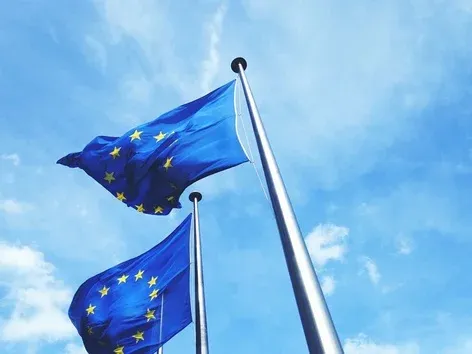
The European Union has systematically reviewed its approach to visa policy for the first time, laying down new rules for travel, work and legal migration. The decision may affect both short-term visas and long-term plans of foreigners who see their future in Europe. Learn more about the key changes in the EU's first visa policy strategy and their possible consequences

For the first time, the European Union has formed a unified vision of how visa policy should work in the coming years. It is a comprehensive approach that combines mobility, security and migration management.
What exactly is included in the new strategy, who will be affected by it and when to expect real changes — we will tell you more in this article.
Are you planning to move, work or stay in the EU for a long time and don't know where to start?
To avoid getting lost in the changes to visa and migration policy, use the immigration guide from Visit World. It contains up-to-date information on obtaining a residence permit and citizenship in different countries, step-by-step instructions, requirements for applicants, a list of documents, deadlines and costs. The guide will be sent to your email in PDF format in just a few minutes and will help you plan your legal move without unnecessary stress.

What does the first EU visa policy strategy mean?
The decision was taken at European Union level and for the first time establishes a long-term framework for the entire visa system. Previously, the rules existed in the form of separate regulations, directives and codes, but were not consolidated into a single strategic framework.
The new strategy aims to make visa policy more predictable, coordinated between member states and more responsive to economic, security and foreign policy challenges.
In a broader context, the strategy is linked to the renewal of approaches to migration and asylum management. The EU is focusing on digital processes, from visas to residence permits, to speed up decision-making and strengthen enforcement.
Inspections and audits are also expected to play a more active role, especially in the area of legal employment of foreigners.
Longer and more flexible visas for ‘reliable’ travellers
One of the key areas has been the expansion of opportunities for multiple-entry visas. The focus is on individuals with a proven travel history, stable business or professional ties, and low risk of violations.
In the long term, this means the possibility of obtaining visas with a longer validity period than is currently available, which is particularly important for business, international projects, and regular travel to the EU.
Exceptions to the 90/180 rule: who are they considering?
The strategy involves revising the strict rule of staying in the Schengen area for no more than 90 days within a 180-day period. The EU is exploring the possibility of special exceptions for certain categories of people whose activities are cross-border or temporary in nature.
This applies in particular to artists, athletes, experts and participants in international projects for whom the current time restrictions create practical difficulties.
New criteria for visa-free travel with third countries
Another important area is the updating of approaches to granting or reviewing visa-free travel.
The EU plans to introduce a more comprehensive assessment system that will take into account migration indicators as well as security issues, cooperation in the field of migrant return and overall stability.
These criteria are expected to be agreed at EU level in the coming years and their practical application will become an instrument of political and diplomatic influence.
Visas as a security and foreign policy tool
The strategy explicitly provides for the possibility of using visa restrictions in response to actions by third countries that may
threaten the security of the EU. This may include suspending, complicating or restricting the issuance of visas in response to hostile or unfriendly steps.
This approach strengthens the role of visa policy as a migration and geopolitical tool.
Attracting talented workers and entrepreneurs
In parallel with its visa policy strategy, the EU has outlined a direction for attracting talent — researchers, STEM specialists, start-up founders and innovative entrepreneurs. Member States are recommended to simplify and digitise procedures, reducing the time taken to process applications.
At the same time, this move is accompanied by tighter controls: employers, universities and organisations recruiting foreigners will be subject to more thorough checks and constant monitoring.
Some of the decisions have the potential to take effect as early as 2026, but a significant number of elements are tied to long-term projects and pilot programmes. Real changes for travellers, expats, and employers will take place gradually and will largely depend on implementation at the level of individual EU countries.
Planning to move or legalise your status in the EU? Use our proven guide!
To live legally in another country, expats need to obtain a residence permit, which may eventually entitle them to citizenship. The procedures, requirements and deadlines vary depending on the country and the reason for moving.
You can find up-to-date and structured information on obtaining a residence permit or citizenship in any country in the immigration guide from Visit World. In PDF format, you will receive step-by-step instructions, a list of documents, costs and processing times, applicant requirements, rules for filling out forms, practical advice and status benefits — all delivered to your email in just a few minutes.
If you are considering moving or staying abroad for a long time, purchase the immigration guide from Visit World and prepare in advance!
Reminder! Electronic travel authorisations, extended visa-free travel, digital arrival cards instead of paper forms — in 2026, border crossing rules in many countries will change again. Travel will not become more difficult, but it will require more advance preparation. Read about the new travel rules in 2026 at the link.
Products from Visit World for a comfortable trip:
Travel guide for 200 countries;
Legal advice from a local specialist on visa and migration issues;
Travel insurance around the world (please select the country of interest and citizenship to receive services);
Medical insurance all over the world.
We monitor the accuracy and relevance of our information, so if you notice any errors or inconsistencies, please contact our hotline.
Frequantly
asked questions
What is the EU's first visa policy strategy?
When will the new EU visa strategy come into effect?
Will the 90/180 Schengen visa rules change?
Recommended articles
1 min
Employment
H-1B Visa 2027: Registration Dates, New Selection Rules, and Changes in US Fees
The H-1B visa remains one of the most popular paths to legal employment in the U.S. Learn about the H-1B visa filing for FY 2027: key dates, weighted lottery system, possible $100,000 cap, and tips for employers and applicants
03 Feb. 2026
More details3 min
Events
Winter Olympics in Milan 2026: a new format for traveling in Europe
The 2026 Winter Olympics in Milan will be the first Games of this magnitude to be held in several Italian cities. For travelers, this means not only sporting events, but also a new format for traveling between different regions of the country. Find out more about how attending the Winter Olympics in Milan can completely change the way you travel
08 Feb. 2026
More details2 min
Travels
Hidden Portugal: 5 Secret Places for a Quiet and Authentic Vacation
Portugal is not just about Lisbon and the popular Algarve resorts, but also dozens of authentic places where locals go to relax, avoiding the tourist rush. Learn about five little-known destinations in Portugal that locals love
07 Feb. 2026
More details2 min
Investment
Georgia raises minimum threshold for real estate investor visa to $150,000
The Georgian government has announced an increase in the requirements for foreigners seeking residence permits through real estate investments. The new minimum threshold of $150,000 will come into effect in the spring of 2026. Learn more about the reasons for these changes and their possible implications for investors
04 Feb. 2026
More detailsAll materials and articles are owned by VisitWorld.Today and are protected by international intellectual property regulations. When using materials, approval from VisitWorld.Today is required.