

Real Estate Market in Bulgaria 2026: Prices, Demand, and Investment Opportunities
Table of contents
- Why are investors choosing Bulgaria in 2026?
- The State of the Bulgarian Real Estate Market in 2026: From Frenzy to Selectivity
- What are people buying most often in Bulgaria?
- Who drives demand in the Bulgarian real estate market?
- Regional differences: where real estate is most actively purchased in Bulgaria
- Real estate prices in Bulgaria in 2026
- Expenses and Taxes: What to Consider Before Buying
- Market Forecast for 2026–2027: What Investors Can Expect
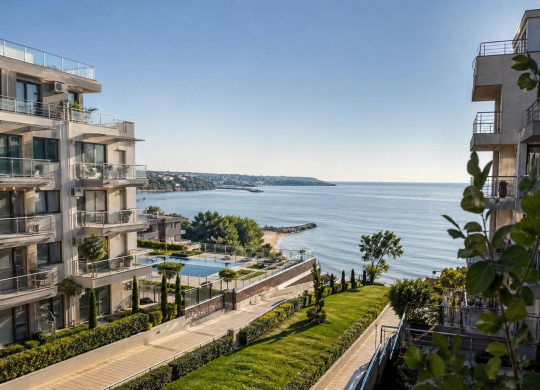
The European real estate market no longer appears uniformly stable: in some countries, prices have already peaked, while in others, new demand is just beginning to emerge. Against this backdrop, Bulgaria is gradually coming into focus for investors as an affordable and relatively straightforward investment destination. Learn more about prices, demand, and real investment opportunities in Bulgaria in 2026

Just a few years ago, the European real estate market was viewed as relatively homogeneous: steady growth, predictable regulations, and clear investment logic. But in 2025–2026, the situation changed significantly—some countries faced overheating and a slowdown in prices, while others began to gain popularity among buyers.
For investors, this means one thing: there are no longer any one-size-fits-all solutions. Conditions vary not only between countries but also between cities, and the choice of a property increasingly depends not on “average prices” but on specific location, liquidity, and income potential.
Against this backdrop, Bulgaria is attracting particular attention. The country combines a relatively low entry threshold, active domestic demand, and clear purchasing rules, while simultaneously transitioning into a more mature phase of market development.
In the previous article, we reported on the most expensive cities in the world to live in in 2026, according to Numbeo.
Are you planning to buy real estate abroad? Before concluding a deal, it is important to consider not only the price per square meter, but also tax liabilities, restrictions for foreigners, title checks, and additional costs. Visit World's real estate lawyers will help you analyze the property, assess legal risks, and accompany you at all stages of the transaction: from the initial consultation to the signing of the contract. Get professional support and confidence in every step.

Why are investors choosing Bulgaria in 2026?
Bulgaria has long been on the list of the most affordable real estate markets in the European Union, but in 2026, its appeal is not solely due to prices. The country offers a combination of several factors that are particularly important to investors right now: clear purchasing rules, stable demand, and the ability to put a property up for rent relatively quickly.
Unlike the more “overheated” markets of Western Europe, Bulgaria has long remained in the affordable housing segment. However, recent years have shown that this market is gradually maturing: prices have risen, demand has picked up, and competition for quality properties has intensified.
The key reason for the interest is the low entry barrier compared to other EU countries. Even in major cities, housing budgets remain significantly lower than in Poland, the Czech Republic, or the Baltic states, making Bulgaria attractive to investors with limited initial capital.
Another important factor is active domestic demand, which supports the market even during periods of slowdown. A significant portion of transactions is carried out by local residents through mortgages, and this is precisely what creates the underlying stability and liquidity of properties.
It is also worth considering the flexibility of investment strategies. In Bulgaria, you can operate in two directions simultaneously:
1. Long-term rentals in major cities;
2. Short-term rentals in resort regions.
This allows you to tailor the investment to your budget, risk tolerance, and expected returns, which is particularly important in the context of an unstable European market.
At the same time, it is important to understand that Bulgaria is no longer an ultra-cheap market. It is transitioning into a phase where the key factors are not low prices, but the right choice of property, location, and strategy. That is why investors are increasingly evaluating not just the cost per square meter, but the balance of price, liquidity, and potential income.
In our previous article, we discussed what to look for before buying an apartment in Poland and how to avoid common mistakes.
The State of the Bulgarian Real Estate Market in 2026: From Frenzy to Selectivity
As of 2026, the Bulgarian real estate market remains active, but without the frenzy characteristic of the previous period. Following a sharp rise in prices in 2025, the pace has slowed significantly—the market is entering a stabilization phase.
In fact, a mixed model has emerged: demand remains, but buyer behavior has changed. Whereas decisions were once made quickly, deals now take longer—investors compare properties, negotiate, and carefully calculate the total cost.
High-quality properties in key cities—Sofia, Varna, Burgas, and Plovdiv—continue to sell relatively quickly. At the same time, weaker offerings can remain on the market for much longer. This is a clear signal: the market no longer “forgives” mistakes in pricing or quality.
Another factor contributing to stability is mortgage lending. Despite the Europe-wide rise in interest rates in recent years, rates in Bulgaria remain relatively affordable, and lending volumes are growing. This supports domestic demand and prevents the market from slumping sharply.
We previously reported that the Greek real estate market is shifting toward compact housing, which is showing faster growth in prices and demand.
What are people buying most often in Bulgaria?
Demand in the Bulgarian real estate market in 2026 has become more pragmatic. Buyers are no longer focused solely on a good price—liquidity, maintenance costs, and the ability to quickly put the property to use (for living or renting) play a key role.
Main segment: new construction
The highest demand is concentrated in the segment of apartments in modern residential complexes. It is precisely these properties that offer more predictable returns and lower risks in the long term.
Buyers are increasingly evaluating not only the cost per square meter but also the property’s features: energy efficiency, parking availability, the complex’s infrastructure, and future maintenance costs. This directly impacts liquidity and the ability to rent out the property.
Popular formats: compact apartments
In major cities, small apartments sell consistently—this segment forms the backbone of the market. These are 1–2-bedroom units that easily adapt to various scenarios: owner-occupancy or rental. Their popularity is simple to explain: lower entry costs, faster return on investment, and stable demand from tenants.
Houses and the secondary market
Houses and townhouses remain a niche product. They are purchased primarily for living—as an alternative to city apartments, especially in the suburbs or resort areas. This segment does not generate mass demand.
Resale housing is also gradually losing ground. It sells if it has a prime location or an attractive price. In other cases, buyers prefer new-builds, even if they are more expensive, as they allow them to avoid additional costs for renovation and modernization.
In our previous article, we reported that Spain has been named the best country for real estate investment in Europe for the first time.
Who drives demand in the Bulgarian real estate market?
By 2026, demand in the Bulgarian real estate market had become more balanced. It is primarily driven by local buyers, while the role of foreign investors remains important but is no longer decisive.
Domestic demand ensures market stability: a significant portion of transactions is concluded by residents of the country who are purchasing housing for their own use or to improve their living conditions. Active use of mortgages maintains steady momentum even during periods of slowdown.
Foreign buyers are also present, but their behavior has changed. They have become more cautious, analyze properties more carefully, and focus on real indicators of liquidity and profitability rather than rapid price growth.
The highest concentration of demand is observed in:
- The capital and major cities with business activity
- Resort regions with potential for seasonal rentals
- Properties ready for occupancy or quick launch
We previously reported that housing prices in the EU have risen by 65% over 10 years.
Regional differences: where real estate is most actively purchased in Bulgaria
The Bulgarian real estate market varies significantly depending on the city and type of location. The difference lies not only in prices but also in the logic of demand: in some regions, residential needs dominate, while in others, investment demand prevails.
Sofia remains the most liquid and most expensive market in the country. This is where the main business demand is concentrated, along with the fiercest competition for high-quality properties and the fastest real estate turnover. Apartments in the capital are more often purchased for long-term residency or stable rental income.
Plovdiv serves as a more affordable alternative. The city offers a lower entry threshold while maintaining developed infrastructure and stable domestic demand, making it attractive to buyers with a moderate budget.
Varna and Burgas combine two types of demand—urban and resort. This creates additional opportunities for investors, especially in the short-term rental segment. At the same time, it is important to consider seasonality, which affects profitability.
A distinct trend in recent years has been a shift in interest from central districts to the suburbs, particularly in Sofia. Buyers are increasingly seeking a balance between price, square footage, parking availability, and overall housing quality, even if this means being farther from the city center.
To summarize, the regional demand structure looks as follows:
- Sofia – maximum liquidity and high budget
- Plovdiv – a more affordable option with stable demand
- Varna and Burgas – a combination of permanent residence and seasonal rentals
- Suburbs – growing demand due to a better balance of price and comfort
In our previous article, we provided a ranking of the most expensive European capitals for buying a home in 2026.
Real estate prices in Bulgaria in 2026
By 2026, it will be difficult to call the Bulgarian market “cheap” in the traditional sense. Following the rapid growth of previous years, prices have risen significantly, especially in major cities. At the same time, the country remains more affordable than most EU markets, though with clear segmentation by housing type and location.
The highest prices are traditionally recorded in Sofia. In new developments, the cost per square meter is already reaching levels close to those in other Eastern European countries. The suburbs of the capital remain more affordable but are also showing gradual growth.
In Plovdiv, Varna, and Burgas, prices are lower, though the gap is narrowing—high-quality properties in desirable neighborhoods are rapidly becoming more expensive. Resort areas, on the other hand, offer a wider range of prices: from budget apartments to more expensive options by the sea.
To summarize the current situation, the market looks like this:
1. Sofia (new construction): approx. 1,800–2,800 euros per m², budget 120–250 thousand euros
2. Sofia suburbs: €1,400–2,000 per m², budget €90,000–180,000
3. Plovdiv: €1,200–1,800 per m², budget €70,000–140,000
4. Varna: €1,300–2,000 per m², budget €80,000–160,000
5. Burgas: €1,200–1,900 per m², budget €75,000–150,000
6. Resort regions: from 800 to 1,500 euros per m², budget 50,000–120,000 euros
It is important to note that these figures are approximate. Even within a single city, price differences can reach 30–50% depending on the neighborhood, construction quality, stage of completion, and infrastructure.
This is precisely why investors are increasingly less likely to focus on the “market average price.”
Instead, the key criterion is the balance between cost, liquidity, and potential income from the property.
To learn more about the best countries in Europe to live and work in 2026, please follow the link.
Expenses and Taxes: What to Consider Before Buying
One of the most common mistakes buyers make is focusing solely on the property’s price. In reality, the final transaction amount in Bulgaria is determined by taking into account additional expenses that can significantly impact the budget.
One-time expenses upon purchase
In addition to the property price, the buyer pays associated expenses during the transaction process. These depend on the property’s value and the region, but on average, they make up a significant portion of the budget.
These include:
- Real estate purchase tax
- Notary fees
- Registration fees
These payments are mandatory and are paid at the time the transaction is finalized.
Annual maintenance costs
After purchasing real estate, the owner incurs regular maintenance costs. These vary depending on the type of housing and the complex, but they should not be ignored.
Main expenses:
- Local taxes
- Utility bills
- Complex maintenance fees (especially in new developments)
In modern residential complexes, these costs may be higher, but they also provide better infrastructure and comfort.
Additional costs that are often overlooked
This is especially relevant for new developments—actual costs do not end at the time of purchase. For the property to become operational, several additional expense categories must be considered:
- Furniture and appliances
- Repairs or finishing touches
- Preparing the property for rent
It is these expenses that often come as a surprise and affect the actual return on investment.
In our previous article, we told you where in Europe it will be the cheapest to buy real estate in 2026.
Market Forecast for 2026–2027: What Investors Can Expect
Over the next 12–24 months, the Bulgarian real estate market is unlikely to return to the sharp growth seen previously. The base scenario is moderate price growth or stabilization without sharp fluctuations.
The key shift is that the market is finally entering a more mature phase. Demand remains, but is becoming selective: competition is growing not due to the number of buyers, but due to the quality of properties.
Several factors will influence further development:
- Accessibility of mortgage lending
- Pace of new construction
- Level of household income
- Overall economic stability
As practice shows, the best results are achieved by properties with the right location and clear investment logic. For example, buyers are increasingly opting out of “scenic” options in favor of more practical properties with better liquidity and stable demand.
Political and economic changes in the country may play a distinct role in the short term. They will influence investor sentiment and overall market dynamics, but their effect will only become clear over time.
Buying a home in another country is not only an investment but also a serious legal procedure. Mistakes in documents, unaccounted taxes or restrictions for foreigners can lead to financial losses. Consultation with a real estate lawyer from Visit World will help you to safely complete the transaction, check the seller and avoid hidden risks. Contact the experts to make your real estate purchase abroad as transparent and secure as possible.
We remind you! The Cypriot parliament is considering draft laws that could significantly change the conditions for buying real estate for citizens of countries outside the European Union. The initiatives include quantitative limits on properties, geographical bans and transparency requirements for transactions. Read more about the proposed restrictions, foreign purchases statistics and how to prepare for possible changes in the Cyprus real estate market.
Products from Visit World for a comfortable trip:
Travel guide for 200 countries;
Legal advice from a local specialist on visa and migration issues;
Travel insurance around the world (please select the country of interest and citizenship to receive services);
Medical insurance all over the world.
We monitor the accuracy and relevance of our information, so if you notice any errors or inconsistencies, please contact our hotline.
Recommended articles
1 min
Investment
Złota Wiza Nieruchomości w 2025 roku: Gdzie Inwestorzy Osiągnęli Najwyższe Zyski
Planujesz inwestycję w nieruchomości w ramach programu Złotej Wizy? Dowiedz się, które programy stały się najbardziej opłacalne dla inwestorów w 2025 roku. Artykuł porównuje ZEA, Grecję, Turcję, Łotwę i kraje azjatyckie, rzeczywisty zwrot z nieruchomości oraz kluczowe ryzyka, które należy wziąć pod uwagę przed inwestowaniem
14 sty. 2026
More details2 min
Investment
Rynek nieruchomości w Dubaju spada o 38% w 2026 roku: przyczyny, ceny i prognozy
Rynek nieruchomości w Dubaju spada w obliczu konfliktu na Bliskim Wschodzie. Dowiedz się, dlaczego ceny spadają, jak inwestorzy reagują i jakie są prognozy na 2026 rok
26 mar. 2026
More details2 min
Investment
Compact Apartments in Greece Are Rising Faster: A New Real Estate Trend
The Greek real estate market is shifting towards compact housing, which is seeing faster price and demand growth. Find out why small apartments are becoming more attractive to investors and buyers
16 kwi. 2026
More details3 min
Popular
Jak kupić mieszkanie w Polsce w 2026 roku: Ceny, podatki i kluczowe wymagania
Ceny mieszkań w Polsce pozostają wysokie, ale rynek oferuje nowe możliwości dla kupujących — w tym zniżki do 10% i stabilny dochód z wynajmu na poziomie 5–7% rocznie. Proces zakupu wiąże się jednak z wieloma szczegółami: od podatków i weryfikacji dokumentów po wybór miasta i rodzaju nieruchomości. Dowiedz się, na co zwrócić uwagę przed zakupem mieszkania w Polsce i jak unikać powszechnych błędów
30 kwi. 2026
More detailsAll materials and articles are owned by VisitWorld.Today and are protected by international intellectual property regulations. When using materials, approval from VisitWorld.Today is required.