

Europe Day 2026: the history of the celebration, traditions and symbols of the EU’s Day of Unity and Peace
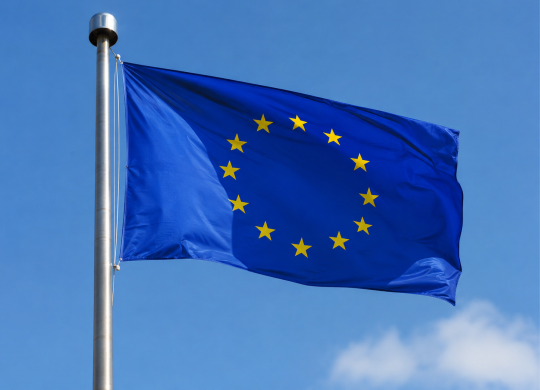
Every year on 9 May, the countries of the European Union celebrate Europe Day — a holiday that symbolises peace, cooperation and unity on the continent following the devastating wars of the 20th century. Find out how Europe Day came about, why it is celebrated on 9 May, and what traditions exist in different European countries

Every year on 9 May, European Union countries celebrate Europe Day – a holiday that symbolises peace, cooperation and unity among European nations. It was on this day in 1950 that Robert Schuman’s declaration was presented, laying the foundations for the creation of the modern EU.
Today, Europe Day is marked by festivals, concerts, cultural events and open days in many European cities. For millions of people, it is not just an official date, but a symbol of shared European values and long-standing cooperation between the countries of the continent.
When planning a trip by car, you should take care not only of the route and accommodation, but also of financial protection on the way. Green Card is an international car insurance that is valid in many countries and helps to avoid significant costs in the event of road incidents. By applying for a policy online through Visit World, you can save time and go on a trip with a greater sense of confidence and peace of mind.

What is Europe Day?
Europe Day is an official holiday of the European Union dedicated to peace, unity and cooperation between European countries. It is celebrated annually on 9 May in most EU member states, as well as in many cities and institutions associated with European culture and politics.
For the European Union, this date holds special significance, as it symbolises the beginning of modern European integration. After the Second World War, the countries of the continent sought a way to avoid new conflicts and build a stable system of cooperation. The idea was to integrate the economies and key industrial sectors of different countries so closely that war between them would become practically impossible.
Today, Europe Day is not merely a political or historical symbol. For many EU residents, it is also a day of cultural festivals, concerts, educational events and open-door events in cities across Europe. In Brussels, Strasbourg and Luxembourg, the institutions of the European Union traditionally hold open days, which are attended by tens of thousands of people every year.
The holiday may be celebrated differently in different countries, but the main idea remains the same – support for peace, democracy, freedom of movement and cooperation between the peoples of Europe.
In the previous article, we talked about the TOP-10 tourist destinations according to Time Out, which are definitely worth visiting in 2026.
Why is Europe Day celebrated on 9 May?
The date of 9 May is linked to one of the most significant events in the history of modern Europe – the Schuman Declaration, which he presented in Paris in 1950. The then French Foreign Minister proposed bringing the coal and steel production of European countries under joint control to make a new war in Europe “not only unthinkable, but practically impossible”.
This initiative was the first step towards the creation of the European Coal and Steel Community – an organisation that would later become the European Union. The project was joined by France, Germany, Italy, Belgium, the Netherlands and Luxembourg.
Europe Day was officially established as a symbolic EU holiday in 1985 during a summit in Milan. Since then, 9 May has come to symbolise peaceful coexistence, cooperation between nations and the gradual unification of Europe following the devastating wars of the 20th century.
Today, the Schuman Declaration is often referred to as the ‘Birthday of the European Union’, and its text is preserved among the EU’s key historical documents.
How was the European Union created?
After the Second World War, European countries sought a way to avoid new conflicts and stabilise the continent’s economy. That is why, in 1951, six states signed a treaty establishing the European Coal and Steel Community – the first step towards the future EU.
Over the years, cooperation between countries became increasingly broad: from the economy and trade to common policies, security and freedom of movement. In 1993, following the entry into force of the Maastricht Treaty, the European Union in its current form was officially established.
Today, the EU remains one of the largest political and economic unions in the world. It comprises 27 countries, and the Union’s population exceeds 440 million people.
Key milestones in the creation of the EU include:
- 1951 — the establishment of the European Coal and Steel Community;
- 1957 — the signing of the Treaties of Rome;
- 1993 — the official establishment of the European Union;
- 1999 — the launch of the euro;
- 2004 — the EU’s largest expansion, with 10 countries joining at once.
The European Union also has a single market, common rules for many sectors of the economy, and one of the largest areas of free movement in the world – the Schengen Area, which is used by hundreds of millions of tourists and European citizens every year.
You can learn more about the TOP 10 little-known destinations for crowd-free travel in 2026 here.
How is Europe Day celebrated in different countries?
In European Union countries, Europe Day is marked with concerts, festivals, exhibitions and public events. In Brussels – the EU’s capital – open days are traditionally held at the European Parliament and other European institutions, attracting thousands of visitors every year.
In France and Germany, street festivals, fairs and cultural events are popular, whilst in Italy concerts and themed exhibitions are often organised. In many cities, central squares are decorated with EU flags, and in the evening historic buildings are illuminated in blue with yellow stars – the symbol of the European Union.
For tourists, Europe Day has also become part of the spring travel season. During this period, various countries host free guided tours, food festivals and open-air cultural events dedicated to European history and traditions.
In the article at the link, we have provided useful tips to help you save money while traveling in Europe in 2026.
The main symbols of the European Union
The European Union has several official symbols that embody unity, peace and cooperation between the countries of the continent. The most famous of these is the EU flag – a blue field with 12 golden stars arranged in a circle. The number of stars is not linked to the number of member states and symbolises harmony and unity.
‘Ode to Joy’ from Ludwig van Beethoven’s Ninth Symphony has become the official anthem of the European Union. It is used during official ceremonies and international EU events.
Another important symbol is the European Union’s motto – “Unity in Diversity”. It emphasises that the countries of Europe have different cultures, languages and traditions, but at the same time cooperate for the sake of shared values and stability on the continent.
For millions of people, the euro has also become a symbol of a united Europe; it is currently used by 20 EU countries. Europe Day on 9 May is officially considered one of the European Union’s main symbolic days.
Interesting facts about Europe Day and the EU
The European Union remains one of the largest political and economic unions in the world, and Europe Day itself is marked each year by hundreds of events across the continent.
Here are a few interesting facts about the EU and the 9 May celebrations:
- The population of the European Union exceeds 440 million people;
- The EU comprises 27 countries;
- The EU flag with 12 stars has been in use since 1985;
- The largest Europe Day celebrations traditionally take place in Brussels;
- Over 20 EU countries use the euro as their official currency;
- The European Union has 24 official languages;
- The Schengen Area allows millions of tourists to travel across Europe without border controls;
- Every year, tens of thousands of tourists visit the EU institutions in Brussels during the open days leading up to Europe Day.
Today, Europe Day remains not only an official date but also a symbol of peaceful coexistence, cultural diversity and cooperation between the countries of the continent.
Traveling by car through several countries requires not only good route planning, but also thoughtful insurance preparation. Having a Green Card reduces financial risks in case of road incidents and simplifies interaction with insurance services abroad. Through Visit World, you can quickly apply for a policy online and focus on your trip, not on the bureaucratic nuances on the road.
We remind you! Every year, tourism experts choose places that deserve the title of modern “wonders of the world” not for their big names, but for their real experiences, unique nature, and cultural value. The 2026 list includes little-known national parks, ancient cities, and remote islands where tourism has not yet spoiled the atmosphere. Read more about the seven destinations you should add to your travel plans now.
Products from Visit World for a comfortable trip:
Travel guide for 200 countries;
Legal advice from a local specialist on visa and migration issues;
Travel insurance around the world (please select the country of interest and citizenship to receive services);
Medical insurance all over the world.
We monitor the accuracy and relevance of our information, so if you notice any errors or inconsistencies, please contact our hotline
Recommended articles
3 min
Events
Met Gala 2026: The Most Striking Looks and Top Trends of the Year's Biggest Fashion Event
The 2026 Met Gala has already taken place in New York, raising record-breaking funds and bringing together dozens of the world’s most famous stars. This year, the event went beyond fashion and turned into a true art manifestation with deep meanings and provocative looks. Learn more about the highlights, trends, and results of the biggest fashion night of the year
05 maj. 2026
More details1 min
Residence permit
Easiest Countries to Get Residency in 2026: Complete Guide
Obtaining a residence permit abroad has become more accessible than ever before. Find out which countries are easiest to obtain a residence permit in 2026, what requirements you need to meet, and which programs to choose
07 maj. 2026
More details3 min
Popular
Happiest Cities in the World in 2026: Where People Live With Less Stress
In 2026, the key factors for a comfortable life were no longer salaries or popularity with tourists, but low stress levels, safety and a good work-life balance. We reveal which cities topped the Happy City Index, why major cities are losing ground, and where people feel happiest today
08 maj. 2026
More details3 min
Popular
Europe’s wealthiest cities and regions in 2026: where incomes and living standards are highest
The economic divide between different parts of Europe continues to widen. Whilst some regions are enjoying record revenues, high wages and a strong influx of investment, others still lag significantly behind in terms of living standards and economic development. We look at which European cities and regions have become the wealthiest in 2026, what lies behind their success, and where the continent’s main financial centres are concentrated today
11 maj. 2026
More detailsAll materials and articles are owned by VisitWorld.Today and are protected by international intellectual property regulations. When using materials, approval from VisitWorld.Today is required.