

Ograniczenia podróży związane z Ebolą 2026: Kraje wprowadzające kontrole wjazdu i co podróżni powinni wiedzieć
Table of contents
- Why are countries tightening control?
- Bahrain temporarily restricts entry
- Canada introduces strict immigration measures
- Jordan tightens rules for arrivals from Central Africa
- Rwanda imposes mandatory quarantine
- Uganda restricts transport links
- UAE suspends issuing new visas
-
New countries impose restrictions due to Ebola
- Bahamas strengthens health controls
- Curacao imposes entry ban on citizens of certain countries
- Kuwait tightens entry rules
- Lebanon imposes restrictions on citizens of the Democratic Republic of Congo and Uganda
- Mauritius imposes quarantine requirements
- Taiwan has restricted entry for certain categories of travelers
- Thailand imposes mandatory screening
- Trinidad and Tobago introduces active monitoring
- Are there risks to Europe?
- What can travelers expect in the near future?
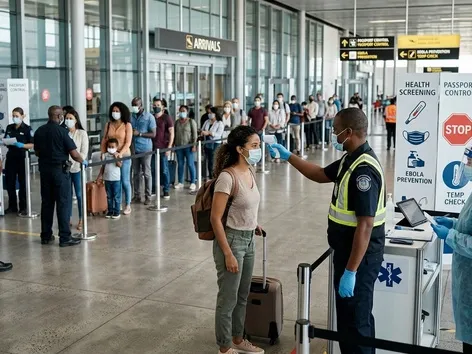
Z powodu nowych wybuchów wirusa Ebola, wiele krajów na całym świecie zaostrzyło kontrole graniczne i wprowadziło tymczasowe ograniczenia wjazdu. Dowiedz się, które kraje zmieniły zasady przekraczania granic, do kogo odnoszą się nowe wymagania i jak przygotować się do podróży międzynarodowej w 2026 roku

As of June 17-18, 2026, the number of countries imposing entry restrictions to prevent the spread of Ebola is increasing. The new rules have affected not only tourists, but also business travelers, students, expats and foreigners planning to move abroad. In many cases, this includes not only increased medical control, but also mandatory quarantine, transit restrictions and temporary suspension of visa issuance.
Although the World Health Organization does not yet recommend a complete cessation of international traffic, individual countries have decided to independently strengthen border controls, quarantine measures and entry requirements for persons who have visited high-risk regions.
Experts note that such measures are temporary in nature and are aimed at curbing the spread of a dangerous infection, which remains one of the most serious viral diseases in the world.
Traveling and moving abroad are always associated with certain risks, especially when it comes to unforeseen medical situations. High-quality health insurance helps to get the necessary assistance in case of illness or accident and protects against significant medical costs. This is especially relevant during the period of increased sanitary control and changes in the rules of international travel. Take out an insurance policy in advance and travel the world with confidence.
Take care of your protection today and choose medical insurance for trips abroad!

Why are countries tightening control?
The reason for the new restrictions was the cases of Ebola in some countries of Central and East Africa, primarily in the Democratic Republic of Congo, Uganda and South Sudan.
In response, the governments of many countries began to introduce additional security measures:
- Restrictions or bans on entry for certain categories of travelers;
- Mandatory quarantine upon arrival;
- Enhanced medical control at airports;
- Suspension of the issuance of certain types of visas;
- Temporary suspension of transport connections with certain regions.
For international travel, this means checking your destination country’s current requirements carefully before purchasing your tickets.
Visit World services for tourists, migrants, and expats: Insurance | Guides | Legal advice
Bahrain temporarily restricts entry
The Bahraini government has banned entry to people of any nationality who have arrived directly from South Sudan, the Democratic Republic of Congo or Uganda until June 19, 2026.
The restrictions also apply to travelers who have visited the countries in the last 30 days before arrival. The only exception is Bahraini citizens, who can return home but must undergo quarantine procedures.
Cheap flights can hide additional transfer costs and hours of travel to the city. Read about the airports that are furthest from the declared destinations here.
Canada introduces strict immigration measures
Canada’s decisions were among the strictest.
Effective May 27, 2026, the country has suspended a number of immigration documents for individuals associated with high-risk regions for 90 days. These include already issued temporary visas, electronic travel authorizations (eTAs), and certain permanent residence documents.
In addition, until the end of August 2026, all travelers who have been to the affected areas in the previous 21 days and do not have symptoms of the disease must undergo mandatory quarantine.
If symptoms appear, the person may be referred to a medical facility for further examination and isolation.
At the same time, restrictions do not apply to Canadian citizens and permanent residents returning home, although they are also required to comply with sanitary requirements.
The summer tourist season in Europe begins against the backdrop of large-scale strikes by aviation workers. Read the link to find out where disruptions are expected and how passengers can prepare for their trip.
Jordan tightens rules for arrivals from Central Africa
Jordan has restricted entry for travelers arriving directly from the Democratic Republic of Congo and Uganda until June 19, 2026.
Jordanian citizens can return home, but must undergo a 21-day quarantine upon arrival. This can be done in designated facilities or at home under the supervision of health authorities.
Rwanda imposes mandatory quarantine
Rwandan authorities have suspended entry for foreigners who have visited or transited through the Democratic Republic of Congo in the past 30 days.
Rwandan citizens and permanent residents are exempt, but they must undergo mandatory quarantine upon return.
Uganda restricts transport links
Uganda has taken additional measures to control the situation on its border with the Democratic Republic of the Congo until at least June 20, 2026.
The country has temporarily suspended air travel between states, and has also restricted cross-border bus, ferry and other public transport.
At the same time, health checks at border checkpoints have been tightened, and travel between countries is only allowed through designated official crossings and if there is a justified need.
UAE suspends issuing new visas
From June 6, 2026, the United Arab Emirates has suspended issuing new visas for citizens of the Democratic Republic of Congo, Uganda and South Sudan.
In addition, entry is restricted for persons arriving from these countries, even via transit routes.
Only those travelers who have been outside the specified countries for at least 21 days prior to arrival will be able to enter the UAE.
New countries impose restrictions due to Ebola
As of June 17, 2026, the list of countries that have tightened entry rules due to the risks of the spread of Ebola has expanded significantly. New restrictions are being introduced by countries in the Caribbean, the Middle East, Africa and Asia.
Bahamas strengthens health controls
The Bahamas has introduced strengthened health controls for travelers who have been in the Democratic Republic of the Congo, Uganda or South Sudan in the past 21-30 days. Upon arrival, passengers may be referred for additional medical examination, isolation or quarantine depending on the results of the screening.
Curacao imposes entry ban on citizens of certain countries
Curacao has banned entry to citizens of Angola, the Democratic Republic of the Congo, Rwanda, South Sudan, Tanzania and Uganda. In addition, new visa applications from citizens of these countries are temporarily not being processed.
Kuwait tightens entry rules
Kuwait has banned entry for most travelers arriving from or having been in the Democratic Republic of Congo, Uganda or South Sudan in the past 21 days. The restrictions also apply to transit routes.
Lebanon imposes restrictions on citizens of the Democratic Republic of Congo and Uganda
Lebanon has temporarily restricted entry for citizens of the Democratic Republic of Congo and Uganda.
Mauritius imposes quarantine requirements
Mauritius has banned entry for tourists and business travelers who have recently visited high-risk countries. A mandatory 21-day quarantine is in place for certain categories of individuals.
Taiwan has restricted entry for certain categories of travelers
Taiwan has restricted entry for citizens and residents of the Democratic Republic of Congo and Uganda. However, some exceptions are provided for students, family members and humanitarian cases.
Thailand imposes mandatory screening
Thailand has stepped up screening for passengers arriving from the Democratic Republic of Congo and Uganda. Travelers are being screened daily or quarantined for up to 21 days.
Trinidad and Tobago introduces active monitoring
Trinidad and Tobago has introduced a 21-day active monitoring protocol for arrivals from high-risk countries. Passengers may be referred for isolation or quarantine if necessary.
Are there risks to Europe?
The European Centre for Disease Prevention and Control has assessed that Ebola could enter Europe in the coming weeks via international air travel.
Experts have identified the following countries as being at the highest risk of potential infection:
- Belgium
- France
- Turkey
- United Arab Emirates
Experts are urging countries to strengthen epidemiological control at airports and be prepared to respond promptly if infected passengers are identified.
What can travelers expect in the near future?
Enhanced health checks are already in place at many international airports in the Middle East and Africa. Additional medical controls are also being implemented at land border crossings.
Therefore, passengers should allow extra time for border formalities and be prepared for:
- temperature screening;
- medical interviews;
- travel route checks;
- self-isolation or quarantine requirements;
- possible changes in flight schedules.
International mobility experts recommend regularly checking entry regulations before traveling, as restrictions may change depending on the epidemiological situation.
The situation surrounding the Ebola outbreaks in 2026 demonstrates how quickly international travel regulations can change. While most restrictions are still spotty, the number of countries tightening border controls due to Ebola continues to grow. This indicates a gradual expansion of global health measures and the possibility of further tightening of international travel regulations.
Particular attention should be paid to quarantine requirements, transit through third countries, and the availability of health insurance, which can be an important protection in case of unforeseen circumstances abroad.
New restrictions, quarantine requirements, and enhanced medical checks once again remind us how important it is to be prepared for unforeseen circumstances while traveling. In many countries around the world, medical care for foreigners can cost thousands of dollars, and emergency hospitalization without an insurance policy often becomes a serious financial challenge.
Health insurance provides access to necessary care, covers a significant part of the costs of treatment, and allows you to receive support even in difficult situations abroad. This is especially important for expats, students, digital nomads, and anyone traveling for a long period. Having a policy gives you confidence that in the event of force majeure, you will not be left alone with the problem.
Get health insurance before your trip and travel the world with the maximum level of protection!
Reminder! International rankings of healthcare systems take into account dozens of indicators - from life expectancy to the cost of insurance and the availability of medical technologies. The positions of countries in different rankings vary, and the prices of treatment and conditions for foreigners can significantly influence the choice of destination. We have already told about the best countries for treatment in 2026, the cost of medical services and the possibilities of obtaining residency.
Photo - generated by Gemini
Products from Visit World for a comfortable trip:
Travel guide for 200 countries;
Legal advice from a local specialist on visa and migration issues;
Travel insurance around the world (please select the country of interest and citizenship to receive services);
Medical insurance all over the world.
We monitor the accuracy and relevance of our information, so if you notice any errors or inconsistencies, please contact our hotline.
Frequantly
asked questions
Czy ograniczenia podróży związane z Ebolą mogą wpłynąć na loty tranzytowe przez kraje trzecie?
Jak weryfikowana jest historia podróży podczas kontroli granicznej?
Czy linie lotnicze mogą wprowadzać własne ograniczenia?
Recommended articles
3 min
Treatment
Długoterminowa choroba w Holandii to nie tylko problem zdrowotny, ale także wyraźna procedura prawna z określonymi terminami i zasadami. Od pierwszego dnia zwolnienia lekarskiego do możliwej aplikacji o zasiłek WIA, istnieje ustalona procedura zarówno dla pracownika, jak i pracodawcy. Dowiedz się więcej o krokach, które musisz podjąć, aby zachować swoje prawa i stabilność finansową
03 mar. 2026
More details2 min
Insurance
Niemiecki publiczny system ubezpieczeń zdrowotnych pozwala na włączenie bliskich krewnych do polisy osoby ubezpieczonej bez dodatkowych kosztów. Program Familienversicherung obejmuje małżonków, dzieci i innych członków rodziny, pod warunkiem spełnienia określonych wymagań dotyczących wieku, dochodów i statusu zatrudnienia. Dowiedz się więcej o tym, kto kwalifikuje się do bezpłatnego ubezpieczenia rodzinnego w Niemczech i jakie ograniczenia należy wziąć pod uwagę
13 mar. 2026
More details3 min
Treatment
Best Blue Flag beaches in 2026: top beach destinations for a summer vacation
Blue Flag beaches are considered among the cleanest and safest in the world. In 2026, an international jury once again selected hundreds of locations that meet the highest standards for water quality, environmental protection, and tourism infrastructure. Learn more about the best Blue Flag beaches to add to your travel list this summer
12 maj. 2026
More details3 min
Treatment
Turystyka medyczna w Tajlandii 2026: Dlaczego kraj został wyznaczony na globalne centrum medyczne
Do 2026 roku Tajlandia umocni swoją pozycję wśród wiodących światowych destynacji turystyki medycznej dzięki krajowej strategii, przystępnym cenom i innowacyjnym technologiom. Ponad 60 szpitali w kraju posiada międzynarodową akredytację JCI, a koszty leczenia pozostają o 30–80% niższe niż w krajach zachodnich. Dowiedz się więcej o turystyce medycznej w Tajlandii w 2026 roku, wiodących szpitalach, cenach zabiegów i strategicznych planach rozwoju branży
14 maj. 2026
More detailsAll materials and articles are owned by VisitWorld.Today and are protected by international intellectual property regulations. When using materials, approval from VisitWorld.Today is required.