

Top Countries with the Best Healthcare in the World in 2026: Rankings, Treatment Costs, and Conditions for Foreigners
Table of contents
- How are healthcare system rankings determined?
- CEOWORLD Ranking: Top Ten
- Scandinavia: Universal Healthcare at Minimal Cost
- Germany and the Netherlands: Two-tier systems with high standards
- Switzerland: premium healthcare with high costs
- Asia: Affordable World-Class Healthcare
- Southern Europe: High-quality healthcare at reasonable prices
- Hungary: Affordable Healthcare and Thermal Tourism
- Canada and the U.S.: Two Approaches to Healthcare on One Continent
- Africa: Tunisia and Egypt as Medical Tourism Destinations

International healthcare system rankings take into account dozens of indicators—from life expectancy to insurance costs and access to medical technologies. Countries’ rankings vary across different lists, and treatment costs and conditions for foreigners can significantly influence the choice of destination. Learn more about the best countries for medical treatment in 2026, the cost of medical services, and opportunities to obtain residency

Every year, approximately 14 million people travel abroad specifically for medical reasons, and that number continues to grow. Recently, Immigrant Invest reported on the latest rankings and trends in medical tourism, compiling data from leading global analytical organizations. Healthcare systems are evaluated based on dozens of parameters, ranging from life expectancy and infant mortality rates to the cost of insurance and the availability of medical technologies.
Among the clear leaders are Switzerland, Taiwan, South Korea, the Scandinavian countries, Germany, Singapore, and Canada. But rankings are only part of the picture: for a foreign patient, prices, the insurance system, and the possibility of obtaining residency are also important.
Read more about all this below.
Planning a trip abroad for medical treatment and don’t know where to start with the medical visa application?
The medical guide from Visit World includes a complete list of documents, step-by-step instructions for applying for a visa, guidelines for filling out the application form, and practical advice for any country and citizenship.

How are healthcare system rankings determined?
International organizations such as the World Health Organization, Bloomberg, The Commonwealth Fund, as well as academic institutions and publications like CEOWORLD Magazine, Statista, US News & World Report, and the Legatum Prosperity Index use comprehensive methodologies to rank countries. Key indicators include life expectancy, infant and maternal mortality rates, mortality from preventable diseases, and healthcare spending as a percentage of GDP.
In addition to purely medical parameters, analysts assess the efficiency of budget spending, the balance between the public and private sectors, the geographic distribution of healthcare facilities, wait times for appointments, and the financial burden on households. Equality in access to healthcare services among different social and regional groups also significantly influences a country’s final ranking. This is why some countries with high-tech medicine (such as the U.S.) may rank lower than countries with less developed infrastructure but more equitable access to care.
CEOWORLD Ranking: Top Ten
According to CEOWORLD Magazine, the top ten countries with the best healthcare systems are as follows:
1. Taiwan;
2. South Korea;
3. Australia;
4. Canada;
5. Sweden;
6. Ireland;
7. Netherlands;
8. Germany;
9. Norway;
10. Israel.
This ranking takes into account both the technical capabilities of hospitals and the accessibility of medical services to the general population.
Other authoritative sources place the emphasis slightly differently. US News & World Report ranks Sweden first, Denmark second, and Germany third, while Finland and Switzerland are in the top five. Statista ranks Singapore as the leader and Japan as second in the world. The Legatum Prosperity Index ranks Norway 7th in terms of healthcare. The difference in rankings is explained by variations in the methodologies and sets of criteria used by each organization.
Visit World services for tourists, migrants, and expats: Insurance | Guides | Legal advice
Scandinavia: Universal Healthcare at Minimal Cost
The Scandinavian countries—Sweden, Denmark, Finland, and Norway—are united by a common principle: universal healthcare funded by taxes, with small copayments from patients. In Sweden, the annual maximum out-of-pocket cost for doctor visits is about 120 euros, and for prescription medications, 240 euros. Once these limits are reached, the state covers any further costs. Dental care is free for people under 23, and medical care for children under 18 is completely free. The average life expectancy in Sweden is 82.9 years. Among the leading hospitals is Karolinska University Hospital, which ranks 7th among 250 clinics worldwide according to the World’s Best Hospitals 2024 ranking.
Denmark ranks 2nd in the US News & World Report ranking. All legal residents are registered in the Danish CPR system and receive a health insurance card (“sundhedskort”). Prenatal and childbirth care is fully covered by the state, and children under 18 receive free dental care. Prescription drugs are subsidized on a sliding scale: up to €150 in annual expenses—no subsidy; from €150 to €350—50% subsidy; from €350 to €830—75%; over €830—85%. Private insurance costs between 30 and 80 euros per month. Life expectancy is 81.5 years. Among the leading hospitals is Rigshospitalet in Copenhagen.
Finland ranks 4th according to US News & World Report and is noted for its advanced maternal and child healthcare system. Copayments for a visit to a general practitioner range from 20 to 40 euros, and to a specialist — 30 to 40 euros. The annual limit on public healthcare costs in 2024 is approximately 692 euros, after which services are provided free of charge. Prenatal care is free or heavily subsidized.
Private insurance costs 50–200 euros per month. Finland is one of the leading countries in digital medicine: patients have access to electronic health records, online appointment scheduling, and telemedicine. The average life expectancy is 82.2 years.
Germany and the Netherlands: Two-tier systems with high standards
Germany consistently ranks among the top five in global rankings: 3rd place according to US News & World Report, 4th for the quality of medical staff (World Population Review), and 8th among countries with the best healthcare systems. The country has a two-tier system: public insurance (GKV) and private insurance (PKV). Public insurance is available to individuals with an income below €66,600 per year (as of 2024); the standard contribution is 14.6% of gross salary, split equally between the employee and the employer. GKV covers doctor visits, examinations, preventive care, hospital stays, maternity care, and prescription medications. The annual copayment limit is 2% of the household’s gross income (1% for individuals with chronic conditions). Spouses and children are insured free of charge.
About free health insurance in Germany — read here.
The Netherlands ranks 7th in the CEOWORLD Magazine ranking. Basic health insurance is mandatory for all residents and is provided by private companies under state regulation. The monthly premium is €100–150 per person, with an annual deductible of €385. Coverage includes visits to a general practitioner, hospital treatment, specialist care, emergency care, maternity care, and prescription medications. Dental care for children under 18 is included in the basic plan.
What to do if you are sick for a long time and cannot work in the Netherlands — we explain here.
Switzerland: premium healthcare with high costs
Switzerland consistently ranks among the world’s leaders — 5th place according to US News & World Report and 10th according to the Legatum Prosperity Index 2023. Average life expectancy is 83.9 years (one of the highest in the world). The healthcare system here is decentralized: it is managed by 26 cantons, and hospitals combine the public and private sectors. Basic health insurance is mandatory for all residents.
Monthly insurance premiums for basic coverage range from 300 to 500 Swiss francs per adult, but may vary depending on the canton and the chosen insurance company. Residents choose an annual deductible ranging from 300 to 2,500 Swiss francs. Once the deductible is met, patients pay 10% of their bills up to a maximum of 700 francs per year for adults (350 francs for children), after which insurance covers 100% of further costs.
Leading medical specialties include cardiology, cardiovascular surgery, oncology, orthopedics, neurology, precision medicine and genetics, and reproductive medicine.
Learn more about healthcare in Switzerland — follow the link.
Asia: Affordable World-Class Healthcare
Taiwan tops CEOWORLD Magazine’s ranking as the country with the best healthcare system. National Health Insurance (NHI) covers all citizens and legal residents and includes hospital stays, doctor visits, dental care, prescription medications, and even traditional Chinese medicine. Insurance premiums are calculated based on income—the average monthly premium is 1.91% of salary, of which about 60% is paid by the employer. The copay for a doctor’s visit is $5–15, and for medications, $3–7. Taiwan emphasizes prevention: regular checkups, cancer screenings, and vaccinations are available for a nominal fee or free of charge. The average life expectancy is 81.3 years.
South Korea ranks 2nd in the CEOWORLD ranking. The National Health Insurance Service (NHIS) covers all citizens and foreign residents. Employees pay 3–4% of their salary, and the employer covers the remainder. Patients pay 20–30% of the cost of services; the rest is covered by insurance. A visit to the doctor costs $5–20, and in private hospitals, $40–160 (with NHI covering 70–80% of the costs). The country has become a recognized hub for medical tourism, particularly in plastic surgery, oncology, and cardiology.
Japan ranks 2nd according to Statista and has the highest average life expectancy among all countries in the ranking—84.7 years. The universal health insurance system operates through two main mechanisms: Employee Health Insurance (EHI) and National Health Insurance (NHI) for the self-employed, students, and retirees. Patients pay 30% of medical costs: a doctor’s visit costs $10–20, and medications cost $5–15. Preventive checkups are fully covered. Financial assistance programs are available for low-income individuals, the elderly, and those with significant medical needs.
Singapore is recognized by Statista as a leader among countries with the best healthcare systems. The country has a dual system (public and private), and the MediShield Life program covers all Singaporeans and permanent residents. Basic consultations with insurance cost $30–45, and a visit to a specialist costs up to $75.
Private insurance is mandatory for expats: basic plans range from $730 to $1,460 per year, comprehensive plans from $2,200 to $7,300, and premium plans from $7,300 to $14,600.
Southern Europe: High-quality healthcare at reasonable prices
Portugal (20th place in CEOWORLD Magazine) offers a universal public healthcare system (SNS) for all legal residents. Healthcare is subsidized by taxes, and copayments are nominal: €5–10 for a visit to a general practitioner, €7–20 for a specialist, and €15–20 for emergency care. Children under 18, pregnant women, people with chronic conditions, and low-income individuals are eligible for exemption from copayments. Dental care is free for children under 18; for adults, a basic visit to the dentist costs 30–80 euros.
Italy ranks 8th in doctor quality (World Population Review) and 22nd in healthcare quality among 110 countries. The universal SSN system provides medical services to all residents. Visits to a family doctor, emergency care, and some specialist consultations are free; copayments for other services range from 10 to 50 euros. Children under 6, low-income individuals over 65, pregnant women, and those with chronic illnesses are exempt from copayments. Prenatal and childbirth care is fully covered.
How to choose the right health insurance — we explain it here.
Hungary: Affordable Healthcare and Thermal Tourism
Hungary (ranked 46th out of 167 countries according to Statista and the Legatum Prosperity Index) stands out among European destinations thanks to its affordable prices. Private consultations with specialists cost between 30 and 70 euros—compared to 100–200 euros in Western European countries. The public system provides universal health insurance, funded by taxes and mandatory contributions, and covers primary care, inpatient treatment, specialist services, and emergency care. Life expectancy is 76.7 years.
The country is well known for dental tourism: dental implants and other procedures cost 50–70% less than in other European countries. Thermal resorts are a particular attraction—Hungary has over 1,000 thermal springs, a significant portion of which are located in Budapest. The thermal waters, rich in calcium, magnesium, and sulfur, are used to treat arthritis, rheumatic diseases, and musculoskeletal problems. Many resorts offer comprehensive medical and wellness packages that combine therapeutic procedures with spa services, massages, and hydrotherapy.
Canada and the U.S.: Two Approaches to Healthcare on One Continent
Canada (4th place according to CEOWORLD) provides universal health insurance funded by taxes. Each province has its own plan—OHIP in Ontario, MSP in British Columbia, and others. The public system covers doctor visits and hospital stays, but dental care, prescription drugs, physical therapy, and eye care typically require private insurance (ranging from 50 to 300 Canadian dollars per month, and over 400 for families).
The United States (15th place according to CEOWORLD) has top-tier medical technology and innovation, but lacks a universal insurance system. Healthcare is primarily provided through private insurance—either through an employer or individually. Monthly premiums for individual plans range from $300 to $1,000+, with family plans costing even more. Dental and vision care are typically not included in standard plans. Copayments for prescription drugs range from $5 to $100+ depending on the category. For individuals aged 65 and older and people with disabilities, the Medicare program is available (covering 80% of costs); for low-income individuals, Medicaid and the Children’s Health Insurance Program are available.
Africa: Tunisia and Egypt as Medical Tourism Destinations
Tunisia has a government-funded universal healthcare system; however, the quality of public hospitals is inconsistent, and wait times can be long, especially outside of cities. The private sector is significantly better developed and is popular among foreigners. Private insurance costs €300–1,200 per year (individual plans), and a specialist consultation ranges from €20 to €50. The country specializes in cosmetic and plastic surgery, dentistry, gastroenterology, urology, orthopedics, neurology, cardiology, and oncology. Arabic and French are widely used in medical facilities, and many doctors in private hospitals speak English.
Egypt is gradually strengthening its position in medical tourism—the country ranks 25th in the world in terms of medical tourism volume. Public hospitals are affordable but face overcrowding and outdated equipment. The private sector, concentrated in Cairo and Alexandria, offers significantly higher standards. Private insurance for expats ranges from 300 to 1,200 euros per year, and a specialist consultation at a private hospital costs between 10 and 40 dollars. Egypt specializes in cosmetic surgery, dentistry, orthopedics, and hepatitis C treatment.
Remember! Planning treatment abroad starts with applying for a medical visa. A complete set of documents is a must: missing even a single document can lead to a delay or denial of your visa. The Visit World portal offers a medical guide that includes visa fees and processing times, a complete list of required documents, tips and advice for visiting the country, instructions for filling out the visa application form, as well as step-by-step guidance from completing the form to the visa interview. The guide is available for any country and for citizens of any nation.
All necessary information is sent to your email address in PDF format in just a few minutes.
Order a medical guide from Visit World and prepare for your medical trip without unnecessary risks or delays!
Reminder! The healthcare system is one of the most important areas of life, reflecting the level of societal well-being and the state’s priorities. How healthcare works in Europe and the US — find out more at the link.
Photo: Freepik
Products from Visit World for a comfortable trip:
Travel guide for 200 countries;
Legal advice from a local specialist on visa and migration issues;
Travel insurance around the world (please select the country of interest and citizenship to receive services);
Medical insurance all over the world.
We monitor the accuracy and relevance of our information, so if you notice any errors or inconsistencies, please contact our hotline.
Frequantly
asked questions
Which country has the best healthcare in the world?
How much does treatment abroad cost?
Recommended articles
2 min
Treatment
The UK Care Worker Visa allows skilled workers to work in the healthcare and care sector. Find out what the Care Worker Visa is, who can get it, the requirements for candidates, the documents required for application, the visa application process and changes to the rules from 2025
20 Mar. 2025
More details2 min
Treatment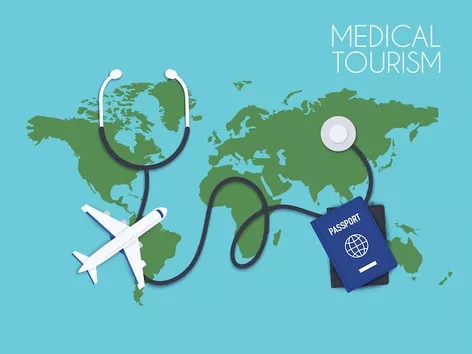
Vietnam is developing as a center for medical tourism and attracts more and more foreigners for treatment every year. Learn about popular medical services in Vietnam, as well as the advantages and disadvantages of treatment in the country
30 Mar. 2025
More details1 min
Treatment
Physiotherapy Internships Abroad: Exploring the World While Gaining Experience
A physiotherapy internship abroad is a great opportunity to advance your career. Learn why you should do an internship abroad, what are the most popular internship destinations, including Asia, Africa, Oceania, and Europe, and get helpful tips on choosing an internship program and financial planning
31 Mar. 2025
More details3 min
Treatment
Long-term sickness in the Netherlands is not only a health issue, but also a clear legal procedure with specific deadlines and rules. From the first day of sick leave to the possible application for WIA benefits, there is a set procedure for both the employee and the employer. Learn more about the steps you need to take to preserve your rights and financial stability
03 Mar. 2026
More detailsAll materials and articles are owned by VisitWorld.Today and are protected by international intellectual property regulations. When using materials, approval from VisitWorld.Today is required.