

Japanese Fans Cleaned the Stadium After a 2026 World Cup Match: A Tradition That Continues to Impress the World
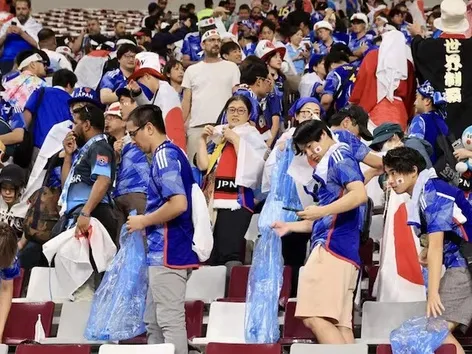
Japanese fans have once again impressed the world with their discipline at the 2026 World Cup. Find out why Japan fans clean up their stadiums after matches, how the tradition has become part of their culture, and why other fans are starting to follow suit

Japanese fans have long been associated around the world not only with supporting their team, but also with perfect order in the stands. At the 2026 World Cup, this tradition has again become one of the most discussed topics of the tournament.
After the match between the Netherlands and Japan (2:2), which took place at the AT&T Stadium in Arlington, Japanese fans left the stands almost spotlessly clean. They collected bottles, paper, food wrappers and other garbage in blue bags that they brought with them to the stadium. For many fans from other countries, such behavior still seems unusual, although for the Japanese it is rather a familiar part of life.
The opening ceremony of the 2026 World Cup took place on June 11-12, 2026, as described in this article.
Traveling to major sporting events is not only about emotions, but also about responsibility. It is important to take care of medical insurance, a safe route and the necessary documents in advance so that the trip goes without unnecessary stress. If you are planning to visit the World Cup or another international tournament, prepare for the trip in advance.
Take out travel insurance and check the conditions of entry into the country before the trip.

A tradition that starts at school
In Japan, children are taught from an early age to be responsible for the common space. In most schools, students wash the floors themselves, clean the classrooms, corridors and courtyards. Cleaning there is not considered a punishment - it is part of upbringing and respect for other people.
That is why Japanese fans explain their behavior very simply: if you use a certain place, you must leave it cleaner than it was before you.
Why has this become a global phenomenon?
The world first drew massive attention to Japanese fans during the 1998 World Cup in France. Since then, this scene has been repeated at almost every major tournament – from the 2018 World Cup in Russia to the 2022 World Cup in Qatar and the current 2026 World Cup in the USA, Canada and Mexico.
Interestingly, at the 2026 World Cup in Arlington, famous American footballer Jameis Winston, wearing a Japan national team jersey, even joined in the cleanup after the match.
Visit World services for tourists, migrants, and expats: Insurance | Guides | Legal advice
Not only discipline, but also respect for others
Sociologists explain this behavior by a combination of personal responsibility and social norms. In Japanese culture, there is a concept of “meiwaku” – not to cause inconvenience to other people. Leaving garbage behind means shifting your work to someone else, and this is considered impolite.
Another important concept is “reading the air,” that is, the ability to sense the expectations of those around them. If one person starts cleaning, others often automatically join in so as not to appear indifferent.
Impact on other fans
Japanese fans do not just support their team – they are shaping a new culture of behavior in stadiums. After the 2022 World Cup, fans from Morocco, Senegal and other countries began to follow the example of the Japanese. Tournament organizers have repeatedly publicly thanked the Japanese fans for their behavior.
In 2026, this tradition has already become part of the image of the Japanese national team. But the fans themselves do not want to be remembered only for cleaning. For them, the main thing is to support the team and sports results.
Why is this important in 2026?
The 2026 World Cup is the biggest ever, with 48 teams, a record number of matches and millions of fans in the stands. Against this backdrop, stories of responsible fan behavior take on special significance.
At a time when major sporting events are often associated with chaos, litter and safety concerns, Japanese fans are showing a different approach – respect for space, people and the game itself.
For the full 2026 World Cup group stage schedule, including dates, groups and times Central European Time (CEST), click here.
The 2026 World Cup will bring together millions of fans in the United States, Canada and Mexico, and for many it will be a dream trip. But even a short trip abroad requires preparation: health insurance, entry regulations, transportation, security and unforeseen expenses can significantly affect the comfort of the trip. Japanese fans set an example of responsibility at the stadiums, and travelers should be just as responsible when organizing their trip. A reliable insurance policy will help avoid large expenses in the event of illness, injury or flight delay. And checking the current requirements for entering the country will help avoid unpleasant surprises at the border.
Plan your trip in advance: take out insurance, check your documents and prepare for a safe trip to the 2026 World Cup.
Reminder! From July 1, 2026, Japan will triple the departure tax to 3,000 yen and is preparing new tourist fees, including the JESTA system. We have already told you who will be affected by the changes, how much you will have to pay and how to prepare for the trip.
Photo – Japanese fans pick up trash at the end of the FIFA World Cup Qatar 2022 Group E match against Germany. (Source: Getty)
Products from Visit World for a comfortable trip:
Travel guide for 200 countries;
Legal advice from a local specialist on visa and migration issues;
Travel insurance around the world (please select the country of interest and citizenship to receive services);
Medical insurance all over the world.
We monitor the accuracy and relevance of our information, so if you notice any errors or inconsistencies, please contact our hotline.
Recommended articles
2 min
Travels
Włochy wprowadzają zwroty opłat za korki w 2026 roku: Kto może ubiegać się o odszkodowanie
Włochy wprowadziły nowy system odszkodowań dla kierowców, którzy stracili czas w korkach na płatnych autostradach z powodu robót drogowych. Dowiedz się, kto ma prawo do zwrotu, jakie kwoty można otrzymać i jak prawidłowo ubiegać się o zwrot
08 cze. 2026
More details2 min
Podróż samolotem
Z powodu nowych wybuchów wirusa Ebola, wiele krajów na całym świecie zaostrzyło kontrole graniczne i wprowadziło tymczasowe ograniczenia wjazdu. Dowiedz się, które kraje zmieniły zasady przekraczania granic, do kogo odnoszą się nowe wymagania i jak przygotować się do podróży międzynarodowej w 2026 roku
18 cze. 2026
More details2 min
Travels
Stany Zjednoczone uruchamiają nowy program przyspieszonych terminów dla wiz B-1/B-2. Dowiedz się, kto będzie uprawniony, ile to będzie kosztować i jak nowy mechanizm będzie działał od lipca 2026 roku
09 cze. 2026
More details2 min
Blog
Deportacja z UE w 2026 roku: Jak działa procedura powrotu, jak długo trwa i kto ponosi koszty
Naruszenie zasad migracyjnych w krajach UE może prowadzić do procedur powrotu lub deportacji. Dowiedz się, jak ten mechanizm działa w 2026 roku, jakie prawa mają cudzoziemcy, jak długo trwa proces i kto pokrywa związane z tym koszty
13 cze. 2026
More detailsAll materials and articles are owned by VisitWorld.Today and are protected by international intellectual property regulations. When using materials, approval from VisitWorld.Today is required.