

Jak uzyskać stały pobyt i status rezydenta w Niemczech w 2026 roku: Szczegółowy przewodnik
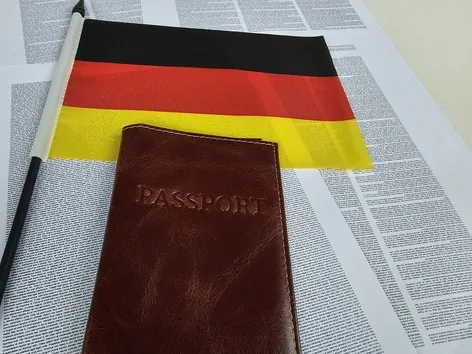
Uzyskanie stałego zezwolenia na pobyt w Niemczech wiąże się z spełnieniem szeregu rygorystycznych wymagań dotyczących długości pobytu, dochodów i poziomu językowego. Dowiedz się, jakie warunki obowiązują w 2026 roku, które kategorie migrantów mogą otrzymać stałe zezwolenie na pobyt na uproszczonych zasadach oraz jak złożyć wniosek

Obtaining a permanent residence permit is the milestone that most foreigners who plan to stay in Germany for a long time aspire to. German law provides for two statuses with very similar consequences that allow migrants to live in the country without time limits, provided that certain requirements are met. Let's figure out what the differences are between these statuses, what their advantages are, and how to obtain them as of 2026.
Moving to a new country is not only about new opportunities, but also about many bureaucratic issues that should be resolved in advance. Each country has its own rules for obtaining a residence permit or citizenship, and it can be difficult to figure them out on your own. The Visit World team has prepared convenient guides with step-by-step instructions for dozens of destinations that will help you avoid common mistakes when applying for documents.
Learn more about available immigration guides and choose your route today.

Two permanent statuses: what's the difference?
A Niederlassungserlaubnis is a permanent residence permit in Germany, which gives you the right to live in the country, work for hire or run a business without having to renew the document periodically. This status is valid in Germany, but also allows short-term trips to the Schengen area.
Erlaubnis zum Daueraufenthalt-EU is a long-term residence permit within the entire European Union. It is also unlimited, but additionally simplifies moving to other EU countries after completing certain procedures. This status is especially useful for those who are considering migration within the European Union in the future.
For most people, these two statuses are issued almost simultaneously: someone who receives a German Niederlassungserlaubnis usually immediately acquires the right to EU residency. In practice, Germany often puts both designations on one card, so a person immediately becomes both a permanent resident of Germany and a long-term resident of the EU.
Read also: How to get a permanent residence permit in Austria?
Visit World services for tourists, migrants, and expats: Insurance | Guides | Legal advice
Basic conditions for obtaining permanent residency
The requirements for obtaining a permanent residence permit are spelled out in the Residence Act (AufenthG). The general criteria as of 2026 are as follows.
1. Five years of legal residence in Germany
The basic requirement is five years of legal residence with a valid residence permit. All periods with permits are counted, including the time spent under temporary protection programs or other temporary statuses. However, the time spent on a tourist visa-free or the period of consideration of an asylum application without a decision is not included in this period.
2. Stable income and financial independence
The applicant must prove that he is able to support himself and his family without applying for social assistance: stable work or another regular source of income not lower than the subsistence minimum. Payslips, tax returns and availability of housing are checked.
A separate requirement is at least 60 months (5 years) of contributions to the state pension system. This criterion may be relaxed if the contributions were made for the applicant by a spouse, or if the person was caring for a child or studying during this time.
A complete guide to employment of foreigners in Canada in 2026 is here.
3. Knowledge of the German language at level B1
A certificate of level B1 on the European scale (Goethe, telc and others) or a certificate of successful completion of an integration course in Germany is required.
Passing an integration course (600 hours of language training and 100 hours of orientation course) with successful passing of exams not only confirms the language level, but also gives the right to reduce the required period of stay by a whole year - to 4 years instead of 5.
4. Basic knowledge of the legal system and social order
This is confirmed by passing an orientation course or the "Leben in Deutschland" test, which tests knowledge of the state system, laws and culture of the country. An alternative confirmation option is a German certificate of complete secondary education.
5. No criminal record
Serious criminal offenses can be a reason for refusal. On the other hand, minor administrative offenses, such as a fine for traveling without a ticket, usually do not affect the decision.
6. Sufficient housing
For Erlaubnis zum Daueraufenthalt-EU, it is mandatory to have housing that meets the standards of space for the applicant and his family - a rental agreement or property documents. In practice, this requirement rarely becomes a problem, because a person who works legally usually already has rented or own housing.
The easiest countries to obtain a residence permit in 2026 in this material.
Simplified conditions for certain categories of migrants (2026)
The official government portal Make it in Germany describes several categories of applicants who can obtain a permanent residence permit under simplified conditions.
Holders of the EU Blue Card
For holders of the EU Blue Card (§18g AufenthG), the requirements are significantly relaxed. Instead of the standard 5 years of residence, 27 months of work with appropriate deductions are sufficient, and if you have a German level of B1, this period is reduced even further - to 21 months. If the language level is limited to A1, you should focus on the same 27 months. The requirements for pension deductions are also lower - 36 months instead of the standard 60. At the same time, the completed "Leben in Deutschland" test and the availability of sufficient housing remain mandatory - there are no relaxations here compared to the general procedure.
Graduates of German universities and vocational schools
For those who have completed their studies in Germany, you need: a work permit as a qualified specialist ("Fachkraft", §18a, §18b or §18d AufenthG) for at least 2 years, 24 months of pension contributions, German level B1, passed the "Leben in Deutschland" test and sufficient housing.
Qualified specialists with three years of work experience
For employees with a permit §18a, §18b, §18d or §18g AufenthG: 3 years with a permit, 36 months of pension contributions, stable income without social assistance, German level B1 and passed the test.
Where in Europe is it realistic to stay after graduation? We analyze here.
Highly qualified specialists
Scientists, researchers and teachers in leading positions can obtain a Niederlassungserlaubnis immediately upon arrival, without a minimum period of stay, provided that they have proven academic qualifications, integration and a stable income without state support.
Entrepreneurs
Holders of a self-employed person permit (§21 AufenthG) can apply for permanent status after 3 years of running a business, provided that they have proven success and stability in their business and that they have sufficient income for themselves and their family.
Spouses of holders of a German permit
If a person comes to Germany with a spouse who already has a Niederlassungserlaubnis for specialists (§18c AufenthG), they can apply for permanent status if they have had their own permit for at least 3 years, work for at least 20 hours per week, live in a marital union, have a B1 level of German and have passed the "Leben in Deutschland" test.
Benefits of a Permanent Residence Permit
Permanent status is the maximum level of stability that can be enjoyed in Germany without citizenship. You no longer have to worry about renewing your documents or being subject to changes in immigration policy.
Permanent residents have almost all the same rights as German citizens, with the exception of the right to vote in federal elections. After eight years of total residence in the country (and under certain conditions even earlier), you can apply for naturalization - obtaining citizenship, if you so desire.
How to apply: documents and cost?
The approximate cost of obtaining a Niederlassungserlaubnis is up to 150 euros, the exact amount depends on the category of the applicant. Payment is made when submitting the application.
Basic package of documents (the list depends on the specific category):
- completed application for a Niederlassungserlaubnis;
- valid passport or a document replacing it;
- biometric photo;
- confirmation of stable income (payslips for the last 3 months, certificate from the place of work);
- confirmation of pension contributions (certificate from Deutsche Rentenversicherung);
- rental agreement or documents proving ownership of housing;
- certificate of knowledge of the German language level B1 (or A1 for Blue Card EU holders);
- confirmation of successful completion of the "Leben in Deutschland" test.
The exact list of documents and application processing times should be clarified directly with the local migration office (Ausländerbehörde), as they may vary depending on the federal state.
If you are considering Germany as a country for permanent residence, it is important to understand the entire procedure in advance - from the first temporary permit to permanent status.
The “Immigration Guide” from Visit World contains detailed step-by-step instructions for applying for a temporary or permanent residence permit and citizenship on various grounds, a complete list of required documents, the current cost and processing times of the application, as well as the requirements for the applicant in a specific country. In the guide, you will also find contacts of the body dealing with citizenship issues, tips for filling out the application form and life hacks for staying in a new country. All information is sent to your email in PDF format within a few minutes after registration.
Choose your destination country and receive a complete action plan for legal registration of status now.
Reminder! Some countries allow citizenship after 2–5 years of legal residence. We have already told you which countries offer the fastest path to a second passport in 2026, what the conditions for naturalization are, and what is important to consider before moving.
Photo – Magnific
Products from Visit World for a comfortable trip:
Travel guide for 200 countries;
Legal advice from a local specialist on visa and migration issues;
Travel insurance around the world (please select the country of interest and citizenship to receive services);
Medical insurance all over the world.
We monitor the accuracy and relevance of our information, so if you notice any errors or inconsistencies, please contact our hotline.
Frequantly
asked questions
Czym różni się Niederlassungserlaubnis od zwykłego zezwolenia na pobyt, które należy odnawiać co roku?
Czy można stracić status stałego rezydenta po jego uzyskaniu?
Czy można jednocześnie ubiegać się o stały pobyt i łączenie rodzin?
Recommended articles
2 min
Expats
Talent passport in France: a detailed guide for foreigners 2026
Artyści, przedsiębiorcy i naukowcy mają możliwość życia i pracy we Francji, uzyskując \"Paszport Talentów\". Zaprojektowany w celu wsparcia gospodarki, ta wiza pozwala cudzoziemcom mieszkać i pracować w kraju przez pierwsze cztery lata. Dowiedz się, czym jest francuski Paszport Talentów i wszystko, co musisz wiedzieć o czteroletniej wizie
19 cze. 2026
More details2 min
Residence permit
Dokumenty rezydencji UE w Polsce wygasają 3 sierpnia 2026 r.: Kogo to dotyczy i co zrobić
Polska unieważnia stare zezwolenia na pobyt UE – nawet te stałe – od 3 sierpnia 2026 r. Dowiedz się, kogo dotyczy ten termin, jakie będą konsekwencje braku działania oraz jak na czas złożyć wniosek o wymianę
10 cze. 2026
More details2 min
Residence permit
Quebec ponownie otwiera program PEQ: Kto może uzyskać stały pobyt w Kanadzie w latach 2026–2028
Quebec tymczasowo ponownie otwiera jeden ze swoich najpopularniejszych programów imigracyjnych dla pracowników zagranicznych i absolwentów. Dowiedz się, kto będzie mógł ubiegać się o stały pobyt przez PEQ, jakie będą warunki w 2026 roku oraz jak zmiany wpłyną na kandydatów do Kanady
13 cze. 2026
More details2 min
Popular
Gruzja przygotowuje surowsze zasady uzyskiwania zezwolenia na pobyt dla zagranicznych studentów i małżonków obywateli. Dowiedz się, jakie są nowe wymagania i kiedy wejdą w życie
20 cze. 2026
More detailsAll materials and articles are owned by VisitWorld.Today and are protected by international intellectual property regulations. When using materials, approval from VisitWorld.Today is required.