

Najbezpieczniejsze jeziora w Europie do letniego pływania: Przewodnik kraj po kraju
Table of contents
- Austria: mountain cleanliness at the highest level
- Finland: the country of a thousand (and actually 187 thousand) lakes
- Germany: "Strandbäder" culture as a way of life
- Italy: Mediterranean warmth plus Alpine coolness
- Switzerland, France and Sweden: Three different bathing styles
- Hungary, the Netherlands and Poland: thermal waters, artificial lakes and the Masurian Sea
- What should you check before swimming in 2026?
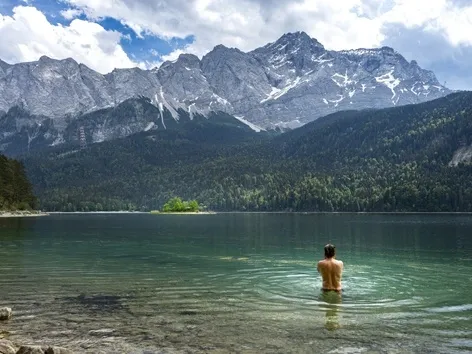
Pływanie w jeziorach Europy tego lata może być nie tylko przyjemne, ale także całkowicie bezpieczne. Dowiedz się, które kraje mają najczystszą wodę według oficjalnych danych z 2026 roku i które jeziora warto wybrać na wakacje

The heat this summer is breaking records again, and the first thing anyone thinks about on such days is where to swim. But not every attractive-looking body of water is actually safe: in France alone, 40 cases of drowning have been recorded since June 18, 2026, mostly among young people who were swimming in places without lifeguards. The country's Prime Minister, Sébastien Lecornu, called the situation a real disaster - and it's a reason to think before jumping into the first lake you come across.
The good news is that Europe remains one of the safest regions in the world for swimming in fresh water. A recent report by the European Environment Agency (EEA), published in June 2026 in collaboration with the European Commission, found that 85% of the more than 22,000 bathing sites surveyed across the continent were rated as excellent, with 96% of all sites meeting minimum quality standards. Seawater traditionally trumps inland waters – 88% of coastal waters were rated excellent, compared to 78% of lakes and rivers – but that doesn’t mean you should skip Alpine or Scandinavian lakes. On the contrary, they are home to some of the warmest and clearest waters of the season.
We’ll tell you where in Europe swimming is not just enjoyable, but also officially certified as safe – country by country, with specific lakes worth visiting.
Europe’s most scenic rail routes in this article.
When planning a summer trip to the lakes of Europe, do not forget about travel insurance - it protects not only against lost luggage, but also against unforeseen medical expenses abroad.
You can apply for a policy in a few minutes online, choosing coverage for a specific route and duration of the trip. Visit World offers a wide range of insurance programs for any type of vacation. Apply for travel insurance today and travel with peace of mind.

Austria: mountain cleanliness at the highest level
Two-thirds of Austria lies in the Alps, and it is the mountains that make the water here so transparent - they act as a natural filter. According to the EEA, 96.5% of the country's inland waters for swimming received an "excellent" rating, and Austria itself is among the top five on the continent in 2026, along with Cyprus, Bulgaria and Greece.
Lake Klopain warms up to 26°C in summer - a comfortable temperature even for long swimming. Attersee, the largest lake located entirely within Austria, is famous for its underwater visibility of up to 7-9 meters: a rare case when you can not only swim, but also look at the bottom. And in Hallstatt, an artificial island, Badensel, has been built - with a lawn, a diving board and a view, for which thousands of tourists come here every year.
Finland: the country of a thousand (and actually 187 thousand) lakes
Finland traditionally shares first place with Austria in the quality of inland water bodies - about 95% are recognized as excellent. There are more than 187,000 lakes here with an area of 500 square meters and more, and a significant part of them is officially open for swimming.
Lake Tuusula in the south of the country is one of the warmest, in summer the water warms up to 18-22°C. Finnish artists gathered here in the early 20th century, and the atmosphere of creative comfort is still felt today. And Saimaa, the fourth largest lake in Europe with almost 14,000 islands, is also one of the few places on the planet where you can see the Saimaa ringed seal in its natural habitat.
Visit World services for tourists, migrants, and expats: Insurance | Guides | Legal advice
Germany: "Strandbäder" culture as a way of life
91.5% of inland bathing waters in Germany are rated as excellent. A separate culture of summer recreation by the water has developed here - the so-called Strandbäder, public beach complexes with changing rooms, sunbathing lawns and restaurants right on the shore.
The Grissee is considered the warmest lake in the country: its shallow depth allows the water to warm up quickly, sometimes above 25°C. Lake Constance in the south is the largest body of water in Germany, the shores of which are shared between Switzerland and Austria. And Walchensee in Bavaria has a truly Caribbean shade of water – the turquoise here is created by a high content of dissolved calcium carbonate.
We tell you where to go on vacation in August 2026 at the link.
Italy: Mediterranean warmth plus Alpine coolness
87.7% of Italy's inland waters are of excellent quality. Thanks to the Mediterranean climate, Italian lakes are generally warmer than those in northern Europe: Lake Kaltern in South Tyrol warms up to 28°C and is considered one of the warmest alpine lakes in general.
Lake Como has long been synonymous with premium water sports and is attractive to long-distance open-water swimmers. Garda and Maggiore are a little less glamorous, but they are densely dotted with lidos - and this is where windsurfing, sailing and kayaking are best developed, if just swimming seems not enough.
The safest cities in Europe for a holiday in summer 2026 can be found here.
Switzerland, France and Sweden: Three different bathing styles
In Switzerland, 84.4% of inland waters are rated excellent, and it is here that the culture of wild urban swimming was born - the people of Zurich and Geneva jump into the lakes right after work. Lake Lugano warms up to 26°C in summer and remains the warmest in the country.
The coolest destinations in Europe for a holiday without the heat in 2026 are here.
In France, the figure is more modest - 71%, but this did not prevent Lake Egbelette in Savoy from becoming the warmest in the country (up to 28°C), and Annecy - one of the most photogenic thanks to its turquoise water against the backdrop of mountains.
Sweden holds 82.1% of excellent quality and offers something unique: the Allemansrätten right allows swimming almost anywhere in the wild, not just on official beaches, the main thing is not to harm the environment. Lake Vänern, the third largest in Europe, is more like a sea than a lake, and in Lapland you can swim under the midnight sun in summer.
Hungary, the Netherlands and Poland: thermal waters, artificial lakes and the Masurian Sea
Hungary has the lowest score of 64% among the leaders of the list, but the country makes up for this with its uniqueness: Lake Hévíz is the largest thermal lake in the world suitable for swimming, with temperatures ranging from 22°C in winter to 36°C in summer thanks to natural springs under the seabed. Balaton, the largest freshwater lake in Central Europe, welcomes 5.2 km of swimming every year across the entire body of water.
The Netherlands (70.4%) compensates for the lack of mountain lakes with artificial reservoirs in former quarries - Lake IJssel, for example, was once a bay of the North Sea and is now a popular windsurfing spot. In Poland (56.7%), the main star is the Sniarzydwy, which is called the Masurian Sea due to its size.
What should you check before swimming in 2026?
A recent EEA report reminds us: the quality of water in rivers remains a weak point on the entire continent - only 47% of river beaches received the highest rating, while among lakes this figure reaches almost 78%. So before traveling, it makes sense to:
- check the current status of a particular beach on the EEA interactive map, and not focus on last year's reviews;
- choose places with lifeguards and official markings, especially with children;
- pay attention to warning signs about currents, algae or underwater debris;
- avoid swimming immediately after heavy rains - this is when the water quality in lakes and rivers temporarily drops.
Such a checklist takes five minutes, and significantly reduces the risk - especially considering the statistics of recent weeks in France.
Swimming in open water – even in the cleanest lakes in Europe – is always associated with a certain risk: cramps, hypothermia, unexpected injury on rocks or underwater snags. Standard medical insurance does not always cover such situations in full, especially when it comes to active recreation on the water.
The policy from Visit World includes coverage for emergency medical care, emergency evacuation and hospitalization – exactly what you need during a summer trip to the lakes of Austria, Finland or Switzerland. Registration takes a few minutes and does not require paperwork. This is especially relevant in the summer of 2026, when record heat attracts more people to the water than ever.
Take care of your own safety in advance. Take out a Visit World insurance policy and enjoy swimming without unnecessary worries.
Let us remind you! European islands remain among the most popular summer vacation destinations, but choosing the perfect place among dozens of options can be difficult. A new ranking compares 80 islands based on weather, gastronomy and the number of green spaces. We have already talked about the best islands in Europe to travel to in 2026 and the destinations that are most suitable for beach, active and gastronomic holidays.
Photo – Magnific
Products from Visit World for a comfortable trip:
Travel guide for 200 countries;
Legal advice from a local specialist on visa and migration issues;
Travel insurance around the world (please select the country of interest and citizenship to receive services);
Medical insurance all over the world.
We monitor the accuracy and relevance of our information, so if you notice any errors or inconsistencies, please contact our hotline.
Frequantly
asked questions
Czy potrzebuję ubezpieczenia podróżnego na wyjazd nad jeziora w Europie, nawet jeśli nie odwiedzam nadmorskiego kurortu?
Dlaczego rzeki w Europie są ogólnie uważane za mniej bezpieczne do pływania niż jeziora?
Czy mogę bezpiecznie pływać w jeziorach, które nie są uwzględnione w oficjalnych rankingach wód kąpielowych EOG?
Recommended articles
3 min
Travels
Fajna Francja latem: 4 miejsca na relaks bez tłumów i upału
Francja oferuje znacznie więcej miejsc plażowych niż tylko zatłoczone Côte d'Azur. Mniej znane miejsca w Bretanii i Normandii oferują przyjemny klimat, niezatłoczone plaże i autentyczną atmosferę wolną od letnich tłumów. Dowiedz się więcej o czterech alternatywnych miejscach na wakacje latem we Francji
25 cze. 2026
More details2 min
Travels
Staying at a 5-star hotel doesn't always mean spending hundreds of dollars a night. A new international study has revealed which cities around the world offer luxury rooms at significantly lower prices than popular tourist capitals. Find out which destinations topped the list and when it's best to book premium-class hotels
04 lip. 2026
More details1 min
Travels
Dziewczęca podróż po Europie 2026: Najlepsze destynacje: Barcelona, Mykonos i Hvar
Podróżowanie z przyjaciółkami to najlepszy sposób na naładowanie baterii. Dowiedz się, które trzy europejskie destynacje w 2026 roku są idealne na dziewczęcy wypad: plaże, gastronomia, atmosfera i praktyczne porady dla każdej z nich
04 lip. 2026
More details2 min
Podróż samolotem
How to Find Last-Minute Cheap Flights: 7 Tips from Skyscanner
A last-minute vacation doesn't have to mean expensive plane tickets. Experts at Skyscanner have shared seven simple ways to help you find great deals even just a few days before your flight. Learn more about how to save money on airfare without sacrificing comfort
12 lip. 2026
More detailsAll materials and articles are owned by VisitWorld.Today and are protected by international intellectual property regulations. When using materials, approval from VisitWorld.Today is required.