

Mass Protests in Europe in 2026: Which Countries Were Affected by the Unrest
Table of contents
- Why has a wave of mass protests swept across Europe?
-
In which European countries are mass protests taking place?
- Protests in France have escalated into riots: what’s happening in Paris and other cities
- Mass protests in Italy in 2026: riots in Milan and clashes with police
- Mass protests in Belgium in 2026: clashes in Brussels, strikes, and hundreds of arrests
- Protests in Portugal over the housing crisis: thousands take to the streets of Lisbon and Porto
- Protests in Spain 2026: The eviction of a pensioner sparked mass unrest and a political crisis
- Anti-government protests in Albania 2026: unrest in Tirana and calls for the prime minister’s resignation
- Mass protests in the U.S. 2026: “No Kings” demonstrations swept all 50 states on the eve of the election
- How did the mass protests in Europe affect transportation, business, and tourist cities?
- Is it safe to travel in Europe during the 2026 protests?
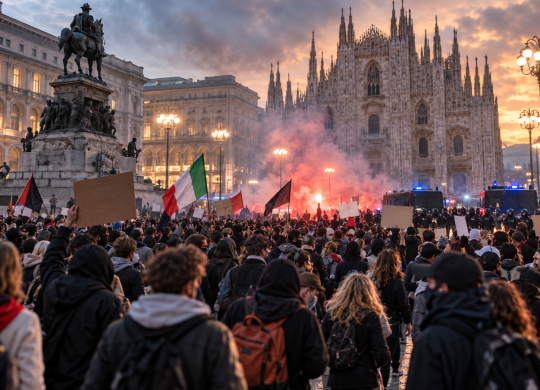
A wave of mass protests swept across Europe, escalating in some cities into riots and clashes with police. The demonstrations spread to France, Italy, Belgium, Portugal, and other countries. Learn more about the causes of the protests, the scale of the unrest, and the consequences for European cities

Mass protests have swept across a number of European countries, including France, Italy, Belgium, Portugal, and Spain. Thousands of people are taking to the streets due to the rising cost of living, low wages, the housing crisis, and dissatisfaction with government policies. The situation has been most tense in France and Italy, where demonstrations have been accompanied by arson, looting of stores, and clashes with law enforcement. In France alone, police detained about 2,400 people, and in Milan, Italy, the number of detainees exceeded 200 in just two days. We’ll explain exactly where the protests are taking place in Europe, what the participants are demanding, and what the consequences of the mass unrest are.
Planning a trip abroad?
Insurance from the Visit World portal will help you avoid unnecessary risks. The policy covers the costs of medical treatment, emergency assistance, and unforeseen situations abroad, so that even in the event of delays or route changes, you remain protected and can focus on your trip rather than on problems.

Why has a wave of mass protests swept across Europe?
The main cause of the mass protests in Europe has been a decline in living standards. In France, Italy, Belgium, and Portugal, demonstrators are protesting high prices, low wages, and cuts to public services. Young people, who face difficulties finding jobs, renting housing, and accessing education, are actively joining the protests.
This economic discontent has concrete grounds. According to Eurostat, the cost of food and non-alcoholic beverages in the EU rose by 34% over five years—from August 2021 to August 2026. At the same time, wage growth did not fully offset the rising cost of basic necessities everywhere. The financial pressure has been particularly acute for young workers, students, and low-income households.
Among the main causes of protests in European countries:
- High cost of living. Rising prices for food, fuel, electricity, and utilities are eroding the population’s purchasing power.
- The housing crisis. In major cities, rent is increasingly becoming unaffordable for young people. For example, in Portugal, housing prices have more than doubled since 2017.
- Low wages and pensions. Workers are demanding higher incomes in line with actual living costs.
- Problems in education. Students and schoolchildren are protesting against insufficient funding for educational institutions, a shortage of teachers, and rising costs of education.
- Dissatisfaction with government policy. Some participants oppose budget cuts, social reforms, and decisions made by national governments.
At the same time, the current demonstrations do not constitute a single, coordinated protest movement. In each country, they have their own underlying causes and demands. For example, in France, social discontent has been exacerbated by problems in the education system; in Portugal, the central issue has become housing affordability; and in Belgium, student protests against educational reforms play a significant role.
Despite these differences, the mass protests are united by the active participation of the younger generation. It is students and young workers who are increasingly organizing the demonstrations. In some cities, peaceful marches have escalated into clashes with police, arson, and vandalism, although most participants took to the streets with peaceful demands.
In which European countries are mass protests taking place?
A wave of protests has swept across several European countries, though the scale and causes of the demonstrations vary significantly. The situation is most acute in France, where hundreds of thousands of people have taken to the streets, and some protests have escalated into mass riots. In other countries, public discontent has also been accompanied by strikes, road blockades, and clashes with law enforcement.
Protests in France have escalated into riots: what’s happening in Paris and other cities
France is experiencing one of the largest waves of street unrest in recent years. On October 17, demonstrations took place across the country against the high cost of living, rising fuel prices, and insufficient funding for education. Students, schoolchildren, teachers, labor unions, workers from various industries, and representatives of the “Yellow Vests” movement joined the protests.
According to the French Ministry of the Interior, approximately 550,000 people took part in the demonstrations, while organizers reported 800,000 participants. In Paris alone, approximately 110,000 people took to the streets.
The most serious disturbances were reported in Paris, Marseille, Lyon, Lille, Bordeaux, and Limoges. Peaceful demonstrations in some areas escalated into clashes with police, car burnings, attacks on public buildings, and mass looting of stores.
Paris suffered particularly significant damage. Near Place de la République and on Boulevard Magenta, groups of masked people smashed storefronts, broke into retail spaces, and carried off merchandise. Grocery stores, clothing stores, electronics stores, cafes, and other establishments were affected.
Among the most high-profile consequences of the protests:
- More than 2,400 people were arrested across France following the large-scale riots.
- Approximately 1,500 retail establishments were damaged, according to estimates by retail industry representatives.
- A fire at the historic town hall in Limoges, which caused the roof of the 19th-century building to collapse.
- Damage to the tourist office in Lyon, where a fire broke out during the riots.
- Attacks on public institutions in Marseille, including demonstrators breaking into the city council building.
Major retail chains also reported significant losses. In particular, Carrefour reported attacks on 50 of its stores in various cities across France. According to the company’s preliminary estimates, repairs to the damaged facilities will cost more than 10 million euros.
The riots continued the following day. In Paris, hundreds of people gathered again at Place de la République. Police used tear gas and stun grenades to disperse participants in the unauthorized gathering.
President Emmanuel Macron condemned the violence and called for those responsible to be held accountable. Prime Minister Sébastien Lecornu instructed local authorities to impose targeted restrictions, including a curfew in certain areas where there is a risk of renewed unrest.
At the same time, the authorities emphasized that citizens’ right to peaceful demonstration must remain protected.
The protest movement has also heightened political tensions ahead of the 2027 presidential election. Representatives of opposition parties are criticizing the government both for its socioeconomic policies and for the actions of law enforcement during mass demonstrations.
In a previous article, we reported in detail on mass protests by schoolchildren in France.
Mass protests in Italy in 2026: riots in Milan and clashes with police
Italy has become yet another hotbed of mass protests against the high cost of living, rising fuel prices, and the tax burden. The most serious unrest occurred in Milan, where demonstrations escalated into looting of stores, arson, and clashes with law enforcement. The protests also spread to Turin, Bologna, Bergamo, and Brescia.
In Milan, the protests began on October 17 with a march against the economic crisis. However, near Via Broletto, groups of masked youths began throwing rocks, bottles, and fireworks at police officers. The clashes later moved to Piazza del Duomo—one of the city’s main tourist attractions.
Rioters erected barricades using street furniture, set trash containers on fire, smashed storefronts, and looted shops. Police used tear gas and water cannons. Due to the danger, people had to be evacuated from Piazza del Duomo and the Vittorio Emanuele II shopping arcade. Subway stations on the M1 and M3 lines were temporarily closed.
At least 25 people were injured during the first day of the riots in Milan, including 10 law enforcement officers. About 50 participants were taken into police custody, nearly half of whom were minors.
The next day, the clashes resumed. Hundreds of young people gathered in central Milan, where attacks on stores and clashes with police began again. According to reports from the Italian news agency ANSA, the total number of people detained or taken to the police station for questioning exceeded 200, approximately 80% of whom were minors.
Unrest was also reported in other cities:
- Turin. Protesters blocked streets with barricades and threw rocks, bottles, and firecrackers at police officers. Law enforcement detained 12 people, including 10 minors. Some were found in possession of incendiary mixtures and fireworks.
- Bologna. The most intense clashes took place near the train station and Piazza Medaglia d’Oro. Demonstrators threw stones, damaged rental bicycles, and erected barricades. Police used water cannons and tear gas; seven people were detained.
- Bergamo and Brescia. Clashes between individual groups of demonstrators and law enforcement were also reported during the protests.
Local businesses suffered significant damage. According to preliminary estimates by the Italian trade association Confcommercio, total losses from the riots in Milan and Bologna amounted to approximately 1 million euros.
Shops, restaurants, and retail spaces in central districts were hit the hardest.
Italian Prime Minister Giorgia Meloni condemned the attacks on law enforcement officers and the destruction of urban infrastructure. She emphasized that citizens have the right to peaceful demonstrations, but violence is unacceptable. Due to repeated clashes, the head of government convened a special meeting on public safety for October 19.
Milan Mayor Giuseppe Sala also acknowledged the validity of the protesters’ socioeconomic demands, while condemning the riots and looting. City authorities have begun cleaning up damaged streets and restoring public spaces
Mass protests in Belgium in 2026: clashes in Brussels, strikes, and hundreds of arrests
Belgium has been swept by a wave of student protests and nationwide strikes against budget cuts, educational reforms, and the rising cost of living. The situation was most tense in Brussels and Liège, where demonstrations were accompanied by arson, property damage, road blockades, and clashes with police.
One of the main causes of discontent is the Wallonia-Brussels Federation government’s plan to cut spending on French-language education by 500 million euros by 2029. The reforms also call for an increase in teachers’ workload from 20 to 22 hours per week and changes to higher education funding. High school and college students fear a decline in the quality of education, cuts to educational programs, and higher tuition fees.
The first large-scale riots broke out in Liège in early October. High school students organized demonstrations that later escalated into clashes with law enforcement. Participants set fire to trash cans and electric scooters, smashed windows at educational institutions, and vandalized stores.
Protesters also blocked the city’s main streets. Due to the unrest, retail establishments, including the Galeries Saint-Lambert shopping center, temporarily suspended operations. Police used tear gas, and local authorities imposed temporary restrictions on mass gatherings.
Since the start of the student protests in Liège, law enforcement has detained more than 200 people. There were also reports of dozens of injured police officers.
In Brussels, labor unions, civil servants, teachers, and transportation workers joined the student protests. They were protesting the budgetary policies of Prime Minister Bart De Wever’s federal government.
The demonstration on October 9 was particularly large. According to police estimates, about 30,000 people took to the streets of Brussels, while labor unions reported 50,000 participants. Protesters demanded a review of plans to cut public spending, the protection of social guarantees, and the preservation of the population’s purchasing power.
Key events and consequences of the protests in Belgium:
- Brussels. Clashes with police occurred near train stations. Small groups of masked individuals threw rocks and fireworks and set fire to bicycles, electric scooters, and cars.
- Liège. The unrest lasted several days. Police used tear gas, and damage was reported to schools, stores, and public property.
- Mass arrests. During clashes near the Brussels-South train station on October 12, 10 people were arrested, nine of whom were minors.
- Transportation restrictions. Nationwide strikes disrupted metro, bus, tram, and rail service. Cancellations and delays also affected air travel.
- New Clashes. On October 17, several hundred mostly young demonstrators gathered again in Brussels. After a car was overturned and clashes broke out, police used water cannons and tear gas.
The Belgian federal government continues to discuss budget-cutting measures. Labor unions oppose changes to the pension system, social benefits, and labor laws. Potential tax changes are a particular cause for concern, notably the proposed increase in the standard VAT rate from 21% to 22%.
Interior Minister Bernard Quentin condemned the violence during the student protests and stressed the need to restore public order. At the same time, representatives of student organizations emphasize that the main goal of the protests remains the protection of affordable and high-quality education.
Although a significant portion of the demonstrations have been peaceful, the mass strikes have already impacted daily life in Brussels, causing disruptions to public transportation, the closure of some educational institutions, and traffic restrictions in central areas.
Learn more about Europe’s best amusement parks and festivals for Halloween 2026 by following the link.
Protests in Portugal over the housing crisis: thousands take to the streets of Lisbon and Porto
A wave of mass demonstrations has swept through Portugal due to rapidly rising housing costs, low wages, and the rising cost of living. Thousands of people took to the streets of Lisbon, Porto, and Coimbra, demanding affordable rent, higher incomes, and the protection of social guarantees. A distinctive feature of the Portuguese protests has been the tent cities that activists have set up right in the historic centers of major cities.
The housing crisis in Portugal has been escalating for several years, but the latest statistics indicate that the situation is continuing to worsen. According to Eurostat, in the second quarter of 2026, housing prices in Portugal were 14.2% higher than the 2025 average. This is one of the largest increases among European Union countries.
Residents of Lisbon and Porto are feeling the problem particularly acutely. For many young workers, renting an apartment on their own has become financially unaffordable. Protesters accuse the government of failing to regulate the real estate market, a shortage of affordable housing, and an inability to curb speculative price increases.
Mass demonstrations intensified on October 10, when thousands of people took to the streets in Lisbon and Porto. Protests were also planned and held in Aveiro, Braga, and Funchal. One of the organizers was the civic platform Já Não Dá Para Viver Assim (“We Can’t Live Like This Anymore”).
A new wave of demonstrations took place on October 17 with the participation of the country’s largest labor union federation, the CGTP. Protesters demanded higher wages and pensions, improved public services, and affordable housing.
The most notable events of the protest movement:
- Lisbon. Hundreds of activists set up a tent city in Rossio Square—one of the capital’s most popular tourist spots. Participants declared their intention to remain there until the authorities begin to address the housing crisis.
- Porto. Protesters set up camp in Dom João I Square. City authorities attempted to dismantle the tents, which led to new protests and clashes with the police.
- Coimbra. Thousands of people joined union demonstrations against low incomes and deteriorating social conditions.
- Other cities. Protests also took place in Funchal and Faro, indicating that discontent is spreading beyond the country’s largest economic centers.
The most tense incident occurred in Porto on October 15. About 40 officers from a special police unit arrived to dismantle a tent encampment where approximately 150 activists were gathered. Organizers reported 37 people injured as a result of the police’s actions, although this figure is based on the protesters’ own estimates. A local hospital confirmed that seven people had been admitted.
The police explained their intervention by stating that the permit for the demonstration did not authorize an indefinite stay in the square. The activists, in turn, accused law enforcement of using disproportionate force.
In Lisbon, the tent camp remained active on October 18. Participants held a general assembly and voted to continue the protest. Protesters in Porto also expressed their willingness to negotiate with city authorities.
Protests in Spain 2026: The eviction of a pensioner sparked mass unrest and a political crisis
Spain was swept by large-scale protests over the housing crisis, sharp rent hikes, and the forced eviction of residents. The demonstrations were sparked by the story of 87-year-old Maricarmen Abascal, who was evicted from her Madrid apartment after living there for more than 70 years. Her case sparked nationwide outrage, and protests spread to more than 50 cities across the country, including Madrid, Barcelona, Valencia, Málaga, and Bilbao.
The woman had lived in an apartment in Madrid’s Retiro neighborhood since 1956. After an investment company purchased the property, they attempted to raise her rent from 500 to 2,650 euros per month. The amount was later reduced to 1,650 euros, but even that exceeded the woman’s pension, which was approximately 1,350 euros.
On September 23, police forcibly evicted Maricarmen despite protests by hundreds of activists who tried to block access to the building. During the operation, law enforcement officers used force and tear gas, and the elderly woman was carried out of the apartment on a stretcher. On October 7, Maricarmen died after two weeks in the hospital. Her story has become a symbol of the struggle against housing speculation and inadequate tenant protection.
After the eviction, protesters set up a tent city in Madrid’s central Puerta del Sol square. About 150 tents were erected there, and participants demanded urgent legislative changes.
On October 3, approximately 70,000 people took to the streets in Madrid. Protests took place in dozens of other cities, and organizers began calling for a nationwide strike.
The largest events of the protest movement in Spain:
- Madrid. Marches involving tens of thousands of people, a tent city at Puerta del Sol, and clashes during the forced eviction of Maricarmen Abascal.
- Barcelona. On October 5, a demonstration escalated into riots. According to city police estimates, about 20,000 people participated; organizers claimed 120,000. Participants erected barricades and set trash containers on fire. Police detained 13 people, and 30 law enforcement officers sustained minor injuries.
- Valencia. The protests were accompanied by isolated incidents and clashes. Demonstrators demanded a halt to evictions and a cap on rent increases.
- Other cities. Protests took place in Málaga, Bilbao, Santander, and other cities.
Participants protested against the bulk purchase of residential real estate by large investment funds.
Protesters put forward specific demands: to reduce rent by 50%, introduce open-ended lease agreements, ban evictions without providing alternative housing, and restrict the purchase of residential real estate by investment funds.
Statistical data also confirm the scale of the problem. According to estimates by the Bank of Spain, the housing shortage in the country stands at about 550,000 units, and the share of social rental housing does not exceed 2% of the housing stock. By comparison, the EU average is approximately 8%.
The protests have had serious political consequences. Pedro Sánchez’s government drafted two emergency decrees to strengthen tenant protections, but parliament rejected both documents. Against the backdrop of the housing crisis and political disputes, the prime minister announced early parliamentary elections for November 29, 2026.
Despite the government’s initiatives, the protest movement has not subsided. Tenants’ unions have called for a general strike on November 11. In Barcelona, residents of a building in the Eixample district also announced a rent strike against the investment company that purchased their property.
We previously reported that Spain will be swept by a massive strike on November 11, 2026.
Anti-government protests in Albania 2026: unrest in Tirana and calls for the prime minister’s resignation
Albania is experiencing a massive wave of anti-government protests that have escalated into clashes with police, arson attacks on government buildings, and mass arrests. The situation is most tense in the capital, Tirana, where demonstrations have been ongoing for six consecutive days. The main participants are students and young people demanding the resignation of Prime Minister Edi Rama, an end to corruption, improvements in education, and the creation of new jobs.
The current unrest is a continuation of a protest movement that began back in May. At that time, civic activists opposed the construction of a luxury tourist complex in southern Albania linked to American investor Jared Kushner — the son-in-law of U.S. President Donald Trump. The project, valued at approximately $4 billion, sparked outrage due to potential damage to nature reserves and controversial circumstances surrounding land deals.
The protest movement was dubbed the “Flamingo Revolution.” The birds became its symbol due to the threat to their natural habitats. Subsequently, environmental demands were joined by accusations of government corruption, dissatisfaction with the high cost of university education, and limited employment opportunities for young people.
A new wave of unrest began on October 13.
Thousands of people gathered outside the Ministry of Education in central Tirana, demanding better educational conditions. The demonstrations quickly escalated into clashes: protesters threw rocks, Molotov cocktails, and fireworks, while police used tear gas, water cannons, flash-bang grenades, and rubber bullets.
The scale of the unrest grew over the course of several days:
- Tirana. Protesters attacked the Ministry of Education, damaged government buildings, and smashed store windows, bus stops, and traffic lights. An attack on a bank was also reported.
- Mass arrests. According to police, by October 17, law enforcement had detained about 500 participants in the riots, 330 of whom were later released.
- Hundreds injured. The Ministry of Health reported that 272 people were injured during the first six days of clashes, including 169 law enforcement officers.
- Fires at government buildings. During the protests, the Ministry of Education building was damaged, a police station was set on fire, and the entrance to the Ministry of the Interior was torched.
- Spread of protests. Demonstrations spread beyond the capital to Lezhë, Elbasan, Shkodër, and Korçë.
The situation became particularly tense on October 18. Hundreds of demonstrators gathered again near the Ministry of Education, chanting demands for the prime minister’s resignation. The clashes subsequently spread to central areas of Tirana. On that day alone, according to the Ministry of Health, another 28 people were injured, including 19 police officers.
Prime Minister Edi Rama, who has led the Albanian government since 2013, categorically refused to step down. He accused his political opponents of exploiting student discontent to destabilize the country and suggested possible foreign interference, though he provided no public evidence to support these allegations.
At the same time, the head of government expressed a willingness to discuss the students’ demands, particularly university funding and tuition costs. However, he emphasized that those involved in attacks on law enforcement officers and government institutions must be held accountable.
The protests have created additional challenges for Albania’s European integration, as the country aims to become a member of the European Union by 2030. The fight against corruption, the independence of the judiciary, and the rule of law remain key issues in the negotiation process. The government warns that prolonged unrest could hinder the country’s progress toward EU membership, while demonstrators are demanding real anti-corruption reforms.
The situation in Tirana remains tense. Protesters continue to demand political change, and law enforcement has stepped up security at government buildings and in the capital’s central districts.
Mass protests in the U.S. 2026: “No Kings” demonstrations swept all 50 states on the eve of the election
A new nationwide wave of “No Kings” protests took place in the U.S., directed against President Donald Trump’s policies.
On October 17, demonstrations, marches, and public events took place in all 50 states. This time, the organizers focused primarily on protecting voting rights and mobilizing citizens ahead of the November 3 midterm congressional elections.
According to U.S. media reports, organizers announced more than 1,500 protests and public events. Other reports indicated nearly 3,000 planned events. Human rights organizations, labor unions, student groups, and local activists joined the campaign. The events took place in both major metropolitan areas and smaller American cities.
The most prominent “No Kings” demonstrations took place in various regions of the U.S.:
- Washington, D.C.. Hundreds of people gathered near the Lincoln Memorial for a rally calling for the protection of voting rights and urging people to vote.
- San Francisco. On Ocean Beach, activists created a large-scale formation spelling out the word “VOTE,” drawing attention to the upcoming election.
- Oakland. Participants organized a street event dedicated to civic engagement and the protection of democratic institutions.
- Atlanta. Demonstrators called for voter participation and the protection of the right to vote.
- New York and other cities. Local rallies, marches, public meetings, and awareness campaigns took place.
The No Kings movement emerged in 2025 amid discontent with the Trump administration’s policies. Its participants criticize immigration restrictions, cuts to social programs, and federal government decisions that, in their view, threaten democratic institutions. The president and his supporters reject accusations of authoritarianism and justify their policies by citing the need to ensure security and enforce the law.
A notable feature of the October protests was a format change. While previous waves of No Kings focused primarily on demonstrations involving thousands of people against the president’s administration, the current campaign is titled “No Kings: Vote Early.” Organizers held meetings with voters, informational events, and rallies in support of early voting.
There were also some scandals. During the nationwide protests, Meta temporarily blocked the No Kings movement’s Instagram account. Organizers and some American politicians expressed concern about possible restrictions on political communication. Meta later restored access and explained that the block was caused by an error in its automated moderation system.
How did the mass protests in Europe affect transportation, business, and tourist cities?
The mass unrest in Europe caused not only political tension but also serious problems for urban infrastructure. The central districts of Paris, Milan, Brussels, and other major cities were hit the hardest, as protesters blocked roads, damaged public property, and clashed with police. Some of the demonstrations took place right next to popular tourist attractions, shopping centers, and transportation hubs.
The most significant consequences of the protests in European cities:
1. Disruptions to public transportation. In Milan, access to central districts and metro stations was restricted due to the unrest. In Belgium, labor union strikes disrupted public transportation and certain transport routes.
2. Looting of stores and shopping centers. In France, protesters looted dozens of retail establishments in Paris, Marseille, Nice, Bordeaux, and other cities. In Italy, shops and restaurants near Piazza del Duomo were damaged.
3. Destruction of historic buildings. In Limoges, France, the historic town hall was severely damaged by arson. In Lyon, a tourist office was set on fire, and in Marseille, rioters broke into City Hall.
4. Restricted access to tourist sites. In Milan, during clashes, law enforcement evacuated people from Piazza del Duomo and the adjacent shopping arcade. In Paris, police blocked off certain streets where riots were taking place.
5. Additional costs for businesses and city budgets. Business owners are forced to repair damaged premises, replace broken storefronts, and temporarily suspend operations. Local authorities are spending funds on cleaning the streets and restoring infrastructure.
The situation has become particularly challenging for the tourism industry. Hotels, restaurants, museums, and shops in the central districts of major cities rely on a steady flow of visitors. Even a brief street closure or the evacuation of public spaces can disrupt sightseeing routes, shuttle services, and the operations of these establishments.
At the same time, mass protests do not mean that traveling throughout Europe has become dangerous. Most incidents are concentrated in specific cities and areas, and a significant portion of the demonstrations are peaceful. The actual risk to travelers depends on the location of the protests, their scale, and the decisions made by local authorities.
In our previous article, we discussed transportation strikes in Europe in October 2026.
Is it safe to travel in Europe during the 2026 protests?
Travel to European countries remains possible, but tourists should exercise greater caution in cities affected by mass protests. The greatest risks arise near government buildings, central squares, train stations, and protest sites. Even peaceful demonstrations can lead to road closures, transportation delays, and restricted access to tourist attractions.
Special attention should be paid to trips to Paris, Milan, Brussels, and Tirana, where clashes between demonstrators and law enforcement have been reported in the past. At the same time, the situation can vary significantly even within a single city. Unrest in the city center does not necessarily affect the operations of airports, hotels, or tourist attractions in other parts of the city.
To avoid problems while traveling in Europe, it is recommended that you:
- Check local news and police reports.
Before visiting major cities, find out if any demonstrations are planned and which areas may be blocked off.
- Keep an eye on changes to public transportation schedules. Check train, subway, bus, and flight schedules on the official websites of the carriers.
- Avoid large crowds. Stay away from barricades, police cordons, and areas where fireworks or tear gas are being used.
- Plan alternative routes in advance. If your hotel is located near a central square or the government district, check whether you can reach it via other streets.
- Have travel insurance. Before your trip, check your coverage for emergency medical care and any exclusions related to civil unrest.
- Keep emergency service contact information handy. In European Union countries, the single emergency number is 112.
If you find yourself near unrest, it is best to leave the dangerous area, avoid conflict with demonstrators, and follow the lawful instructions of local law enforcement. If streets are blocked, do not attempt to push through the crowd or a police cordon.
There is no reason to cancel all travel to Europe due to protests. However, before traveling to a specific city, you should check the current security situation, any possible restrictions, and recommendations from official authorities. This is especially important for travelers planning to visit the central areas of large cities or use public transportation during strikes.
Are you preparing for a trip abroad in 2026?
Medical insurance from the Visit World portal will provide reliable support during your trip, especially in the context of flight changes and unstable schedules. The policy covers medical expenses, emergency assistance, and other unforeseen situations outside the country, so you can feel confident even when plans have to be adjusted at the last minute.
We remind you! High incomes, affordable housing, and life expectancy determine how comfortable a city can be for its residents. Read more about the 10 European cities leading in quality of life in 2026, their advantages, and the nuances of moving there.
Products from Visit World for a comfortable trip:
Travel guide for 200 countries;
Legal advice from a local specialist on visa and migration issues;
Travel insurance around the world (please select the country of interest and citizenship to receive services);
Medical insurance all over the world.
We monitor the accuracy and relevance of our information, so if you notice any errors or inconsistencies, please contact our hotline
Recommended articles
3 min
Transport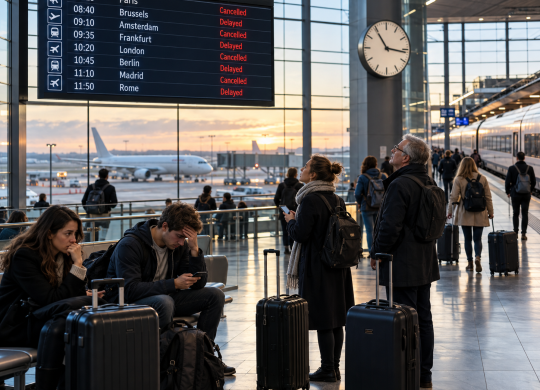
Strajki transportowe w Europie w październiku 2026: Gdzie mogą wystąpić odwołania lotów i pociągów
Strajki pracowników linii lotniczych, kolejarzy i pracowników transportu publicznego mogą zakłócić plany podróży w Europie w październiku. Dowiedz się więcej o datach strajków transportowych w październiku 2026, możliwych zakłóceniach i co pasażerowie powinni zrobić, jeśli ich podróż zostanie odwołana
30 wrz. 2026
More details3 min
Events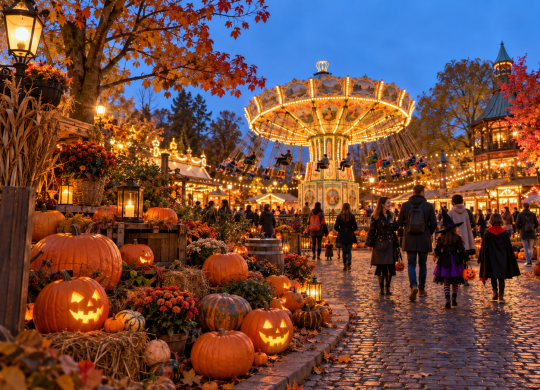
The Best Amusement Parks and Festivals in Europe for Halloween 2026
Amusement parks and cities across Europe are preparing for Halloween 2026 with spooky mazes, costume parades, and evening shows. Learn more about the most exciting festivals, event dates, and activities for children and adults
13 paź. 2026
More details3 min
Popular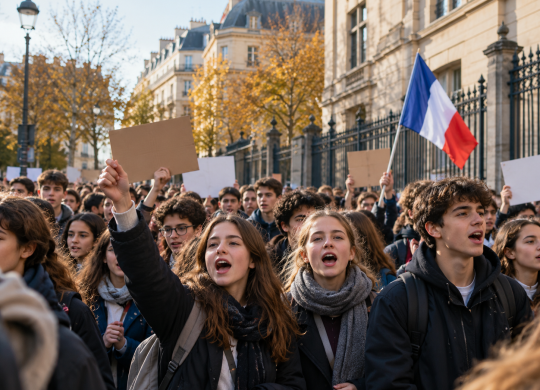
Masowe protesty uczniów we Francji w 2026 roku: przyczyny i konsekwencje
Francuscy uczniowie szkół średnich blokują szkoły i wychodzą na ulice, aby domagać się lepszych warunków edukacyjnych. Dowiedz się więcej o przyczynach protestów, żądaniach protestujących, odpowiedzi rządu oraz wpływie na edukację i podróże we Francji
12 paź. 2026
More details2 min
Transport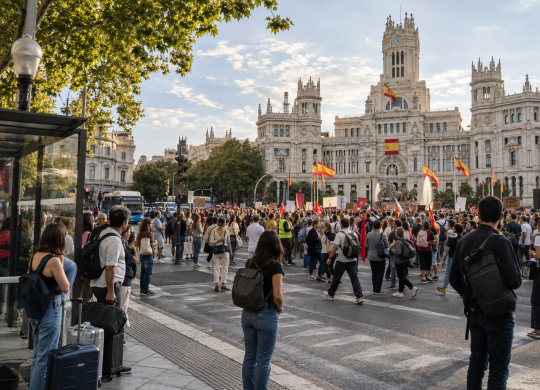
Ogromny strajk przetoczy się przez Hiszpanię 11 listopada 2026 roku
11 listopada 2026 roku w Hiszpanii odbędzie się ogólnokrajowy 24-godzinny strajk, który może prowadzić do odwołania lotów, zawieszenia usług kolejowych, zakłóceń w komunikacji publicznej oraz zamknięcia atrakcji turystycznych. Dowiedz się więcej o przyczynach protestu, możliwych ograniczeniach i zaleceniach dla podróżnych
13 paź. 2026
More detailsAll materials and articles are owned by VisitWorld.Today and are protected by international intellectual property regulations. When using materials, approval from VisitWorld.Today is required.