

Studying in Thailand: A Complete Guide for International Students
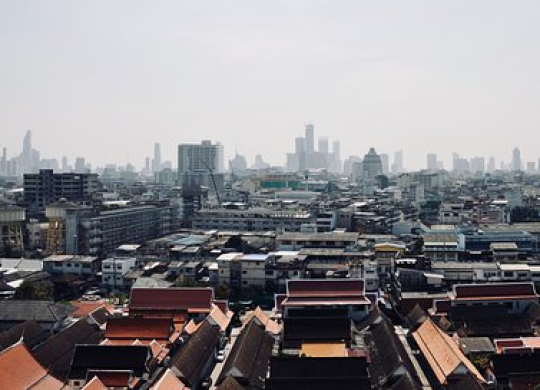
Thailand is becoming an increasingly popular educational center in 2025. Learn everything about studying in Thailand: how to enter a university, how much education costs, what documents are needed, how to apply for a student visa and get a scholarship

Thailand is known worldwide as a country of smiles, vibrant culture and amazing beaches. However, in recent decades it has also established itself as a promising educational destination for foreigners. Every year thousands of students from Pakistan, Iran, Bhutan, Morocco and other countries of the world come here to get a quality education and an unforgettable cultural experience. Thai universities are increasingly included in world rankings, and the combination of affordable cost and high level of teaching makes the country an attractive alternative to traditional educational centers.
Choose a reliable health insurance policy on the Visit World portal to protect yourself from unforeseen expenses during your move. Support from a trusted insurance agent with a guaranteed payout in just a couple of clicks!

Advantages of studying in Thailand
Study in Thailand has many advantages, including:
1. Affordable cost. The price per year of study here is several times lower than in the USA or Great Britain, and the quality of educational programs is often not inferior to European ones.
2. International recognition of diplomas. Leading universities have accreditations, cooperate with foreign institutions and offer double diplomas.
3. A wide selection of English-language programs. In Thailand, you can find programs in business, medicine, IT, tourism, art - all in English.
4. Multicultural environment. Universities accept students from over 100 countries around the world, so you will have the opportunity to study in an international environment.
5. Quality of life. Students note a comfortable climate, affordable housing and food, developed infrastructure and modern campuses.
6. Travel and new experiences. When studying in Thailand, you can combine studies with exploring the country: from the megacities of Bangkok and Chiang Mai to the tropical islands of Phuket or Samui.
Education system in Thailand
The Thai education system consists of several levels:
- High school - 12 grades, after which students can enter university.
- Higher education includes: bachelor's degree - 3-4 years, master's degree - 1-2 years, doctoral degree (PhD) - 3-5 years.
There are two main types of universities in Thailand:
- Public universities. They are cheaper, have a strong reputation and often occupy top places in rankings (Chulalongkorn University, Mahidol University).
- Private universities. They offer a wider selection of programs in English, more flexible study conditions, but the cost is higher.
The semester system is usually divided into two academic periods: August-December and January-May, with summer courses in June-July. Universities actively implement research programs, internships, and practice-oriented classes.
What is needed to study in Thailand?
To become a student in Thailand, you need to prepare several mandatory documents:
1. Passport (valid for at least 6 months);
2. Certificate or diploma of previous level of education, certified translation into English;
3. Academic transcript with grades;
4. Certificate of English language proficiency (TOEFL, IELTS) or passing the university's internal test;
5. Student visa (Non-Immigrant ED Visa), which must be issued after receiving an invitation from the university;
6. Proof of financial capacity (bank account, sponsorship from parents or scholarship);
7. Health insurance, which is often mandatory for registration at the university.
Important! A student visa is usually issued for 90 days with the possibility of extension for a year at the migration service.
Cost of Studying in Thailand
The cost of studying in Thailand is considered one of the most affordable in the region:
- Public universities – $1,500–$4,000 per year.
- Private universities – $3,000–$10,000 per year, depending on the program.
Additional costs:
- Accommodation – a dormitory costs from $100–$250 per month, apartment rent – from $300–$600;
- Food – $150–$300 (lunch in university canteens can cost only $1–$2);
- Transportation – a monthly pass in Bangkok is about $30–$40;
- Textbooks, materials, insurance – another $200–$500 per year.
Many universities and government programs offer scholarships that can cover 25–100% of the cost of tuition and living.
How to get a student visa in Thailand?
To study in Thailand, foreign students need a Non-Immigrant ED Visa (student visa). It is issued after receiving an invitation from a university or language school.
1. Procedure
- University admission. First, you need to apply, get an official Letter of Acceptance (invitation letter) from the educational institution.
- Collection of documents. The package is submitted to the Thai embassy or consulate in your country.
- Application submission. The student applies for a visa in person or online.
- Consideration. On average, the consideration takes 5-10 business days.
- Obtaining a visa. First, a visa is issued for 90 days. After arriving in Thailand, it must be extended for 1 year at the local immigration office.
2. Required documents
- International passport, valid for at least 6 months;
- visa application form;
- passport-sized photo;
- invitation letter from the university or language school;
- proof of financial capacity (bank statement with an account of at least $500–$1,000);
- medical insurance (often a policy covering the entire period of stay is required);
- receipt for payment of the consular fee (usually $80–$100).
3. Important rules
- Visa extension. Every 90 days, the student must confirm his place of residence with the immigration service.
- Work. The student ED visa does not give the right to official work. Only internships or part-time jobs at the university are allowed.
- Change of university. If the student transfers to another educational institution, a new invitation must be obtained and the visa must be processed.
4. Validity period
- The initial visa is issued for 90 days.
- Extension is possible for up to 1 year, with subsequent renewal each year for the duration of the study.
Preparatory courses and language programs
For foreigners who plan to study in Thailand, there are various adaptation programs:
- Language courses in English or Thai at universities. They help prepare for the main program and adapt to the new environment.
- Foundation programs - preparatory courses for students who do not yet meet all the entry requirements. They can include academic English, mathematics, business basics or IT.
- Summer intensives. Universities offer 2-3 month programs for foreigners that combine study and cultural activities.
- Online courses as preliminary preparation before moving: universities often provide free access to study materials.
Other important aspects
Student life in Thailand is not limited to studies:
- Student life - universities organize festivals, sports competitions, cultural events. Many students participate in volunteer projects.
- Work during studies - officially students are not allowed to work full-time, but you can join paid research programs or internships.
- Safety - Thailand is considered a relatively safe country, although you should be careful in tourist areas. There is security and student support on campus.
- International community - in large cities there are associations of foreign students where you can find friends and get help with adaptation.
Getting an education in Thailand is an opportunity to get quality knowledge, recognized internationally, at an affordable price. Here you will find not only modern universities and promising programs, but also a multicultural environment, new acquaintances and a vibrant student life. The combination of studying, traveling, and immersing yourself in Asian culture makes Thailand one of the most interesting destinations for international students.
Need help with obtaining a study visa to Thailand? Contact experienced immigration lawyers who will help you prepare all the documents, go through the visa procedure, and avoid common mistakes.

Reminder! Thailand is becoming a popular destination for foreigners who want to work in various fields, thanks to its culture and economic development. We have already talked about how to move to Thailand for work in 2025 and where most expats work and how much they earn in the country.
Products from Visit World for a comfortable trip:
Checklist for obtaining a visa and necessary documents in Thailand;
Legal advice on immigration to Thailand;
Travel insurance for foreigners in Thailand;
Medical insurance all over the world.
We monitor the accuracy and relevance of our information, so if you notice any errors or inconsistencies, please contact our hotline.
Frequantly
asked questions
Do you need to know Thai to study?
Can you work while studying in Thailand?
Which universities are considered the best for foreigners?
Recommended articles
2 min
Education
Italy is one of the most popular countries among international students: it combines affordable education, high quality teaching and life among architecture, art and sun. Find out how the education system in Italy is organized in 2025 - from kindergartens to universities, from scholarships to learning English, from admission to obtaining a student visa
19 Jun. 2025
More details2 min
Education
The best majors to study in Canada in 2026: what to study to stay employed
Want to study in Canada and stay working after graduation? Learn about the top majors of 2026, new PGWP requirements, and which programs offer the best chances of immigration
03 Jul. 2025
More details2 min
Education
Student Visa to Australia 2025 (Subclass 500): New Rules, Work Restrictions and Fee Increases
Australian Student Visa Subclass 500 in 2025: New Rules, Increased Fees and Important Tips for a Successful Application. Learn How to Study, Work and Live in Australia Legally
17 Jul. 2025
More details2 min
Education
How much does a student visa cost in 2025: price comparison by country
Are you planning to enroll in a foreign university? Then you should definitely know about the cost of visa processing. Find out how much a student visa costs in 2025 in the USA, Canada, Great Britain, Australia and other countries
24 Jul. 2025
More detailsAll materials and articles are owned by VisitWorld.Today and are protected by international intellectual property regulations. When using materials, approval from VisitWorld.Today is required.