

The safest countries in the world during World War III: where to go?
Some countries are island states with political neutrality, which means that the likelihood of a military conflict is quite low. Learn more about the countries that are likely to participate in World War III and the top safest countries in the world

As geopolitical tensions rise around the world, more and more people are wondering: is World War III possible—and if so, where would it be safest? A new survey shows that Western Europeans are deeply concerned about such a scenario, with a majority believing their countries are not prepared for a major conflict.
Choose a reliable health insurance policy from Visit World to travel abroad safely.

Western Europe: Fear of War and Lack of Confidence in Defense Capabilities
A YouGov survey conducted in 2025 among more than 7,000 respondents from the UK, France, Germany, Italy, and Spain revealed an alarming trend: between 41% and 55% of respondents believe that within the next 5–10 years, the world could once again find itself in the throes of a global war. At the same time, the majority assume that the conflict will inevitably involve the use of nuclear weapons.
Despite the high level of concern, in France alone, almost half of citizens (44%) are confident in the ability of their armed forces to defend the country. In other countries, this figure is much lower: only 16% of Germans and 20% of Italians trust the defense capabilities of their army.
Interestingly, the willingness to participate in military operations remains high: in the UK, 89%, while in Italy - 66%.
All these events make many people think about finding the safest places in the world.
Where to go if World War III starts? We tried to find regions where you can escape from World War III.
Will World War III begin in 2026?
The possibility of World War III in 2026 is increasingly being raised in expert assessments of global security. As noted by the National Security Journal, the modern world is in a phase of heightened turbulence, with several serious conflicts existing in parallel and mutually reinforcing the risks of escalation.
Unlike the Cold War, the current confrontation does not have a clear two-bloc structure. It is multipolar, less predictable, and complicated by the involvement of several nuclear powers in regional wars and crises. An additional factor of danger is the gradual disappearance of “red lines” — nuclear threats are increasingly being made publicly, lowering the psychological threshold of deterrence.
At the same time, analysts emphasize that even with high tensions, a global war is not fatally inevitable. Awareness of the catastrophic consequences of a direct confrontation between major powers remains a key deterrent. Therefore, 2026 looks more like a period of maximum testing for the international security system than a guaranteed start of a global conflict.
Which countries and regions are most at risk?
As noted in an article in the National Security Journal, global tensions are concentrated in several regions where the interests of nuclear powers and military alliances intersect. Eastern Europe remains one of the main hotspots due to Russia's war against Ukraine and its proximity to NATO countries, which creates the threat of direct involvement of allies in the conflict.
The Asia-Pacific region also poses a serious challenge to global security. Growing military pressure around Taiwan and activity in the South China Sea are creating scenarios where any incident could quickly escalate into a large-scale crisis involving several states.
Chronic instability persists on the Korean Peninsula, where the absence of a peace treaty, North Korea's nuclear program, and the alliance system make the situation particularly vulnerable. In the Middle East, Iran's nuclear ambitions and fierce confrontation with Israel, which could spill over beyond the region, pose an additional threat.
South Asia also remains a potential flashpoint due to the rivalry between India and Pakistan, two nuclear powers with divergent foreign ties. Ultimately, the risk to the world is not posed by any one specific war, but by a combination of interrelated crises that can reinforce each other.
Where will it be safe during World War III?
Taking into account possible participants, we can conclude that the safest will be:
- Island states with political neutrality, because the probability of invading them is low.
- Countries that occupy high positions in the World Peace Index.
- Small states with a tiny population, for the invasion of which troops may find no reason at all.
12 countries that will be as safe as possible if World War III breaks out
Antarctica
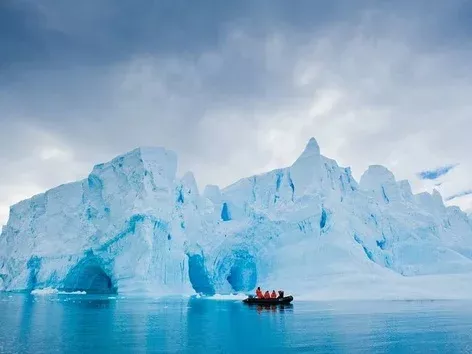
During World War III, there will be no safer place on the planet than Antarctica. Theoretically, you can hide in one of the scientific outposts and wait for the end of hostilities.
However, we note that it will be possible to save yourself here only for the first time, because it will be extremely difficult to provide yourself with food on the icy continent.
Given its remote location, it is unlikely to be visited by many people in the event of a possible Third World War.
Fiji
Fiji is an island nation located in the southwestern part of the Pacific Ocean. The closest neighbor of the island is Australia, which is more than 4345 kilometers away. Fiji itself does not have much to offer in terms of military strategy or resources. The country has a very small army of about 6,000, so neither side of World War III would perceive it as a threat. Also, there are not many natural resources on the territory of the state.
However, Fiji has an endless supply of food and fertile land for growing crops, so you can safely wait out the danger here.
Disadvantages include that, more than likely, because you'll be so far away from the action, you may not know who's winning or even that the war is over. During a world war, global communication and the Internet will probably become impossible. Therefore, we will have to wait until someone comes to the island and announces that the war is over.
Iceland
Iceland is the leader of the Global Peacefulness Index, and the country is thousands of kilometers away from the United Kingdom and the rest of Europe. That is why, during the Third World War, the state is unlikely to be in direct danger.
Like many other island nations, Iceland has tons of marine resources and abundant fresh water reserves.
Another factor that makes Iceland a great place to be during a global war is that the country gets 100% of its energy from renewable sources that are within its borders. Iceland harnesses vast amounts of geothermal energy and converts it into electricity and heat. While the entire planet is at war, Iceland doesn't have to worry about getting oil, coal or any other kind of energy from different parts of the world.
Iceland also has plenty of land to settle on if you need to find a place to wait out the war. In fact, the current population of the country averages 3 people per square kilometer.
Argentina
Although Argentina has experience in wars, including the country's claim to the Falkland Islands in 1982 in Great Britain, this South American country will be the most successful place to experience famine after a nuclear war.
Considering that studies have shown that the release of 100 nuclear bombs could release so much smoke that the sun could be covered. Such a situation can lead to famine and crop failure. As a result - Argentina would be a good place to live due to its abundance of sustainable crops such as wheat and its remote location.
New Zealand
New Zealand is a separate but developed country that does not participate in any armed conflicts in the world, and its mountainous terrain will help protect the country from any wars.
New Zealand also has enough food, clean water and fertile soil to sustain itself in the short term. The infrastructure of the state is developed at a high level, the country is working on becoming independent for many decades.
Thanks to its foreign policy, it ranks second in the Global Peacefulness Index.
Butane
Since Bhutan joined the UN, the country has agreed to take a neutral side in any conflict. Surrounded by mountains, it is one of the most remote landlocked countries in the world. Its geographical location and foreign policy will protect the population if war does break out.
Ireland
Despite its proximity to England, a potential participant in the Third World War, Ireland maintains a completely independent foreign policy and refrains from NATO membership. Its military neutrality and the requirement of government approval and UN authorization to participate in foreign conflicts make Ireland a neutral entity.
Switzerland
For more than 200 years, Switzerland's main principle in foreign policy has been the position of neutrality. Also, the country is reliably protected due to its geographical location and landscape. After all, the mountainous terrain will protect against invasion, and the bridges that connect the country with other regions can simply be blown up. In addition, it is important to note that Switzerland has a sufficient number of prepared shelters to protect the population even from a nuclear attack.
Indonesia
The Indonesian islands are a quiet and relatively safe place to survive in the event of a global war. The state maintains neutrality in world political issues. Also, the country has a fairly well-developed infrastructure and agriculture, which will ensure access to food, even in the conditions of the Third World War. Also in Indonesia, and especially on the island of Bali, moderate real estate prices, the state is the top region in terms of investment attractiveness according to Forbes estimates. Therefore, buying housing here in case of the Third World War is not only to prepare an island of security for yourself, but also a successful investment. A profitable investment option in Bali is the purchase of real estate for the Ramada Encore Pandawa Hills complex from the reliable international developer ANTA Group, which has been operating in the real estate market for more than 10 years. Details at the link.
Tuvalu
Tuvalu is a 16 square kilometer chain of islands located just over 1,600 km north of Fiji. Only about 11,000 people live on the islands of Tuvalu. Its remote location and lack of natural resources made it an undesirable target for both sides during World War III, and thus afforded safety to its inhabitants.
Chile
Chile is a South American country that has a wealth of natural resources and numerous geological features that make for an easy escape should war ever reach South America.
Chile is one of the most developed countries in all of South America, which means it has the infrastructure needed to support the country if the rest of the world goes to war with each other.
South Africa
South Africa is the perfect place to hide from the horrors of World War III. The country has many sources of food, fresh water supplies and fertile land.
It should be noted that there is no safer place in this part of the world than Cape Town - it is a thriving city with modern infrastructure and numerous resources around it. You can fish near the coast, and the mountains surrounding the city isolate it from the rest of the continent.
The world is changing, it is becoming more and more dangerous to live here, but if you have a place in case of a global crisis, you can better prepare for possible troubles.
Planning a trip or moving abroad? A travel insurance policy is an important component of a successful trip, as it guarantees high-quality medical care anywhere in the world and can protect you from unnecessary expenses during your trip.
Buy insurance from trusted agents on the Visit World portal!
Reminder! There are hiking trails around the world that impress not only with their complexity, but also with their landscapes, atmosphere, and sense of real adventure. Some of them pass through desert highlands, others along ocean cliffs or among glaciers and volcanoes. Here we tell you about the best hiking trails in the world that will inspire you to set off on a journey right now.
Products from Visit World for a comfortable trip:
Travel guide for 200 countries;
Legal advice from a local specialist on visa and migration issues;
Travel insurance around the world (please select the country of interest and citizenship to receive services);
Medical insurance all over the world.
We monitor the accuracy and relevance of our information, so if you notice any errors or inconsistencies, please contact our hotline.
Frequantly
asked questions
Which country in the world is the safest in the event of a nuclear war?
Which country has the best chance of surviving World War III?
Where to hide during war?
Recommended articles
2 min
Popular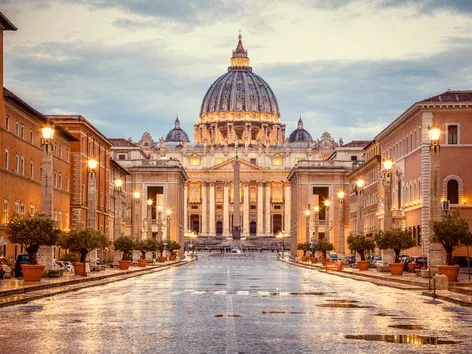
Italy is one of the most popular European countries among expats. It has many historical and cultural attractions, picturesque small towns, beautiful beaches, and world-famous cuisine. Find out more about the top 7 cities in Italy with the highest quality of life 2025
25 Jan. 2025
More details3 min
Expats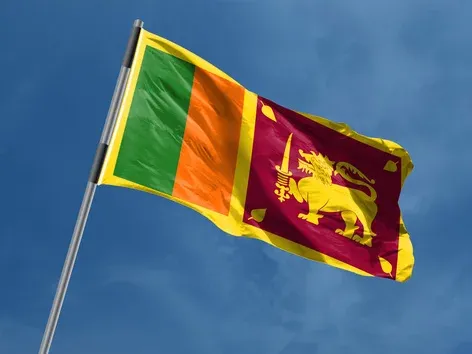
Sri Lanka updates visa rules: new opportunities for tourists and digital nomads
Sri Lanka is updating its migration rules and opening up new opportunities for travelers and remote workers looking for a comfortable country for a long stay. The country's visa formats simplify legal residence, online work, and planning longer trips without violating local rules. Learn more about Sri Lanka's visa options for tourists and digital nomads
06 Feb. 2026
More details3 min
Travels
Barcelona is preparing a special event for tourists and architecture enthusiasts—one of Europe's most famous shrines will be temporarily open to the public free of charge. This is a rare opportunity to see the legendary temple, which has been under construction for over a century, as it nears completion. Learn more about free visits to the Sagrada Familia and the conditions of access for visitors to the city
07 Feb. 2026
More details3 min
Work
The US is expanding the H-2B program in 2026: +64,716 visas for temporary workers
In fiscal year 2026, the US government adopted an interim rule that significantly increases the number of H-2B visas for foreign workers in non-agricultural fields. The decision is aimed at covering labor shortages in key industries and supporting businesses. Learn more about the H-2B visa requirements, new quotas, and important filing deadlines in 2026
09 Feb. 2026
More detailsAll materials and articles are owned by VisitWorld.Today and are protected by international intellectual property regulations. When using materials, approval from VisitWorld.Today is required.