

Why the Northern Lights in the winter of 2026 will be the most spectacular in a decade and where to see them: a guide for tourists
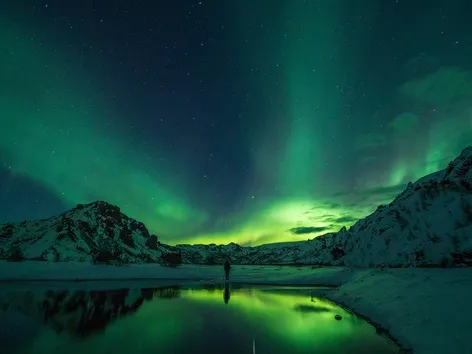
2026 is the best time to see the Northern Lights! Find out where, when and how to plan a trip to see the most spectacular natural phenomenon

When the night sky flashes green, pink and purple, it seems as if the Universe itself is painting a masterpiece. The Northern Lights are one of the most mysterious and breathtaking natural phenomena on Earth. And if you have long dreamed of seeing this spectacle with your own eyes, then the winter of 2025-2026 is your perfect chance.
Astronomers predict that this season the northern lights will be the brightest and most frequent in the last decade, because the Sun reaches the peak of its activity. NASA has confirmed: we have entered the phase of the so-called solar maximum, which occurs only once every 11 years. And while this period will last until the spring of 2026, the sky promises a real light show.
Read about the countries where it is best to see the northern lights this winter in this article.
Traveling for the Northern Lights? Don't forget about reliable travel insurance!
Take out a policy with Visit World - it is a guarantee of your safety during a trip to any country. Medical protection, baggage insurance and round-the-clock support — everything you need for a peaceful trip.

When space comes alive: what is solar maximum?
To understand why the aurora is becoming so powerful right now, it is worth looking higher — to our star. Solar activity changes in cycles: approximately every 11 years the Sun goes through a period of rest, and then becomes active again. In the maximum phase, its surface is covered with dark spots, explosions and flares - they are the ones that throw billions of charged particles into space.
“During solar maximum, the number of sunspots, and therefore the level of solar activity, increases significantly,” explains Jamie Favors, director of the Space Weather Program at NASA Headquarters. “This increase in activity creates an exciting opportunity to observe phenomena that affect not only space, but also the Earth.”
When these particles collide with our planet’s magnetic field, they interact with nitrogen and oxygen atoms in the atmosphere. The result is a shimmering glow that we see as the Northern Lights (Aurora Borealis). Depending on the altitude and type of particles, the colors of the glow can vary from green and pink to purple or even red.
Tourism boom: why the world is going in droves to see the northern lights
The solar maximum is not only exciting astronomers – it has already created a real tourism phenomenon. Online travel agencies are recording an unprecedented increase in demand for trips to the northern regions.
According to eSky Group, in the 2024/2025 season, the number of bookings for “hunting for the aurora” has increased significantly:
- Finland – +2300%;
- Iceland – +2200%;
- Norway – +126%;
- Sweden – +91%.
“The Northern Lights have become a bucket list event that many people are dreaming of right now,” says Jaroslav Grabczak of eSky Group. According to him, even increases in airfare or accommodation prices have little impact on demand: tourists book trips a year in advance, and small northern cities have a limited number of hotels and glass igloos.
Where to hunt for the Northern Lights: 6 destinations that guarantee the magic of the sky
Iceland - the land of fire, ice and light
This is, without exaggeration, one of the best locations to observe the Northern Lights. From September to March, dark nights reign here, and the sky often remains clear.
Thingvellir National Park near Reykjavik provides ideal conditions for observations, while the Jökulsárlón glacial lagoon creates a cinematic backdrop for photos.
The Icelandic Meteorological Office has even developed a special northern lights forecast map with the KP index, which helps to predict the intensity of the glow.
Finland – Lapland under a blanket of light
Finnish Lapland is a real winter fairy tale. Here you can admire the aurora, lying under the transparent roof of a glass igloo, or combine the trip with a visit to Santa Claus Village in Rovaniemi.
In the city of Oulu, which will become the European Capital of Culture in 2026, the aurora can be observed simply from city parks.
Norway – a polar classic
The city of Tromsø, located beyond the Arctic Circle, is considered the “gateway to the aurora”. It combines the comfort of the city and proximity to dark fjords.
Even further north is Spitsbergen, where the polar night reigns in winter, and the sky is dark around the clock. This means that you can observe the aurora at any moment.
And the small fishing village of Reine, named the third most beautiful in the world by Forbes magazine, offers the perfect combination of silence, nature and magical radiance.
Sweden – scientifically accurate magic
Abisko National Park is known among astronomers as the place with the clearest sky in Scandinavia. It is home to the Aurora Sky Station, created specifically for studying the aurora. Due to the unique microclimate, the so-called “blue hole” often forms above the park – a cloud-free zone, which guarantees excellent visibility.
Canada – boundless dark skies
The northern territories of Canada, in particular the Yukon and Nunavut, provide up to 240 nights of observation per year. Minimal light pollution and crystal clear air make these regions ideal for photographers.
Cruise under the aurora
Another option is a sea voyage along the Norwegian fjords or to Iceland. On board a cruise there is practically no light pollution, so the aurora can be observed right from the balcony of the cabin.
When and how to observe the northern lights?
- The best time is from 9:00 PM to 2:00 AM.
- The observation season lasts from September to March, when the nights are the longest.
- The location is as far away from cities and sources of artificial light as possible.
- Check the KP-index forecast: a figure of 5 and above means a high probability of observation.
- Advice for photographers - use a tripod and a long shutter speed to capture all the colors of the light.
For many people, a trip to see the Northern Lights is not just a trip, but a dream come true. Some choose a romantic weekend under the stars, some choose a family adventure, and some go to catch the “perfect shot” for the album.
That is why astronomical events, such as the current solar maximum, create a wave of “nocturnism” - a new trend when people travel for the sake of night sky phenomena.
Planning your trip to one of the countries to enjoy the Northern Lights? Make it safe and comfortable with Visit World.
Use the “Travel Guide” from Visit World - in it you will find step-by-step instructions for applying for a visa, tips for booking accommodation, information on visa fees and current entry rules.
Open your sky this winter. Plan a trip to the Northern Lights with Visit World - and let every night become a memory of a lifetime.

Reminder! The best places to relax in December 2025 - from festive Paris and snowy Scotland to sunny Maldives and Sydney beaches. We have already talked about the weather, season, cultural features, gastronomy and tips for tourists in each direction.
Photo - Freepik
Products from Visit World for a comfortable trip:
Travel guide for 200 countries;
Legal advice from a local specialist on visa and migration issues;
Travel insurance around the world (please select the country of interest and citizenship to receive services);
Medical insurance all over the world.
We monitor the accuracy and relevance of our information, so if you notice any errors or inconsistencies, please contact our hotline.
Frequantly
asked questions
When is the best time to watch the Northern Lights in 2026?
Which country has the best view of the aurora borealis?
How to prepare for a trip to see the aurora borealis?
Recommended articles
2 min
Travels
Vacation at the edge of the world: why tourists choose Kiribati?
Kiribati is a remote country in the heart of the Pacific Ocean, where you can escape civilization, see pristine nature and experience true silence. Find out how to get there, what to see and why this corner of the planet is called the "edge of the world"
02 Nov. 2025
More details1 min
Popular
The Grand Egyptian Museum opened to visitors: tickets, opening hours, history and exhibition
The Grand Egyptian Museum at Giza opened on November 4, 2025. Learn about the exhibits, opening hours, tickets, routes and the main treasures of the GEM
04 Nov. 2025
More details2 min
Travels
8 best budget places in Europe for skiing: where to spend a winter vacation profitably and brightly?
Winter is just around the corner – it’s time to plan an active vacation in the snowy mountains. Find out which 8 European resorts offer the best combination of price, quality and magical atmosphere for skiing in the 2025–2026 season
06 Nov. 2025
More details1 min
Travels
Where to celebrate New Year 2026: 9 best cities in Europe for New Year's Eve fun
Lonely Planet has named the 9 best cities in Europe to celebrate the New Year 2026. Fireworks, festivals, music, gastronomy – choose the perfect place for a winter trip
07 Nov. 2025
More detailsAll materials and articles are owned by VisitWorld.Today and are protected by international intellectual property regulations. When using materials, approval from VisitWorld.Today is required.