

Countries out of conflict: 7 neutral destinations for living and relocation
Table of contents
- 1. Switzerland: the gold standard of neutrality
- 2. Liechtenstein: micro-state neutrality
- 3. Austria: neutrality within the EU
- 4. Andorra: mountain neutrality between France and Spain
- 5. Oman: pragmatic neutrality in the Middle East
- 6. Mauritius: a neutral harbor in the Indian Ocean
- 7. Costa Rica: demilitarized neutrality in Latin America
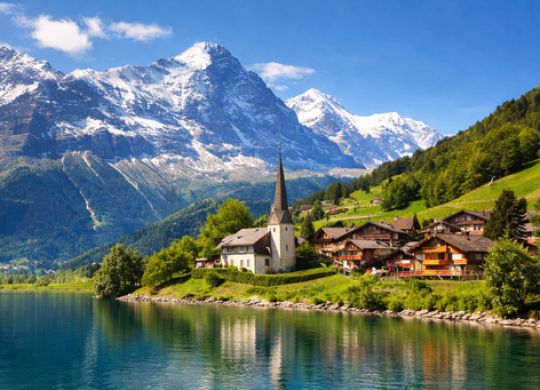
In times of geopolitical turbulence, some people consider moving to countries that have long maintained a policy of neutrality and avoided military alliances. Such states offer relative stability and clear paths for residency or long-term residence. Learn more about countries that remain neutral and realistic options for moving to them

The escalation of international conflicts is forcing many to seek more peaceful jurisdictions to live and work. There is a small group of countries in the world that have been adhering to a policy of military neutrality for decades, relying on diplomacy, mediation, and a balance of interests. At the same time, it is important to understand that neutrality is not an absolute guarantee of security. History knows cases when even non-aligned countries have been involved in global conflicts. In this article, we will discuss 7 neutral countries and practical options for relocation for foreigners.
Earlier we told you that the EU has approved the first ever visa policy strategy.
Are you planning to move, work or stay in the EU for a long time and don't know where to start?
To avoid getting lost in the changes to visa and migration policy, use the immigration guide from Visit World. It contains up-to-date information on obtaining a residence permit and citizenship in different countries, step-by-step instructions, requirements for applicants, a list of documents, deadlines and costs. The guide will be sent to your email in PDF format in just a few minutes and will help you plan your legal move without unnecessary stress.

1. Switzerland: the gold standard of neutrality
Switzerland is considered the benchmark of military neutrality: its non-aligned status was officially established in 1815 after the Treaty of Paris. The country has not joined military alliances, participated in wars, or provided military assistance to parties to conflicts for decades. This approach has allowed Switzerland to maintain its reputation as one of the key diplomatic mediators in the world.
At the same time, Switzerland's modern neutrality has its own peculiarities. After Russia's full-scale invasion of Ukraine, the country joined the EU sanctions and froze Russian assets. This has sparked discussions about the limits of neutrality, but the authorities emphasize that economic sanctions do not contradict military non-alignment and do not mean participation in armed conflicts.
Residence options
It is relatively easy for EU citizens to obtain a residence permit, provided they can prove their financial solvency and have housing. For third-country nationals, there is an independent visa format that is suitable for those who have stable income outside of Switzerland. A separate path is available for wealthy applicants through the lump-sum taxation system, when tax is paid on expenses rather than income. Citizenship is possible after long-term legal residence in the country.
2. Liechtenstein: micro-state neutrality
Liechtenstein has maintained permanent neutrality since 1868, when the principality disbanded its army and declared its complete refusal to participate in conflicts. Since then, the state has avoided military confrontations for more than a century and a half, remaining one of the most stable and peaceful jurisdictions in Europe.
Geopolitically, Liechtenstein is closely linked to Switzerland, which represents its interests in the international arena and is responsible for foreign affairs and the customs union. Despite the absence of its own armed forces, the principality retains sovereignty, is a member of the UN, the European Economic Area and the Schengen zone, combining neutrality with deep economic integration into the European space.
Residence options
Obtaining a residence permit in Liechtenstein is difficult due to strict quotas and a limited number of permits for foreigners. Residency usually requires proof of significant financial resources and does not give the right to work in the country. The tax regime remains attractive for wealthy individuals, but the path to citizenship is one of the longest in Europe and requires many years of residence with the permission of local authorities.
In the previous article, we provided information on the most expensive cities in the world to live in in 2026 according to Numbeo.
3. Austria: neutrality within the EU
Austria enshrined its permanent neutrality at the constitutional level on October 26, 1955. The country cannot join military alliances or host foreign military bases on its territory. At the same time, Austria has been a member of the EU since 1995, so its model is often called “differentiated neutrality”: it is not a member of NATO, but participates in the EU's common foreign policy and peacekeeping missions.
After 2022, there were active discussions in Austria about revising its neutrality, but in practice, the course remained unchanged: the country maintains military non-alignment and positions itself as a diplomatic platform. It is no coincidence that the headquarters and offices of the UN, IAEA and OPEC are located in Vienna - this is an important signal for those looking for a stable and politically predictable jurisdiction for life and business.
Residence options
The most popular option for financially independent individuals is a residence permit without the right to work (the so-called visa for persons with independent income). It requires proof of an annual income of about 24,000 euros per person, as well as housing and health insurance in Austria. There is a separate category of residence permit for entrepreneurs and self-employed persons: an investment of EUR 100,000 or more and a project that creates economic value or jobs are usually required.
Permanent residence can be obtained after 5 years of legal residence, provided that you have at least a B1 level of German. Citizenship is granted after approximately 10 years of residence (or sooner if you have a higher level of integration, including B2 German).
4. Andorra: mountain neutrality between France and Spain
Andorra has maintained a neutral position for decades and did not participate in the major wars of the twentieth century. The country does not have a standing army and actually relies on security guarantees from its neighbors, France and Spain. The neutral status is combined with political stability and a low level of international tension around the jurisdiction.
For relocation, it is important to consider: Andorra is not a member of the EU, but uses the euro and has special agreements with the European Union. The country attracts with low taxes, security, high-quality medicine, and a high standard of living, but at the same time, it has strict requirements for the financial solvency of residents.
Residence options
The most common way is residence without the right to work. It is necessary to make a security deposit (about 50,000 euros) and invest a significant amount in the country's economy (usually through real estate or special funds). The permit is issued for a limited period with the possibility of extension, and permanent residence is possible after several years of legal status. Andorran citizenship is a long process: it takes decades of residence and real integration into the country, including knowledge of the Catalan language.
In the previous article, we provided a rating of the top 10 tourist destinations according to Time Out for travel in 2026.
5. Oman: pragmatic neutrality in the Middle East
For decades, Oman has pursued a foreign policy separate from regional blocs and maintained working relations with both Western countries and Iran. That is why the sultanate often acts as a mediator in negotiations between parties in conflict. Oman does not participate in the military campaigns of its neighbors in the region and avoids public alliances that could draw it into confrontation.
A practical security factor is geography. Oman controls the southern shore of the Strait of Hormuz, through which a significant portion of the world's oil exports pass. This forces the country to invest in the stability and predictability of the region, as any escalation directly affects its economic interests, logistics, and port infrastructure. Domestically, Oman is considered one of the most stable countries in the Persian Gulf with a low level of internal conflicts.
Residence options
For foreigners, the key way is the investor residency program: an investment of approximately 200,000 Omani riyals (about $500,000+) is required, which entitles you to a long-term residence permit (up to 10 years with the possibility of extension). Resident status does not lead to citizenship: naturalization in Oman is practically unavailable for foreigners, so the country is suitable for long-term residence, not for changing a passport.
6. Mauritius: a neutral harbor in the Indian Ocean
Mauritius adheres to a non-aligned foreign policy and does not participate in military alliances. The country relies on diplomacy and regional cooperation in Africa and the Indian Ocean, avoiding involvement in geopolitical confrontations. In practice, this means low political risks for foreigners, no internal conflicts, and a stable democratic system of government.
From the perspective of relocation, Mauritius is often seen as a “safe base” outside of hot spots: there are no wars, no tense relations with neighbors, and the country is actively developing financial services, tourism, and programs to attract foreign residents. For those who work remotely or are looking for an alternative jurisdiction with a mild climate and relatively predictable rules for foreigners, this is a real option.
Residence options
The easiest way is investment residency through the purchase of real estate from a certain threshold (approximately $375,000 in approved projects), which entitles you to long-term residence. Separate programs exist for pensioners aged 50+ with the requirement of proof of regular income or monthly transfers to the country. Permanent residence and citizenship are possible after several years of legal status. Mauritius is more often chosen for long-term residency rather than quick naturalization.
7. Costa Rica: demilitarized neutrality in Latin America
Costa Rica is one of the few countries in the world that officially abolished the army back in 1948 and enshrined the principle of unarmed neutrality. The Constitution prohibits the establishment of a standing armed force, and security is provided by the police, international agreements, and regional cooperation mechanisms. This is not an abstract neutrality, but a real model: the country has not been involved in wars or military blocs for decades.
For foreigners, this means a relatively stable environment in a region that is generally considered politically unstable. At the same time, it is important to consider practical risks: Costa Rica does not have an army, and the current security challenges are not related to wars, but to transit crime and drug trafficking in Central America. That is, the country is suitable for those who are looking for political neutrality, but not “perfect silence”.
Residence options
The most popular programs are for retirees (you need to confirm a regular income of about $1,000 per month) and for financially independent people with a stable income or a deposit in a local bank. A separate option is an investor visa with an investment of $150,000 or more in business or real estate. Permanent residence is possible after a few years of legal status, and citizenship is possible after about 7 years, provided that the person is truly integrated and speaks Spanish.
Planning to move or legalise your status? Use our proven guide!
To live legally in another country, expats need to obtain a residence permit, which may eventually entitle them to citizenship. The procedures, requirements and deadlines vary depending on the country and the reason for moving.
You can find up-to-date and structured information on obtaining a residence permit or citizenship in any country in the immigration guide from Visit World. In PDF format, you will receive step-by-step instructions, a list of documents, costs and processing times, applicant requirements, rules for filling out forms, practical advice and status benefits — all delivered to your email in just a few minutes.
If you are considering moving or staying abroad for a long time, purchase the immigration guide from Visit World and prepare in advance!
We remind you! Electronic travel authorisations, extended visa-free travel, digital arrival cards instead of paper forms — in 2026, border crossing rules in many countries will change again. Travel will not become more difficult, but it will require more advance preparation. Read about the new travel rules in 2026 at the link.
Products from Visit World for a comfortable trip:
Travel guide for 200 countries;
Legal advice from a local specialist on visa and migration issues;
Travel insurance around the world (please select the country of interest and citizenship to receive services);
Medical insurance all over the world.
We monitor the accuracy and relevance of our information, so if you notice any errors or inconsistencies, please contact our hotline.
Frequantly
asked questions
Do neutral countries really guarantee complete security during global conflicts?
Which of the neutral countries is the easiest to move to without large investments?
Is it possible to obtain citizenship in neutral countries quickly?
Which countries are suitable for moving with remote work or passive income?
Does neutrality affect the attitude towards foreigners and migrants?
Which of these countries is the easiest to legalize business or investment?
What should I look for before moving to a “neutral” country?
Recommended articles
3 min
Travels
10 best hiking trails in the world: where to go for real adventures
There are hiking trails in the world that impress not only with their difficulty but also with their landscapes, atmosphere, and sense of adventure. Some of them run through desert highlands, others along ocean cliffs or among glaciers and volcanoes. Find out more about the best hiking trails in the world that inspire you to go on a journey right now
08 Feb. 2026
More details3 min
Travels
Barcelona is preparing a special event for tourists and architecture enthusiasts—one of Europe's most famous shrines will be temporarily open to the public free of charge. This is a rare opportunity to see the legendary temple, which has been under construction for over a century, as it nears completion. Learn more about free visits to the Sagrada Familia and the conditions of access for visitors to the city
07 Feb. 2026
More details3 min
Travels
Tourism in Spain broke a historical record in 2025: key figures and facts
In 2025, Spain welcomed a record number of foreign tourists and became one of the world's top three countries in terms of tourist revenue. Tourism has become one of the key drivers of the country's economy, while also creating new challenges for cities and local residents. Find out more about the main tourism highlights of 2025 in Spain and the world
07 Feb. 2026
More details3 min
Work
The US is expanding the H-2B program in 2026: +64,716 visas for temporary workers
In fiscal year 2026, the US government adopted an interim rule that significantly increases the number of H-2B visas for foreign workers in non-agricultural fields. The decision is aimed at covering labor shortages in key industries and supporting businesses. Learn more about the H-2B visa requirements, new quotas, and important filing deadlines in 2026
09 Feb. 2026
More detailsAll materials and articles are owned by VisitWorld.Today and are protected by international intellectual property regulations. When using materials, approval from VisitWorld.Today is required.