

The 2026 Olympics in Milan: medal count, records, scandals, and major sensations of the Winter Games
Table of contents
- 2026 Olympics medal count: who is in the lead and who is surprising?
- Johannes Klæbo's record: the most titled athlete in the history of the Winter Olympics
- Brazil and South America's first Winter Olympic medal
- Curling scandal: Canada accused of cheating
- Defective Olympic medals: organizers acknowledge the problem
- Dismissal of the Finnish national team coach and the helmet scandal
- The debut of ski mountaineering and the format of the 2026 Olympics
- How are the Olympics going for fans and tourists?
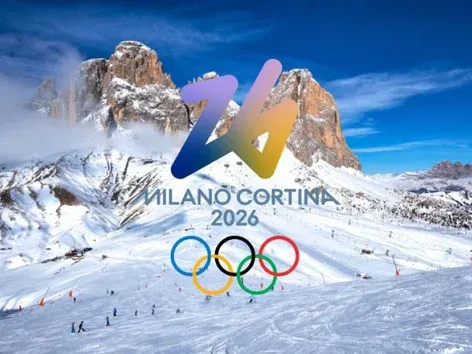
The 2026 Winter Olympics in Italy have already given spectators historic records, unexpected triumphs, and heated debates. From Norway's dominance in the medal count to South America's first winter gold, these Games will be remembered for a long time. Learn more about the main characters, scandals, and sensations of the 2026 Milan-Cortina Olympics

The 2026 Winter Olympics in Italy—Milan and Cortina d'Ampezzo—have already passed the halfway point, and these two weeks of great sport have already produced many memorable stories. Norway's Johannes Klæbo rewrote the record books, Brazil won its first ever Winter Olympic medal, and a curling scandal between Canada and Sweden is being discussed on both sides of the Atlantic. At the same time, athletes are complaining en masse about defective medals, and the coach of the Finnish national team has been suspended for disciplinary violations. The community was also shaken by reports of sabotage on the railway, which paralyzed transport links in Italy during the 2026 Olympics.
Read on to learn more about the medal count, historic achievements, major surprises, and the atmosphere of the Games for fans.
Planning a trip abroad and want to protect yourself from unforeseen situations?
Travel insurance from Visit World will cover medical expenses, flight delays, and lost luggage in any country. Get a policy online in a few minutes and travel with confidence!

2026 Olympics medal count: who is in the lead and who is surprising?
The Norwegian team confidently holds first place in the overall team standings. As of February 15, the Norwegians have 12 gold, 7 silver, and 7 bronze medals — a total of 26 awards. Their lead over their closest rivals is significant: second-placed Italy has 8 gold and 22 medals in total, while third-placed the United States has 5 gold and 17 medals. Norway has won the team standings at the Winter Olympics without interruption since 2014, and so far the trend continues.
Next in the top ten are the Netherlands and Sweden (5 gold and 11 medals each), France and Germany (4 gold and 15 medals each), Austria (4 gold and 13 medals), Switzerland (4 gold and 9 medals), and Japan (3 gold and 17 medals). Interestingly, Australia has unexpectedly won 3 gold medals, while Kazakhstan and Brazil have each won one gold medal for the first time. On the other hand, Canada, traditionally a strong winter team, has yet to win a single gold medal, with only 3 silver and 5 bronze medals.
Johannes Klæbo's record: the most titled athlete in the history of the Winter Olympics
The main figure of the 2026 Games is 29-year-old Norwegian skier Johannes Høsflot Klæbo. On Sunday, February 15, he finished first in the men's 4×7.5 km relay, earning him his ninth Olympic gold medal — an absolute record in the history of the Winter Olympics. Previously, the record of eight gold medals was shared by three of his compatriots: skiers Marit Bjørgen and Bjarne Dali, as well as biathlete Ole Einar Bjørndalen.
At the Games in Milan, Klæbo won all four races in which he competed: the skiathlon, sprint, 10 km freestyle race, and relay. He has two more races ahead of him — the team sprint on February 18 and the 50 km mass start on February 21. If he wins at least one more gold medal, Klæbo will take second place in the overall history of the Olympics (summer and winter) in terms of the number of top awards, second only to Michael Phelps with his 23 golds. Videos of Klæbo charging up hills at speeds of over 18 km/h on skis have gone viral on social media.
Brazil and South America's first Winter Olympic medal
One of the most remarkable stories of these Games is the triumph of Brazilian alpine skier Lucas Pinhiero Braaten in the giant slalom. The 25-year-old athlete beat the reigning Olympic champion, Switzerland's Marco Odermatt, by 0.58 seconds to win gold. This victory was the first medal for any South American country at the Winter Olympics in almost 100 years of the continent's participation.
Braaten was born in Oslo to a Norwegian father and Brazilian mother. He represented Norway until 2023, then unexpectedly ended his career and moved to Brazil. A year later, he returned to the sport under the Brazilian flag. His victory coincided with the carnival season in Brazil, and Brazilian television broadcast the Olympic races alongside reports from the Carnival. After the finish, Braaten performed a samba right next to the track, and his helmet read “Vamos Dançar” — “Let's dance.”
Curling scandal: Canada accused of cheating
The usually calm and gentlemanly sport of curling unexpectedly became the epicenter of the hottest conflict of the 2026 Olympics. During the match between Canada and Sweden in the men's tournament, Swedish player Oscar Eriksson accused Canadian Mark Kennedy of “double touching” — touching the stone again after it had been released. Kennedy responded with profanity and stated that in 25 years in the sport, no one had ever questioned his integrity.
The situation escalated further: in the women's match between Canada and Switzerland, the referee recorded a similar violation by Canadian Rachel Homan and removed her stone. Homan protested, but according to curling rules, video replays are not used, and the referee's decision is final. A similar violation was recorded in the match between Great Britain and Germany. The World Curling Federation issued a special clarification of the rules and tightened referee control by adding additional officials to each game.
Defective Olympic medals: organizers acknowledge the problem
Another unpleasant news story for the organizers is the mass complaints from athletes about the quality of the Olympic medals. American skier Breezy Johnson showed reporters at a press conference how the fastener connecting the ribbon to the medal had broken off her award. Figure skater Alisa Liu reported a similar problem, posting a video in which she holds the medal and ribbon separately. Swedish skier Ebba Andersson broke her silver medal into three pieces just a few minutes after the award ceremony.
During the German biathlon team's celebration of their bronze medal, one of the athletes' medals broke off the ribbon and fell to the floor — the moment was caught on video. The organizers announced that they had determined the cause of the damage and asked the athletes to return their medals for repair. It is worth noting that this is not the first time there have been problems with the quality of Olympic medals: after the 2024 Summer Games in Paris, more than 220 requests were received to replace medals that had begun to tarnish.
Dismissal of the Finnish national team coach and the helmet scandal
The Finnish Olympic Committee has suspended Igor Medved, head coach of the national ski jumping team, ahead of schedule. The reason was a disciplinary violation related to alcohol. Medved had led the team since June 2024 and had previously competed as an athlete for the Slovenian national team. The coach admitted his guilt and publicly apologized to the team and fans.
The situation with the equipment attracted particular attention. Italian snowboarder Roland Fischnaller appeared at the competition wearing a helmet with the Russian flag, although according to the rules of the 2026 Games, the display of Russian and Belarusian flags at Olympic venues is prohibited. The IOC explained that the athlete depicted the flags of the countries where he had previously competed. The organizers added that their authority does not extend to flags in public places outside the arenas.
The debut of ski mountaineering and the format of the 2026 Olympics
Ski mountaineering, a discipline that combines climbing and skiing, appeared in the Olympic program for the first time at the Games in Milan and Cortina d'Ampezzo. Athletes cover distances by alternating between skiing with crampons, walking, and skiing downhill. The program includes five sets of medals: individual competitions and sprints for men and women, as well as a mixed relay. In total, 116 sets of awards will be contested in 16 disciplines at the 2026 Games — seven more than four years ago in Beijing.
This Olympics is the first in history to be officially hosted by two cities. Milan hosted the ice competitions — figure skating, hockey, short track, and speed skating. The mountain disciplines were divided between the clusters of Cortina d'Ampezzo, Valtellina, and the Fiemme Valley. The opening ceremony was held at the San Siro Stadium in Milan, and the closing ceremony on February 22 will take place at the Arena di Verona — for the first time since 1984, the ceremonies are being held in different locations.
How are the Olympics going for fans and tourists?
Milan-Cortina 2026 is one of the most geographically dispersed Winter Olympics. The competitions are spread across eight towns in three regions of northern Italy: Lombardy, Veneto, and Trentino-Alto Adige. Many spectators are opting for a “two-base” strategy — spending a few days in Milan for the ice competitions and then moving to the mountain cluster.
According to analysts' data, the cost of a three-day stay for two people in Milan is approximately €2,800 for budget travelers. In Cortina d'Ampezzo, the figure is similar — around €2,500, while the Alpine town of Livigno turned out to be the most expensive location — over €4,000. Hotel prices during the Olympics rose by 55-84% compared to the non-Olympic period. Organizers report that more than 1.2 million tickets have already been sold, and a total of about 2 million visitors are expected. Tickets for the competitions start at €30, and more than half cost less than €100. The transport infrastructure has undergone a major upgrade: the Italian government has invested around €1 billion in the rail network and road infrastructure ahead of the Games.
Remember! Traveling to major sporting events requires careful preparation. Overcrowded transport, high prices, and unpredictable situations are all things to consider before departure. Visit World offers travel insurance that covers medical expenses, flight delays, lost luggage, and other risks during your trip.
Take out a policy online at Visit World and enjoy your trip without any unnecessary worries!
Reminder! In February and early March, flight delays and cancellations are possible in Italy due to strikes by aviation industry workers and related services. Several European media outlets and Italian news agencies are warning passengers about the risks. We discussed the strikes at Italian airports in more detail in our previous article.
Products from Visit World for a comfortable trip:
Checklist for obtaining a visa and necessary documents in Italy;
Legal advice on immigration to Italy;
Travel insurance for foreigners in Italy;
Medical insurance all over the world.
We monitor the accuracy and relevance of our information. Therefore, if you see any error or discrepancy, please write to our hotline.
Frequantly
asked questions
Where will the 2026 Olympics be held?
How many sets of medals will be awarded at the 2026 Olympics?
What new sport appeared at the 2026 Olympics?
Recommended articles
3 min
Travels
Europe without crowds: 10 little-known travel destinations in 2026
European megacities are increasingly suffering from overtourism, museum queues and sky-high prices during the season. In 2026, more and more travelers are choosing less popular cities where they can travel more relaxed and feel the country's atmosphere more deeply. Find out more about 10 lesser-known destinations in Europe that will be an ideal alternative to the popular tourist capitals in 2026
16 Feb. 2026
More details3 min
Events
Carnival February 2026: four spectacular celebrations in Rio, Venice, Tenerife, and Barranquilla
February 2026 will unite the world in the rhythm of the planet's most vibrant carnivals, from fiery samba to exquisite historical masks. Rio de Janeiro, Venice, Tenerife, and Barranquilla are preparing unique programs that combine traditions, large-scale parades, and a true festive atmosphere. Learn more about the most spectacular carnivals of February 2026
15 Feb. 2026
More details2 min
Air travel
Strikes at Italian airports: tourists are warned of flight delays
In February and early March, Italy may experience flight delays and cancellations due to strikes by aviation and related services. Several European media and Italian news agencies warn of the risks to passengers. Find out more about the dates and airports that may be affected
14 Feb. 2026
More details4 min
Travels
The best places in Europe to travel alone: 7 destinations worth visiting
Europe remains one of the best continents for solo travelers, thanks to its safe infrastructure, cultural diversity, and welcoming local communities. Lonely Planet experts have compiled a list of seven destinations where solo travelers will feel most comfortable, from sunny Mediterranean islands to remote archipelagos in the North Atlantic. Learn more about the best places in Europe for solo travel in our article
15 Feb. 2026
More detailsAll materials and articles are owned by VisitWorld.Today and are protected by international intellectual property regulations. When using materials, approval from VisitWorld.Today is required.