

Chinese New Year 2026: exact date of celebration, traditions and meaning of the holiday
Table of contents
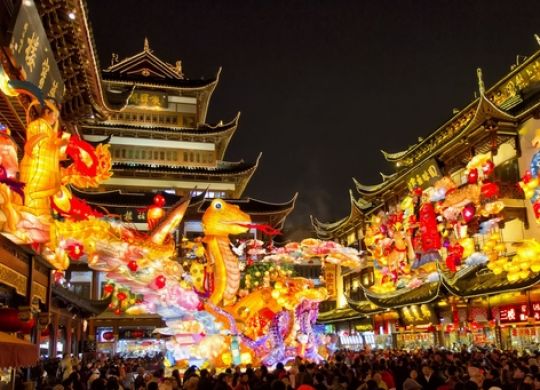
The Chinese New Year is one of the most colorful and large-scale holidays in the world, which falls on different dates every year. In 2026, it will again be celebrated not according to the usual calendar, but according to ancient lunar cycles. Learn more about the exact date of the celebration, the reasons for its changes, and the main traditions of this holiday

Chinese New Year, or Spring Festival, is considered the main holiday in China and many Asian countries. It is celebrated with loud festivals, family gatherings, fireworks, and colorful parades. During this period, millions of people travel to their hometowns, and tourist destinations are overwhelmed with visitors.
Unlike the European New Year, the date of the celebration is constantly changing. It is determined according to the lunisolar calendar and depends on the phases of the moon, so every year it falls on different days in January or February. Because of this, many travelers and tourists look for the current date in advance to plan trips, vacations, or participation in festive events.
In this article, we will find out when exactly the Chinese New Year will be celebrated in 2026, why its date changes every year, as well as what traditions, symbols, and rituals accompany this holiday and what those who want to see it with their own eyes should know.
In our previous article, we told you that China has abolished fingerprinting for short-term visas until the end of 2026.
Discovering a new country for yourself without the help of travel agents or intermediaries is very simple. All you need is a checklist or a “Travel Guide” from Visit World – a step-by-step guide with all the key information for your trip.
The guide contains information on visa requirements, visa-free entry rules, permitted periods of stay and a list of required documents.
After completing the form, the guide will be sent to your email in PDF format in just a few minutes.
Choose a country and get your travel guide today.

When is Chinese New Year in 2026?
In 2026, Chinese New Year celebrations will begin on February 17. It is on this day that the new year begins according to the lunisolar calendar, which corresponds to the year 4723 in the traditional chronology. Unlike the Western calendar, the date of this holiday is not fixed and changes every year.
Traditionally, Chinese New Year is not limited to one day. The festive period lasts about two weeks, during which festivals, family gatherings, parades, and cultural events take place in cities and villages. In 2026, the celebration will last until March 3, culminating in the Lantern Festival, which symbolically ends the New Year's celebrations.
For tourists, this period is one of the most interesting, but also the busiest in China and in popular Asian destinations. During the holidays, passenger traffic increases significantly, accommodation and ticket prices may be higher, and many establishments operate on a holiday schedule.
You can learn more about the digital arrival card and how to fill it out here.
Why does the Chinese New Year date change every year?
The Chinese New Year is not determined by the Gregorian calendar, but by the traditional lunisolar calendar, which takes into account the movement of the Moon and the Sun. That is why the date of the celebration falls on different days each year and does not have a fixed date, like January 1 in most countries.
The beginning of the new year coincides with the new moon, which occurs after the winter solstice. Usually, it is the second new moon after December 21, which is why the date of the celebration can vary from January 21 to February 21. This system aligns the lunar cycles with the seasons, which has historically been important for agriculture and traditional lifestyles in China.
Due to this feature, the date of the Chinese New Year is different every year not only in China but also in all countries where the Spring Festival is celebrated. For tourists and travelers, this means that they need to check the holiday calendar in advance to avoid peak periods of transportation and hotel traffic or, conversely, to plan a trip during the time of large-scale celebrations.
In the previous article, we talked about the TOP-10 tourist destinations according to Time Out, which are definitely worth visiting in 2026.
Origin and history of the holiday?
The exact date of the Chinese New Year is unknown, but researchers attribute the holiday to the Shang Dynasty, around the XIV century BC. Initially, it was associated with agricultural cycles, the end of the old year and preparation for the new agricultural season. Over time, the Spring Festival turned into the main event of the year, combining religious beliefs, family traditions, and folk rituals.
One of the most famous legends is about a monster named Nian, who supposedly appeared at the end of the year and scared villagers. People noticed that it was afraid of loud noises, bright light, and the color red. It is from this legend that the tradition of decorating houses with red decorations, launching fireworks and organizing loud festive events originates.
Dragon and lion dances have become an integral part of the modern celebration. In Chinese culture, the dragon symbolizes strength, prosperity, and protection, so colorful processions with long dragon figures are considered a good omen for the new year. Such performances usually become the culmination of street celebrations and attract both locals and tourists.
Earlier we talked about the 13 best places for a spring trip in Europe in 2026.
Main traditions and rituals of celebration
Chinese New Year has a deep symbolic meaning for every family. Preparations for the holiday begin several days or even weeks in advance: people try to complete important tasks, pay off debts, and cleanse the space around them. It is believed that the mood and conditions in which you celebrate the New Year will affect your well-being and luck throughout the year.
The main traditions and rituals observed during the celebration are:
1. Family dinner on New Year's Eve. This is the main event of the holiday season, for which many people travel hundreds of kilometers to get together. The festive table has not only a culinary but also a symbolic meaning - it embodies the unity of the family and wishes for peace in the home.
2. General cleaning before the holiday. On the eve of the New Year, houses are thoroughly cleaned to “sweep away” the failures and problems of the past year. At the same time, cleaning is avoided in the first days of the celebration, so as not to accidentally “sweep away” good luck.
3. Decorating the house with red decorations. Doors and windows are decorated with paper hieroglyphics with wishes of happiness, lanterns and red ribbons. Red is considered to be a protective color and brings prosperity and well-being.
4. Red envelopes with money. Money in red envelopes is given to children and younger relatives as a symbolic wish for financial well-being and protection from adversity in the new year.
5. Fireworks and loud noises. Firecrackers, fireworks and loud celebrations are traditionally used to ward off evil spirits and negative energy left over from the previous year.
6. Street festivals and traditional dances. During the holidays, cities host mass events, fairs, and parades with dragon and lion dances, which symbolize strength, protection, and success in the new year.

Chinese New Year symbols: what they mean
The Chinese New Year is filled with symbols, each of which has a separate meaning and is associated with wishes for good luck, prosperity, and protection in the new year. That's why there is so much red, dragon figures, and themed decorations during the celebration - these are not just decor, but elements with a deep meaning.
The most common symbols of the holiday are:
1. Dragon and lion. In Chinese culture, the dragon symbolizes strength, prosperity, and protection from evil forces, and the lion symbolizes courage and good luck. Dragon and lion dancing during the celebrations is considered a good sign for the beginning of the year.
2. The color red. Red is associated with happiness, success and longevity. That is why jewelry, envelopes for money and festive elements are most often made in red.
3. Lanterns. Red lanterns symbolize light, hope and good wishes. They are used to decorate streets, houses and churches, especially at the end of the holiday season during the Lantern Festival.
4. Symbolic dishes. Fish personifies abundance and excess, dumplings are associated with wealth, and long noodles with longevity. Such dishes are not prepared by chance, but with the wish of certain benefits in the new year.
5. Hieroglyphs with wishes. Inscriptions with the words “happiness,” “wealth,” and ‘prosperity’ are often placed on doors and walls, sometimes even turned upside down as a symbol of the “arrival” of good luck in the house.
In the article at the link, we have provided useful tips to help you save money while traveling in Europe in 2026.
How Chinese New Year is celebrated today: interesting facts and modern features
Today, Chinese New Year has long gone beyond China and become a global holiday. It is celebrated in many Asian countries, as well as in large cities of Europe, the USA, Canada, and Australia, where there are large Chinese communities. These days, massive parades, festivals, fairs, and cultural events are organized that attract not only locals but also tourists.
For China, the Spring Festival remains the time of the largest seasonal movement of people in the world. Millions of metropolitan residents travel to their hometowns, causing transportation hubs to operate at maximum capacity and train and plane tickets to be sold out in advance. In major tourist centers, accommodation prices often rise during the holidays, and popular locations become overcrowded.
Modern celebrations combine traditions and new formats. In addition to the classic family gatherings and street parades, themed shows, light installations, food festivals, and cultural events for tourists are becoming increasingly popular. Many cities are introducing official holiday programs for guests, making Chinese New Year not only a family holiday but also a major tourist event.
Are you planning a trip and want to prepare without unnecessary stress? Visit World's travel guide contains key tips for travelers: rules of entry and stay, current requirements for tourists, basic safety, transportation and accommodation. Such a guide will help you quickly navigate a new country, avoid common mistakes during your trip, and plan your route taking into account practical nuances that often go unnoticed by tourists.
We remind you! China has launched an updated online visa application system COVA for travelers from the USA. We have already told you how to apply, what documents are required and what has changed in the rules for obtaining a Chinese visa.
Products from Visit World for a comfortable trip:
Checklist for obtaining a visa and necessary documents in China;
Legal advice on immigration to China;
Travel insurance for foreigners in China;
Medical insurance all over the world.
We monitor the accuracy and relevance of our information, so if you notice any errors or inconsistencies, please contact our hotline.
Frequantly
asked questions
When is Chinese New Year in 2026?
Why is the date of the Chinese New Year different every year?
How long does the Chinese New Year celebration last?
What traditions are considered the most important during the celebration?
Should tourists plan a trip during the Chinese New Year?
Recommended articles
3 min
Travels
Cefalù, Praiano, Tropea: magical corners of the Italian coast
Italy is famous for its unique coastline, which attracts travellers from all over the world with its beauty, history and atmosphere. Here you can enjoy hiking, beautiful nature and gastronomic delights. Find out more about the beautiful parts of the Italian coast that are worth visiting this spring
04 Mar. 2024
More details1 min
Travels
Visa-Free Transit in China 2026: Who Can Stay for Up to 10 Days Without a Visa
China makes travel easier for foreigners. Learn about 24-hour and 240-hour visa-free transit, new airports, transfer rules and traveler requirements
14 Jun. 2026
More details2 min
Work
The new Chinese K visa category opens up vast opportunities for young professionals in the fields of science, technology, engineering and entrepreneurship. Learn all about the conditions for obtaining it, criteria for candidates, differences from other Chinese visas and H-1B in the USA
01 Oct. 2025
More details1 min
Residence permit
Shanghai Overseas Talent Residence Permit: detailed guide
Shanghai continues to strengthen its position as a global talent hub by introducing a new residence permit for overseas talent, aimed at making it easier for foreign professionals to live and work in the city. Find out who is eligible for the permit, how to apply, the required documents and much more useful information
29 Oct. 2025
More detailsAll materials and articles are owned by VisitWorld.Today and are protected by international intellectual property regulations. When using materials, approval from VisitWorld.Today is required.