

Sri Lanka Digital Nomad Visa in 2026: Requirements, Eligibility Criteria and Application Process
Table of contents
- What is a Digital Nomad Visa in Sri Lanka?
- Who can apply for a remote worker visa in Sri Lanka?
- What are the benefits of a remote worker visa in Sri Lanka?
- Requirements for applicants for a digital nomad visa to Sri Lanka
- How to confirm financial capacity for a remote worker visa in Sri Lanka?
- How to apply for a remote worker visa in Sri Lanka?
- Sri Lanka Digital Nomad Visa Residency Requirements
- Sri Lanka Digital Nomad Visa Fee
- Tax obligations for Digital Nomad visa holders in Sri Lanka
- How much does it cost to live in Sri Lanka for remote workers?
- Where to live as a digital nomad in Sri Lanka?
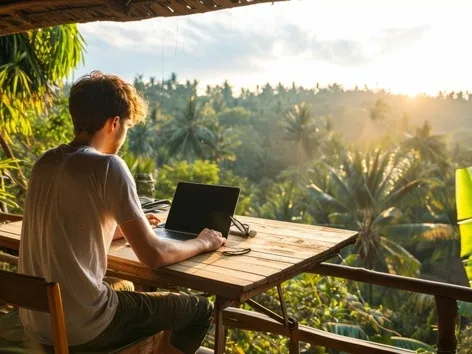
Sri Lanka is actively developing its Digital Nomad Visa program in 2026, opening up new opportunities for foreign remote professionals, entrepreneurs and freelancers. Find out who can apply for this type of residence permit, what are the financial requirements for applicants, how long they are allowed to stay in the country and what benefits Digital Nomad Visa holders receive

In February 2026, Sri Lanka officially launched the long-awaited Digital Nomad Visa (DNV) program. After several years of discussions and preparations, the country has proposed a clear legal model for foreigners who want to live on the island and work remotely for companies or clients outside the country.
This is not just another “freelancer visa” – it is a full-fledged category of residence visa that allows you to legally stay in the country for up to one year with the possibility of annual renewal. It is issued by the Department of Immigration and Emigration Sri Lanka, which has clearly defined requirements for income, security checks, tax registration and compliance with immigration rules.
We have collected everything you need to know about the visa for remote workers in Sri Lanka in this article.
Health insurance is not just a formality, but a confidence in the future. It helps to cover the costs of treatment, doctor's consultations and even emergency care abroad. It is especially important to have a reliable policy when traveling or staying in another country for a long time. Choose insurance that works for you in any situation.
Take care of your health today - get insurance right now!

What is a Digital Nomad Visa in Sri Lanka?
The Sri Lankan Digital Nomad Visa (DNV) is a special long-term residence permit introduced by the country’s government for foreign professionals who work remotely for companies or clients outside the country. The program is aimed at attracting mobile professionals, entrepreneurs and freelancers who can live in the country without integrating into the local labor market.
Who can apply for a remote worker visa in Sri Lanka?
The following individuals are eligible to apply for a Digital Nomad Visa:
- Foreign nationals aged 18 and over;
- Employees working remotely for companies registered outside Sri Lanka;
- Freelancers with international clients;
- Business owners if their company is not registered in Sri Lanka;
- Spouses and dependents of the main applicant.
The mandatory financial requirement is a minimum verified income of USD 2,000 per month. Applicants must provide documents confirming the source and regularity of income as required by the immigration authority.
What are the benefits of a remote worker visa in Sri Lanka?
Holders of a digital nomad visa are entitled to:
- Legally reside in the country for up to 12 months with the possibility of extension;
- Work remotely for foreign employers or clients;
- Open bank accounts with local financial institutions;
- Rent accommodation on a long-term basis;
- Enrol children in international or private educational institutions;
- Use telecommunications and utilities;
- Work in co-working spaces and participate in professional and tourism initiatives.
However, the visa does not allow employment in local companies or income from sources in Sri Lanka. During the entire period of stay, applicants are required to comply with the immigration laws and current tax regulations of the country.
Requirements for applicants for a digital nomad visa to Sri Lanka
To apply for a digital nomad visa, the applicant must prepare a complete package of documents in accordance with the rules established by the Department of Immigration and Emigration of Sri Lanka. The requirements apply equally to both the main applicant and his family members - spouse and dependents (if any).
Package of documents for applying for a digital nomad visa to Sri Lanka
- Duly completed visa application form;
- Official letter of application from the applicant;
- Valid passport (validity period - at least 6 months);
- Two current passport-sized photographs;
- Completed security clearance form;
- Medical report on health;
- Certificate of good conduct from the country of citizenship or permanent residence (issued no later than 3 months prior to application);
- Proof of international health insurance valid in Sri Lanka;
- Letter of recommendation from a relevant government agency (Ministry of Digital Economy);
- Documents confirming a stable monthly income;
- Marriage certificate (for spouses);
- Birth certificates of children (for dependents).
All submitted documents must meet official standards and may be additionally checked by immigration authorities.
Visit World services for tourists, migrants, and expats: Insurance | Guides | Legal advice
How to confirm financial capacity for a remote worker visa in Sri Lanka?
Particular attention is paid to proof of financial self-sufficiency. The candidate must confirm a stable income received exclusively from foreign sources. Financial criteria include:
- Minimum income for the main applicant - from 2000 USD per month;
- If the number of dependents exceeds two, an additional $500 per month must be confirmed for each additional family member.
The documents must clearly demonstrate the source of income and confirm that the income is not related to activities in Sri Lanka. This is a key condition for obtaining and further extending the Digital Nomad Visa.
How to apply for a remote worker visa in Sri Lanka?
The application procedure is as digital as possible and is carried out online through the resources of the Department of Immigration and Emigration Sri Lanka.
Step 1 - Prepare the documents
Before applying for a Digital Nomad Visa, it is very important to check that all forms are filled out correctly and meet the income requirements, type of employment and participation criteria established for this visa category. All supporting documents must be current, accurate and correspond to the information specified in the application. Any incomplete or incorrect documents may cause delays in processing or refusal of the visa.
Step 2 – Apply online
Go to the official Electronic Travel Authorization (ETA) portal or the Department of Immigration and Emigration or the dedicated section “Digital Nomad Visa”.
Step 3 – Pay the fee
The processing fee is $500 (non-refundable).
Step 4 – Wait for the decision
Once approved, the applicant will receive a confirmation email and can enter the country to activate the visa.
Since the program started in 2026, it is worth checking the current requirements on the official website before applying.
Sri Lanka Digital Nomad Visa Residency Requirements
The Sri Lanka Digital Nomad Visa allows legal residence in the country for up to 12 months, renewable annually, provided the holder continues to meet all the criteria and abides by the rules of the Department of Immigration and Emigration. During their stay in Sri Lanka, visa holders must derive their income exclusively from foreign sources. Any local employment or income-generating activity is strictly prohibited. In addition, all immigration laws, tax obligations and regulatory requirements of the country remain mandatory for the entire period of stay.
The same documents as for the initial application must be submitted for the extension, as well as proof of tax registration with the Sri Lanka Revenue Department. Failure to meet the income requirements or late submission of documents may result in the visa being refused or even cancelled. Visa holders are also required to notify the Department of any changes to their employment status, income, or dependents within 30 days. Failure to do so may result in immediate termination of their visa.
Today, digital nomads can combine work and travel with virtually no housing costs. We’ve already covered how to live for free in different countries around the world.
Sri Lanka Digital Nomad Visa Fee
The visa has a fixed annual fee set by the Department of Immigration and Emigration. The fee is $500 for the principal applicant, $500 for the spouse, and $500 for each dependent per year. These fees apply to both the initial visa application and its annual renewal, and are non-refundable regardless of the outcome of the application.
In addition to the basic fee, there may be additional costs for document preparation, medical examinations, insurance, and other administrative requirements, which depend on the applicant’s country of residence and personal circumstances.
Tax obligations for Digital Nomad visa holders in Sri Lanka
Although the visa allows for remote work for foreign employers or clients, Digital Nomad visa holders are still required to comply with Sri Lankan tax laws. Proof of tax registration is required to renew a visa, even if the income is only from abroad. Visa holders are responsible for determining their tax liability based on length of stay, residency status, and international tax treaties. Failure to do so may result in the digital nomad visa being denied or cancelled. For more information on your tax liability, please contact the Sri Lanka Revenue Authority or a qualified tax advisor.
How much does it cost to live in Sri Lanka for remote workers?
Sri Lanka remains one of the more affordable destinations in Asia for long-term living, with approximate costs as follows:
- Accommodation: $400-800 per month for an apartment or villa in coastal cities.
- Food: $1-3 for local dishes; up to $10 for Western-style cafes.
- Transport: Trains cost a few dollars for intercity routes; scooter rental – $100–150 per month.
With a minimum income of $2,000, the applicant can cover expenses without significant financial burden.
Where to live as a digital nomad in Sri Lanka?
South Coast
The most popular region among remote workers:
- Weligama and Mirissa – active community, coworking, surfing.
- Hiriketiya – compact bay with a more relaxed atmosphere.
- Galle – a historic city with colonial architecture; its old town, Galle Fort, is a UNESCO World Heritage Site.
Central Highlands
- Ella – cooler climate, tea plantations and developed tourist infrastructure.
- Kandy – a cultural center with urban infrastructure and a more relaxed atmosphere.
Capital
- Colombo is a financial center with the best internet infrastructure, modern housing and business environment.
Read also, TOP 10 countries for digital nomads according to Global Citizen Solutions.
The launch of the Digital Nomad Visa in 2026 is a strategic step for Sri Lanka, which legalizes the stay of remote professionals and makes the country competitive in the Asian market for digital nomads.
With an income of $ 2,000 per month and an online application procedure, the program looks attractive for those looking for a balance between comfort, nature and an affordable cost of living.
Before relocating, it is worth considering the features of the regional infrastructure and the stability of the Internet connection depending on the chosen location.
The life of a digital nomad is about freedom of movement, new countries and flexible schedules, but with them also certain risks. Health insurance becomes a key element of a safe life abroad, because medical services in different countries can be expensive. A quality policy covers not only emergencies, but also planned consultations, diagnostics and treatment. This allows you to focus on work and travel, without worrying about unforeseen expenses.
Choose health insurance that travels with you - and discover the world without unnecessary worries!
Reminder! Dreaming of spending the winter in a warm country and working remotely without legal risks? Which countries in 2026 are suitable for Digital Nomads, offer stable internet, comfortable climate and visas for digital nomads - we tell you at the link.
Photo - Freepik.com
Products from Visit World for a comfortable trip:
Checklist for obtaining a visa and necessary documents in Sri Lanka;
Legal advice on immigration to Sri Lanka;
Travel insurance for foreigners in Sri Lanka;
Medical insurance all over the world.
We monitor the accuracy and relevance of our information, so if you notice any errors or inconsistencies, please contact our hotline.
Frequantly
asked questions
What is a Sri Lankan Digital Nomad Visa?
Can I move with my family?
Do I need to pay taxes?
Recommended articles
1 min
Expats
Taiwan Digital Nomad Visa 2026: Requirements, Validity Period, and How to Apply
Taiwan has extended the validity of the digital nomad visa to 2 years from 2026. Find out the current requirements, documents, taxes, and permit application procedure for remote workers
09 Jan. 2026
More details1 min
Residence permit
Bulgaria digital nomad visa in 2025: conditions, cost and life of a foreigner
Bulgaria launches residence permit for digital nomads from December 20, 2025. Who can apply, how much does a visa cost, how to live and work remotely in Bulgaria
21 Dec. 2025
More details3 min
Expats
Life of a digital nomad: how traveling affects your budget and finances
Working without being tied to an office has made it possible to travel the world and earn money from anywhere in the world. But behind the beautiful photos from different countries are real financial challenges and solutions. Learn more about how the life of digital nomads affects budget, expenses, and financial stability
24 Feb. 2026
More details3 min
Expats
Digital nomad visa in Spain 2026: new financial requirements and conditions for obtaining it
Spain has updated its financial requirements for digital nomad visa applicants, raising the minimum income threshold. The changes came into effect in February 2026 and apply to both single applicants and those moving with their families. Learn more about the new amounts, program conditions, and the procedure for applying for a Digital Nomad Visa in Spain
28 Feb. 2026
More detailsAll materials and articles are owned by VisitWorld.Today and are protected by international intellectual property regulations. When using materials, approval from VisitWorld.Today is required.