

Hardest Countries to Get Citizenship in Europe in 2026: Top Places with the Toughest Requirements
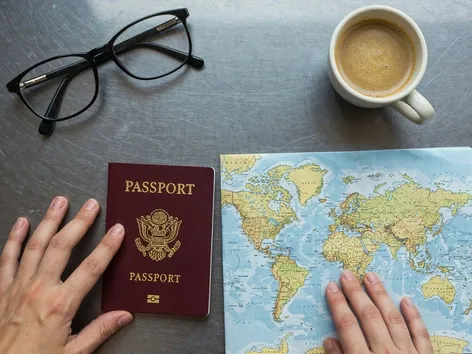
Citizenship in Europe is becoming increasingly difficult with new requirements and longer naturalization timelines. Find out which EU countries will be hardest to get a passport in 2026, what the language, income and residency requirements are, and where the process can take years

Citizenship of European countries remains one of the main goals for many migrants. An EU passport opens access to life and work in any country of the Union, and also greatly simplifies travel and social protection.
However, the rules for naturalization in different countries differ significantly - from deadlines to language level and financial requirements.
We will tell you about the European countries in which it is most difficult to obtain citizenship in this article.
The rating of European countries with the easiest naturalization conditions in this article.
Are you planning to move, work or obtain citizenship in Europe? Consulting a migration lawyer will help you avoid mistakes and significantly increase your chances of successfully obtaining documents. A specialist will tell you what type of visa or permit to choose, help you collect the right package of documents and will accompany you at every stage.
Contact a migration lawyer now so as not to lose time and money due to refusal!

Why are European countries tightening citizenship rules?
In 2026, many European countries are reviewing their migration policies and tightening requirements for foreigners, the main reasons being:
- Increasing migration levels;
- Political changes in EU countries;
- The desire to ensure better integration of migrants;
- Increasing requirements for economic independence of applicants.
As a result, higher standards for language proficiency, longer periods of residence and proof of stable income are increasingly being set.
Sweden
In Sweden, for example, the rules that were previously considered relatively liberal are planned to be significantly tightened. If it is now enough to live for five years and have a stable income of about 20,000 kroons per month, then from June 2026 a mandatory language test at level B1 will appear, and the period of residence may increase to eight years.
The consideration of the application often takes up to 47 months, and the cost of submitting documents will increase from 120 to approximately 250 euros.
Dual citizenship is allowed in Sweden.
Germany
In Germany, despite the 2024 reform that reduced the minimum period of residence to five years, the naturalization process remains bureaucratically complicated. In addition to language proficiency at level B1, the applicant must pass a test on knowledge of the laws and life in the country, as well as confirm financial independence.
The application fee is 255 euros, and dual citizenship has become allowed under the new reform.
France
France is distinguished by its high language requirements. To obtain citizenship, you need to live in the country for five years, or two years after studying at a French university, know French at level B2 and pass an integration test. In addition, the applicant must meet strict financial criteria, and the application fee is 255 euros.
Dual citizenship is allowed.
France will introduce a mandatory citizenship exam for foreigners from 2026. Read the link to find out who the new rules apply to, when to take the Examen civique and how to prepare.
Spain
In Spain, the citizenship process is one of the longest in Europe. The minimum period of residence is ten years, you must have an A2 level of language proficiency, pass a test on culture and government, and, after approval, take the oath to the king.
Dual citizenship is only allowed for certain countries, and the application process costs approximately 104 euros.
Italy
In Italy, the procedure is also long. The standard period of residence is ten years, but for EU citizens it is reduced to four years. You must prove a stable income and language skills at level B1.
The processing of applications takes from 24 to 36 months, and the cost of submitting documents is about 250 euros. Dual citizenship is allowed.
Visit World services for tourists, migrants, and expats: Insurance | Guides | Legal advice
Austria
Austria, on the other hand, is known for having one of the most complex naturalization systems in Europe. It requires ten years of residence, at least five of which must be permanent, knowledge of German at level B1, proof of financial independence, and passing a citizenship test.
The total cost of the procedure can exceed 1,300 euros, and dual citizenship is almost never allowed.
Denmark
Denmark has set some of the most stringent requirements for obtaining citizenship. You must live for about nine years, have a perfect command of Danish at level B2, pass a complex citizenship test, and undergo a special ceremony with a handshake from an official.
The application fee is about 800 euros, but dual citizenship is allowed here.
Switzerland
Switzerland is distinguished by its multi-level decision-making system, where not only federal authorities but also cantonal authorities and local communities are evaluated. The applicant must have lived in the country for ten years, have a written language proficiency of A2 and a spoken language proficiency of B1, and demonstrate integration into local society.
The cost of applying for documents starts at €90 plus local fees, and dual citizenship is allowed.
Countries where you can get citizenship by investing in cryptocurrency are here.
Norway
Norway has seen a surge in applications since allowing dual citizenship. To become naturalized, you need to have lived there for five to eight years, have a B1 level of Norwegian, and pass a social studies test. The application fee is approximately €555.
What exactly makes the citizenship process difficult?
The difficulty of obtaining citizenship varies across European countries. In Denmark and France, high language requirements are a key barrier, in Spain and Italy, long residence periods, in Switzerland, a strict integration test, and in Austria, restrictions on dual citizenship. These factors determine where the process becomes the most difficult and longest.
What to look for before applying for citizenship?
Before applying, it is important to prepare in advance: confirm your language level, take into account income and tax history requirements, make sure you have a legal residence status without violations, plan the terms of consideration of applications and learn the rules for dual citizenship.
Obtaining citizenship in Europe in 2026 is no longer a formality, but a complex and lengthy process that requires not only years of residence, but also real integration: knowledge of the language, stable income and compliance with the laws. Before applying, you should carefully assess the requirements of a particular country and prepare in advance - this will significantly increase your chances of success.
Traveling, moving or finding work in a new country is always associated with the issuance of permits. A migration lawyer is a specialist who specializes in the migration legislation of different countries and helps to correctly go through all stages of legalization.
Submitting documents on your own is often difficult and risky: you need to prepare a large package of certificates, comply with the requirements of a specific country and avoid mistakes that can lead to refusal. This is especially true for countries with strict conditions for obtaining citizenship, such as Austria or Denmark.
Consultation with a migration lawyer will be useful for everyone who plans to go abroad - regardless of the purpose: work, study or obtaining citizenship. A specialist will help you choose the right strategy, prepare documents and significantly increase your chances of success.
Get professional advice to go through the difficult path to citizenship without unnecessary risks!
Let us remind you! The value of a passport is determined not only by the number of visa-free countries, but also by the tax regime, the right to dual citizenship and access to international labor markets. In 2026, the leaders of the Henley Passport Index rating differ significantly according to these criteria in each region of the world. We have already talked about the best citizenships in different parts of the world and what makes them so valuable.
Photo – Freepik.com
Products from Visit World for a comfortable trip:
Travel guide for 200 countries;
Legal advice from a local specialist on visa and migration issues;
Travel insurance around the world (please select the country of interest and citizenship to receive services);
Medical insurance all over the world.
We monitor the accuracy and relevance of our information, so if you notice any errors or inconsistencies, please contact our hotline.
Frequantly
asked questions
In which country in Europe is it most difficult to obtain citizenship?
Where in Europe is the naturalization period longest?
Is it possible to have dual citizenship in EU countries?
Recommended articles
3 min
Residence permit
Moving to Liechtenstein 2026: how can a foreigner obtain a residence permit and citizenship?
Liechtenstein is one of the richest countries in Europe, where thousands of expats dream of moving. However, it is quite difficult to do this, because in the country there is a quota for issuing a residence permit. Find out what methods of moving to Liechtenstein are available to foreigners and how to get a residence permit in the country in 2026
06 Mar. 2026
More details3 min
Expats
Triple citizenship 2026: in which countries can you have 3 passports at once?
In some countries, citizens are allowed to have 3 passports at once. This status provides many advantages, such as visa-free entry to more countries, access to social and economic rights in different countries. Find out more about which countries allow triple citizenship
28 Feb. 2026
More details2 min
Expats
In 2025, Moldova becomes one of the most attractive countries for obtaining a second citizenship - with transparent procedures, accessible requirements and wide opportunities. Find out how to obtain Moldovan citizenship in 2025: main methods, conditions, required documents and step-by-step application process
22 Oct. 2025
More details2 min
Popular
Portugal’s Citizenship and Residency Laws Are Changing in 2025: What Expats Should Know
Portugal is updating its citizenship and residency laws in 2025. Learn what’s changing, who can apply, and how the new rules affect expats, investors, and those planning to move to Portugal
28 Oct. 2025
More detailsAll materials and articles are owned by VisitWorld.Today and are protected by international intellectual property regulations. When using materials, approval from VisitWorld.Today is required.