

Flight disruptions in Europe in 2026: delays, cancellations and what travelers should expect
Table of contents
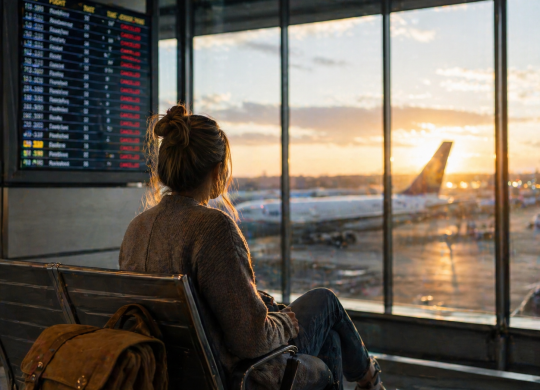
The global aviation industry is entering a new crisis: due to the war in the Middle East, fuel shortages, and rising costs, airlines are cutting flights en masse. Europe is already warning of potential disruptions, and carriers are even proposing to revise passenger compensation rules. Find out how this will affect travel in 2026

In 2026, the global aviation industry faced a new wave of instability. Against the backdrop of escalating tensions in the Middle East, airlines began to massively revise their routes, cut back on flights, and warn of possible disruptions to air service.
A key factor was the war in Iran, which affected not only flight safety but also global jet fuel supplies. As a result, carriers’ costs rose sharply, and certain routes became economically unviable. European experts are already warning of the risk of fuel shortages and schedule disruptions, especially during the summer season.
Against this backdrop, airlines have begun demanding a review of the rules that require them to compensate passengers for flight delays and cancellations. In this article, we’ll examine what’s happening in the aviation market, what consequences this will have for travelers, and how to prepare for travel in 2026.
In our previous article, we discussed how to choose safe accommodation, avoid mistakes, and book a hotel without unnecessary expenses.
Planning a trip abroad and want to protect yourself from unforeseen situations?
Travel insurance from Visit World will cover medical expenses, flight delays, and lost luggage in any country. Get a policy online in a few minutes and travel with confidence!

Why have there been disruptions in air travel?
Disruptions in air travel in 2026 are not random—they are the result of several global factors that have simultaneously impacted the industry. These factors have affected both flight routes and the financial stability of airlines.
War in Iran and Airspace Closures
One of the main causes was the escalation of the conflict in the Middle East. Due to security threats, many countries restricted or completely closed their airspace to civilian aviation.
As a result, airlines are forced to reroute flights, especially between Europe and Asia. Detours make flights longer and significantly increase fuel costs. This places an additional burden on carriers and complicates schedule planning.
The fuel crisis and sharp price increases
Another key factor is energy. Instability in the region has affected oil supplies, particularly due to risks in the Strait of Hormuz, which is a vital route for transporting energy resources.
As a result:
- The cost of jet fuel has risen significantly
- Airlines’ expenses have skyrocketed
- Some flights have become unprofitable
Fuel is traditionally one of the largest expense items in aviation, so even a slight price increase quickly affects ticket prices and the number of available flights.
Risk of an aviation fuel shortage in Europe
European countries are already warning of potential disruptions in aviation fuel supplies. If the situation worsens further, this could lead to an actual shortage of the resource.
Main consequences:
- Limitations on the number of flights
- Prioritization of the most profitable routes
- Reduction of less popular routes
Travelers may face not only higher prices but also fewer travel options.
In our previous article, we reported that European airlines are canceling flights en masse due to a fuel shortage.
Which airlines are already cutting flights?
Airlines are already moving from warnings to actual flight cuts—and the numbers show the scale of the problem. This is most noticeable in Europe, where the fuel crisis and rising costs are forcing carriers to massively revise their schedules.
The most telling example is Lufthansa. The company has already announced the cancellation of 20,000 flights through October 2026, representing approximately 1% of its total capacity. These cuts are aimed at saving fuel, the price of which has effectively doubled since the conflict began.
Other European carriers are also already cutting flights. KLM has canceled about 160 flights in Europe. Scandinavian Airlines has canceled about 1,000 flights in just one month.
Meanwhile, low-cost carriers, particularly Ryanair, are warning that they may cut some flights this summer if the fuel shortage worsens. They are talking about the risk of losing 10–20% of available capacity.
The crisis is already having a global impact. For example, in the U.S., some airlines are cutting up to 5% of their monthly schedules, while ticket prices continue to rise. Meanwhile, in Europe, jet fuel reserves are estimated at only about six weeks’ worth, creating the risk of new waves of cancellations.
Key changes already taking place in the market:
- Reduction of long-haul flights
- Decrease in flight frequency between popular cities
- Complete closure of less-traveled routes
- Revision of summer schedules toward reduction
Airlines are keeping only the most profitable routes in their schedules, while less popular destinations are the first to be cut. For travelers, this means not only higher prices but also a significantly smaller selection of flights.
Learn more about the world’s top 10 airports with the best restaurants and food courts by following the link.
Airlines are calling for the abolition of passenger protections: what will change
Amid rising costs, airlines have begun openly calling for a review of the rules that currently protect passengers. This primarily concerns European regulations, specifically EU Regulation 261/2004, which requires carriers to compensate passengers for flight delays and cancellations.
Airlines argue that current rules do not account for large-scale crises related to wars, fuel shocks, and disruptions in resource supply.
Which specific rules might change?
These are the key guarantees currently in place for passengers in the EU:
- Compensation of €250–€600 for flight delays or cancellations
- Mandatory provision of meals, hotel accommodations, and transfers
- Refunds or alternative flights
- Clear deadlines for compensation payments
It is precisely these requirements that place a significant financial burden on carriers during times of crisis.
Why are airlines pushing for changes?
The carriers’ main argument is a sharp rise in costs. Due to rising fuel prices and route changes, some flights are already operating at the break-even point.
Under such conditions, compensation payments become an additional burden, especially if delays are caused by factors beyond the companies’ control.
That is why airlines are proposing to expand the list of “exceptional circumstances” under which compensation may not be paid.
How will this affect passengers?
If the rules are revised, this will directly change travel conditions:
- It will become harder to get compensation
- You will have to cover part of the costs yourself in case of cancellation
- The level of passenger protection will decrease
- The role of insurance and flexible tickets will increase
In fact, some of the risks may shift from airlines to travelers themselves, which is particularly important to consider when planning trips in 2026.
In our previous article, we provided practical tips for traveling abroad with pets.
How will the aviation crisis affect tourists?
The aviation crisis is already directly affecting travel, and for tourists, this means a change in the usual conditions of flights. The first thing travelers notice is rising ticket prices. Due to the increase in the cost of jet fuel, carriers’ expenses have risen sharply, and these costs are gradually being passed on to passengers. As a result, even basic routes within Europe can cost significantly more than they did a year ago.
The second important factor is the reduction in the number of flights. Airlines are keeping only the most profitable routes in their schedules, while less popular destinations are either being cut or temporarily suspended. It is becoming more difficult for travelers to find convenient flight options, especially during peak season.
The number of delays and schedule changes is also increasing. Due to detours and instability in airspace, flights may take longer, and connections may become less reliable. Even minor disruptions in a single segment can affect the entire route.
A separate risk is the last-minute cancellation of flights. Under current conditions, airlines are forced to react quickly to changes in the situation, and this can lead to sudden schedule adjustments. If compensation rules are revised at the same time, passengers will have to cover part of the costs themselves in such cases.
We previously reported that on some routes, airfare prices have skyrocketed to a record 560%.
What to expect in the summer of 2026?
The summer season of 2026 could become one of the most challenging for the aviation industry in recent years. It is during this period that travel demand traditionally rises, but due to limited resources and disruptions in fuel supply, airlines will not be able to fully meet it.
According to industry analysts, carriers are already cutting back on summer schedules, retaining only the most profitable routes. This means that the number of available flights to popular tourist destinations may be lower than expected, and competition for tickets—higher. As a result, prices will continue to rise, especially during peak demand periods.
Potential disruptions in jet fuel supplies remain an additional risk factor. Warnings about limited supplies are already being issued in Europe, and if the situation worsens, this could lead to a new wave of cancellations or schedule changes even in the middle of the season.
Another important point is route instability. Due to the closure of parts of airspace, flights may be rerouted, affecting travel time and schedule accuracy. This is particularly critical for connecting flights.
Travel insurance from Visit World will help you avoid unexpected expenses while traveling. The policy covers medical care, hospitalization, medication costs, and other risks that may arise abroad. You can purchase insurance online in just a few minutes by selecting the best option based on your destination and the duration of your trip.
What travelers should do: practical tips
Travel conditions in 2026 require more preparation than usual. Due to the instability of the aviation market, even a well-planned trip can change at the last minute, so it’s worth minimizing risks in advance.
To avoid unnecessary expenses and stress, travelers should keep a few key points in mind:
1. Choose tickets with flexible exchange or refund terms
2. Try to avoid complex routes with multiple layovers
3. Check your flight status regularly before departure
4. Allow extra time for connections and transfers
5. Purchase travel insurance that covers flight delays or cancellations
These simple steps do not guarantee a completely problem-free experience, but they significantly reduce financial losses and help you respond more quickly to schedule changes.
No matter how well thought-out your itinerary is, there is always room for force majeure when traveling. Unexpected medical expenses, transportation delays, or problems with luggage can ruin your plans and budget. Travel insurance helps you avoid unnecessary worries in such situations. You can apply for a travel insurance policy for a specific trip online at Visit World - quickly and without unnecessary bureaucracy!
Take out a policy online at Visit World and enjoy your trip without any unnecessary worries!
We remind you! Popular European tourist destinations are becoming increasingly crowded, so travelers are looking for alternatives without the crowds. In 2026, attention is turning to countries that remain off the beaten path but offer unique experiences, affordable prices, and an authentic atmosphere. Read more about 5 European countries that are rarely visited by tourists.
Products from Visit World for a comfortable trip:
Travel guide for 200 countries;
Legal advice from a local specialist on visa and migration issues;
Travel insurance around the world (please select the country of interest and citizenship to receive services);
Medical insurance all over the world.
We monitor the accuracy and relevance of our information, so if you notice any errors or inconsistencies, please contact our hotline
Frequantly
asked questions
Why are flights being canceled en masse in 2026?
Have airfares gone up in 2026?
Can a flight be canceled after a ticket is purchased?
Is compensation paid for a canceled flight?
How can you minimize risks when traveling in 2026?
Recommended articles
3 min
Air travel
Airfare prices have skyrocketed by 560%: what’s happening in 2026
Airfare prices around the world have skyrocketed, and travelers shouldn’t expect them to drop anytime soon. Due to geopolitical risks, rising fuel costs, and route changes, flights are becoming significantly more expensive. Learn more about what’s happening in the air travel market in 2026
27 Mar. 2026
More details2 min
Air travel
Low-cost carrier Ryanair has canceled flights to the Azores: 400,000 passengers are affected
The Irish low-cost carrier Ryanair has officially suspended flights to the Azores—one of Europe’s most popular nature destinations. The reason is a sharp increase in airport fees and new taxes. Find out how this will affect tourists and what alternatives remain
31 Mar. 2026
More details3 min
Air travel
The 5 worst seats on a plane: where you definitely don't want to sit
Even a single minor issue—like your seat on the plane—can ruin your entire flight. Some seats look fine on the seating chart, but in reality, they’re just uncomfortable. Learn more about which seats to avoid when booking
04 Apr. 2026
More details3 min
Air travel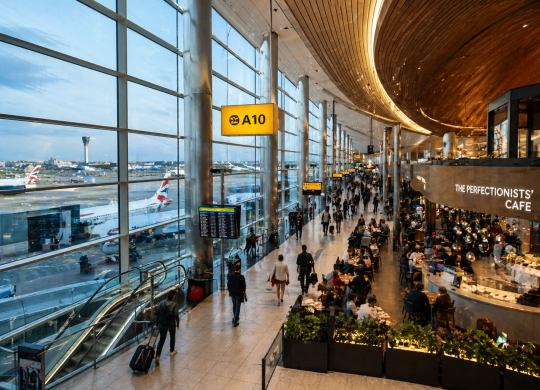
Best airport food in the world: Top 10 airports with the best restaurants and dining options in 2026
Airports are no longer just associated with long lines and rushing around—today, they are full-fledged culinary destinations. The new Skytrax 2026 ranking reveals where the world’s best food can be found, and Europe has firmly established itself among the leaders. Learn more about the top 10 airports with the best restaurants and food courts
29 Apr. 2026
More detailsAll materials and articles are owned by VisitWorld.Today and are protected by international intellectual property regulations. When using materials, approval from VisitWorld.Today is required.