

Airfare prices have skyrocketed by 560%: what’s happening in 2026
Table of contents
- Why have airfare prices skyrocketed in 2026?
- How much have flights gone up in price: figures and statistics
- How has this affected travelers and demand?
- Which destinations are gaining and which are losing popularity
- Will airfares drop in the near future?
- easyJet warns: prices may rise even further by the end of summer
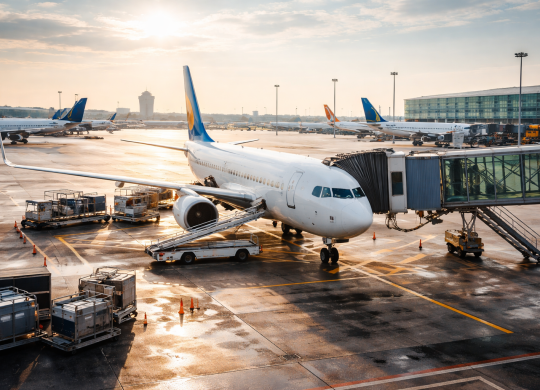
Airfare prices around the world have skyrocketed, and travelers shouldn’t expect them to drop anytime soon. Due to geopolitical risks, rising fuel costs, and route changes, flights are becoming significantly more expensive. Learn more about what’s happening in the air travel market in 2026

Tourists hoping for a return to affordable airfares are in for an unpleasant surprise this year. According to Bloomberg, airfares on key routes between Asia and Europe have skyrocketed and are likely to remain high for several more months.
The main reason is geopolitical instability in the Middle East, which has affected one of the world’s most important aviation corridors. As a result, routes are changing, fuel is becoming more expensive, and airlines are passing on the costs to passengers.
In our previous article, we told you whether it is safe to travel to Cyprus, Egypt, and the Middle East.
Planning a trip abroad and want to protect yourself from unforeseen situations?
Travel insurance from Visit World will cover medical expenses, flight delays, and lost luggage in any country. Get a policy online in a few minutes and travel with confidence!

Why have airfare prices skyrocketed in 2026?
The main factor is geopolitics. Due to the war in Iran, airspace and key transit routes through the Persian Gulf—one of the busiest aviation corridors in the world—have been severely affected.
Airlines are forced to reroute flights, avoid dangerous zones, and increase flight durations. This automatically increases costs, primarily for fuel and flight operations.
The second important factor is the sharp rise in aviation fuel prices. Due to supply constraints and instability in the region, fuel prices have risen, and fuel accounts for approximately one-third of airlines’ costs.
As a result, several effects are emerging simultaneously:
1. Longer routes → higher fuel costs
2. Limited capacity → fewer available flights
3. Rising costs → higher prices for passengers
Even if the situation stabilizes, prices won’t drop immediately. The aviation market reacts with a delay, so high fares may persist for several more months.
We previously reported that European airlines are adjusting their routes, offering more direct flights to Asia and Africa.
How much have flights gone up in price: figures and statistics
The price increase in 2026 was sharp and noticeable for most travelers. On average, flights between Asia and Europe have become about 70% more expensive compared to last year, but on certain routes the situation is much worse.
For example, a ticket from Sydney to London now costs over $1,500—that’s roughly twice as much as a year ago. An even more telling example is flights from Hong Kong to London: their cost exceeds $3,000, and prices have risen more than fivefold in a short period. The situation is similar on the Bangkok–Frankfurt route, where tickets have also become several times more expensive and exceed $2,800.
The sharpest price increases have been recorded on routes passing through the Middle East—a key transit region between Asia and Europe. Due to disruptions in this corridor, prices are rising rapidly not only locally but are also impacting the global air travel market.
Analysts predict that even in October, prices will remain approximately 30% higher than last year’s levels. In other words, the classic seasonal drop in ticket prices should not be expected in 2026.
Earlier, we told you that airfares to Asia have risen sharply due to the war between the United States and Israel against Iran.
How has this affected travelers and demand?
The sharp rise in airfare has already affected travelers’ behavior. Some tourists have begun postponing trips or rethinking their itineraries, opting for more affordable destinations.
Statistics confirm this trend: the number of bookings for flights between Europe and the U.S. has declined, in both directions. Demand for flights between Asia and Europe has also declined, although these routes traditionally remain among the busiest.
An additional factor is uncertainty. Due to delays, flight cancellations, and route changes, tourists have begun to plan their trips more cautiously. People are more often choosing shorter flights or destinations where the situation appears more stable.
As a result, a new pattern of behavior is emerging: instead of long and complicated routes, travelers are increasingly opting for more predictable and less risky trips.
In our previous article, we told you that experts predict a 30% drop in tourist traffic in the Middle East.
Which destinations are gaining and which are losing popularity
Changes in the air travel market have already influenced tourists’ choices. Due to instability in the Middle East, some travelers have begun to avoid destinations associated with this region or located nearby.
In particular, interest in the Eastern Mediterranean—destinations such as Turkey and Cyprus—is declining. Tourists perceive these countries as less predictable in terms of logistics and potential changes to flight schedules.
In contrast, demand for Western European countries is growing. Popular resort destinations that do not rely on complex transit routes—such as Spain, Italy, and Greece—are benefiting the most. Travelers are choosing these locations as more stable and straightforward in terms of travel planning.
Additionally, some travelers are opting out of long-haul flights altogether in favor of shorter trips within Europe. This helps mitigate risks associated with delays, layovers, and sudden price changes.
In a previous article, we reported that tourists are canceling their Mediterranean vacations due to the war in the Middle East.
Will airfares drop in the near future?
A rapid drop in prices in 2026 is not expected. Even if the geopolitical situation stabilizes, the air travel market reacts with a delay.
One of the key reasons is fuel costs. Even after a potential drop in oil prices, it takes time for this to impact the entire supply chain and airline expenses. Experts estimate this lag to be several months.
Rerouted flights and limited capacity are creating additional pressure. Many flights continue to be rerouted, which increases carriers’ costs and prevents a quick return to previous fares.
Airlines are already warning that price hikes could intensify toward the end of summer. This is because some carriers use fuel hedging only for a short period, and once it expires, costs could rise even further.
As a result, even in a favorable scenario, prices will remain higher than last year’s at least until fall.
easyJet warns: prices may rise even further by the end of summer
easyJet CEO Kenton Jarvis issued a specific warning to travelers. According to him, the situation may worsen in the coming months, and the main price hike will occur precisely at the end of summer.
The reason lies in the fuel hedging mechanism. Currently, airlines are partially protected from sharp price fluctuations, but these contracts have a limited duration. As they begin to expire, carriers will be forced to purchase fuel at market prices, which remain volatile.
That is why, according to Jarvis, travelers will feel the real increase in ticket prices closer to the end of summer. And if fuel prices remain high, the price hike could be sharp.
At the same time, demand is shifting. Due to instability in the Middle East, tourists are increasingly avoiding destinations in the eastern Mediterranean, particularly Turkey and Cyprus. Instead, interest is growing in more stable routes, such as Spain and other Western European countries.
EasyJet itself does not rule out the possibility of reducing flight frequency on certain routes, especially where there were previously several flights a day. This could also affect ticket availability and further drive prices up.
The overall situation in the industry is creating additional pressure: fuel accounts for about a third of airlines’ costs, and some carriers are already warning of possible fare increases. At the same time, the market remains unpredictable, and even the airlines themselves cannot accurately predict when prices will begin to stabilize.
No matter how well thought-out your itinerary is, there is always room for force majeure when traveling. Unexpected medical expenses, transportation delays, or problems with luggage can ruin your plans and budget. Travel insurance helps you avoid unnecessary worries in such situations. You can apply for a travel insurance policy for a specific trip online at Visit World - quickly and without unnecessary bureaucracy!
Take out a policy online at Visit World and enjoy your trip without any unnecessary worries!
We remind you! Some countries are island states with political neutrality, which means that the likelihood of military conflict is quite low. Read more about the countries that are likely to participate in World War III and the top safest countries in the world.
Products from Visit World for a comfortable trip:
Travel guide for 200 countries;
Legal advice from a local specialist on visa and migration issues;
Travel insurance around the world (please select the country of interest and citizenship to receive services);
Medical insurance all over the world.
We monitor the accuracy and relevance of our information, so if you notice any errors or inconsistencies, please contact our hotline
Frequantly
asked questions
Why did airfare prices rise so sharply in 2026?
How much have airfares gone up?
Will airfares drop in the near future?
Which destinations are currently the most cost-effective for travel?
When is the best time to buy airline tickets in 2026?
Recommended articles
3 min
Travels
Tourists cancel vacations in the Mediterranean because of the war in the Middle East
The war in the Middle East has begun to affect not only the political situation but also the global travel market. Some travelers are reconsidering their vacation plans and abandoning popular resorts in the Eastern Mediterranean. Find out more about which countries have lost tourists and which destinations are gaining popularity instead
18 Mar. 2026
More details3 min
Transport
European airlines change routes: more direct flights to Asia and Africa
The war in Iran is changing global routes: tourists are avoiding flights through the Middle East, and airlines are urgently adapting their networks. European carriers are already increasing the number of direct flights to Asia and Africa to meet demand and minimize risks. Find out more about how this will affect travel in 2026
20 Mar. 2026
More details2 min
Popular
Egypt cuts business hours due to energy crisis: how it will affect vacation
Egypt is introducing new restrictions on cafes, shops and shopping centers due to the energy crisis. The changes are already affecting the usual rhythm of life and tourist experience. Learn more about the new rules and what they mean for travelers
20 Mar. 2026
More details2 min
Transport
Strikes at Spanish airports for Easter 2026: what tourists need to know
Travelers planning a trip to Spain for Easter are warned of possible flight delays due to large-scale strikes by airport staff. Disruptions may affect the country's largest transportation hubs during peak passenger traffic. Learn more about strike dates, risks and how to prepare for your trip
21 Mar. 2026
More detailsAll materials and articles are owned by VisitWorld.Today and are protected by international intellectual property regulations. When using materials, approval from VisitWorld.Today is required.