

Tourism crisis in the Middle East: experts predict tourist numbers could drop by up to 30%

The escalation of the conflict in the Middle East has already begun to have a dramatic impact on the region's tourism sector. Analysts predict a significant reduction in international travel, massive cancellations, and billions of dollars in losses for the economies of popular tourist destinations. Learn more about how many tourists the region could lose and how the conflict is changing the global travel market

The escalation of the conflict in the Middle East has already begun to have a dramatic impact on the region's tourism sector. Analysts predict a significant reduction in international travel, massive cancellations and billions of dollars in losses for the economies of popular tourist destinations. Find out more about how many tourists the region could lose and how the conflict is changing the global travel market.
The escalation of the conflict between the United States, Israel, and Iran has already begun to have a significant impact on the Middle East's tourism industry. Analysts estimate that the region could lose tens of millions of travelers and billions of dollars in tourism revenue. Part of the airspace remains closed, governments of different countries recommend citizens to refrain from traveling, and tourists who are in popular destinations are trying to return home on a limited number of flights.
Experts note that a few months ago, the region's tourism sector was showing strong growth, but the current situation could dramatically change these forecasts. According to new estimates, the number of international arrivals to the Middle East in 2026 may decrease by 11-27%, and in some scenarios, the drop in tourist flow may approach 30%.
In our previous article, we told you whether it is safe to travel to Cyprus, Egypt, and the Middle East.
Planning a trip abroad and want to protect yourself from unforeseen situations?
Travel insurance from Visit World will cover medical expenses, flight delays, and lost luggage in any country. Get a policy online in a few minutes and travel with confidence!

How many tourists could the Middle East lose in 2026?
The escalation of tensions in the Middle East could seriously affect the region's tourism sector. According to analysts, in 2026, the number of international arrivals to the Middle East may decline by 11-27% year-on-year, while at the end of 2025, experts predicted an increase in tourist arrivals of about 13%.
In absolute terms, this means 23-38 million fewer international tourists than previously expected. Along with a drop in the number of trips, travelers' spending will also decrease: the region's tourism industry could lose between $34 and $56 billion in revenue, equivalent to about €29-48 billion.
Experts explain that the sharp deterioration in forecasts is due to the escalation of the conflict between the United States, Israel, and Iran. Part of the region's airspace remains closed, and the governments of a number of countries recommend that citizens refrain from traveling or allow only emergency travel to certain countries in the Middle East. As a result, travel demand has fallen sharply, and many companies have already recorded massive cancellations and disruptions to air travel.
Analysts also warn that the negative effect may persist even after the active phase of the conflict is over. Reputational risks and a change in the perception of the region as a safe tourist destination may hold back the recovery of international travel for some time.
Earlier, we told you that airfares to Asia have risen sharply due to the war between the United States and Israel against Iran.
Which countries in the Middle East are likely to suffer the most?
The countries of the Gulf Cooperation Council (GCC) may suffer the greatest losses in the tourism sector. These countries have been actively developing international tourism in recent years, investing in large-scale infrastructure projects and positioning themselves as safe and stable tourist destinations.
The United Arab Emirates and Saudi Arabia are considered particularly vulnerable. Both countries receive significant volumes of international tourist traffic and are heavily dependent on air travel. Air travel is the fastest to respond to changes in traveler sentiment, so flight cancellations and airspace closures can significantly affect the number of visitors.
At the same time, Qatar and Bahrain may feel a slightly smaller impact. In these countries, the share of land arrivals is much higher - about 32% in Qatar and about 74% in Bahrain. This means that they are partly less dependent on international flights compared to other countries in the region.
The transit function of the Middle East also plays a separate role. Airports in the region account for approximately 14% of the world's international transit passenger traffic. That is why any disruptions in the operation of air hubs can affect not only local tourism but also global routes between Europe and Asia-Pacific countries, which traditionally pass through Middle Eastern transport hubs.
In our previous article, we talked about the scale of Iranian shelling and the consequences for the affected countries.
Evacuation of tourists from Dubai and record growth in charter prices
The escalation of the conflict has forced thousands of tourists and employees of international companies to urgently leave the Gulf countries, including Dubai. Due to the limited number of flights and the closure of part of the airspace, evacuation has become much more difficult and expensive.
According to insurers and travel companies, the cost of evacuating a family of two adults and two children can reach up to $250,000 if a private jet is used to leave. The demand for charter flights has increased dramatically, and their prices have roughly doubled in just a few days.
Due to the shortage of commercial flights, many people are forced to leave the region by land. Renting a taxi or a private minibus from Dubai to neighboring countries, such as Muscat in Oman or Riyadh in Saudi Arabia, can now cost more than $5,000, although previously such a trip cost only a few hundred.
At the same time, the number of scheduled flights from key airports in the region remains limited. Emirates, Flydubai, and Etihad are gradually resuming some flights to return passengers, but regular flights are not yet fully operational. Some routes, including Qatar Airways flights, remain canceled due to the airspace closure, and tens of thousands of passengers are still unable to depart.
To bring their citizens home, several European governments are organizing special repatriation flights. For example, Air France and KLM have operated evacuation flights from Muscat, and German airline Lufthansa is also planning special flights for German citizens.
In our previous article, we talked about the scale of Iranian shelling and the consequences for the affected countries.
How does the conflict change global tourist flows?
The deteriorating situation in the Middle East is already affecting not only the countries of the region but also the global travel market. Tour operators and airlines report a sharp decline in interest in traveling to Middle Eastern destinations and a simultaneous increase in demand for alternative tourist destinations.
According to Michael O'Leary, CEO of Europe's largest low-cost airline Ryanair, the number of people planning to spend their vacations in Europe has increased significantly since the outbreak of hostilities. Tourists are increasingly choosing European resorts instead of traveling to the Gulf and other Middle Eastern destinations.
At the same time, there has been a sharp drop in the number of bookings to the Middle East, especially in the run-up to the Easter holidays, which are traditionally an important period for the travel industry. Travel companies note that many travelers have decided to postpone travel to the region due to uncertainty and security risks.
Nevertheless, some representatives of the aviation industry believe that the negative effect may be temporary. According to experts, once the situation stabilizes, travel demand may recover fairly quickly, as the Middle East countries remain important tourist and transit centers on a global scale.
To learn more about the sharp rise in oil prices due to the conflict in the Middle East, please follow the link.
Can the travel market recover quickly?
Despite the harsh forecast figures, the industry does not look hopeless. The region has gone through crisis periods many times before and has usually shown a high ability to recover demand once a sense of stability returns.
What can help the recovery:
1. Rapid resumption of scheduled air travel and stable border crossing rules;
2. Removal or easing of travel advisories by key countries from which many tourists come;
3. Clear communication from airlines and tourist infrastructure regarding safety, routes and refund conditions;
4. Gradual return of trust, which usually takes longer than the technical resumption of flights.
At the same time, it is important to take into account inertia: even if the active phase of the conflict subsides, some travelers will choose alternative destinations for some time to come. Therefore, the most likely scenario is that aviation and transit will be the first to come back to life, and tourist demand for vacations in the region will recover in waves, depending on the news background and the sense of security.
No matter how well thought out your itinerary is, there is always room for force majeure when traveling. Unexpected medical expenses, transportation delays, or problems with luggage can ruin your plans and budget. Travel insurance helps you avoid unnecessary worries in such situations. You can apply for a travel insurance policy for a specific trip online at Visit World - quickly and without unnecessary bureaucracy!
Take out a policy online at Visit World and enjoy your trip without any unnecessary worries!
We remind you! Some countries are island states with political neutrality, which means that the likelihood of military conflict is quite low. Read more about the countries that are likely to participate in World War III and the top safest countries in the world.
Products from Visit World for a comfortable trip:
Travel guide for 200 countries;
Legal advice from a local specialist on visa and migration issues;
Travel insurance around the world (please select the country of interest and citizenship to receive services);
Medical insurance all over the world.
We monitor the accuracy and relevance of our information, so if you notice any errors or inconsistencies, please contact our hotline
Frequantly
asked questions
Why is tourism in the Middle East declining in 2026?
How much could tourist arrivals to the Middle East fall?
Which Middle Eastern countries may be affected the most?
Why does the conflict in the Middle East affect global flights?
Is it safe to travel to the Middle East right now?
Recommended articles
3 min
Popular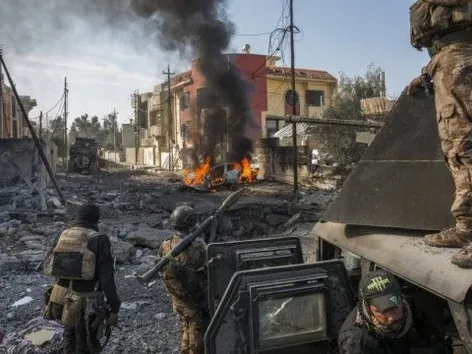
Iran's missile attack on 11 countries: over 460 missiles and 350 drones in two days
The Middle East is experiencing the most significant military escalation in recent years. Iran has launched massive strikes against countries in the region, resulting in deaths and injuries among the civilian population in several countries. Learn more about the scale of Iran's attacks and the consequences for the affected countries
02 Mar. 2026
More details3 min
Popular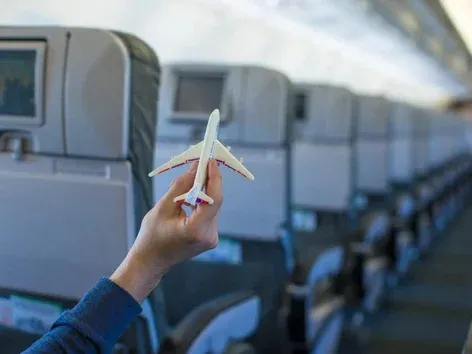
Aviation crisis over Iran: canceled flights, closed skies, and consequences for passengers worldwide
The conflict surrounding Iran has caused the most significant crisis in global aviation since the Covid-19 pandemic. Eight Middle Eastern countries have restricted their airspace, thousands of flights have been canceled, and airlines around the world are changing routes and incurring huge financial losses. Learn more about which carriers have been hit hardest, what is happening with fuel prices, and how to protect yourself while traveling
03 Mar. 2026
More details3 min
Popular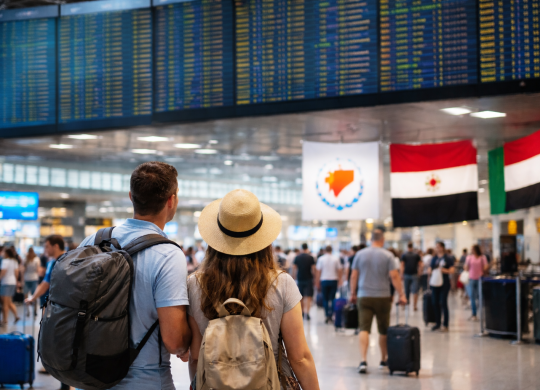
Is it safe to travel to Cyprus, Egypt and the Middle East now: what tourists know
Amid the escalating situation in the Middle East, travelers are increasingly asking whether it is safe to plan trips to popular tourist destinations in the region. In particular, we are talking about Cyprus, Egypt and a number of Middle Eastern countries where some events have already affected the operation of airports and flights. Learn more about the current travel advisory and the travel situation in the region
04 Mar. 2026
More details3 min
Popular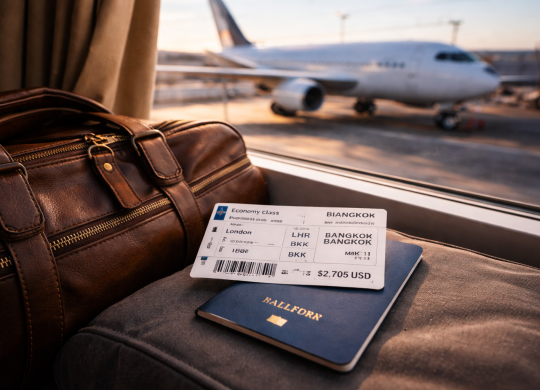
Flight prices to Asia surge due to the Iran war in 2026: what’s happening with international flights
Airfares between Europe, Asia, and Australia have risen sharply following the closure of part of the Middle East's airspace due to the war between the United States and Israel against Iran. Passengers are massively rebooking flights, and some routes are already sold out for several days in advance. Read more about how the conflict is affecting global air travel and ticket prices
05 Mar. 2026
More detailsAll materials and articles are owned by VisitWorld.Today and are protected by international intellectual property regulations. When using materials, approval from VisitWorld.Today is required.