

Aviation crisis over Iran: canceled flights, closed skies, and consequences for passengers worldwide
Table of contents
- Which countries have closed their airspace due to the conflict with Iran?
- Cancellation of flights by Emirates, Qatar Airways, and other airlines
- What is happening with Air India, Lufthansa, Finnair, and British Airways flights?
- Route changes and technical stops: how are airlines adapting to the closed skies?
- Rising oil prices and financial losses for the airline industry
- Evacuation flights and assistance to stranded passengers
- Passenger rights: rebooking and refunds
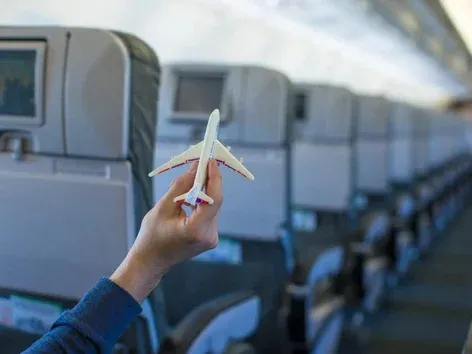
The conflict surrounding Iran has caused the most significant crisis in global aviation since the Covid-19 pandemic. Eight Middle Eastern countries have restricted their airspace, thousands of flights have been canceled, and airlines around the world are changing routes and incurring huge financial losses. Learn more about which carriers have been hit hardest, what is happening with fuel prices, and how to protect yourself while traveling

The US military operation against Iran and the resulting strikes have caused an unprecedented collapse of air traffic in the Middle East. At least eight countries have restricted or completely closed their airspace, thousands of flights have disappeared from airport departure boards, and hundreds of thousands of passengers have been stranded in various corners of the globe.
Which airlines have been hit the hardest, what is happening with oil prices, and what travelers can expect — we'll tell you more in this article.
Are you planning a trip and want to be sure that flight cancellations or airspace closures won't leave you stranded?
Travel insurance from Visit World will help cover the costs of accommodation, meals, and ticket rebooking in case of force majeure.

Which countries have closed their airspace due to the conflict with Iran?
The escalation between the US, Israel, and Iran has led to a large-scale closure of airspace in the Persian Gulf and Middle East regions. Restrictions have been imposed by the UAE, Qatar, Kuwait, Israel, Bahrain, and Iraq.
The consequences of these decisions have been disastrous for global aviation. The Middle East traditionally serves as a key transit hub between Europe and Asia, and the paralysis of this region has instantly affected the international air transport network. According to data from the Cirium platform, cited by Dantri.com, of the 32,000 flights scheduled to and from the region, about 13,000 were canceled within a few days. The skies over the Middle East remained virtually empty in the morning, and the world's largest airports were paralyzed.
Cancellation of flights by Emirates, Qatar Airways, and other airlines
Air carriers based in the Persian Gulf region were hit the hardest. As of Monday morning, Emirates and Qatar Airways had canceled a total of more than 400 flights. Emirates and Etihad suspended all flights to and from their bases until Monday afternoon local time. Qatar Airways flights to Hamad International Airport in Doha were also suspended due to the closure of Qatar's airspace.
The most affected airports were Dubai International Airport, the world's busiest international airport, which served a record 95.2 million passengers last year, and Hamad Airport in Doha. At Dubai Airport alone, Emirates canceled more than 600 flights. Ben Gurion Airport in Tel Aviv and King Abdulaziz Airport in Jeddah were also affected.
Every day, at least 90,000 passengers transfer at the three main hubs — Dubai, Doha, and Abu Dhabi — and all of them found themselves in the zone of transport collapse.
What is happening with Air India, Lufthansa, Finnair, and British Airways flights?
The chaos was not limited to Gulf airlines — a wave of cancellations swept across carriers around the world. India's IndiGo was the hardest hit airline outside the Middle East due to its flights to Dubai, Jeddah, and Doha. Air India suspended all flights to the UAE, Saudi Arabia, Israel, and Qatar until 11:59 p.m. Indian time on March 2, 2026. The company also canceled some European flights on March 2, including connections between Delhi and Zurich, Delhi and Copenhagen, and flights from Amritsar to Birmingham.
European airlines are also making massive adjustments to their schedules. Germany's Lufthansa has suspended flights to Dubai until March 4 and to Tel Aviv, Beirut, Amman, Erbil, Dammam, and Tehran until March 8. British Airways has canceled flights to Tel Aviv and Bahrain until March 4. Finnair has gone even further, canceling flights to Dubai until March 28 and suspending flights from Doha until March 6. Finnair's decision will affect about 4,000 passengers, and the company has announced that for safety reasons, its planes will not use the airspace of Iran, Iraq, Syria, and Israel.
Route changes and technical stops: how are airlines adapting to the closed skies?
Those flights that are still operating are forced to significantly change their trajectories. A number of long-haul flights are being redirected southward — over Saudi Arabia, Egypt, and the Red Sea region. This significantly increases flight times, reduces aircraft turnaround times, and increases operating costs.
Air India is maintaining flights to North America and most European cities, but they are operating on alternative routes. Flights to New York (JFK) and Newark now include a technical stop at Rome's Leonardo da Vinci-Fiumicino airport for refueling. Passengers are not allowed to leave the plane during this stop, but the total travel time increases significantly. Jan Petčenik, director of communications at Flightradar24, warned that squeezing airlines into narrow corridors creates the risk of prolonged disruptions, and any further complications near these routes could seriously affect trade between Europe and Asia.
Visit World services for tourists, migrants, and expats: Insurance | Guides | Legal advice
Rising oil prices and financial losses for the airline industry
The conflict has dealt a powerful blow to the aviation industry's economy on several fronts. Brent crude oil prices rose 10% to $80 per barrel. Market analysts predict that the price could exceed $100 per barrel if tensions continue. For airlines, whose fuel costs account for up to 30% of their total operating costs, this means double the pressure: longer routes and more expensive fuel.
Grounding planes means stopping cash flow, while terminal, personnel, and depreciation costs continue to
accumulate. British aviation analyst John Strickland noted that the problem is enormous in scale — hundreds of planes and thousands of crew members are stranded in the wrong places around the world, and returning the network to normal will require significant financial resources and time. In addition to passenger transport, cargo logistics are also suffering, as the Persian Gulf region is a critical hub for air cargo transport, and the paralysis of air transport threatens to increase logistics costs and consumer goods prices.
Evacuation flights and assistance to stranded passengers
Airlines and governments have begun efforts to evacuate stranded passengers, although these measures are being carried out with extreme caution. Etihad Airways, Emirates, and budget airline FlyDubai have begun operating a limited number of flights to transfer aircraft and transport passengers. Dozens of flights have departed from Abu Dhabi to London, Paris, and Mumbai. Israeli airline EL AL has completely shut down its commercial ticket sales system until March 21 to give priority to stranded passengers.
At the same time, European countries are considering solutions to help their citizens who are stranded in the Middle East. According to Finnish diplomatic missions, most Finnish citizens are stranded in the UAE and Qatar — diplomats and tour operators are offering them options for staying or alternative routes out via Oman. Even departures from Cyprus, which came under Iranian attack due to the use of a British airbase by the US military, have become a problem. Henry Harteveld, president of the research firm Atmosphere Research Group, noted that airlines will not resume mass commercial operations until they are completely confident in safety, and advised passengers to prepare for further delays.
Passenger rights: rebooking and refunds
Most airlines have offered flexible terms for affected passengers. Air India is offering free rebooking or full refunds for tickets purchased before February 28, 2026, including travel dates up to March 5, 2026. Passengers are being contacted by email and phone. Many other carriers have also introduced free ticket changes or full refunds.
Passengers are advised to regularly check their flight status on the airlines' official websites, monitor SMS messages and emails, and allow extra time in their travel plans. The situation remains unstable, and routes may change again, so it is worth contacting the carriers' support services for details on rebooking.
The large-scale aviation crisis in the Middle East clearly demonstrates how quickly a trip can turn into a long wait in a foreign country with unpredictable costs for accommodation, food, and new tickets. That is why travel insurance is an important part of preparing for any trip. On the Visit World portal, you can purchase travel insurance that covers the risks associated with flight cancellations, delays, and other force majeure circumstances.
Purchase insurance in advance and travel with confidence that you are protected even in the most unpredictable situations!
Reminder! The Middle East is experiencing the most significant military escalation in recent years. Iran has launched massive strikes on countries in the region, resulting in deaths and injuries among the civilian population in several countries. For more information on the scale of the Iranian attacks and the consequences for the affected countries, follow the link.
Photo: Freepik
Products from Visit World for a comfortable trip:
Travel guide for 200 countries;
Legal advice from a local specialist on visa and migration issues;
Travel insurance around the world (please select the country of interest and citizenship to receive services);
Medical insurance all over the world.
We monitor the accuracy and relevance of our information, so if you notice any errors or inconsistencies, please contact our hotline
Frequantly
asked questions
Which countries have closed their airspace due to the conflict with Iran?
Which airlines have canceled flights due to the situation in the Middle East?
Recommended articles
3 min
Popular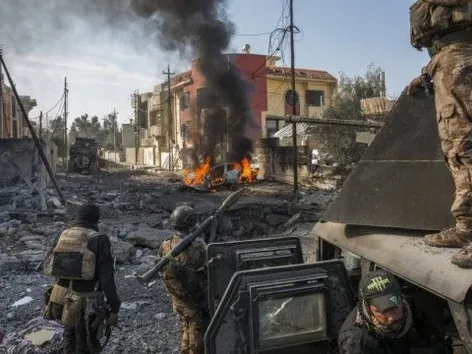
Iran's missile attack on 11 countries: over 460 missiles and 350 drones in two days
The Middle East is experiencing the most significant military escalation in recent years. Iran has launched massive strikes against countries in the region, resulting in deaths and injuries among the civilian population in several countries. Learn more about the scale of Iran's attacks and the consequences for the affected countries
02 Mar. 2026
More details3 min
Popular
Oil prices have risen sharply following the escalation of the conflict over Iran, and markets are already pricing in the risk of a large-scale confrontation in the Middle East. Will the situation be limited to a short-term shock, or is the world entering a deeper geopolitical crisis? Learn more about possible scenarios and their global implications
02 Mar. 2026
More details3 min
Expats
Citizenship in Europe: which countries have the easiest naturalization requirements?
Moving to Europe often starts with work or study, but over time, most foreigners start thinking about an EU passport. Naturalization requirements vary so much from country to country that your choice of destination can significantly affect the speed and complexity of obtaining citizenship. Learn more about the European countries with the easiest naturalization requirements
02 Mar. 2026
More details3 min
Events
What to give for March 8: universal ideas for women in 2026
March 8 is a great occasion to say “thank you” to important women and give them something truly special. In 2026, personalization, impressions, and practical gifts that combine style and care are trending. Find out more about universal ideas that are suitable for mom, sweetheart, girlfriend or colleague
03 Mar. 2026
More detailsAll materials and articles are owned by VisitWorld.Today and are protected by international intellectual property regulations. When using materials, approval from VisitWorld.Today is required.