

Vietnam Digital Arrival Card 2026: New Entry Rules in Ho Chi Minh City
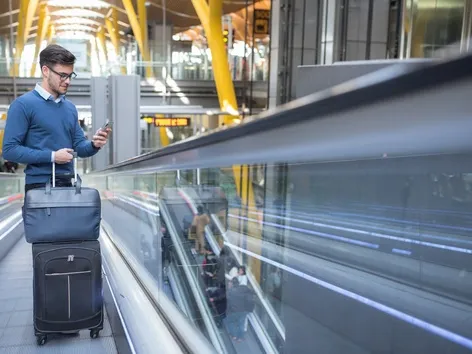
Vietnam is changing entry rules for tourists. Learn how the digital arrival card works, who needs it, and how to prepare for your trip

Since spring 2026, travel to Vietnam has become even more technological. The country is gradually abandoning paper procedures and moving to digital solutions - and one of the first steps was a new electronic declaration system for travelers.
Traveling abroad is always more than just buying tickets. Entry rules, visas, new digital requirements - all this is easy to miss, especially when countries regularly update procedures.
The “Travel Guide” from Visit World will help you sort everything out. It is a convenient PDF document with clear instructions, which you receive by email in just a few minutes.
Order the guide now and travel without unnecessary worries.

What has changed for tourists?
Since April 15, 2026, the Digital Arrival Card has officially started operating at Tan Son Nhat International Airport in Ho Chi Minh City. It replaces the usual paper forms that were previously filled out directly on the plane or upon arrival.
Now, some passengers must enter their data online in advance and confirm them with a QR code. This code will become the main “document” when passing through border control.
And although for many it looks like an additional step, in practice the system should simplify the process: fewer queues, faster processing and a minimum of paper bureaucracy.
Who does the new requirement apply to?
The new system is primarily aimed at international travelers who actually cross the border of Vietnam.
In particular, the digital declaration must be filled out by:
- foreigners entering the country;
- holders of valid visas;
- tourists, business travelers, students and those arriving for work purposes;
- certain categories of Vietnamese citizens returning from abroad.
It is important to understand: the key criterion is precisely passing the border control. If you are officially entering the country, there is a high probability that the declaration will almost certainly be needed.
All travelers arriving in India must fill out an electronic online form. More details in this article.
Who may not fill out the form?
At the same time, the new rules are not universal for all passengers. The authorities have left exceptions for categories that do not go through the full entry procedure.
In particular, the following are exempt from submitting a declaration:
- Vietnamese citizens traveling on national passports;
- transit passengers who do not leave the transit zone;
- travelers who do not formally cross the country's border.
Thus, the system focuses specifically on those who pass immigration control, and not on all passengers without exception.
Visit World services for tourists, migrants, and expats: Insurance | Guides | Legal advice
When is it necessary to submit a declaration?
The submission procedure is built on a logic familiar to many travelers - it resembles online check-in for a flight.
The form can be filled out no earlier than 72 hours before arrival. At the same time, experts advise not to postpone this step until the last moment: if you do everything before departure, this will avoid unnecessary stress after arrival.
After filling out, the system generates a QR code that you will need to show at passport control. If you do not do this in advance, you will have to spend time at the airport - and this often means queues.
Haiti takes a step towards digitalization: the country is introducing a new “iKat” system, which simplifies migration control procedures, more details here.
How does the system work: what do you need to specify?
The process of submitting a declaration itself looks quite simple and intuitive. It can be conditionally divided into several stages.
First, the traveler enters basic personal data - name, date of birth, passport information, citizenship and contacts. If available, visa data is also added.
Next, the system asks to clarify the details of the trip. This includes the country of departure, purpose of the trip, flight number, address of residence in Vietnam and approximate date of departure.
After this, a short confirmation stage takes place: a one-time code (OTP) is sent to the email, which must be entered to verify the data.
And the final step is receiving a QR code. It is this code that confirms that the declaration has been submitted and must be presented at the border.
Where is the innovation already in effect?
Currently, the digital arrival card works only at one key point - Ho Chi Minh City International Airport. However, the system itself already provides options for land and sea checkpoints.
This means that similar rules may appear in other regions of the country in the near future.
In 2025, Laos will completely switch to new digital immigration forms.
Why is Vietnam doing this?
The transition to digital procedures is not just a technological upgrade, but part of a larger strategy. Among the main goals:
- reducing immigration processing time;
- reducing paper processes;
- optimizing passenger flow;
- modernizing the border system.
In fact, Vietnam is moving in the same direction as other popular tourist countries in Asia, which have been testing similar solutions for a long time.
Holiday delays with visas
In addition to the new digital rules, travelers should take into account another practical point - seasonal delays in issuing electronic visas.
In late April and early May 2026, the processing of applications will be temporarily suspended. This is due to public holidays, in particular Reunification Day and May 1.
During this period, applications are not considered, visa decisions are not made, and waiting times may increase.
Therefore, the optimal strategy is to submit documents in advance so as not to risk your travel plans.
New rules, such as the digital arrival card in Vietnam, prove once again: preparing for a trip today is not only about booking a hotel, but also about paying attention to detail.
The “Travel Guide” from Visit World is a step-by-step instruction that covers all the key stages of preparation. In the document you will find information about applying for a visa, a list of required documents, rules for filling out forms, and practical tips for traveling.
The peculiarity of the guide is in its structure: it is not overloaded with unnecessary information, but contains everything you need to avoid mistakes. This is especially important for those traveling independently.
Order a travel guide today and prepare for your trip with confidence.
Reminder! In 2026, many countries introduced new requirements for tourists: ETIAS in the EU, ETA in the UK, updated ESTA for the USA and digital arrival cards. Read here what will change and how to prepare for travel in advance.
Photo – Freepik
Products from Visit World for a comfortable trip:
Checklist for obtaining a visa and necessary documents in Vietnam;
Legal advice on immigration to Vietnam;
Travel insurance for foreigners in Vietnam;
Medical insurance all over the world.
We monitor the accuracy and relevance of our information, so if you notice any errors or inconsistencies, please contact our hotline.
Frequantly
asked questions
Can the rules of the digital declaration change after launch?
Do I need to fill out a new declaration at each entry?
Are there any penalties for filling out data incorrectly?
Recommended articles
1 min
Residence permit
Immigration to the Baltic States 2026: How to Get Residence in Estonia, Latvia, and Lithuania
The Baltic States are opening up new opportunities for living and working in the EU. Find out how to get a residence permit in Estonia, Latvia and Lithuania, what visa options are available and what you need to move
26 Apr. 2026
More details3 min
Travels
Top Visa-Free Countries in 2026: Where Can You Travel Without a Visa?
Visa-free travel in 2026 depends not only on the destination country but also on the traveler’s passport—Singapore, Japan, South Korea, and the UAE offer access to nearly the entire world, while Ukrainians have access to approximately 149 visa-free destinations. The European Union is gradually introducing the EES and ETIAS digital systems, which are changing the Schengen entry procedure for all third-country nationals. Learn more about the full list of visa-free countries by passport, current stay limits, new rules for entering Europe, and practical tips for travelers
27 Apr. 2026
More details3 min
Travels
New rules for entering the EU with pets: what you need to know in 2026
The EU has updated its rules for traveling with pets, which have been in effect since April 2026. The new requirements cover documentation, vaccinations, and even eligibility for a pet passport. Find out what documents you need to travel with a dog or cat to the EU and how to avoid problems at the border
27 Apr. 2026
More details3 min
Air travel
Flight disruptions in Europe in 2026: delays, cancellations and what travelers should expect
The global aviation industry is entering a new crisis: due to the war in the Middle East, fuel shortages, and rising costs, airlines are cutting flights en masse. Europe is already warning of potential disruptions, and carriers are even proposing to revise passenger compensation rules. Find out how this will affect travel in 2026
28 Apr. 2026
More detailsAll materials and articles are owned by VisitWorld.Today and are protected by international intellectual property regulations. When using materials, approval from VisitWorld.Today is required.