

Dubai Resumes Air Travel Following the Crisis in the Middle East: What's Happening with Flights
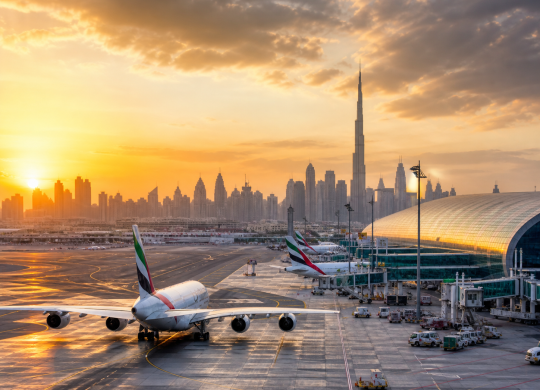
After several months of restrictions and a drop in passenger traffic of more than 65%, Dubai is beginning to resume air service. Airports are gradually resuming flights, but the situation in the region remains unstable. Learn more about how operations are changing at one of the world’s largest aviation hubs

After several months of severe disruptions to air travel, Dubai is beginning to gradually resume operations at its key airports. Following the escalation of the conflict between Iran and Israel in late February, airspace over parts of the Middle East was partially closed, leading to a sharp drop in passenger traffic and widespread flight delays. In March, Dubai International Airport (DXB) served only 2.5 million passengers—a 65.7% decrease compared to the same period last year.
The situation is now gradually stabilizing: following the full reopening of airspace over the UAE, Dubai’s airports have begun scaling up operations and increasing the number of flights. At the same time, some route restrictions in the region remain in place, which is affecting the pace of recovery to pre-crisis levels.
In our previous article, we discussed how to choose safe accommodation, avoid mistakes, and book a hotel without unnecessary expenses.
Planning a trip abroad and want to protect yourself from unforeseen situations?
Travel insurance from Visit World will cover medical expenses, flight delays, and lost luggage in any country. Get a policy online in a few minutes and travel with confidence!

What happened to air traffic in Dubai?
Following the military escalation in late February, the Middle East’s aviation system faced severe restrictions. Airspace over key transit countries was partially closed due to the threat of missile and drone attacks, which immediately impacted international travel.
Dubai—one of the world’s major transit hubs—was hit the hardest. By March, traffic at Dubai International Airport (DXB) had plummeted: the airport served only 2.5 million passengers, a 65.7% decrease from the previous year. By comparison, during stable periods, this figure exceeds 7 million passengers per month.
The situation was further complicated by massive disruptions in logistics:
- Tens of thousands of travelers were stranded in the region in early March
- Airlines massively canceled or rerouted flights
- Some routes became inaccessible due to airspace closures
Additional pressure was created by recommendations from governments, particularly the U.S., to refrain from traveling to the region. This further reduced demand for flights even after the partial reopening of the airspace.
Learn more about the world’s top 10 airports with the best restaurants and food courts by following the link.
How is Dubai restoring air service?
After the situation stabilized and airspace over the UAE fully reopened, Dubai’s aviation industry began gradually resuming operations. Airport operators announced a phased return of flights and an increase in capacity in line with available routes in the region.
The operating company, Dubai Airports, confirmed that flights are already scaling up: airlines are restoring their schedules, and the number of flights is increasing as transit corridors are reopened. At the same time, the process is not happening instantly—some destinations remain restricted due to the unstable security situation.
The company’s CEO, Paul Griffiths, noted that airports are working to meet the growing demand, which began to recover immediately after the skies reopened. This indicates that demand for flights to Dubai remains high even after the crisis.
In practice, the recovery looks like this:
- Airlines are gradually reinstating canceled flights
- The number of transit flights through DXB is increasing
- International routes are being restored, but not all at once
- Schedules remain flexible due to the situation in the region
Despite the positive momentum, the industry is still operating under restrictions. That is why a full return to pre-crisis levels may take several months.
In our previous article, we reported that European airlines are canceling flights en masse due to a fuel shortage.
What does this mean for travelers?
Despite the resumption of air service, travel to and through Dubai remains less predictable than before. The situation is stabilizing, but the region’s aviation system has not yet returned to full operation.
The first thing to keep in mind is the flexibility of schedules. Even after the reopening of airspace, some routes operate with restrictions, so airlines continue to adjust flights depending on the situation in the region.
Key points to consider before traveling:
- Possible flight delays or rescheduling even a few days before departure
- Longer travel times due to detours around closed or dangerous areas
- Fewer available flights on certain routes
- Heightened security measures at airports
It’s also worth noting that during the peak disruptions in March, tens of thousands of passengers were stranded in the region. This shows how quickly the situation can change even after flights have partially resumed.
At the same time, demand for travel to Dubai is gradually returning, and expats and tourists are once again beginning to plan trips. This means that the number of flights will increase in the coming months, but the stability of schedules will depend directly on the security situation in the Middle East.
No matter how well thought-out your itinerary is, there is always room for force majeure when traveling. Unexpected medical expenses, transportation delays, or problems with luggage can ruin your plans and budget. Travel insurance helps you avoid unnecessary worries in such situations. You can apply for a travel insurance policy for a specific trip online at Visit World - quickly and without unnecessary bureaucracy!
Take out a policy online at Visit World and enjoy your trip without any unnecessary worries!
We remind you! Popular European tourist destinations are becoming increasingly crowded, so travelers are looking for alternatives without the crowds. In 2026, attention is turning to countries that remain off the beaten path but offer unique experiences, affordable prices, and an authentic atmosphere. Read more about 5 European countries that are rarely visited by tourists.
Products from Visit World for a comfortable trip:
Travel guide for 200 countries;
Legal advice from a local specialist on visa and migration issues;
Travel insurance around the world (please select the country of interest and citizenship to receive services);
Medical insurance all over the world.
We monitor the accuracy and relevance of our information, so if you notice any errors or inconsistencies, please contact our hotline
Frequantly
asked questions
Have flights to Dubai been fully restored yet?
How much has the number of passengers in Dubai dropped?
Is it safe to fly to Dubai right now?
Are flight delays or cancellations possible?
When will the situation return to normal?
Recommended articles
2 min
Air travel
European airlines have already begun cutting flights en masse due to a sharp rise in fuel prices and supply issues. Some carriers are grounding planes, while others are introducing new fees, which passengers are immediately feeling. Learn more about which flights are being canceled, how much ticket prices have risen, and what to expect next
17 Apr. 2026
More details3 min
Air travel
Best airport food in the world: Top 10 airports with the best restaurants and dining options in 2026
Airports are no longer just associated with long lines and rushing around—today, they are full-fledged culinary destinations. The new Skytrax 2026 ranking reveals where the world’s best food can be found, and Europe has firmly established itself among the leaders. Learn more about the top 10 airports with the best restaurants and food courts
29 Apr. 2026
More details3 min
Air travel
Flight disruptions in Europe in 2026: delays, cancellations and what travelers should expect
The global aviation industry is entering a new crisis: due to the war in the Middle East, fuel shortages, and rising costs, airlines are cutting flights en masse. Europe is already warning of potential disruptions, and carriers are even proposing to revise passenger compensation rules. Find out how this will affect travel in 2026
28 Apr. 2026
More details2 min
Transport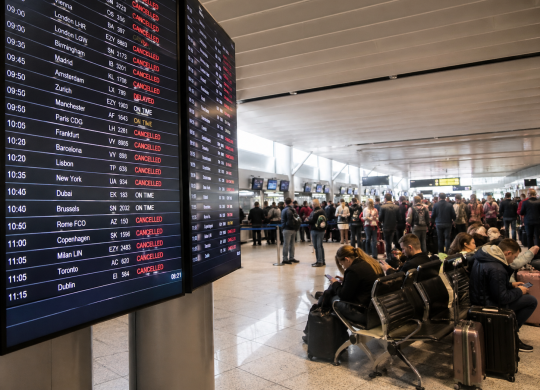
Transport strike in Belgium on May 12, 2026: widespread flight cancellations at Brussels Airport
Brussels Airport has warned of major disruptions in May 2026 due to a nationwide strike. Some flights are already scheduled to be canceled, and passengers are advised to prepare for schedule changes. Find out exactly when the disruptions are expected, how many flights are at risk, and what travelers should do
12 May. 2026
More detailsAll materials and articles are owned by VisitWorld.Today and are protected by international intellectual property regulations. When using materials, approval from VisitWorld.Today is required.