

France to Increase Tuition Fees for Non-EU Students in 2026: New Costs, Scholarships and Impact
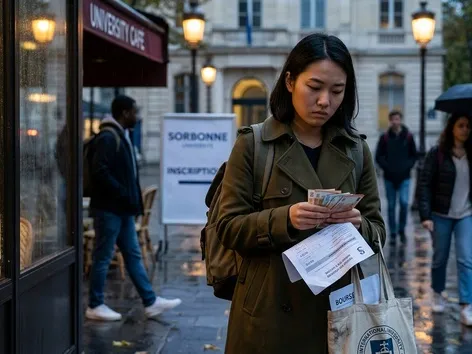
France is changing its higher education policy for international students and increasing tuition fees from 2026/2027. Find out how much a bachelor's and master's degree will cost, who will be affected by the new rules, which specialties will become a priority and how this will affect international applicants

France, which for decades has remained one of the most accessible countries in Europe for international education, is preparing major changes for students from countries outside the European Union. From the 2026/2027 academic year, most foreigners will pay significantly higher tuition fees for studies at public universities.
The new rules will be part of the French government’s renewed strategy for higher education and international student recruitment. Paris is effectively moving to a model where differentiated fees for foreigners will become the standard, and benefits will be the exception.
The decision has already sparked debate in the French academic community, as universities fear a loss of access to education and a decrease in the country’s international attractiveness.
The education systems of other countries often have complex admission rules, visa requirements and legal nuances that are important to consider before submitting documents.
An education lawyer will help you choose a country, educational institution and program, as well as prepare the necessary documents for admission and obtaining a student visa. Consulting a specialist will help you avoid mistakes when completing your documents and better understand your rights as an international student.
Get professional support and prepare your educational path abroad with confidence and without unnecessary stress.

How much will it cost to study in France from 2026?
According to the new model, students from non-EU countries will have to pay:
- 2,895 euros per year for bachelor's programs;
- 3,941 euros per year for master's programs.
This is a significant change for France. Previously, many public universities used to have the right to maintain reduced fees for foreigners or partially exempt students from increased fees. Now this practice will be limited.
French Minister of Higher Education Philippe Baptiste said that the government is changing the very approach to financing international education: now the increased fee is the basic rule, while exemptions from it will apply only in exceptional cases.
In fact, France is gradually approaching the model already used by some other popular study destinations, including the UK, Canada and Australia, where international students pay significantly more than local students.
Visit World services for tourists, migrants, and expats: Insurance | Guides | Legal advice
Who will be affected by the new rules?
The increase will apply to most students from countries outside the EU and the European Economic Area. This means that the new rates will affect a significant proportion of international applicants from Asia, Africa, Latin America and Eastern Europe.
The new policy is expected to come into effect for the 2026/2027 admission campaign. Some prospective students will actually face the changes when they submit their documents and plan their financial move.
At the same time, the government is maintaining a limited system of fee exemptions. According to preliminary plans, up to about 10% of students will be able to receive benefits.
How to get a French student visa, what documents are needed, a step-by-step application process, the features of life and study in France and much more important information in the article at the link.
France is betting on technology and science
One of the main reasons for the reform was France's attempt to change the structure of the international student flow. The state seeks to attract more students to strategic and high-tech areas.
About 60% of state scholarships are planned to be directed to the following areas:
- Artificial intelligence;
- Digital technologies;
- Quantum research;
- Biotechnology;
- Engineering;
- Scientific innovations.
Thus, Paris is trying to combine educational policy with the country's economic and technological ambitions. France is actively competing for talent in the field of AI and deep tech and seeks to make universities part of this strategy.
Studying in Europe is becoming one of the most realistic ways to obtain a residence permit. Read here which countries offer the best chances of staying after studying, finding a job, and moving to permanent residence.
Why are universities criticizing the reform?
Despite the official position of the government, some French universities have reacted critically to the changes. Representatives of the academic community fear that the increase in tuition fees could make France less accessible to talented students with middle-income levels.
The organization France Universités stated that such a policy contradicts the traditional principles of openness and academic accessibility, which have long distinguished French education from the Anglo-Saxon model.
Universities also warn of possible problems:
- Increasing administrative burden;
- More complex scholarship procedures;
- Reduced international diversity;
- The risk of France losing its competitiveness in the global education market.
Experts note that even after the increase, France will still remain cheaper than many English-speaking countries. However, the psychological effect of the new tariffs can significantly influence the decisions of applicants.
Countries where fully funded scholarships are available, as well as the conditions for obtaining them, are in this article.
Will France remain popular among international students?
Despite the changes, France is unlikely to lose its status as one of the main educational centers in Europe. The country continues to attract students with its high quality of education, a large number of international programs, the opportunity to study in English and access to the European labor market.
In addition, even the new tariffs remain lower than the average cost of studying in the UK, the USA or Australia, where annual fees often exceed 15-25 thousand euros.
However, experts predict that competition between European countries for international students will only intensify in the coming years. Against this background, France's decision may be a signal for other EU countries to reconsider their own policies towards foreign students.
After changes in the French education system and an increase in tuition fees for students from outside the EU, applicants will have to be more careful when planning their move. In addition to choosing a university, it is important to properly prepare documents, prepare for obtaining a student visa and take into account all the requirements of the educational institution.
An education lawyer can help at every stage - from selecting a program and consulting on academic differences to supporting you in difficult or conflict situations during your studies. This is especially important for students who face bureaucratic procedures, document legalization issues or problems in interacting with the university. Professional legal support allows you to minimize risks and feel more confident while studying abroad.
Contact an education lawyer to receive individual advice and support for a comfortable start to your studies in France or another European country.
Recall! The QS agency has updated the regional ranking of the strongest universities in Europe for 2026. The top ten included seven British institutions, two Swiss and one French, and the list was topped by the University of Oxford with the maximum score in five key indicators. Read about the top 10 European universities according to the QS 2026 and their features here
Photo - generated by Gemini
Products from Visit World for a comfortable trip:
Checklist for obtaining a visa and necessary documents in the France;
Legal advice on immigration to the France;
Travel insurance for foreigners in the France;
Medical insurance all over the world.
We monitor the accuracy and relevance of our information, so if you notice any errors or inconsistencies, please contact our hotline.
Frequantly
asked questions
Is it possible to study in France for free after the 2026 changes?
Will the new rules affect already enrolled students?
Which French cities remain the most popular for international students?
Recommended articles
2 min
Education
International Student Grants and Scholarships 2026: Realistic Funding Options for Studying Abroad
Visit World's study guides are a quick and reliable way to prepare for your student visa. Get up-to-date information by email in minutes
11 Jan. 2026
More details2 min
Education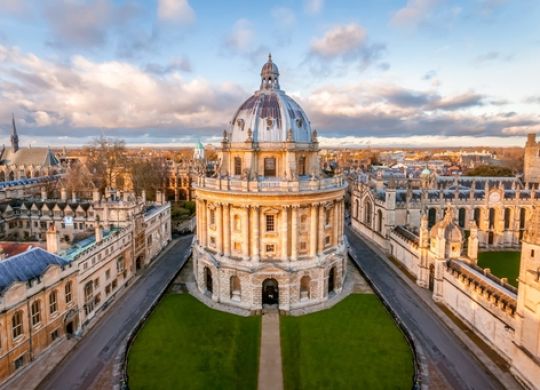
TOP-10 most prestigious universities: world ranking 2026
When choosing a university abroad, applicants are increasingly guided by international rankings and the reputation of the institution. The TOP 10 in 2026 includes universities with the highest research, graduate employment, and international influence. Learn more about the leaders of global education
05 Feb. 2026
More details2 min
Education
Best Countries to Study and Live Abroad in 2026: Overview, Tips & Opportunities
Studying abroad is a strategic step for career development and international experience. Find out which countries are the most attractive for students in 2026, work-while-study opportunities, costs and tips for successful admission
27 Mar. 2026
More details3 min
Education
The United Kingdom is among the most popular destinations for higher education abroad—hundreds of thousands of international students choose it every year. Before applying, it’s important to familiarize yourself with university rankings across different regions of the country, the financial aspects, and the requirements for obtaining a student visa. Learn more about applying to British universities in 2026, tuition costs, language requirements, and employment opportunities for international students
26 Apr. 2026
More detailsAll materials and articles are owned by VisitWorld.Today and are protected by international intellectual property regulations. When using materials, approval from VisitWorld.Today is required.