

Moving to Norway in 2026: Visas, Jobs, Salaries, and Everything You Need to Know
Table of contents
- Norway’s immigration status: what you need to know before moving
- Visas and Residence Permits in Norway in 2026
- Norwegian personal identification number (fødselsnummer): why is it needed
- Working in Norway: in-demand professions and work permits
- Salary levels in Norway
- Is it necessary to know Norwegian to work?
- Cost of living in Norway in 2026: real figures
- Taxes and Social Contributions in Norway
- Norway’s Healthcare System for Immigrants
- Pros and Cons of Moving to Norway
- Assistance with moving to Norway from Visit World
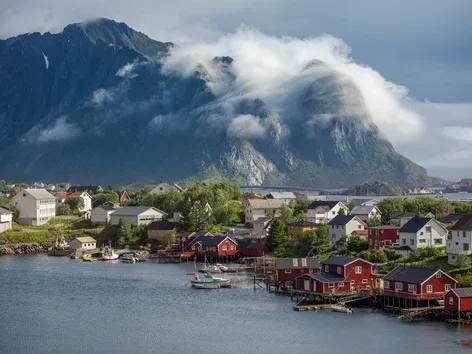
Norway attracts foreigners with high salaries, free education, and a well-developed social welfare system. At the same time, moving there requires careful planning: from obtaining permits to finding housing in a competitive market. Learn more about how to move to Norway in 2026

Norway consistently ranks among the countries with the highest standard of living in the world. High wages, a well-developed social welfare system, and a safe environment make this Scandinavian country an attractive destination for migrant workers from all over the world. At the same time, Norway’s immigration system has a clear structure and strict requirements, and the cost of living here significantly exceeds the European average.
In this article, we explore the main ways to legally move to Norway, types of visas and residence permits, in-demand professions and salary levels, the actual cost of living in 2026, as well as the pros and cons of emigrating to this country.
Are you planning to move to Norway and don’t know where to start with the paperwork?
The Visit World portal offers consultations with an immigration lawyer who will help you choose the right type of permit, gather the necessary documents, and navigate the entire process without mistakes.

Norway’s immigration status: what you need to know before moving
Before planning your move, it’s important to understand Norway’s unique status on the political map of Europe. This country is not a member of the European Union, but it is part of the European Economic Area (EEA) and the Schengen Area. This status directly affects immigration rules: citizens of EU and EEA countries have the right to free movement, while citizens of third countries must go through a separate procedure to obtain permits.
The currency of Norway is the Norwegian krone (NOK). The main cities where the majority of foreign workers are concentrated remain Oslo, Bergen, Stavanger, and Trondheim. It is in these cities that the widest selection of job openings for foreigners is available, although the cost of living is highest there.
Visit World services for tourists, migrants, and expats: Insurance | Guides | Legal advice
Visas and Residence Permits in Norway in 2026
Citizens of the EU, EEA, and Switzerland
Citizens of EU member states, the EEA, and Switzerland—including citizens of Romania—enjoy the right to free movement. A valid passport or national ID card is sufficient for entry. You are permitted to work and reside immediately upon arrival without prior authorization. Registration is not mandatory during the first three months; however, for a longer stay, you must register with local authorities (Folkeregisteret) and submit an application to the UDI.
Important practical note: even EU citizens need a Norwegian personal identification number (fødselsnummer) to function fully in the country. Without this number, it is impossible to open a bank account, sign a lease, or sign a mobile phone contract. It is recommended to contact the local tax office (Skatteetaten) within the first week of arrival.
Citizens of other countries
Citizens of countries outside the EEA, including citizens of Ukraine, Moldova, Kazakhstan, and New Zealand, are required to obtain a residence permit before arriving in Norway. All applications are processed by the Norwegian Directorate of Immigration (UDI), and submissions are made through an online portal. For most categories of permits, biometric data must be provided at a Norwegian embassy or a designated application center.
Main categories of residence permits:
- Permit for Skilled Workers — requires a formal job offer from a Norwegian employer, relevant qualifications, and a minimum salary (approximately 436,000 NOK per year, equivalent to about 38,000 EUR). Processing time is 2–4 months.
- Family immigration — available to spouses or partners of Norwegian citizens or individuals with a valid residence permit. Proof of the relationship, housing, and financial stability is required. Processing can take 6 to 12 months.
- Student Permit — requires admission to a Norwegian university and proof of financial support (approximately 139,600 NOK per year, or about 12,150 EUR). Processing takes 2–3 months.
- Job Seeker Permit — issued for 6 months to qualified professionals with a bachelor’s degree. It is not renewable.
It is recommended to apply 3–6 months before your planned move. Arriving on a tourist visa with the intention of resolving visa issues upon arrival is a violation of immigration law and may result in deportation and a ban on entry into the Schengen Area.
How to obtain Norwegian citizenship — read more at the link.
Norwegian personal identification number (fødselsnummer): why is it needed
A fødselsnummer is an 11-digit identification number assigned to every resident of Norway. This number is required to open a bank account, sign a lease, sign a mobile phone contract, register with the healthcare system, and obtain a tax card.
To obtain a fødselsnummer, you must confirm your legal residency status and visit the local tax office (Skatteetaten) in person with your passport, proof of address in Norway, and residency documents. Until full registration is complete, you can receive a temporary D-nummer, which allows you to begin basic administrative procedures. The permanent fødselsnummer is sent by mail within 1–3 weeks after submitting the application.
More details about immigration to Norway — here.
Working in Norway: in-demand professions and work permits
Norway’s economy relies on the oil and gas sector (with a gradual transition to renewable energy), the maritime industry, information technology, engineering, healthcare, and tourism. The labor market is geared toward skilled professionals, particularly those with STEM education or medical qualifications.
Among the most in-demand professions in 2026:
- Software developers and IT specialists;
- Engineers (oil, civil, electrical, mechanical);
- Healthcare professionals (nurses, doctors, physical therapists)—foreign diplomas must be validated through the Norwegian Health Personnel Register (Helsepersonellregisteret);
- Teachers (primarily English, mathematics, and natural sciences);
- Construction workers and tradespeople (electricians, plumbers, carpenters).
For third-country nationals, obtaining a work permit directly depends on having an official job offer from a Norwegian employer. The employer must confirm that the position could not be filled by a local candidate or an EEA citizen.
How to apply for a work visa to Norway — we explain here.
Salary levels in Norway
The average gross salary in Norway in 2026 is approximately 75,000 EUR per year (about 860,000 NOK).
However, the amount of
pay varies significantly by industry: professionals in IT, engineering, and healthcare often earn over 90,000 EUR per year.
It is worth noting that high salaries are partially offset by a progressive tax system. The effective tax rate for an annual income of 75,000 EUR is approximately 35–38%.
Is it necessary to know Norwegian to work?
Most Norwegians are fluent in English, and many international companies conduct business communication in English. At the same time, jobs in customer service (retail, hospitality, public sector) usually require knowledge of Norwegian. In the tech sector, engineering, and science, English is often sufficient.
Free Norwegian language courses are available to immigrants through the Introduction Program (Introduksjonsprogrammet) and local municipalities. Classes are usually held 2–3 times a week for 6–12 months. Mastering the language significantly improves your chances for career advancement and social integration.
For information on employment in Norway — follow the link.
Cost of living in Norway in 2026: real figures
Norway is among the most expensive countries in the world in terms of the cost of daily living. High wages partially offset expenses, but housing, restaurants, alcohol, and transportation remain significantly more expensive than in most European countries. The average monthly budget for a family of three in Oslo is 3,500–5,000 EUR, in Bergen — 3,100–4,500 EUR, and in Trondheim — 2,900–4,200 EUR.
Major monthly expenses (using Oslo as an example):
- Rent for a two-bedroom apartment in the city center: 1,800–2,500 EUR;
- Utilities (electricity, water, internet): 150–220 EUR;
- Groceries for a family of three: 600–800 EUR;
- Public transportation pass: about 80 EUR;
- Lunch at a mid-range restaurant: 35–50 EUR;
- Daycare (public, 1 child): 250–350 EUR.
In Bergen and Trondheim, costs are 15–25% lower than in Oslo, especially for housing and dining out. For citizens of other countries, such as Canada, who are accustomed to a different price level, adjusting their budget will require special attention.
Taxes and Social Contributions in Norway
The Norwegian tax system is progressive and consists of several components.
The municipal tax is 22% (a fixed rate with minor variations depending on the municipality). The national income tax has a progressive scale ranging from 0 to 17.4%, with higher rates applying to incomes exceeding approximately 80,000 EUR per year. In addition, the employee pays a social security contribution of 8.2% of their salary.
There is also a property tax—0.95–1.1% of net assets exceeding approximately 150,000 EUR. After receiving a fødselsnummer, Skatteetaten issues a preliminary tax card (skattekort), which must be provided to the employer for correct tax withholding. For a salary of 75,000 EUR, the total tax burden is approximately 35–38%.
Norway’s Healthcare System for Immigrants
Norway has a universal, tax-funded healthcare system. After registering as a resident and receiving a fødselsnummer, an individual automatically becomes a member of the National Insurance Scheme (Folketrygden). The system requires registration with a family doctor (fastlege), who serves as the first point of contact for medical care. A visit to a family doctor costs approximately 20–30 EUR in copayments, and a referral to a specialist costs 30–50 EUR.
The annual deductible (egenandel) in 2026 is approximately 3,260 NOK (285 EUR). Once this amount is reached through copayments, the rest of the medical services for the year are free (with the exception of prescriptions, which are subsidized but cost 10–50 EUR). Dental care for adults is not covered by the public system—a checkup costs 80–150 EUR, and a filling costs 200–500 EUR. Many immigrants take out private dental insurance.
EU and EEA citizens can use the European Health Insurance Card (EHIC) for the first three months while their registration is being processed. Third-country nationals gain access to the system immediately after registration, provided they have a residence permit.
Everything you need to know about Norway’s healthcare system — available at the link.
Pros and Cons of Moving to Norway
The decision to emigrate should be based on a careful assessment of the advantages and challenges faced by foreigners in Norway.
Pros:
- High wages—the average salary is approximately 75,000 EUR per year;
- A well-developed social system: free education, subsidized healthcare, and accessible daycare;
- A safe environment with a low crime rate;
- A work-life balance enshrined in law;
- Access to the Schengen Area for free movement throughout Europe.
Challenges:
- The cost of living is 30–50% higher than the EU average;
- A competitive rental market, especially in major cities;
- A harsh climate with long winters and short daylight hours;
- A language barrier that complicates social integration;
- Long processing times for residence permit applications for third-country nationals.
Assistance with moving to Norway from Visit World
Moving to another country always involves navigating visa requirements, gathering documents, and properly filing applications. The Visit World portal offers consultations with an immigration lawyer who will help you choose the optimal type of permit, prepare the required documents, and guide you through the process from application submission to receiving a decision. Professional support is especially important for citizens of countries outside the EEA—the procedure for obtaining a residence and work permit involves many nuances that can affect the final outcome.
Book a consultation with an immigration lawyer on the Visit World portal and receive a personalized relocation plan to Norway tailored to your situation and citizenship!
Reminder! In our previous article, we discussed countries you can visit with a U.S., UK, or Schengen visa in 2026.
Photo: Magnific
Products from Visit World for a comfortable trip:
Checklist for obtaining a visa and necessary documents for Norway;
Legal advice on immigration to Norway;
Travel insurance for foreigners in Norway;
Medical insurance all over the world.
We monitor the accuracy and relevance of our information, so if you notice any errors or inconsistencies, please contact our hotline.
Frequantly
asked questions
Do I need a visa to move to Norway in 2026?
What professions are most in demand in Norway for foreigners?
Recommended articles
2 min
Expats
Free housing in Spain for expats: how to move to Arenillas and get a job
European villages are becoming the new destination for expats and those seeking a more laid-back lifestyle. Find out why Arenillas in Spain is attracting new residents and what opportunities it offers
05 May. 2026
More details2 min
Expats
Fastest Countries to Get Citizenship in 2026: Top 10 Easiest Paths to a Second Passport
Some countries allow citizenship after 2–5 years of legal residence. Find out which countries offer the fastest path to a second passport in 2026, what the naturalization requirements are, and what to consider before moving
09 May. 2026
More details1 min
Expats
Where Is It More Profitable to Live in 2026: Germany, Poland or the Czech Republic?
European countries continue to be popular destinations for moving due to their stable economies, high standard of living and career opportunities. Find out where it is more profitable to live in 2026 - Germany, Poland or the Czech Republic, what salaries and expenses await expats, and which country to choose depending on your goals
11 May. 2026
More details2 min
Expats
New Zealand to Introduce Citizenship Test in 2027: New Rules for Migrants
New Zealand is preparing major changes to the citizenship process for foreigners. Find out who will be affected by the new citizenship test, what topics the exam will cover, how many attempts there will be and how to prepare for the new requirements in 2027
13 May. 2026
More detailsAll materials and articles are owned by VisitWorld.Today and are protected by international intellectual property regulations. When using materials, approval from VisitWorld.Today is required.