

A new train route through six European cities: how much will the trip cost and what will tourists see?
Table of contents
- New ICE high-speed train to connect 6 European cities: what is known about the route
- Cologne: The City of the Famous Cathedral and Beer Culture
- Aachen: Charlemagne’s underrated city at the three borders
- Liège: the most unusual city on the route
- Leuven: Belgium’s student capital without the tourist crowds
- Brussels: The Capital of Europe’s Top Tourist Attractions
- Antwerp: Belgium’s capital of fashion and contemporary art
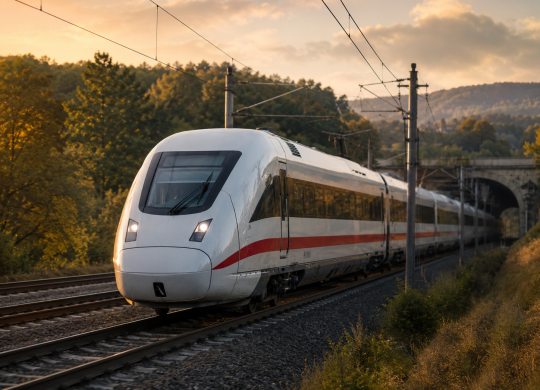
Europe is launching a new ICE high-speed international train that will connect six popular cities in Germany and Belgium. The route will begin service in the fall of 2026 and will allow tourists to travel quickly between Cologne, Aachen, Liège, Leuven, Brussels, and Antwerp without transfers. We’ll tell you how much tickets will cost, how long the trip will take, and why this route could become one of the most interesting options for traveling through Europe in 2026

Europe continues to actively develop international rail connections, and the new ICE route between Germany and Belgium could be one of the most exciting launches for tourists in 2026. The train will connect six cities at once, including both popular tourist destinations and lesser-known but charming destinations with historic architecture, local cuisine, and cultural landmarks.
The new route will allow travelers to travel between Cologne and Antwerp without transfers in just 2 hours and 25 minutes. For many tourists, this will be an opportunity to see several cities in Belgium and western Germany in a single trip, without wasting time on complicated transfers or flights.
In our previous article, we discussed how to choose safe accommodation, avoid mistakes, and book a hotel without unnecessary expenses.
Planning a trip abroad and want to protect yourself from unforeseen situations?
Travel insurance from Visit World will cover medical expenses, flight delays, and lost luggage in any country. Get a policy online in a few minutes and travel with confidence!

New ICE high-speed train to connect 6 European cities: what is known about the route
The new international route is being launched by Deutsche Bahn and SNCB. The first direct service between Cologne and Antwerp will begin on September 7, 2026. This will be the first direct ICE connection between these cities, as previously most high-speed trains terminated their routes in Brussels.
Trains are expected to run twice daily in each direction, with a travel time between the terminal stations of approximately 2 hours and 25 minutes. For tourists, this means the ability to travel quickly between Germany and Belgium without transfers or long waits at major transportation hubs.
The route will pass through six popular tourist cities:
- Cologne
- Aachen
- Liège
- Leuven
- Brussels
- Antwerp
The official ticket prices have not yet been announced, but experts predict that prices will be roughly the same as on the Cologne–Brussels route. In that case, booking early will allow you to purchase a ticket for approximately $35–55, a standard fare will cost $75–140, and a first-class trip will cost up to $220.
The new route could become particularly popular among tourists who enjoy multi-city trips—where a single journey allows them to visit several cities with distinct atmospheres, cuisines, and architecture. In just a few days, travelers will be able to visit both major cultural hubs and less touristy towns with local bars, historic squares, and medieval neighborhoods.
We previously reported that the EU is introducing a single ticket for trains operated by different companies.
Cologne: The City of the Famous Cathedral and Beer Culture
Cologne is considered one of the main cultural centers of western Germany. It is home to the famous Cologne Cathedral—one of Europe’s most renowned Gothic structures and a UNESCO World Heritage Site.
Millions of tourists visit the cathedral every year, and its two towers, standing over 150 meters tall, remain among the country’s most recognizable symbols.
Tourists are particularly drawn to the fact that Cologne Cathedral survived the bombings of World War II, even though a significant portion of the city’s historic center was severely damaged. Today, the area around the cathedral is home to museums, the Rhine promenade, historic squares, and dozens of traditional beer halls.
Cologne is also known for its beer culture. It is here that Kölsch is brewed—a light, pale beer that is officially permitted to be produced only in this region of Germany. In local brauhauses, glasses are traditionally served in small 200-ml portions, and waiters often automatically bring a new glass until the guest covers it with a coaster.
Tourists in Cologne should also check out:
- The Old Town with its colorful houses and narrow streets
- The Hohenzollern Bridge with thousands of “love locks”
- Panoramic walks along the Rhine
- One of Europe’s largest Christmas markets in winter
- A wealth of museums of modern art and Roman history
Aachen: Charlemagne’s underrated city at the three borders
Aachen often remains in the shadow of Germany’s more popular tourist cities, even though it is home to one of the country’s most important historical cathedrals. The city was Charlemagne’s favorite residence, and Aachen Cathedral became the first site in Germany to be inscribed on the UNESCO World Heritage List.
The city’s main architectural landmark is the cathedral with its octagonal chapel, construction of which began as early as the late 8th century. It was here that German kings were crowned for centuries. Inside the cathedral, you’ll find ancient mosaics, marble columns, and Charlemagne’s throne.
A unique feature of Aachen is its location near the borders of three countries: Germany, Belgium, and the Netherlands. Because of this, the city blends elements of different cultures: it’s known for its bike routes, Belgian cuisine, and international student atmosphere.
Today, Aachen is also known as a major student city thanks to RWTH Aachen—one of Europe’s top technical universities. With its large student population, the city boasts a vibrant nightlife, affordable cafes, and plenty of youth-oriented venues.
Must-see attractions in Aachen:
- Aachen Cathedral and Charlemagne’s Treasury
- The 14th-century town hall in the city center
- The thermal springs for which the city was famous even during the Roman Empire
- The narrow streets of the old town with traditional German cafes
- Cycling routes near the Belgian and Dutch borders
In our previous article, we wrote about the most beautiful train routes for summer travel in Europe.
Liège: the most unusual city on the route
Liège is often called one of Belgium’s most unconventional cities. Unlike the classic postcard scenes of Brussels or Bruges, Liège has a more industrial, “raw,” and even slightly rebellious character.
This is exactly what makes it interesting for tourists who want to see a less glossy but more authentic Belgium.
The city was once the center of a prince-bishopric and an important industrial region of the country. Today, it combines ancient Gothic cathedrals, modern architecture, and former industrial districts that are gradually being transformed into cultural spaces and art venues.
One of the city’s main tourist attractions remains the Montagne de Bueren staircase with its 374 steps. The climb is quite challenging, but the top offers one of the best panoramic views of Liège and the Meuse River valley. It is these stairs that often appear in rankings of the most beautiful city staircases in Europe.
A distinct part of the city’s tourist culture is Liège waffles. They differ from Brussels waffles in that they have a denser texture, caramelized sugar, and a richer flavor. Many tourists come to Liège specifically for the local desserts and charming small cafes.
Things to do in Liège:
- Climb the Montagne de Bueren stairs
- Try authentic Liège waffles
- Stroll through the historic center near Saint-Lambert Square
- Visit the modern Liège-Guillemins train station, designed by architect Santiago Calatrava
- See the contrast between the city’s historic and industrial architecture
Leuven: Belgium’s student capital without the tourist crowds
Leuven is often called one of Belgium’s most comfortable cities for a peaceful getaway. There are far fewer tourists here than in Brussels or Bruges, yet the city boasts a well-preserved medieval center, atmospheric narrow streets, and dozens of historic buildings.
Leuven’s town hall is considered the city’s main architectural highlight—one of the most intricately detailed Gothic town halls in Europe. Its facade is adorned with hundreds of sculptures, and the building itself has long been one of Belgium’s symbols. Nearby are old squares, small cafes, and student bars.
KU Leuven—one of Europe’s oldest universities, founded as far back as the 15th century—gives the city a special atmosphere. Thanks to its large student population, Leuven has a vibrant nightlife, many affordable establishments, and a large number of cyclists on the streets.
It was in Leuven that the world-famous Stella Artois beer brand originated. And Oude Markt Square, with its dozens of bars and restaurants, is often called “Europe’s longest bar.” In the evening, this place becomes one of the main hubs of city life.
What to see in Leuven:
- The Gothic town hall on the central square
- Oude Markt Square with dozens of bars
- The historic buildings of KU Leuven
- The Kruidtuin Botanical Garden—the oldest in Belgium
- The ancient streets and canals in the city center
We previously reported that the European Commission has banned airlines from charging passengers additional fees after a ticket is purchased—even during a fuel crisis.
Brussels: The Capital of Europe’s Top Tourist Attractions
Brussels welcomes millions of tourists every year thanks to its blend of historic architecture, museums, and status as the political center of the European Union. Although the city is often criticized for its chaotic urban development and the contrast between its neighborhoods, it is home to some of Belgium’s most famous tourist attractions.
The city’s main attraction remains the Grand-Place—the historic center of Brussels, surrounded by Baroque buildings, ancient guildhalls, and the city hall. In the evening, the square is especially popular thanks to the illuminated facades and the large number of cafes and restaurants.
Tourists also frequently visit the observation deck near the Museum of Musical Instruments, which offers a panoramic view of the city’s historic center. In addition to classic landmarks, Brussels attracts visitors with its many chocolate shops, waffle cafes, and contemporary art museums.
Despite its popularity among tourists, some areas of the city have a rather mixed reputation. That is why travelers are advised to carefully choose their accommodations and routes for evening walks, especially near major train stations.
Things to do in Brussels:
- See the Grand-Place and the historic town hall
- Try Belgian waffles, chocolate, and fries
- Visit the Musical Instruments Museum
- Take a walk through the European Parliament district
- See the famous Atomium and Mini-Europe Park
In our previous article, we reported that Europe is suspending biometric checks due to issues with the EES system.
Antwerp: Belgium’s capital of fashion and contemporary art
Antwerp will be the final stop on the new ICE route. It is Belgium’s second-largest city and one of Europe’s largest ports. Antwerp is often called the country’s most “creative” city thanks to its blend of historic architecture, contemporary art, designer shops, and vibrant cultural life.
The city boasts a well-preserved historic center with narrow streets, ancient squares, and guild buildings. At the same time, modern art galleries, concept stores, and trendy cafes operate right alongside the medieval architecture. It is precisely because of this atmosphere that the author of Traveloffpath compares Antwerp to Milan.
Antwerp has long been considered the global center of the diamond trade. A significant portion of the global diamond market passes through the local Diamond District, and the district itself remains one of the city’s most unique attractions for tourists.
The city is also known for its fashion scene. It was here that the famous group of designers known as the Antwerp Six formed, significantly influencing modern European fashion. Today, Antwerp attracts tourists with its abundance of showrooms, vintage shops, and independent brands.
What to see in Antwerp:
1. Antwerpen-Centraal Central Station, often called one of the most beautiful in Europe
2. Cathedral of Our Lady of Antwerp
3. The historic Grote Markt square
4. The MAS Museum with a panoramic view of the port
5. The Diamond District and the city’s designer shops
No matter how well thought-out your itinerary is, there is always room for force majeure when traveling. Unexpected medical expenses, transportation delays, or problems with luggage can ruin your plans and budget. Travel insurance helps you avoid unnecessary worries in such situations. You can apply for a travel insurance policy for a specific trip online at Visit World - quickly and without unnecessary bureaucracy!
Take out a policy online at Visit World and enjoy your trip without any unnecessary worries!
We remind you! Popular European tourist destinations are becoming increasingly crowded, so travelers are looking for alternatives without the crowds. In 2026, attention is turning to countries that remain off the beaten path but offer unique experiences, affordable prices, and an authentic atmosphere. Read more about 5 European countries that are rarely visited by tourists.
Products from Visit World for a comfortable trip:
Travel guide for 200 countries;
Legal advice from a local specialist on visa and migration issues;
Travel insurance around the world (please select the country of interest and citizenship to receive services);
Medical insurance all over the world.
We monitor the accuracy and relevance of our information, so if you notice any errors or inconsistencies, please contact our hotline
Recommended articles
2 min
Air travel
Europe suspends biometric border control: what to know about EES system problems in 2026
The EU’s new border control system, EES, which requires facial and fingerprint scans for tourists from third countries, has already caused hours-long lines and widespread flight delays. Due to the resulting transportation chaos, some European countries have begun temporarily abandoning biometrics and reverting to passport stamps. Here’s a look at which countries have already relaxed the rules and what this means for travelers in the summer of 2026
07 May. 2026
More details2 min
Air travel
European airlines cut flight ticket prices as travelers fear a new fuel crisis in 2026
European airlines have begun to actively cut ticket prices for popular summer destinations after tourists postponed their bookings en masse due to fears of a new fuel crisis and potential flight cancellations. On some routes, flight prices have fallen by more than 40%. Find out more about why airfares in Europe are falling, which destinations have already become more affordable, and what tourists can expect in the summer of 2026
11 May. 2026
More details2 min
Transport
Best train trips in Europe 2026: 4 most beautiful railway routes for summer travel
Train travel across Europe is once again the main trend of the summer: new international routes allow you to reach the continent’s most beautiful cities quickly and comfortably, without the stress of airports. From the night express between Paris and Berlin to a scenic journey from Vienna to the Adriatic – this season, travellers have more opportunities for unforgettable train journeys. Find out more about the 4 most interesting train routes in Europe for your summer holiday in 2026
16 May. 2026
More details3 min
Transport
The European Union is preparing a major reform of rail travel: passengers will be able to purchase a single ticket even for routes involving multiple carriers. The new rules are also intended to strengthen the protection of travelers’ rights in the event of delays, cancellations, or missed connections. Find out how the single-ticket system will work in the EU and when the changes may take effect
14 May. 2026
More detailsAll materials and articles are owned by VisitWorld.Today and are protected by international intellectual property regulations. When using materials, approval from VisitWorld.Today is required.