

US Resumes Diversity Visa Issuance Ahead of Sept 30 Deadline
Table of contents
- What is the Diversity Visa program (the Green Card lottery)?
- Why was visa issuance suspended back in December 2025?
- The court ruling in Medani et al. v. Trump et al.
- Who does the resumption of Diversity Visa issuance affect?
- Why does the September 30, 2026 deadline matter so much?
- What should DV-2026 applicants do right now?
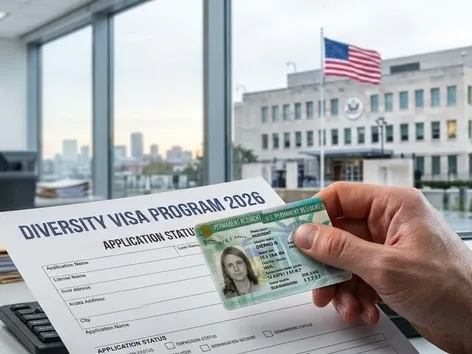
The U.S. Department of State resumed issuing Diversity Visas in 2026 following a court ruling. Find out who is affected and why the deadline is September 30

Getting a Green Card through the Diversity Visa lottery is a dream for millions of people around the world, and right now that dream has moved a little closer to reality. The U.S. State Department resumed issuing Diversity Visas as of August 28, 2026 – a decision that followed a months-long legal battle. For thousands of lottery winners, this is good news, but news that comes with a tight deadline: all the formalities have to be wrapped up within a matter of weeks.
Handling the paperwork for moving or working abroad is rarely simple, especially when the rules keep shifting and the clock is ticking.
A migration lawyer on VisitWorld can help you make sense of the process, put together a complete document package, and avoid the common mistakes that cost time and money. Just enter your citizenship and destination country, and the service will match you with a specialist who handles cases just like yours.
Find your migration lawyer on VisitWorld today.

What is the Diversity Visa program (the Green Card lottery)?
The Diversity Visa, informally known as the "Green Card lottery," is an annual U.S. immigration program for citizens of countries with historically low rates of immigration to the United States. Winners are chosen through a random computerized drawing, but winning the lottery is only the first step – not a visa in hand.
Once selected, an applicant must:
1. Submit a complete set of documents and confirm they meet the program's requirements;
2. Pass a background check and attend a consular interview;
3. Pay the required fees and complete a medical exam;
4. Receive final visa approval before the fiscal year ends.
Miss any one of these steps, and the spot in the program is lost – no matter how lucky the draw was.
Visit World services for tourists, migrants, and expats: Insurance | Guides | Legal advice
Why was visa issuance suspended back in December 2025?
The pause began on December 23, 2025, when the State Department announced it was suspending all Diversity Visa issuance in order to review its screening and vetting procedures. Alongside the visa pause, related restrictions were introduced too: adjustment-of-status applications for DV winners were frozen, and consular officers were instructed to deny visas under Section 221(g) of the Immigration and Nationality Act. For people who had waited years for their shot, those months of uncertainty were a real test of patience.
In 2026, getting a Green Card in the U.S. became notably harder due to tighter immigration policy and new applicant screening. Read more about the new Green Card rules in the U.S. here.
The court ruling in Medani et al. v. Trump et al.
The turning point came from a lawsuit filed in California in June 2026. A federal court found that three subclasses of DV-2026 applicants were entitled to relief and preliminarily blocked three visa-freeze policies, finding them likely arbitrary and capricious. The court ordered the relevant agencies to resume standard case processing.
The State Department updated its official guidance on August 31, 2026, confirming that the December pause was lifted retroactively, effective August 20, 2026. Still, it's worth understanding the difference between a policy being formally lifted and the actual speed of processing – the latter depends on how busy individual consulates are, interview slot availability, and other practical constraints a court order can't simply erase.
Changes to the Green Card process for temporary visa holders are covered here.
Who does the resumption of Diversity Visa issuance affect?
This news matters most to people who were already selected in the DV-2026 lottery and whose cases were stuck because of the suspension.
One clarification worth making upfront: this ruling doesn't open a new path to a Green Card – it simply unblocks processing for applications from people already selected. If you didn't enter the DV-2026 lottery, or weren't selected, this news doesn't directly affect you.
The biggest winners are applicants from countries the program is traditionally open to, who still fall within the current fiscal-year visa number allocation. For citizens of countries that are historically excluded from the program due to high immigration rates to the U.S., nothing changes here – eligibility wasn't there before, and it isn't now either.
Also read: the United States is eliminating the "Duration of Status" system for student and exchange visas.
Why does the September 30, 2026 deadline matter so much?
This is where the real difficulty lies. By law, diversity visas for a given fiscal year must be issued by September 30 of that same year – no exceptions. Any visa numbers not used by midnight on September 30 expire and cannot be carried over to the next fiscal year. That means even a case that's technically "active" but hasn't had its interview by October 1 is effectively over.
The court has scheduled a status conference for September 18, 2026, to assess how faithfully and effectively agencies are complying with the order to resume processing. Immigration law firms tracking the case estimate that tens of thousands of applicants remain at risk, a significant share of them from African countries whose interviews hadn't taken place before the program was suspended.
What should DV-2026 applicants do right now?
Time is short, so there's no room to wait:
1. Check your case status through the State Department's official portal;
2. Submit any missing documents immediately;
3. Confirm with your consulate or embassy whether your interview is scheduled or confirmed;
4. Keep an eye on official updates – guidance can change from one week to the next;
5. Don't put off medical exams or paperwork – those queues take time too.
It's worth remembering: winning the lottery was never an automatic guarantee of a visa, and the current legal situation adds another layer of unpredictability. The court's ruling could still be appealed, clarified, or changed before the fiscal year ends.
This year's Diversity Visa situation showed just how quickly immigration rules can shift – and how valuable it is to have a professional keeping track of those changes on your behalf. Whether you're a Green Card lottery winner or just planning to apply in the next cycle, a migration lawyer can help assess your chances, prepare your documents ahead of time, and make sure you don't miss a single deadline.
Lawyers available through VisitWorld know the ins and outs of consular procedures across different countries and can advise on the steps worth taking right now, while the situation remains unsettled. This matters especially if you already filed your application and are worried about losing your place due to procedural delays.
Don't wait until the clock runs out – put the legal side in a professional's hands. Find a vetted migration lawyer on VisitWorld in just a few clicks.
A reminder: the cost of housing, groceries, transportation, and healthcare varies significantly across U.S. states. Hawaii, Massachusetts, and California top the list, while Oklahoma recorded the lowest costs. We've already covered the cost of living in every U.S. state and the factors that affect your budget the most.
Photo - generated by Gemini
Products from Visit World for a comfortable trip:
Travel guide for 200 countries;
Legal advice from a local specialist on visa and migration issues;
Travel insurance around the world (please select the country of interest and citizenship to receive services);
Medical insurance all over the world.
We monitor the accuracy and relevance of our information, so if you notice any errors or inconsistencies, please contact our hotline.
Frequantly
asked questions
What happens if a DV-2026 winner does not complete all procedures by September 30?
Can a refusal to issue a Diversity Visa be appealed?
How does the Diversity Visa differ from other U.S. immigrant visas?
Recommended articles
2 min
Expats
Best cities for immigrants in US: where should a foreigner move in 2026?
The United States of America attracts people from all over the world with its cultural diversity, economic opportunities, and high standard of living. For many immigrants, choosing a place to live in the United States is an important step in a new phase of life. Learn more about the best cities in the US for expats
01 Aug. 2026
More details2 min
Residence permit
USCIS Public Charge Rule 2026: What Green Card Applicants Need to Know Before September 18
A new public burden rule for green card applicants will take effect in the United States on September 18, 2026. Find out what benefits immigration officers will now consider, how the date of application affects the outcome of the case, and who will not be affected by the changes
22 Jul. 2026
More details2 min
Expats
U.S. Citizenship by Birth: Trump Signs New Executive Orders to Restrict the Right in 2026
The Donald Trump administration continues to pursue a policy of tightening immigration, despite the U.S. Supreme Court’s ruling on birthright citizenship. New executive orders dated August 6, 2026, impose additional restrictions and exclude certain categories of individuals from automatically qualifying for U.S. citizenship. Learn more about the content of the new orders, the groups of people they will affect, and the legal prospects for challenging these orders
10 Aug. 2026
More details2 min
Expats
The U.S. State Department has suspended visa interview appointments: what do we know?
It has recently become more difficult to obtain a U.S. visa: scheduling interviews at U.S. consulates around the world is temporarily unavailable. The State Department attributes this to the launch of a training program for consular staff and more rigorous screening of applicants. Learn more about the reasons behind this decision, the implications for applicants who already have scheduled interviews, and the current status of U.S. visa issuance
27 Aug. 2026
More detailsAll materials and articles are owned by VisitWorld.Today and are protected by international intellectual property regulations. When using materials, approval from VisitWorld.Today is required.