

What attractions can you visit for free in Europe in September 2026?
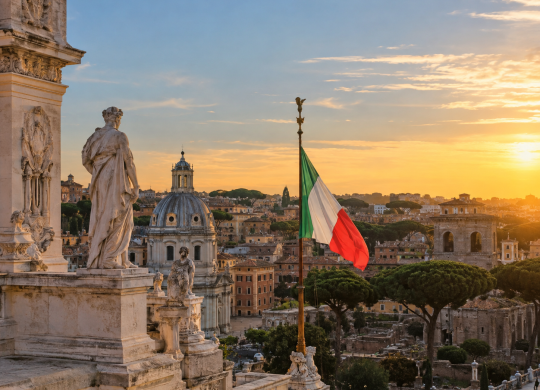
In September 2026, you can visit museums, palaces, historic buildings, and other cultural sites for free in many European countries. Some of these locations are usually closed to the general public or accessible only with tickets. Here’s where and when you should take advantage of this opportunity

September in Europe offers a rare opportunity to save money on cultural activities. In many countries, museums, palaces, historic residences, government buildings, and archaeological sites open their doors for a few days—either for free or at discounted rates. Some of these places are not open to tourists at all on regular days.
This takes place as part of European Heritage Days—a joint initiative of the Council of Europe and the European Union, in which dozens of countries participate each year. In 2026, the main events will take place in September, but specific dates, admission rules, and the need for advance registration vary depending on the country and individual location.
Any trip abroad is not only about inspiration and new experiences, but also about responsibility for your own safety. Travel insurance protects you from unforeseen expenses: illness on the road, flight delays, lost luggage or trip cancellation.
With Visit World, you can apply for an insurance policy online in a few minutes - without queues, unnecessary documents and nerves. Travel with confidence. Apply for travel insurance online at Visit World!

What are European Heritage Days and how do they work?
European Heritage Days are a series of cultural events held in various European countries on different dates. Their main feature is the opportunity to visit sites—which are usually ticketed or have restricted access—for free or at a discounted rate.
The program may include museums, castles, palaces, historic buildings, archaeological sites, government institutions, and private cultural heritage sites. Organizers often conduct special tours, open normally closed areas, or grant access to buildings that do not operate as tourist attractions throughout the year.
However, free admission does not always mean unrestricted access without any conditions. Popular locations may require online registration, a specific time reservation, or a form of identification. The number of spots on tours is also often limited.
Therefore, before your visit, it’s worth checking:
- The exact date a specific site is participating
- Whether advance registration is required
- Hours of free admission
- Whether guided tours are included
- Age and other restrictions for visitors
In 2026, events take place on various weekends in September depending on the country, so it’s impossible to set a single universal date for all of Europe.
Learn more about the specifics of Museum Night in Europe by following the link.
Where can you go for free in September 2026?
Heritage Days are held on different dates across Europe. Most events take place in mid- to late September, and the format varies by city and venue.
Berlin, Germany – September 13
In Germany, Tag des offenen Denkmals will take place on September 13. On this day, historic buildings, landmarks, and architectural sites—some of which have restricted access on regular days—are opened to visitors.
In Berlin, the program traditionally includes historic residential buildings, industrial architecture, religious structures, and other sites of urban heritage. Advance registration may be required for certain tours.
Paris, France – September 19–20
Paris offers one of the most interesting programs in Europe. During the Journées européennes du patrimoine, not only museums and landmarks are opened to the public, but also administrative buildings that are usually off-limits to the general public.
Among the locations listed in the program are Paris City Hall, the Ministry of Economy and Finance, the Basilica of Saint-Denis, and other historic sites. Advance reservations are often required for the most popular venues.
UNESCO has launched the world's first Virtual Museum of Stolen Cultural Properties. Read here about the goal of the project, who its author is and where you can see the stolen values.
Brussels, Belgium – September 19–20
In Brussels, the focus is on architecture, historic buildings, and urban spaces. Part of the program includes special tours and access to sites that aren’t typically open as tourist attractions.
Among the interesting options, be sure to check out the programs offered by European institutions and the city’s historic administrative buildings.
Prague, Czech Republic – throughout September
In the Czech Republic, events aren’t limited to a single weekend. Throughout September, Prague and other cities host open tours, lectures, concerts, and special cultural events.
The program may include historic buildings, sacred architecture, old industrial sites, and urban landmarks. It’s worth checking the specific dates separately for each location.
Athens and other cities in Greece – September 25–27
In Greece, the program covers state museums, archaeological sites, and other cultural venues. For tourists, this is a great opportunity to see part of the country’s historical heritage in a special setting.
Individual events may include themed tours, presentations, and access to exhibits not included in the standard visitor program.
We tell you why a trip to a museum improves your mood at the link.
Rome, Italy – September 26–27
In Italy, Heritage Days take place in late September and include state museums, archaeological sites, and historical landmarks.
An important note: not all visits will be completely free. For some state-run cultural sites, a symbolic ticket price of 1 euro will apply on Saturday evening.
Vienna, Austria – September 27
In Vienna, more than 50 historic sites are set to open to visitors. The program includes both well-known landmarks and buildings that aren’t usually part of standard tourist itineraries.
Among the announced locations are the University of Vienna Archives, sites in Augarten, and the Bahá’í Center Austria. For some tours, the number of spots may be limited.
In a previous article, we wrote about the world’s most unusual museums.
Which places should you check out first?
The most interesting sites during Heritage Days aren’t the usual museums, but rather sites that are normally restricted to the public throughout the year. That’s why it’s best to browse the program not only by city but also by type of location.
First and foremost, you should pay attention to:
1. Government and administrative buildings—city halls, ministries, parliaments, and other institutions that do not typically operate as tourist attractions
2. Historic residences and palaces—especially those where individual rooms or administrative areas are opened to the public
3. Archaeological sites—in Greece and Italy, some of these sites participate in special programs
4. Archives and university buildings—they often open their collections, courtyards, or historic rooms to the public
5. Industrial architecture—old factories, depots, power plants, and other sites that rarely make it onto classic tourist itineraries
It’s especially worth keeping a close eye on the programs in Paris, Berlin, and Vienna. It’s in the major capitals that you’ll usually find the most locations with restricted access, and spots on tours to these sites sell out the fastest.
The Great Egyptian Museum in Giza opened on November 4, 2025. Read this article for opening hours, tickets, routes and the main treasures of the GEM.
What to check before a free visit?
Even if a site is participating in European Heritage Days, this doesn’t always mean you can simply walk in without a ticket. Popular locations often require advance registration, and the number of spots on guided tours is limited.
Before your visit, be sure to check:
- Whether online booking is required
- What times offer free or discounted admission
- Whether a guided tour is included in the program
- What language the tour is conducted in
- Whether you need a valid ID
- Whether there are age restrictions or limits on the number of visitors
It’s also important to check the program specifically on the official website of the particular city or site. Schedules are subject to change, and registration for the most popular locations sometimes opens only a few days or weeks before the event.
If you’re planning a trip specifically to take advantage of free admission, it’s best to make a list of several alternative places in advance. This will help ensure you don’t waste a day if tickets for the most popular attraction are already sold out.
When planning a trip to Europe for festivals, cultural events, or free museum days, it’s a good idea to arrange travel insurance in advance. A policy will help cover unexpected expenses related to medical care, injuries, or other situations that may arise during your trip. You can purchase travel insurance for a trip abroad online through the Visit World service by selecting a plan based on the country, trip duration, and planned activities.
We remind you! European tourists in 2026 are increasingly choosing lesser-known destinations instead of expensive and crowded capitals. Slovenia, Latvia, Montenegro and Albania offer quality vacations at significantly lower prices. We have already talked about the cost of accommodation, food and the features of each of these countries.
Products from Visit World for a comfortable trip:
Travel guide for 200 countries;
Legal advice from a local specialist on visa and migration issues;
Travel insurance around the world (please select the country of interest and citizenship to receive services);
Medical insurance all over the world.
We monitor the accuracy and relevance of our information, so if you notice any errors or inconsistencies, please contact our hotline
Frequantly
asked questions
Can all sites be visited for free during Heritage Days?
Do I need to book a visit in advance?
Can I visit places that are usually closed to tourists?
Where can you find the current program for a specific city?
Is it worth planning a trip just for free admission?
Recommended articles
1 min
Popular
UNESCO has opened the world's first Virtual Museum of Stolen Cultural Properties: where to look?
UNESCO has launched the world's first Virtual Museum of Stolen Cultural Property - a digital space where you can see over 250 artifacts stolen from around the world. Find out what the project aims to do, who its creator is, and where you can see the stolen treasures.
12 Oct. 2025
More details1 min
Popular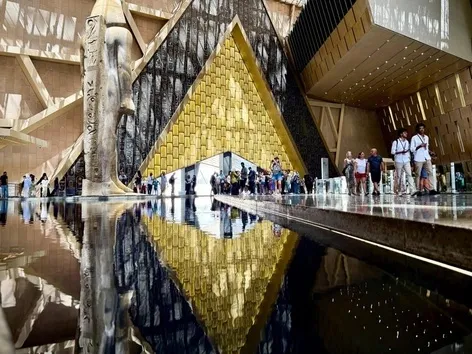
The Grand Egyptian Museum opened to visitors: tickets, opening hours, history and exhibition
The Grand Egyptian Museum at Giza opened on November 4, 2025. Learn about the exhibits, opening hours, tickets, routes and the main treasures of the GEM
04 Nov. 2025
More details2 min
Travels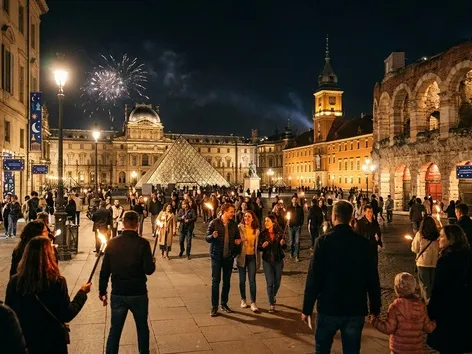
European Night of Museums 2026: Dates, Program & Best Locations to Visit
Museum Night 2026 will take place simultaneously in 30 European countries on May 23. Find out which museums will be open for free, what Paris, Rome, Warsaw and Berlin are preparing, and how to plan the perfect cultural evening abroad
20 May. 2026
More details2 min
Travels
Museums of Oddities: The World's Strangest Cabinets of Curiosities to Visit in 2026
Cabinets of curiosities are museums where science borders on myth, and each exhibit raises more questions than it answers. Find out how 16th-century chambers of curiosities have evolved into modern museums of curiosities, and which six must-sees are a must-see for any traveler who appreciates the unusual
08 Aug. 2026
More detailsAll materials and articles are owned by VisitWorld.Today and are protected by international intellectual property regulations. When using materials, approval from VisitWorld.Today is required.