

UNESCO has opened the world's first Virtual Museum of Stolen Cultural Properties: where to look?
Table of contents
- What is the Virtual Museum of Stolen Cultural Properties?
- Who created the UNESCO Virtual Museum of Stolen Cultural Property?
- What is presented in the UNESCO Virtual Museum of Stolen Cultural Property?
- The Return Room: A Special Place in the Museum of Stolen Cultural Property
- Where can I find the Virtual Museum of Stolen Cultural Property?
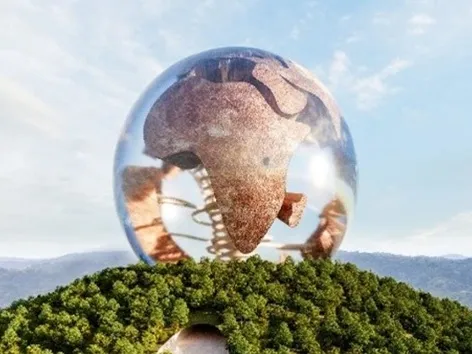
UNESCO has launched the world's first Virtual Museum of Stolen Cultural Property - a digital space where you can see over 250 artifacts stolen from around the world. Find out what the project aims to do, who its creator is, and where you can see the stolen treasures.

World cultural heritage has found a new home – in the digital space. UNESCO has presented the world’s first Virtual Museum of Stolen Cultural Objects, created to remind us that cultural heritage belongs to everyone, and its return is a common mission of humanity.
We tell you about the new project from UNESCO in this article.
Travel safely – take out travel insurance! When planning a trip abroad, do not forget about the important thing – reliable travel insurance. It will provide protection in case of unforeseen situations, including illness, trip cancellation or other emergency circumstances.

What is the Virtual Museum of Stolen Cultural Properties?
The online museum presents more than 250 stolen artifacts provided by 46 countries around the world. Visitors can see 3D renderings of works of art, archaeological finds, ancient books and rare musical instruments. The collection is available for free – via the website or using a virtual reality headset.
Each exhibit has its own story. After all, as the authors of the project emphasize, “when a cultural object is stolen, we lose part of our identity.”
Who created the UNESCO Virtual Museum of Stolen Cultural Property?
The project was launched on September 29 at the UNESCO World Conference on Cultural Policy in Barcelona. The initiative is implemented in partnership with Interpol and with the financial support of the Kingdom of Saudi Arabia.
The architect of the virtual museum is Pritzker Prize laureate Francis Kéré. His project is inspired by the shape of the baobab tree – a symbol of resilience and the connection of generations in African cultures. The spatial structure of the museum resembles the winding path of the famous Guggenheim Museum in New York.
What is presented in the UNESCO Virtual Museum of Stolen Cultural Property?
The museum’s virtual rooms are divided by region:
- Europe and North America – 96 objects;
- Latin America and the Caribbean – 57;
- Africa – 51;
- Asia and the Pacific – 37;
- Arab countries – 36.
Exhibits include a 2,000-year-old gold bracelet from Romania, an elephant tusk from Cameroon, a coin from the Benghazi treasury, as well as a bronze statue of Buddha from the Ming era and a gold pendant from Palmyra from the 2nd century AD.
In many cases, the 3D models were created using artificial intelligence, which recreates the shape of the lost objects based on old photographs.
The Return Room: A Special Place in the Museum of Stolen Cultural Property
Unlike traditional museums, the UNESCO collection has a special purpose – to shrink, not grow. The “Room of Return and Restitution” presents the stories of artifacts that have already returned home. For example, a trilobite fossil returned to Morocco in 2024.
In the future, when countries return their relics, digital exhibits will gradually disappear from the virtual gallery, symbolizing the victory of truth over oblivion.
Where can I find the Virtual Museum of Stolen Cultural Property?
You can visit the Virtual Museum of Stolen Cultural Property at the following link: museum.unesco.org.
The project has already become an example of how digital technologies can unite people and help preserve the memory of the past.
The launch of the Virtual Museum of Stolen Cultural Property was an important step towards preserving the common history of humanity. Thanks to modern technology and international cooperation, now anyone can touch the cultural heritage that the world has lost to war, looting and illegal trade.
UNESCO is transforming digital space into a place of remembrance, where art and science work for justice. This project reminds us that cultural heritage has no borders, and its return is not only a gesture of respect for the past, but also a contribution to the future of generations.
Discover the world with Visit Ukraine travel guides!
Are you preparing for a trip? With our travel guide you will receive: step-by-step instructions on entering different countries, current rules of stay and other useful travel tips.

Reminder! Southern Italy attracts with its mild climate, gastronomy and sea, but to truly enjoy its charms, it is important to choose the right time to travel. We have already told you when is the best time to go to southern Italy - weather, seasons, prices, festivals and the ideal time to travel without crowds.
Photo - Unesco
Products from Visit World for a comfortable trip:
Travel guide for 200 countries;
Legal advice from a local specialist on visa and migration issues;
Travel insurance around the world (please select the country of interest and citizenship to receive services);
Medical insurance all over the world.
We monitor the accuracy and relevance of our information, so if you notice any errors or inconsistencies, please contact our hotline.
Frequantly
asked questions
Can you visit the UNESCO Virtual Museum of Stolen Cultural Property for free?
How were 3D models of stolen artifacts created?
What is the main goal of creating this museum?
Recommended articles
2 min
Travels
Is it safe to travel to Brazil in 2026: what can and cannot be done in the country for a tourist?
Brazil is a unique country that every tourist must visit at least once, because its rich culture and vast territory make this place special. However, news about the level of security here often scares travelers. Find out if it's safe to travel in Brazil and the dos and don'ts of the country
20 Mar. 2026
More details2 min
Travels
EES system (Schengen Entry and Exit System): what is it, who needs it and the registration procedure
The new EES entry-exit system will be operational in Europe from October 12, 2025. Find out who needs to register, what biometric data is collected, how the control process works, how to prepare for your trip and much more useful information
11 Oct. 2025
More details2 min
Travels
Top 8 grand hotels that every tourist dreams of staying in (according to National Geographic)
From transparent capsules in Peru to a hotel deep in a mine in the UK, National Geographic has presented a selection of the most unique hotels in the world that turn an ordinary trip into a real adventure. Where to spend the night among the clouds, in the desert or underground - read our article
07 Oct. 2025
More details2 min
Blog
New Umrah Visa Rules 2025: Full Guide for Pilgrims and Tourists
In 2025, Saudi Arabia took an important step towards openness and digitalization of pilgrimage. Learn about the new Umrah visa rules 2025: how to apply for Umrah through the Nusuk platform, what entry deadlines apply and what pilgrims from different countries need to know
08 Oct. 2025
More detailsAll materials and articles are owned by VisitWorld.Today and are protected by international intellectual property regulations. When using materials, approval from VisitWorld.Today is required.