

The Best Cities in Austria to Live In in 2026
Table of contents
- Vienna – the largest job market and the best public transportation
- Graz – a university city with a developed industrial sector
- Linz – A Strong Job Market for Engineers and IT Professionals
- Salzburg – High Incomes and One of the Most Expensive Housing Markets
- Innsbruck—Life in the Alps with High Rent Costs
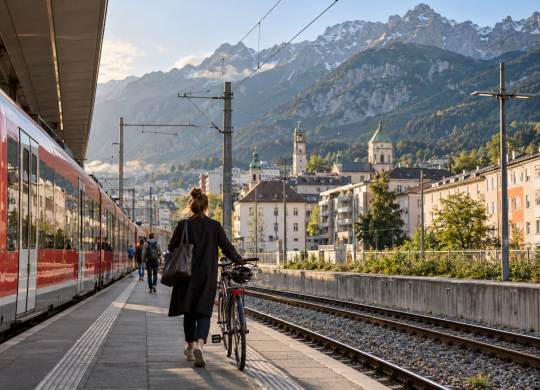
Vienna offers the most job openings, Graz attracts people with its more affordable cost of living, and Linz with jobs in manufacturing and IT. Learn more about the best cities in Austria to live in, rental prices, salaries, transportation, and family-friendly conditions

Austria isn’t just about expensive and prestigious Vienna. If you’re thinking of moving there, you should also consider Graz, Linz, Salzburg, and Innsbruck: each city has its own job market, cost of living, and pace of life. The capital is ideal for an international career, Linz is best for engineers and technical specialists, and Graz is perfect for students and families. Salzburg and Innsbruck offer proximity to the Alps, but rent there can be just as high as in Vienna. Below, we compare the five cities based on factors that directly affect your budget and quality of life after moving.
In a previous article, we discussed the world’s best cities to live in, according to Generation Z.
Immigration rules vary depending on the country, the reason for relocation, and the applicant’s personal situation. A Visit World immigration attorney will help you choose the appropriate type of visa or residence permit, verify the requirements, and prepare the necessary documents. Professional consultation allows you to identify potential risks in advance and avoid mistakes when submitting your application.

Vienna – the largest job market and the best public transportation
Vienna is located in eastern Austria, near the borders with Slovakia, the Czech Republic, and Hungary. The city is home to about 2 million people. It is the country’s political, financial, and business hub, hosting the headquarters of international companies, government agencies, and UN organizations.
Life in Vienna is ideal for those who need a large job market and the ability to get by without a car. At the same time, the capital is no longer unequivocally the most expensive city in Austria: private rentals in Salzburg and Innsbruck often cost just as much.
Rent and Monthly Expenses
The housing market in Vienna is divided into private, municipal, and cooperative sectors. New residents typically rent apartments from private landlords. Access to subsidized housing depends on immigration status, income, and length of residence. For most of these apartments, you must have had your primary residence in Vienna for at least two years.
Rent on the private market in Vienna exceeds €20 per m² in new listings. A one-bedroom apartment outside the central districts typically costs €900–1,300, while those closer to the center cost €1,100–1,600. Be sure to check the lease agreement to see if Betriebskosten—building maintenance fees, water, cleaning, and trash removal—are included.
Estimated budget for one person:
- Apartment rent – €900–1,600
- Utilities and internet – €220–330
- Groceries – €350–500
- Cell phone service – €15–30
- Other expenses (excluding rent) – €750–1,050
- Comfortable monthly budget – €1,900–2,700
When moving in, the landlord may require a security deposit equal to three months’ rent. Apartments are often rented unfurnished, and sometimes without a fully equipped kitchen. The initial budget for moving may therefore exceed €5,000.
Salaries and Employment Opportunities
Jobs in Vienna are most commonly available in the fields of IT, finance, insurance, consulting, pharmaceuticals, biotechnology, trade, logistics, and tourism. International organizations, research centers, and diplomatic missions form a separate segment of the job market.
Typical salaries for professionals in IT, engineering, and finance range from approximately €50,000 to €85,000 gross per year. Administrative staff, support specialists, and service sector workers earn around €32,000–48,000. The national median salary for a full-time employee is approximately €55,700 gross per year.
In Austria, annual income is often paid out in 14 installments. Additional payments are made during the summer vacation period and at Christmas and are taxed according to separate rules. Therefore, job offers should be compared based on the annual gross amount, not on a single monthly payment.
You can find positions requiring English at international technology companies. For roles involving client interaction, as well as in healthcare, education, retail, the public sector, and most local companies, a German language proficiency of at least B1–B2 is required.
Transportation, Infrastructure, and Family Life
Vienna’s public transit system includes the subway, trams, buses, and commuter trains. A car is not necessary in most neighborhoods. An annual pass for all public transit within the city limits will cost €461 in 2026 if paid in a lump sum, or €41.70 per month with a subscription.
An important benefit for families is free attendance at municipal and subsidized private preschools until the child starts school. To qualify, the child and at least one parent must be permanent residents of Vienna. Meals and additional services may be paid for separately.
Public schools are free, and compulsory education lasts nine years. The primary language of instruction is German. International schools offer programs in English, French, and other languages, though annual tuition can range from several thousand to tens of thousands of euros.
In our previous article, we discussed how to obtain a permanent residence permit in Austria: requirements and documents for foreigners.
Graz – a university city with a developed industrial sector
Graz is the capital of Styria and Austria’s second-most populous city. It is located in the southeastern part of the country, approximately 200 km from Vienna and 50 km from the border with Slovenia. The city is home to over 300,000 people, and its universities and research centers make up a significant portion of the local economy.
Life in Graz is more relaxed and less expensive than in Vienna, yet the city does not rely solely on students. It is home to companies in the automotive, mechanical engineering, microelectronics, energy, and IT sectors. The compact city center and well-developed cycling infrastructure mean you spend less time commuting each day.
Cost of Living and Rent
Rent in Graz is, on average, 20–30% lower than in Vienna. A one-bedroom apartment can be found for €700–1,000 per month. In the central districts of Innere Stadt, Geidorf, and St. Leonhard, prices often reach €900–1,200. More affordable options are available in Lend, Gries, Eggenberg, Wetzelsdorf, and Straßgang.
Estimated expenses for one person:
- Rent for a one-bedroom apartment – €700–1,200
- Utilities and internet – €200–300
- Groceries – €320–450
- Cell phone service – €15–30
- Other expenses (excluding rent) – €650–900
- Comfortable monthly budget – €1,550–2,200
Heating costs significantly affect the price of an apartment. In older buildings, heating may be gas-fired, and winter bills are noticeably higher than summer bills. You should also check the lease agreement to see if Betriebskosten are included in the listed price.
Jobs, Salaries, and Key Industries
Jobs in Graz are most readily available for engineers, programmers, technical specialists, researchers, and manufacturing workers. The city’s automotive cluster encompasses the development of transportation technologies, vehicle assembly, electronics, and powertrain testing.
Specialists in IT, automotive engineering, electronics, and mechanical engineering earn approximately €45,000–72,000 gross per year. For administrative roles, retail, service, and entry-level positions, the typical range is €30,000–44,000.
Some job openings at technology companies and research teams are posted in English. German remains essential for working in local businesses, healthcare, education, sales, and government agencies. A B1–B2 language proficiency level significantly broadens your range of employers.
Transportation, Education, and Family-Friendly Conditions
There is no subway in Graz. The city is served by trams, buses, and S-Bahn commuter trains. Due to the city’s compact size, many routes are easily accessible by bicycle. An annual KlimaTicket for Graz residents costs €432 and is valid on trams, buses, and regional transit throughout Styria.
Graz is family-friendly thanks to short distances, plenty of green spaces, and lower building density. The cost of daycare and preschools depends on family income, the length of the child’s stay, and the cost of meals. Unlike in Vienna, full-day preschool is not automatically free for all families.
Public schools are taught in German. For children who do not have a sufficient command of the language, additional language support may be provided. It is advisable to reserve spots in popular kindergartens in advance, as the selection of facilities in a specific neighborhood is limited.
Learn more about the cost of living in Austria by following the link.
Linz – A Strong Job Market for Engineers and IT Professionals
Linz is located on the Danube between Vienna and Salzburg, near the borders with Germany and the Czech Republic. It is the capital of Upper Austria with a population of over 210,000. The city is more compact than Vienna and Graz but boasts one of the country’s strongest industrial clusters.
Life in Linz is best suited for technical professionals. The local economy is based on metallurgy, mechanical engineering, automation, the chemical industry, logistics, and software. At the same time, the city has fewer international job openings in marketing, media, and the creative industries than Vienna.
Housing Costs and Daily Expenses
Rent in Linz is cheaper than in Vienna, Salzburg, and Innsbruck. A one-bedroom apartment typically costs €700–1,000. In the city center, new residential complexes, and neighborhoods near the Danube, prices can exceed €1,100.
More affordable apartments can be found in Franckviertel, Neue Heimat, Kleinmünchen, and Ebelsberg. Urfahr, Innenstadt, and areas near Johannes Kepler University are in high demand, so housing there is more expensive.
Estimated expenses for one person:
- Rent for a one-bedroom apartment – €700–1,150
- Utilities and internet – €200–300
- Groceries – €320–450
- Cell phone service – €15–30
- Other expenses (excluding rent) – €650–900
- Comfortable monthly budget – €1,500–2,150
On the private market, you’ll need to set aside a separate budget for a security deposit, moving expenses, and furniture. The average rent under existing leases in Austria is lower than the prices listed in new listings. In the second quarter of 2026, the national average was €10.50 per m² including operating costs, but new residents in Linz typically pay more.
Salaries and Demand for Specialists
Jobs in Linz are most commonly available in metallurgy, industrial manufacturing, mechatronics, automation, energy, IT, and logistics. Major employers in the region include voestalpine, Primetals Technologies, Dynatrace, KEBA, and companies in the chemical park.
Engineers, software developers, automation specialists, and technical project managers earn approximately €48,000–78,000 gross per year. For workers in manufacturing, logistics, office administration, and service roles, the typical range is €32,000–48,000.
In large technology companies, some teams work in English. At manufacturing plants, German is required for training, technical documentation, and communication with colleagues. For most local job openings, employers expect a language proficiency level of at least B1.
Public Transportation and Quality of Life
Linz’s public transportation system consists of trams, buses, and commuter trains. Central areas are well-served, but in outlying parts of the city and industrial zones, a car may be more practical, especially for shift work.
An annual MEGA-Ticket for a person whose primary residence is in Linz will cost €285 in 2026 thanks to a city subsidy. Without this subsidy, the price is €630. The ticket is valid in the central fare zone for 12 months.
For families, Linz offers public schools, municipal daycare centers, healthcare facilities, and many green spaces along the Danube. Daycare fees depend on the child’s age, length of stay, family income, and meal plans. It’s best to secure a spot in daycare well in advance, especially if you need full-day care.
We previously discussed options for legally moving to Austria: current visa requirements, the Red-White-Red Card, the EU Blue Card, health insurance, and residency for foreigners.
Salzburg – High Incomes and One of the Most Expensive Housing Markets
Salzburg is located near the border with Germany, approximately 145 km from Munich. The city is home to about 160,000 people. Its compact size, direct rail connections to Vienna and Munich, and its own international airport make it convenient for commuting between Austria and Germany.
The city’s economy isn’t limited to tourism. Companies in retail, logistics, finance, media, the automotive industry, and biotechnology operate here. However, living in Salzburg requires a high income: a shortage of apartments and tourist demand keep housing prices among the highest in Austria.
Rent and Real Monthly Budget
In 2026, the median price for new listings in the city is approximately €20.85 per m². A one-bedroom apartment costs €900–1,300 outside the historic center and €1,100–1,500 in central neighborhoods or new buildings.
The most expensive neighborhoods are Altstadt, Riedenburg, Nonntal, and Aigen. Slightly more affordable apartments can be found in Lehen, Liefering, Taxham, and Schallmoos. Moving to Hallein, Freilassing, or other surrounding communities reduces rental costs but adds a daily commute.
Estimated budget for one person:
- Rent for a one-bedroom apartment – €900–1,500
- Utilities and internet – €220–320
- Groceries – €350–500
- Cell phone service – €15–30
- Other expenses (excluding rent) – €700–1,000
- Comfortable monthly budget – €1,900–2,650
Finding housing in Salzburg is complicated not only by prices but also by the limited number of long-term listings. Some apartments are used for short-term tourist stays. When attending viewings, you should bring proof of income, employment documents, and funds for a security deposit.
Jobs in Tourism, Retail, and International Companies
Jobs in Salzburg are available in the hospitality industry, food service, retail, transportation, logistics, and the cultural events sector. Qualified professionals are also in demand in finance, pharmaceuticals, medical technology, the automotive industry, and corporate management.
For professionals in finance, technology, logistics, and management, the typical gross annual income ranges from €45,000 to €75,000. Employees in tourism, retail, and the service sector typically earn €29,000–44,000. In the hospitality industry, employers sometimes provide meals or company housing, which can partially offset high rent.
Most positions involving regular contact with customers require German language proficiency at the B1–B2 level. English-speaking job openings are available at international companies, in tech teams, and in tourism, but competition for these positions is high. For seasonal work, it’s important to check the contract duration, number of working hours, and living conditions.
Transportation, Schools, and Life with Children
Trolleybuses and buses form the backbone of public transportation. They run frequently, but tourist traffic and the large number of people commuting daily from the suburbs cause traffic jams. In the city center, it’s more convenient to get around on foot or by bike.
The KlimaTicket Salzburg costs €399 per year for an adult and is valid on public transportation throughout the entire state of Salzburg. The reduced fare for youth, seniors, and certain categories of passengers is €299.
Salzburg is a good fit for families who value safety, a compact city layout, and access to nature. Public schools are free and taught in German. The cost of daycare depends on the child’s age, the duration of care, meals, and the specific facility.
The main drawback for families is housing. A two-bedroom apartment in the city often costs €1,300–1,850 per month. Because of this, families often choose to live in the suburbs and use regional trains or buses.
In our previous article, we discussed how to obtain Austrian citizenship in 6 years through volunteer work.
Innsbruck—Life in the Alps with High Rent Costs
Innsbruck is the capital of Tyrol, with a population of about 130,000. The city is located in the Inn River valley between mountain ranges, on a transportation corridor between Germany and Italy. Munich is about a two-hour train ride away, and Bolzano, Italy, is also roughly two hours away.
Life in Innsbruck combines the advantages of a regional capital with access to the mountains, ski resorts, and tourist infrastructure. At the same time, it is a small labor market with a large number of students and seasonal workers. Demand for apartments significantly exceeds supply.
Housing Costs and Basic Expenses
The base rent in Innsbruck starts at approximately €14 per m² excluding utilities and taxes. Once these are added, the total increases by at least 25%, and electricity and heating are often billed separately.
Rent in Innsbruck for a single person typically ranges from €900 to €1,400. For an apartment in the city center, Wilten, Hötting, or Pradl, rents can range from €1,200 to €1,600. Cheaper options can be found in Neu-Arzl, Reichenau, Rum, Hall in Tirol, and other towns along the railway lines.
Estimated expenses for one person:
- Rent for a one-bedroom apartment – €900–1,600
- Utilities and internet – €220–330
- Groceries – €350–500
- Cell phone service – €15–30
- Other expenses excluding rent – €700–1,000
- Comfortable monthly budget – €1,900–2,700
Furnished apartments and short-term leases are often aimed at students, tourists, or seasonal workers. Before signing a lease, you should verify whether you can register your primary residence at that address. Without such registration, you will encounter difficulties with paperwork and access to local services.
Employment and Salary Levels
Jobs in Innsbruck are concentrated in tourism, the hospitality industry, healthcare, education, retail, construction, and transportation. The city is also home to companies in the fields of medical technology, renewable energy, software, and industrial research. Tyrol is developing clusters in high-tech, medtech, and sustainable energy.
Engineers, IT specialists, healthcare professionals, and researchers earn approximately €44,000–72,000 gross per year. In tourism, retail, food service, and administrative work, the typical range is €29,000–44,000.
Seasonal employers may offer room and board. In such cases, you should clarify whether the cost is deducted from your salary, how many people will be living in the accommodation, and whether you can stay after your contract ends.
German is required for most permanent positions. English may be sufficient in certain research groups, international technology companies, and the tourism sector. For jobs in healthcare, education, and with local clients, proven knowledge of German is required.
Transportation, Leisure, and Family-Friendly Conditions
Innsbruck is served by trams, buses, and regional trains. Due to limited space in the valley, driving presents more problems than benefits: parking is expensive, and major roads are congested during rush hour and tourist seasons.
The KlimaTicket Tirol costs €625.60 per year and is valid on public transportation throughout Tyrol. For passengers under 26, there is a fare of €319. This pass is convenient for suburban residents who commute to Innsbruck daily.
For families, the city offers a safe environment, public schools, a university hospital, and quick access to nature. The cost of daycare depends on the child’s age, the duration of care, and whether meals are included. Housing remains the largest expense in a family’s budget: a two-bedroom apartment can cost €1,400–2,000 per month.
You should choose Innsbruck only if you have a specific job, a spot at a university, or a stable source of income from abroad. Moving there without a signed contract and pre-arranged housing poses a high financial risk.
Are you planning to relocate, legalize your stay, or renew your immigration documents? Contact a Visit World immigration lawyer. A specialist will analyze your situation, explain your available options, and help you complete the necessary procedures in accordance with the laws of your chosen country. Get personalized advice and a clear plan of action.
We remind you! New economic indicators show which countries have been able to increase their GDP and which have lost ground due to inflation and slowing growth. Ranking of the richest countries in the world in 2026 — follow the link.
Products from Visit World for a comfortable trip:
Travel guide for 200 countries;
Legal advice from a local specialist on visa and migration issues;
Travel insurance around the world (please select the country of interest and citizenship to receive services);
Medical insurance all over the world.
We monitor the accuracy and relevance of our information, so if you notice any errors or inconsistencies, please contact our hotline
Frequantly
asked questions
Which Austrian city is the best place to live?
Where in Austria is it cheapest to rent an apartment?
What salary is needed to live comfortably in Austria?
Is it possible to find a job in Austria without knowing German?
Which Austrian city is best for families with children?
Recommended articles
2 min
Expats
Cost of living in Austria: expenses for housing rent, food, entertainment and budget for the month
Austria is one of the happiest countries in the world, and its friendly people, well-developed transport infrastructure and high level of healthcare are attracting more and more expats here. However, most people know that living in Austria is expensive. How much? Find out what the prices of housing, food, entertainment and much more will be in Austria in 2025
18 Apr. 2025
More details1 min
Work
Austria is introducing a new work permit for cross-border workers from December 2025. Find out who can apply, how the scheme works and what the rules are for workers' families
19 Nov. 2025
More details3 min
Residence permit
How to Obtain a Permanent Residence Permit in Austria: Requirements and Documents for Foreigners
Permanent resident status in Austria grants foreigners indefinite permission to live and work in the country. The process of applying for Daueraufenthalt EU requires meeting a number of requirements—ranging from length of stay to income level and language proficiency. Learn more about the requirements, necessary documents, and common mistakes when applying for permanent residency in Austria
25 May. 2026
More details2 min
Expats
How to Obtain Austrian Citizenship in 6 Years: How Volunteering Can Help
In Austria, foreigners can obtain citizenship after just 6 years of residence instead of the standard 10. One of the grounds for shortening this period is volunteer work. Learn more about the conditions for obtaining an Austrian passport, the requirements for volunteer work, and the naturalization process in 2026
23 Oct. 2026
More detailsAll materials and articles are owned by VisitWorld.Today and are protected by international intellectual property regulations. When using materials, approval from VisitWorld.Today is required.