

Belgium Residence Permit in 2026: Types and Requirements
Table of contents
- What types of residence permits exist in Belgium?
- How much does a temporary residence permit cost?
- What documents are needed to obtain a permit?
- How do you register in Belgium after arrival?
- How do you obtain a permanent residence permit?
- What's the difference between EU, EU+, F, and F+ cards?
- What should you know about family reunification?
- How do you obtain Belgian citizenship?
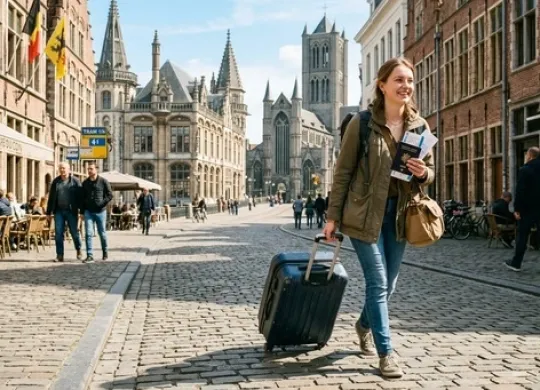
Belgium updated its residence permit rules in 2026. Learn about permit types, required documents, application costs and registration with the municipality

Moving to Belgium always involves obtaining permit documents that confirm the legality of your stay beyond 90 days. In 2026, the procedure still differs for EU citizens and third-country nationals, and some rules — and even document names — have been updated. Read this article to learn about the types of Belgian residence permits and how to obtain them.
Handling paperwork for a move abroad rarely goes without questions, and a single mistake in the application can cost you months of waiting.
An immigration lawyer on the Visit World portal helps you choose the right type of permit, gather a complete document package, and avoid common reasons for refusal. Consultations are available regardless of nationality or purpose of relocation — from studying to family reunification. To find a specialist suited to your situation, enter your nationality and destination country in the search form. Get a consultation from an immigration lawyer on Visit World.

What types of residence permits exist in Belgium?
As before, the country has two types of documents.
A temporary residence permit is issued through a long-stay type D visa — it allows you to live, study, or work in Belgium for up to five years, depending on your purpose of relocation (employment, study, family reunification, or the EU Blue Card for highly skilled professionals).
A permanent residence permit can be obtained after five years of continuous legal stay in the country — it grants the same rights as Belgian citizens and is issued for an indefinite period.
Find out how to apply for a Belgian work permit online here.
How much does a temporary residence permit cost?
As of July 1, 2026, the fee for a long-stay visa (D-visa) is €250, up from the previous €180. In addition to this consular fee, applicants must separately pay an administrative contribution to the Belgian Immigration Office, the amount of which depends on the visa category — proof of payment must be attached to the application.
Visit World services for tourists, migrants, and expats: Insurance | Guides | Legal advice
What documents are needed to obtain a permit?
The basic document package hasn't changed much, though the formatting requirements have become stricter:
- a valid passport (valid for at least 12 months),
- two passport photos,
- health insurance covering the entire stay,
- proof of the purpose of relocation (employment contract, university enrollment letter, proof of family ties),
- proof of accommodation in Belgium,
- proof of financial means,
- an apostilled criminal record certificate, no older than six months.
For citizens of non-EU countries, documents additionally require an apostille or legalization along with a certified translation.
Find the best countries and cities for expats in 2026 via the link.
How do you register in Belgium after arrival?
After arrival, you must report to the commune (municipal office) in your area of residence within eight days — you'll receive a temporary document (Annex 15) while your case is being processed, followed by an address verification check.
For EU citizens, the rules became stricter in 2025: as of September 1, 2025, you must present proof of EU citizenship and all required status documents during your very first visit to the commune — otherwise your application won't be considered. Older guides describing a "transition period" no longer apply.
How do you obtain a permanent residence permit?
After five years of continuous legal residence in Belgium, the procedure differs depending on your nationality.
EU, EEA, and Swiss citizens obtain long-term resident status automatically and confirm it with a card — though since 2021, it's no longer called "E+" but EU+: as of May 10, 2021, the previous E and E+ cards were replaced with EU and EU+ cards, and new E cards are no longer issued.
For non-EU citizens, the path is longer: first, a B card (registration in the foreigners' register for an indefinite period), then a K card — issued after five years with a B card, transferring the holder to the population register (this card was previously called "C"). The final step is the L card (formerly "D"): to obtain it, you need a monthly income of at least €793 plus €264 per dependent and health insurance; with an L card, you can stay outside Belgium for up to six years as long as you remain within the EU during that time.
Find a step-by-step guide to starting a business in Belgium in 2026 via the link.
What's the difference between EU, EU+, F, and F+ cards?
For family members joining an EU citizen, the card names haven't changed. An F card is issued for five years, after which you must obtain an F+ card, which confirms permanent residence.
What should you know about family reunification?
For family reunification, the key requirement is the sponsor's income. As of 2026, the minimum net sponsor income must be at least €2,048.53 per month, along with adequate housing and health insurance. The family receives an A card (for non-EU relatives of a non-EU sponsor) or an F card (for relatives of an EU citizen).
If the procedure seems confusing due to different income thresholds and card types — that's exactly the moment to bring in an immigration lawyer: a specialist can immediately tell you which document package applies to your situation.
How do you obtain Belgian citizenship?
As before, citizenship can be obtained after 5–10 years of permanent residence, provided you demonstrate full integration into society — employment, language proficiency, and tax payments. Dual citizenship is permitted in the country.
Moving to Belgium involves several sequential steps: first the type D visa, then registration at the commune within 8 days, and only after that — issuance of the actual residence permit. Missing a deadline or submitting an incomplete document package risks refusal or irregular status, even if the mistake was unintentional.
An immigration lawyer specializing in Belgian law can help you determine which type of permit fits your purpose — work, study, or family reunification — and review your document package before submission. A specialist can also advise on how to prove financial means or sponsor income in line with current 2026 requirements. You can get a consultation on the Visit World portal by entering your nationality and desired destination country. Learn more about the immigration lawyer service and book a consultation on Visit World.
Reminder! Renting in Belgium can cost anywhere from a few hundred to over €1,500 per month, but rent itself is only part of the budget. You'll also need to factor in a deposit, utilities, insurance, and other expenses — and the rules differ between Brussels, Flanders, and Wallonia. We've already covered housing prices in Belgium in 2026, rental documents, and expenses to consider before signing a lease.
Photo — generated by Gemini
Products from Visit World for a comfortable trip:
Checklist for obtaining a visa and necessary documents for Belgium;
Legal advice on immigration to Belgium;
Travel insurance for foreigners in Belgium;
Medical insurance all over the world.
Controlamos la exactitud y pertinencia de nuestra información. Por lo tanto, si observa algún error o discrepancia, póngase en contacto con nuestra línea directa.
Frequantly
asked questions
Does a Belgian residence permit automatically give you the right to work?
What happens if you do not register with the municipality within 8 days of arrival?
Is a Belgian residence permit recognized by other EU countries?
Recommended articles
5 min
Education
Education in Belgium 2026: Schools, Universities and Student Visa Guide
The Belgian education system combines free schooling with strict university admissions rules. Find out how education in Belgium will be organized in 2026, how much tuition costs, and what new requirements apply to obtain a D-type student visa
17 Jul. 2026
More details2 min
Travels
Where to Travel in Belgium: Best Cities to Visit Instead of Brussels in 2026
Belgium is opening up in a new way through atmospheric cities outside the capital. Find out where to go instead of Brussels and what destinations tourists are choosing today
18 Apr. 2026
More details2 min
Expats
Best Cities in the World for Expats in 2026: Top Places to Relocate and Live Comfortably
Moving abroad is becoming increasingly popular among people seeking a better quality of life and new opportunities. Find out which cities topped the list of the most comfortable for expats in 2026 and why they became the leaders
07 Jun. 2026
More details2 min
Popular
Portugal continues to attract new residents to the country’s sparsely populated regions. As part of the Emprego Interior MAIS program, the government covers relocation costs and may pay up to €5,000 to those willing to work or run a business in the country’s inland regions. Learn more about the eligibility criteria, available funding amounts, and requirements for applicants
23 Jun. 2026
More detailsAll materials and articles are owned by VisitWorld.Today and are protected by international intellectual property regulations. When using materials, approval from VisitWorld.Today is required.