7 new wonders of the world to be seen by tourists in 2026
Every year, tourism experts choose places that deserve the title of modern “wonders of the world” not for their catchy names, but for their real experiences, unique nature, and cultural value. The 2026 list includes little-known national parks, ancient cities, and remote islands where tourism has not yet spoiled the atmosphere. Learn more about the seven destinations to add to your travel plans now
There are places that don't need advertising - they impress even before you have time to take out your phone for a photo. In 2026, travelers' attention is focused not on the promoted capitals, but on cities in the rocks, almost deserted national parks, and remote corners of the planet where the mass tourism industry has not yet reached. These are the locations included in the list of the seven new wonders of the world. These are destinations for those who are not looking for a tick in the list of countries visited, but for a real sense of travel and discovery of something unique.
In the previous article, we talked about the TOP-10 tourist destinations according to Time Out, which are definitely worth visiting in 2026.
Discovering a new country for yourself without the help of travel agents or intermediaries is very simple. All you need is a checklist or a “Travel Guide” from Visit World – a step-by-step guide with all the key information for your trip.
The guide contains information on visa requirements, visa-free entry rules, permitted periods of stay and a list of required documents.
After completing the form, the guide will be sent to your email in PDF format in just a few minutes.
Choose a country and get your travel guide today.
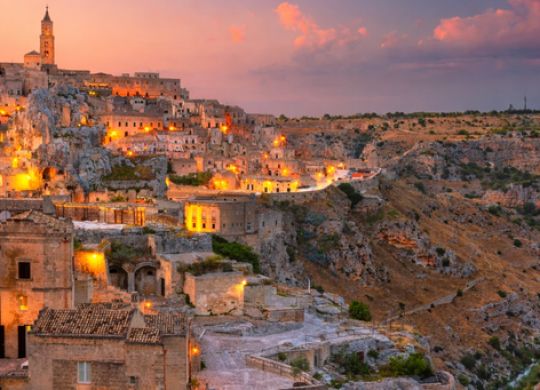
1. Matera, Italy
Matera is one of the oldest continuously inhabited cities in Europe, known for the Sassi cave residential complexes carved into the rocks. Back in the mid-twentieth century, families with livestock lived here in the caves, and today some of these premises have been converted into boutique hotels and atmospheric restaurants overlooking canyons and stone terraces. In 2026, the city will become a center of cultural events thanks to its status as the Mediterranean capital of culture and dialogue. Throughout the year, residencies for artists, open-air movie screenings, and live performances related to the theme of “submerged lands” are planned.
Matera is interesting for travelers not only as a photogenic location: it is a city for slow walks along intricate staircases, observation decks over gorges, and exploring ancient rock-cut churches. It is worth planning at least 1-2 days to walk through the Sassi di Matera neighborhoods and not miss the less touristy neighborhoods on the opposite side of the canyon. During the high season, accommodation in the caves is booked in advance - there are few places, and demand in 2026 is expected to be much higher due to the city's cultural program.
2. Banff National Park, Canada
Banff is the oldest national park in Canada and one of the most spectacular parts of the Rocky Mountains, but most tourists know it only as a winter ski resort. In the warm season, the park opens up in a completely different way: turquoise glacial lakes, alpine meadows, hiking and canoeing trails among the mountain ranges. In 2026, a new scenic railroad route between Banff and Jasper National Park will be launched, allowing you to travel the region without a car and see hard-to-reach areas of the Canadian Rockies from panoramic cars.
A trip to this region should be planned in advance: in summer, train tickets and hotel accommodation are sold out quickly, especially given the increased tourist flow in 2026. Some of the highlights include a gondola ride to one of the viewpoints and a special all-terrain vehicle ride to the Athabasca Glacier, where you can see one of the largest ice fields in North America. If you don't want crowds, you should choose early morning or less popular trails outside the main tourist routes.
You can learn more about the TOP 10 little-known destinations for crowd-free travel in 2026 here.
3. Bradford Pennines Nature Reserve, United Kingdom
Bradford Pennines is part of a network of protected areas created as part of the UK's Royal Initiative for the Conservation of Landscape and Biodiversity. This region of over 1,200 hectares lies on the edge of the urban area of Bradford and the wild heathland of the Pennines, where the landscape changes dramatically from hills and cliffs to open windswept spaces. The area is connected with the places where the Brontë sisters lived, so it combines literary history and harsh northern nature.
For tourists, the main value of Bradford Pennines is the new hiking trails connecting the old villages of Haworth, Stanbury, and Thornton. The trails lead to medieval stone bridges, hidden waterfalls, and viewpoints with panoramic views of heathered valleys where there are hardly any tourist groups. This is a destination for those who want to see “uninstagrammable” England - with changeable weather, strong winds, and a feeling of complete remoteness from big cities, although civilization is only a few kilometers away.
4. Djemila, Algeria
Djemila is one of the best-preserved Roman cities in North Africa, but at the same time one of the least visited due to Algeria's difficult tourist reputation. The ruins of the city with forums, basilicas, and arches lie on a high plateau where stone colonnades look almost surreal against the open spaces and blue sky. The settlement was founded as a colony for veterans of the Roman army, and the scale of the complex allows us to imagine what life was like in this region almost two thousand years ago.
The most interesting thing for travelers and researchers is that the archaeological work here is far from complete: only a part of the complex has been excavated, so a significant part of the city is still hidden underground. Due to the small tourist flow in Djemil, it is easy to feel like a pioneer: there are no crowds and queues, and walks between the ancient streets are quiet. Traveling to Algeria requires more preparation - visa formalities, limited tourist infrastructure, and logistical issues - but this is what makes Djemila a destination not for “mass tourism” but for those looking for rare and authentic experiences.
Earlier we talked about the 13 best places for a spring trip in Europe in 2026.
5. Faroe Islands, Denmark
The Faroe Islands are not a classic beach vacation, but the harsh nature of the Atlantic: steep cliffs, ocean winds, and villages pressed against the fjords. Hiking routes along the coast, kayaking between rocky shores, and birdwatching, particularly puffins, which are best seen on sea trails in the warm season, are all appreciated here. Even short walks near the villages of Gasadalur and Saksun give a sense of remoteness from civilization, despite the fact that the islands are well connected by tunnels and bridges.
A separate magnet for tourists is the gastronomy of Torsgavn: the capital, with several world-class restaurants, has become an unexpected center of northern cuisine. Here, they experiment with local products (seafood, seaweed, fermented meat and fish) in the format of tasting sets that are booked in advance. A trip to the Faroe Islands should be planned with the weather in mind. Strong winds and fogs can change plans for the day, but it is this unpredictability that makes the islands a destination for those looking for uncomfortable but authentic experiences.
6. Richtersveld, South Africa
The Richtersveld National Park looks like an alien landscape: quartz plateaus, granite hills and single krug trees create a feeling of complete isolation from civilization. The park is located on the border with Namibia, far from the popular tourist routes of South Africa, so few people come here. The journey from the Atlantic coast takes a whole day, and there is no mobile connection in many places. This is not a “light walk” but a full-fledged expedition into the wild.
The main surprise of Richtersveld is the rock paintings scattered throughout the park. Their age is estimated to be from several hundred to about 10 thousand years, and it is believed that they are associated with the spiritual practices of the Nama people who still live in the region today. Here you will not see the “big five” African animals, but you can feel the scale of the desert expanse, see rare leopards and spend the night in a tent under a completely dark sky without light pollution.
In the article at the link, we have provided useful tips to help you save money while traveling in Europe in 2026.
7. El Imposible National Park, El Salvador
El Imposible is one of the least known natural regions of Central America, although it is not inferior to the popular parks of Costa Rica in terms of the variety of landscapes. It combines deep canyons, rainforests, waterfalls, and mountain ranges, home to rare species of animals, including pumas. The park is located in an inaccessible mountainous area, so there is still no mass tourism here. Most routes remain wild and require good physical fitness.
The most impressive detail of this region is the way local farmers deliver coffee from the mountains to the coast. In the past, the cargo was transported by mules along a narrow path over steep cliffs, where the animals were blindfolded to prevent them from panicking. Today, the path has been made a little easier with a primitive bridge, but the transportation of the crops is still physically difficult and dangerous. For tourists, it's not an attraction, but a reminder of the cost of producing the coffee we're used to drinking at home in remote regions of the world.
Are you planning a trip and want to prepare without unnecessary stress? Visit World's travel guide contains key tips for travelers: rules of entry and stay, current requirements for tourists, basic safety, transportation and accommodation. Such a guide will help you quickly navigate a new country, avoid common mistakes during your trip, and plan your route taking into account practical nuances that often go unnoticed by tourists.
We remind you! Popular tourist destinations can be a trap. We have already told you which 8 places in the world Fodor’s advises to avoid in 2026 due to overtourism, environmental risks and social tension – and what alternatives to choose instead.
Products from Visit World for a comfortable trip:
Travel guide for 200 countries;
Legal advice from a local specialist on visa and migration issues;
Travel insurance around the world (please select the country of interest and citizenship to receive services);
Medical insurance all over the world.
We monitor the accuracy and relevance of our information, so if you notice any errors or inconsistencies, please contact our hotline
Recommended articles
3 min
Travels
Europe without crowds: 10 little-known travel destinations in 2026
European megacities are increasingly suffering from overtourism, museum queues and sky-high prices during the season. In 2026, more and more travelers are choosing less popular cities where they can travel more relaxed and feel the country's atmosphere more deeply. Find out more about 10 lesser-known destinations in Europe that will be an ideal alternative to the popular tourist capitals in 2026
16 lut. 2026
More details3 min
Travels
Peru topped Lonely Planet's ranking of the best travel destinations for 2026. March is considered a particularly good month to visit, thanks to warm weather, low prices, and minimal crowds. Learn more about why this country is recommended to visit next year and what it has to offer travelers
14 lut. 2026
More details4 min
Travels
The best places in Europe to travel alone: 7 destinations worth visiting
Europe remains one of the best continents for solo travelers, thanks to its safe infrastructure, cultural diversity, and welcoming local communities. Lonely Planet experts have compiled a list of seven destinations where solo travelers will feel most comfortable, from sunny Mediterranean islands to remote archipelagos in the North Atlantic. Learn more about the best places in Europe for solo travel in our article
15 lut. 2026
More details3 min
Travels
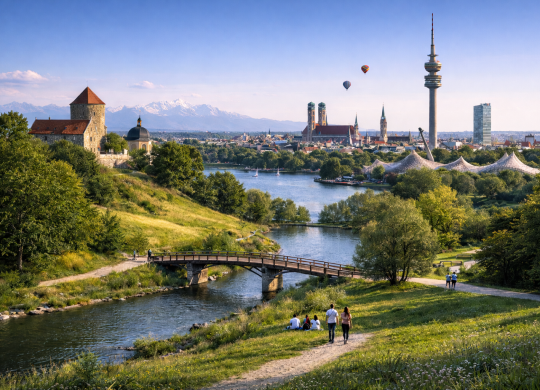
The best cities in the world for hiking: Top 10 greenest locations in 2026
Experts analyzed cities around the world by the number of green areas, accessibility of parks, and air quality to determine the best locations for hiking. The ranking includes both major capitals and less obvious travel destinations. Find out more about the greenest cities in the world where it is pleasant to walk and relax in nature right within the city limits
21 lut. 2026
More detailsAll materials and articles are owned by VisitWorld.Today and are protected by international intellectual property regulations. When using materials, approval from VisitWorld.Today is required.