

Easter greetings 2026 from the Visit World team: orthodox Easter, traditions, and the meaning of the holiday
Table of contents
- Easter greetings from the Visit World team
- What Easter Means: More Than Just a Holiday
- The History of Easter: How the Holiday Came to Be
- Orthodox Easter Traditions: Preserved for Centuries
- Easter Symbols: What Lies Behind the Familiar Attributes
- How to maintain the festive spirit, no matter where you are?
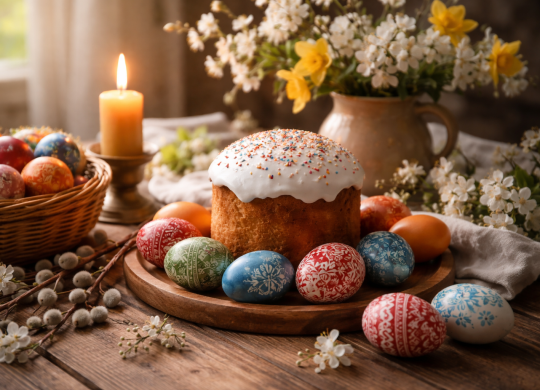
Easter is one of the most important Christian holidays, symbolizing rebirth, faith, and a new beginning. In 2026, Orthodox Easter will be celebrated on April 12, upholding centuries-old traditions and family values. Learn more about the meaning of the holiday, its symbols, and heartfelt greetings

Easter is not just a religious holiday, but a special time when people around the world come together around the values of faith, hope, and goodness. For millions of Orthodox Christians, this day symbolizes the victory of life over death, light over darkness, and a new beginning.
In 2026, Orthodox Easter falls on April 12, and, as it does every year, it fills homes with an atmosphere of warmth, family comfort, and heartfelt emotions. Even if loved ones are far away, this holiday remains a reminder of the importance of support, unity, and faith in a better future.
In this article, we’ve gathered heartfelt greetings from the Visit World team, and we’ll also discuss the meaning of Easter, its traditions, and symbols that have been preserved for centuries.
In the previous article, we talked about the most beautiful Easter fairs in Europe in 2026.
When planning a trip by car, you should take care not only of the route and accommodation, but also of financial protection on the way. Green Card is an international car insurance that is valid in many countries and helps to avoid significant costs in the event of road incidents. By applying for a policy online through Visit World, you can save time and go on a trip with a greater sense of confidence and peace of mind.

Easter greetings from the Visit World team
Easter is a special time when we pause amid the daily hustle and bustle to reflect on what matters most. This holiday fills the heart with light, gives us faith in goodness, and reminds us that after any hardship, there is always a new beginning. During these days, we especially feel the warmth of family traditions, the sincerity of words, and the value of moments spent together 🌿
The Visit World team sincerely wishes you a Happy Orthodox Easter 2026! 💛 May this bright holiday bring harmony, peace, and inner balance to your life. We wish that your homes are always filled with comfort, love, and mutual understanding, and that you are surrounded by people who support you in any circumstances and inspire you to move forward.
May the light of Easter fill each of your days with warmth, giving you strength and confidence in the future ✨ May hope always live in your heart, and may new opportunities, good news, and happy moments appear in your life. Even in difficult times, it is important to keep faith in a better future, find joy in simple things, and share it with your loved ones.
Wherever you are today—at home, abroad, or on the road—may this holiday bring you closer to your loved ones, give you a sense of warmth, and remind you that true values always remain unchanged 🤍 May your life be filled with more bright days, sincere smiles, and moments you’ll want to cherish forever.
Christ is Risen! May there always be room in your life for goodness, peace, and love 🕊️
What Easter Means: More Than Just a Holiday
Easter is not just a single day on the calendar or a set of festive traditions. For millions of people around the world, it is a profound symbol of rebirth, hope, and the victory of light over darkness. It is in this sense that the main idea of the holiday lies, one that remains relevant regardless of the time, circumstances, or place where you celebrate it.
In the Christian tradition, Easter is associated with the resurrection of Jesus Christ, symbolizing new life and spiritual renewal. However, the significance of this day extends far beyond the religious context. It is a reminder that light always follows difficult times, and that any hardship can be overcome if one maintains faith and inner strength.
Easter is also associated with the beginning of a new phase. It is a time when many people reflect on their path, set new goals, and strive for positive change.
That is why the atmosphere of the holiday is filled with a special sense of renewal, peace, and inner harmony.
Another important aspect of Easter is unity. On this day, people come together, reconnect, spend time with family, or find ways to be close to loved ones even from a distance. The holiday unites generations, cultures, and countries, reminding us of the shared values that are important to each of us.
That is why Easter is much more than traditions or a festive meal. It is about faith in a better future, about support, and about the light we can bring to one another every day.
In the previous article, we talked about the date of the holiday, the Easter calendar, the Lenten period, the traditions of celebration and the significance of Easter in the world.
The History of Easter: How the Holiday Came to Be
Easter is one of the oldest and most important Christian holidays, with roots dating back to biblical events. It is associated with the resurrection of Jesus Christ, which, according to the Gospel, took place on the third day after the crucifixion. This event became the foundation of the Christian faith and a symbol of life’s victory over death.
The name of the holiday has different origins in various languages. In the Slavic tradition, Easter is associated with the “great day,” emphasizing its significance, while in many European languages the word “Easter” is used, which derives from the Hebrew Passover. In the Jewish tradition, this holiday symbolizes the liberation of the Jewish people from Egyptian slavery, and it is historically linked to the period when the events described in the New Testament took place.
The date of Easter is not fixed and changes every year. It is determined by the lunisolar calendar. The holiday is celebrated on the first Sunday after the full moon following the spring equinox. That is why Easter falls between late March and late April.
The difference in dates between Catholic and Orthodox Easter is due to the use of different calendars. Western Christians follow the Gregorian calendar, while the Orthodox Church adheres to the Julian calendar. In 2026, Catholic Easter will be celebrated on April 5, and Orthodox Easter on April 12.
Despite the different dates and some differences in traditions, the essence of the holiday remains unchanged. Easter unites people around shared values, reminding them of faith, hope, and spiritual renewal.
Orthodox Easter Traditions: Preserved for Centuries
Orthodox Easter is accompanied by many traditions that have developed over the centuries and are passed down from generation to generation. They combine religious meaning, folk customs, and family rituals, creating a special festive atmosphere.
The most important part of the celebration is the all-night vigil on the eve of Easter. Believers gather in churches to celebrate this joyous holiday together, and at midnight, the solemn greeting “Christ is Risen” rings out, symbolizing the joyful news of the Resurrection. After the service, people return home with blessed baskets filled with traditional foods.
The festive basket holds a special place in Easter traditions. It usually contains Easter bread, painted eggs, meat products, cheese, butter, and other dishes. The blessing of the food symbolizes gratitude for abundance and peace in the home.
Equally important is the tradition of painting eggs. Pysanky and krashanky have deep symbolic meaning and are considered symbols of life, rebirth, and continuity. Different regions have their own unique patterns and painting techniques that preserve cultural heritage.
Easter is also traditionally a family holiday. People gather around the same table, share festive dishes, and spend time together. Even if they cannot be physically present, many stay in touch with loved ones through calls or messages, maintaining a sense of unity.
In our previous article, we discussed European countries with the most vibrant Easter traditions.
Easter Symbols: What Lies Behind the Familiar Attributes
Easter has its own symbolism, which has evolved over the centuries and remains recognizable to people in various countries around the world. Many festive attributes carry deep meaning and are associated with the ideas of rebirth, life, and spiritual renewal.
The most common Easter symbols include:
1. The egg (painted eggs and decorative pysanky) — a symbol of new life, rebirth, and the beginning of a new cycle.
2. Festive bread (paska or its equivalents) — represents abundance, blessings, and family unity. Different countries have their own variations of this traditional bread.
3. Candle — a sign of light, faith, and purification. It symbolizes the victory of good over darkness.
4. Easter basket — a symbol of gratitude and abundance that brings loved ones together for a shared meal.
5. Spring plants and flowers - are associated with the renewal of nature and a new beginning.
These symbols create the festive atmosphere and help us better understand its meaning. Regardless of country or culture, they convey the universal ideas of hope, life, and renewal that lie at the heart of Easter.
To learn more about the 10 cheapest destinations in Europe for a budget Easter trip, follow the link.
How to maintain the festive spirit, no matter where you are?
The pace of modern life, travel, or distance from loved ones doesn’t always allow us to celebrate Easter in the usual way. However, even under such circumstances, it’s possible to preserve the festive atmosphere and feel its special spirit.
First and foremost, it’s important to create a sense of celebration for yourself, even in the little things. This could be setting a symbolic Easter table, decorating your space, or observing small traditions that hold meaning specifically for you. Such simple actions help you feel connected to the holiday no matter where you are.
Communicating with loved ones is just as important. If you can’t meet in person, make time for a phone call or video chat. Sincere words and attention can create a sense of unity even from a distance.
You can also use Easter as a time for inner renewal. It’s an opportunity to slow down, take a break from daily routines, rethink your goals, and find the energy for new beginnings.
Even a brief pause helps you feel harmony and peace.
A festive mood often arises not from grand events, but from simple moments. Therefore, no matter where you are, you can fill Easter with warmth, meaning, and sincere emotions that will stay with you for a long time.
Traveling by car through several countries requires not only good route planning, but also thoughtful insurance preparation. Having a Green Card reduces financial risks in case of road incidents and simplifies interaction with insurance services abroad. Through Visit World, you can quickly apply for a policy online and focus on your trip, not on the bureaucratic nuances on the road.
We remind you! Every year, tourism experts choose places that deserve the title of modern “wonders of the world” not for their big names, but for their real experiences, unique nature, and cultural value. The 2026 list includes little-known national parks, ancient cities, and remote islands where tourism has not yet spoiled the atmosphere. Read more about the seven destinations you should add to your travel plans now.
Products from Visit World for a comfortable trip:
Travel guide for 200 countries;
Legal advice from a local specialist on visa and migration issues;
Travel insurance around the world (please select the country of interest and citizenship to receive services);
Medical insurance all over the world.
We monitor the accuracy and relevance of our information, so if you notice any errors or inconsistencies, please contact our hotline
Recommended articles
2 min
Travels
Wielkanoc to świetny czas na krótki wyjazd do Europy. Sprawdź 10 destynacji, gdzie możesz zaplanować budżetowe wakacje tej wiosny
15 mar. 2026
More details3 min
Events
Najpiękniejsze jarmarki wielkanocne w Europie w 2026 roku: gdzie udać się po świąteczną atmosferę
Wielkanoc w Europie to nie tylko świąteczne msze i tradycje, ale także kolorowe jarmarki, które co roku przyciągają tysiące turystów. Wiosenne targi z rękodziełem, świątecznymi dekoracjami i tradycyjnymi potrawami otwierają się w różnych miastach. Dowiedz się więcej o najpiękniejszych jarmarkach wielkanocnych w Europie w 2026 roku, ich datach, lokalizacjach i cechach
18 mar. 2026
More details3 min
Events
Gdzie świętować Wielkanoc 2026 w Europie: kraje z najbardziej kolorowymi tradycjami świątecznymi
Wielkanoc w Europie to nie tylko msze i rodzinne obiady. W różnych krajach święto towarzyszą kolorowe procesje, starożytne rytuały, duże jarmarki, a nawet nietypowe festiwale. Dowiedz się więcej, gdzie w Europie możesz zobaczyć najciekawsze tradycje wielkanocne
22 mar. 2026
More details3 min
Events
Wielkanocne Życzenia 2026: Tradycje, Znaczenie i Ciepłe Życzenia
Wielkanoc to czas światła, wiary i nowych początków, który łączy ludzi w różnych krajach. Nawet gdy jesteś daleko od domu, te święta przynoszą poczucie ciepła i jedności. Dowiedz się więcej o znaczeniu Wielkanocy, tradycjach świętowania i serdecznych życzeniach od zespołu Visit World
05 kwi. 2026
More detailsAll materials and articles are owned by VisitWorld.Today and are protected by international intellectual property regulations. When using materials, approval from VisitWorld.Today is required.