

Museums of Oddities: The World's Strangest Cabinets of Curiosities to Visit in 2026
Table of contents
- Where did curio cabinets come from?
- What exactly was kept in the cabinets of curiosities?
- Why did people need cabinets of curiosities?
- How did a private closet turn into a public museum?
- Museum of Jurassic Technology, Los Angeles, USA
- House on the Rock, Wisconsin, USA
- Musée Patamécanique, Rhode Island, USA
- The Museum of Curiosities & Oddities, Hawaii and London
- The Oddities Museum, Inc., USA
- Why is it worth visiting one of the museums of curiosities?
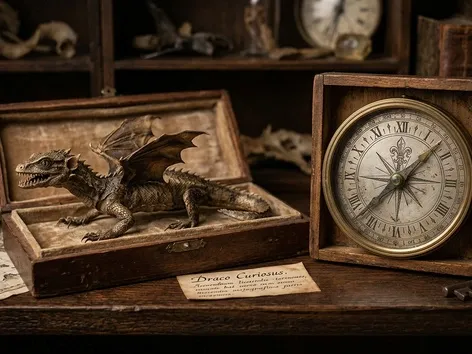
Cabinets of curiosities are museums where science borders on myth, and each exhibit raises more questions than it answers. Find out how 16th-century chambers of curiosities have evolved into modern museums of curiosities, and which six must-sees are a must-see for any traveler who appreciates the unusual

Imagine a room where a dried “dragon” lies on one shelf, and next to it is a real scientific compass from the 17th century, and no one in the room is in a hurry to explain what is true. This is exactly what the first museums of strange things looked like – wunderkamera, from which, oddly enough, modern science eventually grew. Today, this tradition has not disappeared, but has only been disguised under new signs: from Los Angeles to London, places are still operating where the exhibit asks questions rather than gives answers. Relocate.to has collected six such institutions, and we tell you why it is worth planning a trip just for them.
Read also, UNESCO has launched the world's first Virtual Museum of Stolen Cultural Properties.
A trip abroad is always accompanied by a bunch of organizational issues, and entry documents are one of those that are remembered last. As you plan your itinerary through curio museums around the world, it’s easy to lose sight of what documents you’ll need to cross a country’s border.
Visit World’s “Travel Guide” brings all of this information together in one step-by-step checklist—visa requirements, visa-free travel rules, and permitted lengths of stay. Complete the guide, and within minutes, you’ll receive detailed instructions in PDF format in your inbox. Check the requirements for your trip now and go marvel without any stress.

Where did curio cabinets come from?
The word “museum” in its modern sense didn’t exist when the first private collections of curiosities began to appear in 16th-century Europe. The Age of Discovery brought with it not only spices and gold, but also objects that Europeans had no explanation for. Aristocrats, doctors, alchemists and travelers began to bring everything incomprehensible under one roof - this is how the phenomenon of Wunderkammer, or "rooms of wonders" was born.
The border between science and magic was then illusory. A shell from the newly discovered America, a "lightning stone", and a finely crafted mechanical clock could all fit into the same cabinet - everything was equally surprising, and therefore deserved a place in the collection.
Visit World services for tourists, migrants, and expats: Insurance | Guides | Legal advice
What exactly was kept in the cabinets of curiosities?
The classic Wunderkammer rarely had a clear logic for the arrangement of exhibits - and this, in fact, was its essence. Within the boundaries of one cabinet or room, there could be simultaneously:
- Fossils and distorted animal skeletons that nature had not yet explained;
- Amulets, "magic" stones and other objects on the border of religion and superstition;
- Miniature mechanisms, telescopes and early scientific instruments;
- “Evidence” of the existence of creatures like sirens or dragons, made from parts of real animals.
These were not museums in the modern sense of the word – rather personal catalogues of wonder that the owner had collected throughout his life.
Why did people need cabinets of curiosities?
It was not only intellectual interest that was at work here. The world suddenly turned out to be much larger and more complex than previously thought, and this gave rise to a very real anxiety – something like what German philosophers would later call Zukunftsangst, the fear of the unknown future. The Wunderkamera was an attempt to order chaos: if a strange thing could be put on a shelf and given a name, then the world was a little less threatening.
It was from this impulse – to arrange the incomprehensible on shelves – that the first sprouts of modern science grew: anatomy, mineralogy, botany, zoology. Science did not deny wonder, it was born from it.
Read our previous article on why going to a museum improves your mood.
How did a private closet turn into a public museum?
In the 17th and 18th centuries, what could be called the separation of science and wonder began. Natural history collections moved to universities, art objects to palaces and galleries, and everything dubious, mythological, or unproven simply fell out of the official picture of the world. The Wunderkamera as a whole genre dissolved.
But the desire to be amazed did not go away. In the 19th century, it sprouted in the form of anatomical cabinets, fairground shows of ugliness, mechanical theaters, and private collections of eccentric travelers. And already in the 20th and 21st centuries, a new hybrid genre appeared - museums that consciously play on the border of science, art, and theatricality, without hiding this game from the visitor.
Below are six places where this tradition lives on today.
Museum of Jurassic Technology, Los Angeles, USA

Photo - whichmuseum.com
- Website: mjt.org.
- Ticket price: from $15 for adults (concessions from $3 to $12).
- Address: 9341 Venice Blvd, Culver City, CA 90232, USA
- Opening hours: Thu–Fri 2:00–8:00 PM, Sat–Sun 12:00–6:00 PM, admission by reservation only
Amidst the typical buildings of Culver City, there is a museum that is often called the most accurate modern reincarnation of a wonder camera. Despite its name, the Museum of Jurassic Technology has almost nothing to do with the Jurassic period – instead, real scientific exhibits, half-truthful legends and installations that make you doubt your own perception coexist peacefully here. The curators frankly admit: the goal is not for the visitor to leave with new knowledge, but for him to leave with new questions.
In 2025, the museum survived a fire that caused serious damage to the gift shop and some of the exhibits, but within a month it had fully reopened – and as of 2026 it continues to welcome guests by reservation, preserving the same atmosphere of a chamber wonder that made it iconic.
The most beautiful villages in France that are worth visiting at least once in your life in this article.
House on the Rock, Wisconsin, USA

Photo – tripadvisor
- Website: thehouseontherock.com.
- Ticket price: from $34.95 for adults, $17.95 for children 7–17 years old (cheaper online than on site).
- Address: 5754 State Road 23, Spring Green, WI 53588, USA
- Opening hours: seasonal, mostly daily from about 9:00 to 17:00.
If the Museum of Jurassic Technology is a chamber puzzle, then the House on the Rock is a journey on the scale of an entire house. It is not a museum in the classical sense, but rather an endless labyrinth of rooms filled with automatons, mechanical orchestras and thousands of objects reminiscent of old American fairs and the dreams of lone inventors. It is home to the world's largest carousel, and surreal installations occupy a space of such a scale that you literally have to navigate using a map.
This is a place for those who are close to the aesthetics of Guillermo del Toro or Neil Gaiman - something between a circus, a museum and a dream.
The Great Egyptian Museum in Giza opened on November 4, 2025. Read about the exhibitions, opening hours, tickets, routes and the main treasures of the GEM here.
Musée Patamécanique, Rhode Island, USA

Photo – Facebook / Musée Patamécanique
- Website: museepata.org.
- Ticket price: specified individually when booking a tour.
- Address: the exact location in the historic center of Bristol, Rhode Island, USA is communicated to participants after registration.
- Opening hours: by appointment only, tours usually begin at sunset
In small Bristol, there is a mechanical theater of wonders, where exhibits do not just stand in showcases, but come to life. Musée Patamécanique combines artistic engineering, ironic science and the tradition of mechanical theaters of the 18th–19th centuries: here you can see devices that are both funny and a little scary, and the scenes played by automatons remind of the era when the mechanism still seemed like magic.
The Museum of Curiosities & Oddities, Hawaii and London

Photo – themorbidtourist.com
Hawaii version (Honolulu)
- Website: hotel-magic.com
- Ticket price: from $45 (entrance to the museum is included in the ticket to The Magical Mystery Show).
- Address: Hilton Waikiki Beach Hotel, 2500 Kuhio Ave, Honolulu, Hawaii, USA.
- Opening hours: shows every evening, except Tuesday, at 5:00 PM and 7:30 PM, the museum part is worth visiting 15–20 minutes before the start of the show.
London version (The Viktor Wynd Museum of Curiosities)
- Website: thelasttuesdaysociety.org
- Ticket price: £12 for adults, £8 concession.
- Address: 11 Mare Street, London, E8 4RP, United Kingdom.
- Opening hours: usually Wed–Sun, in the afternoon and evening – check the schedule on the website before visiting.
This is a rare case of a museum tied to a theatrical production – The Magical Mystery Show. That is why the atmosphere here is intimate, almost homely, and not museum-official. The exposition consists of props from the show and oddities from around the world, each of which tells a story rather than performing a practical function. The Hawaiian version has a tropical, lighter mood, the London version is more Victorian and gloomy. Both are suitable for those who want to immerse themselves in the strange without being too serious.
The Oddities Museum, Inc., USA

Photo – atlasobscura.com
- Website: theodditiesmuseum.org
- Ticket price: $10 per person, children under 6 years old – free.
- Address with country: 3870 N Peachtree Rd, Chamblee, GA 30341, USA.
- Opening hours: Mon, Thu–Sun 11:00–17:00, Tue and Wed – weekends
In contrast to the chamber and theatrical formats, this American museum focuses on the educational component. Here, rare artifacts are combined with clear explanations of their origin, and the exposition is supplemented with lectures and educational programs. This is an option for those who want not only to be surprised, but also to understand the context: where the object came from, why it ended up in the collection and what it says about the culture that created it.
5 little-known cities in Europe: underrated destinations for a quiet summer trip without crowds at the link.
Why is it worth visiting one of the museums of curiosities?
Cabinets of curiosities are a rare type of museum that does not try to give a definitive answer. They work on the border of trust and doubt, and this is precisely their value for the traveler: here it is impossible to simply walk past the exhibit without thinking. If you are planning a route that includes Los Angeles, Wisconsin or London, it is worth setting aside a separate evening for such a museum - there is definitely no need to rush here.
A route with amazing museums is rarely limited to one country, but as soon as the route goes beyond the borders of one state, documents cease to be a formality and become a matter of whether the trip is ruined or saved.
“Travel Guide” from Visit World allows you to check in advance what documents are required for each point of your route - just indicate your citizenship and country of destination. The ready-made guide in PDF format will be sent to your email in just a few minutes, and you can calmly plan even the most eccentric route. Create your guide before your next adventure trip.
Reminder! September allows you to extend the summer without the exhausting heat, crowded beaches and peak prices. We have already talked about the best destinations for a vacation during the velvet season: from the coast of Italy and the Greek islands to the Cote d’Azur and tropical Mauritius.
Photo – Magnific
Products from Visit World for a comfortable trip:
Travel guide for 200 countries;
Legal advice from a local specialist on visa and migration issues;
Travel insurance around the world (please select the country of interest and citizenship to receive services);
Medical insurance all over the world.
We monitor the accuracy and relevance of our information, so if you notice any errors or inconsistencies, please contact our hotline.
Recommended articles
2 min
Travels
10 Najbezpieczniejszych Wysp na Świecie w 2026 roku: Przewodnik po Bezstresowych Podróżach
Aruba, Kajmany i Malta prowadzą nowy ranking najbezpieczniejszych miejsc podróży. Dowiedz się, które inne wyspy znalazły się w pierwszej dziesiątce najbezpieczniejszych w 2026 roku i dlaczego warto na nie zwrócić uwagę
23 lip. 2026
More details3 min
Travels
Wakacje letnie w Norwegii na budżecie: Najlepsze darmowe miejsca
Norwegia jest uważana za jedno z najdroższych miejsc turystycznych w Europie, ale wiele jej naturalnych atrakcji jest darmowych do odwiedzenia. Oto gdzie można popływać, które szlaki turystyczne warto zbadać, jak zobaczyć fiordy i jak zaoszczędzić pieniądze na letniej podróży
01 sie. 2026
More details3 min
Travels
Gdzie pojechać tego lata, aby uciec przed upałem: 4 chłodne miejsca w Europie
Na letnią podróż bez śródziemnomorskiego upału rozważ Północną Europę i wybrzeże Bałtyku. Oto co robić w Helsinkach, Bergen, Tallinnie i Gdańsku, które miejsca odwiedzić i jakiej pogody się spodziewać
02 sie. 2026
More details2 min
Travels
Jeden bilet – cztery stolice: nowy format podróży pozwala połączyć przystępny budżet, tętniące życiem nocne życie i atrakcje światowej klasy w jednej podróży. Dowiedz się, które pięć tras autobusowych Europa uznała za najlepsze do maksymalizacji podróży w 2026 roku i co zmieniło się na granicach UE od uruchomienia systemu EES
01 sie. 2026
More detailsAll materials and articles are owned by VisitWorld.Today and are protected by international intellectual property regulations. When using materials, approval from VisitWorld.Today is required.