

The Best Cities in France for Expats to Live in 2026
Table of contents
- Paris: The Largest Job Market and Highest Rent
- Lyon: A Strong Economy Without the Capital’s Costs
- Toulouse: Jobs in the Aerospace Industry and More Affordable Housing
- Bordeaux: A Comfortable Environment, but Expensive Housing
- Strasbourg: European institutions and working near the German border
- Nantes: A Tech Hub and Family-Friendly City
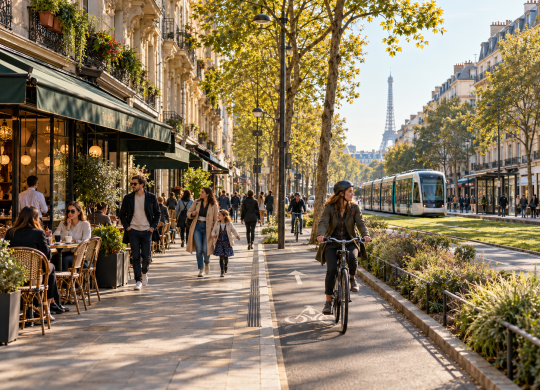
France offers several different relocation options: a career in Paris, a job in the aerospace industry in Toulouse, cross-border employment in Strasbourg, or a more relaxed family life in Nantes. Learn more about the best cities in France for expats, rental costs, salaries, transportation, and local job markets

The best cities in France for expats to live in are Paris, Lyon, Toulouse, Bordeaux, Strasbourg, and Nantes. Paris offers the most job opportunities but remains the most expensive. Lyon provides the best balance between income and expenses, while Toulouse attracts professionals in the aerospace and IT industries. Bordeaux is ideal for those who value a comfortable urban environment; Strasbourg provides access to international institutions and the cross-border job market; and Nantes remains one of the most family-friendly options.
In a previous article, we discussed the world’s best cities to live in, according to Generation Z.
Immigration rules vary depending on the country, the reason for relocation, and the applicant’s personal situation. A Visit World immigration attorney will help you choose the appropriate type of visa or residence permit, verify the requirements, and prepare the necessary documents. Professional consultation allows you to identify potential risks in advance and avoid mistakes when submitting your application.

Paris: The Largest Job Market and Highest Rent
Paris remains France’s main business hub. It is home to the headquarters of international companies, banks, consulting firms, tech startups, fashion houses, and major universities. The La Défense business district is located outside the capital’s administrative boundaries, so your search for work and housing should cover the entire metropolitan area.
The city is divided into 20 arrondissements, but housing costs vary significantly between them. Central and western Paris are more expensive. More affordable options are more commonly found in the 18th, 19th, and 20th arrondissements, as well as in the suburbs with access to the metro or RER.
Housing and Monthly Expenses
The average rent for private housing in Paris is €26.30 per square meter, and for new tenants, it is about €28.30 per square meter. The actual average rent listed in ads in 2025 reached €1,632 per month. Nearly half of the listings analyzed exceeded the established rent caps.
Estimated budget for one person:
- Studio apartment – €1,200–1,800
- Apartment in the city center or a prestigious western neighborhood – €1,700–2,000
- Groceries – €350–550
- Utilities and internet – €150–250
- Other expenses (excluding rent) – €1,100–1,500
- Comfortable monthly budget – €2,600–3,600
Landlords often require proof of income equivalent to at least three months’ rent. A French guarantor or a Visale guarantee may also be required. For newcomers without a local credit history, finding an apartment often takes several weeks.
Salaries and Employment
Paris offers the most opportunities in finance, consulting, IT, cybersecurity, pharmaceuticals, media, fashion, tourism, and corporate management. International organizations, research centers, and startups form a separate segment of the market.
Qualified professionals typically earn €45,000–75,000 gross per year.
In finance, technology, management consulting, and engineering, experienced professionals can earn €60,000–100,000 or more. For administrative positions, retail, and the service sector, the typical range is €28,000–42,000.
English may be sufficient in an international company, a startup, or a tech team. For client-facing roles, as well as in healthcare, education, the public sector, and most French companies, French proficiency at least at the B1–B2 level is required.
Transportation and Family-Friendly Conditions
The network of subways, RER trains, commuter trains, trams, and buses makes it possible to live outside Paris and commute to the capital daily. A Navigo pass covering all zones will cost €90.80 per month in 2026. French employers are required to reimburse employees for at least 50% of the cost of their transit pass.
Public schools are free, and children are typically enrolled in the school in their neighborhood. The cost of municipal daycare centers depends on family income, but there is a shortage of spots. International and bilingual private schools can cost several thousand or tens of thousands of euros per year.
For families, it makes more sense to consider not only Paris but also the suburbs with direct public transportation links. Boulogne-Billancourt, Vincennes, Issy-les-Moulineaux, Rueil-Malmaison, and Saint-Germain-en-Laye offer more housing and green spaces, but savings on rent depend on the specific neighborhood.
In our previous article, we discussed employment contracts in France: types of contracts and key employment terms.
Lyon: A Strong Economy Without the Capital’s Costs
Lyon is located between Paris, the Alps, and the Mediterranean Sea. The TGV high-speed train covers the distance to Paris in about two hours, and Geneva can be reached in less than two hours. This location is convenient for professionals working with the French, Swiss, and Italian markets.
The city is more compact than Paris but has a fully developed business infrastructure. The main office districts are located near Part-Dieu, in Confluence, and in neighboring Villeurbanne. Families tend to choose the 3rd, 6th, and 7th arrondissements, as well as Monplaisir, Croix-Rousse, Caluire-et-Cuire, and the western suburbs.
Housing and Monthly Expenses
A one-bedroom apartment in Lyon typically costs €800–1,150 per month. In central neighborhoods, new developments, and near Part-Dieu, prices can exceed €1,200. In Villeurbanne, Vénissieux, Bron, and Oullins-Pierre-Bénite, housing is cheaper, and the city center can be reached by metro, tram, or bus.
Estimated expenses for one person:
- One-bedroom apartment – €800–1,150
- Groceries – €300–450
- Utilities and internet – €140–220
- Transportation – about €75 per month for central areas
- Other expenses excluding rent – €900–1,250
- Comfortable monthly budget – €1,900–2,600
Lyon also has a rent control system. Before signing a lease, you should check the base rent, additional fees, and the justification for the complément de loyer. In older buildings, heating can be a separate expense.
Salaries and Employment
Lyon’s economy is driven by pharmaceuticals, biotechnology, the chemical industry, medical technology, IT, finance, logistics, and industrial manufacturing. Companies such as Sanofi, bioMérieux, Boehringer Ingelheim, Renault Trucks, Groupama, and numerous engineering firms operate in the city and its suburbs.
Qualified professionals typically earn €38,000–60,000 gross per year. In the pharmaceutical, IT, engineering, and project management sectors, experienced employees can expect to earn €50,000–75,000. Administrative positions, sales, and customer service typically offer €26,000–38,000.
There are fewer international job openings than in Paris. English may be the working language in technology, pharmaceutical, and export companies, but French is required for most local positions.
Transportation and Family-Friendly Conditions
The TCL network includes the metro, trams, buses, funiculars, and commuter routes. Following the expansion of the fare system, the cost of a pass depends on the number of zones. A monthly pass for adults starts at €30.60, but for regular travel through the central part of the metropolitan area, you should budget around €75. Employers reimburse at least half the cost of the pass.
Public schools are free and assigned based on residential address. Lyon also has bilingual and international schools, including the Cité Scolaire Internationale. Municipal daycare centers are cheaper than private ones, but it’s advisable to apply well in advance due to limited availability.
Lyon is family-friendly thanks to shorter commutes, numerous parks, and access to the Alps. The main practical drawbacks are air pollution during heat waves and restrictions on older vehicles in the low-emission zone.
We previously covered in detail legalization in France starting in 2026: the citizenship exam, language requirements, and changes for foreigners.
Toulouse: Jobs in the Aerospace Industry and More Affordable Housing
Toulouse is located in southwestern France, between the Atlantic, the Mediterranean, and the Pyrenees. The city has a warmer climate, a large university sector, and an international airport. Spain is just a few hours’ drive away.
The main feature of the local economy is the concentration of aerospace companies, research centers, and engineering schools. Airbus, ATR, Thales Alenia Space, CNES, Safran, and dozens of subcontractors form a distinct international labor market. Cybersecurity, artificial intelligence, autonomous transportation systems, and medicine are also thriving.
Housing and Monthly Expenses
The median rent in the metropolitan area is €12.50 per m² excluding utilities, and €13.30 in Toulouse itself. The median rent for a two-room apartment (T2) with a separate bedroom is €554 excluding additional expenses. In furnished apartments, new construction, and central neighborhoods, the actual price is usually higher.
Approximate budget for one person:
- Studio apartment – €650–900
- Apartment in the city center or a new building – €850–1,100
- Groceries – €300–450
- Utilities and internet – €130–220
- Transportation – €52.10–59 per month
- Other expenses excluding rent – €850–1,150
- Comfortable monthly budget – €1,700–2,300
The most expensive areas remain Capitole, Carmes, Saint-Étienne, and the popular neighborhoods near the Canal du Midi. More affordable options can be found in Borderouge, Croix-Daurade, Rangueil, Purpan, and the neighboring towns of Colomiers, Blagnac, and Ramonville-Saint-Agne. When choosing a place to live, it’s worth considering your employer’s location: major industrial facilities are spread throughout the metropolitan area.
Salaries and Employment
Engineers, developers, and specialists in avionics, cybersecurity, data, and industrial project management can expect to earn €38,000–60,000 gross per year. For experienced professionals in the aerospace and IT sectors, salaries often range from €50,000 to €75,000.
Technical production workers, mechanics, and operators typically earn €24,000–36,000 gross per year, excluding bonuses and shift differential pay. Administrative positions, retail, and the service sector offer approximately €25,000–38,000.
English is used regularly in international engineering teams. However, French is required for production meetings, internal documentation, working with local contractors, and most job openings outside of large corporations.
Transportation and Family-Friendly Conditions
The Tisséo network includes the metro, tram, and buses. A 31-day pass costs €59, while an annual contract costs €52.10 per month. Employers reimburse at least half the cost of the pass.
The metro serves the city center well, but some companies are located in Blagnac, Colomiers, and industrial zones. For employees with rotating shifts, a car may still be necessary. Before renting a place to live, it’s worth checking not only the distance but also the commute time during rush hour.
For families, Toulouse offers free public schools, municipal daycare centers, international educational programs, and a wide variety of sports clubs. Two- or three-bedroom apartments are significantly more affordable than in Paris or Lyon. Among the drawbacks are hot summers, traffic jams on the ring road, and the heavy reliance on cars in certain neighborhoods.
Learn more about the Talent Passport in France by following the link.
Bordeaux: A Comfortable Environment, but Expensive Housing
Bordeaux is located in southwestern France, about 50–60 km from the Atlantic Ocean. The high-speed train to Paris takes just over two hours. The airport serves European routes, although the selection of international flights is significantly smaller than in Paris.
The city is often associated with winemaking, but the local job market is not limited to this sector. The metropolitan area is home to well-developed aerospace, defense, IT, e-commerce, laser technology, healthcare, and creative industries. Major companies are concentrated not only in Bordeaux but also in Mérignac, Pessac, and other suburbs.
Housing and Monthly Expenses
The average advertised rent is about €16 per m², including utilities. For small T1–T2 apartments, the rate reaches €18.54 per m². A typical 45 m² T2 apartment costs approximately €830 per month, though furnished apartments in the city center are more expensive.
Estimated budget for one person:
- Studio apartment – €750–1,000
- Apartment in the city center or a new building – €950–1,200
- Groceries – €300–450
- Utilities and internet – €140–220
- Transportation – about €47 per month
- Other expenses (excluding rent) – €900–1,200
- Comfortable monthly budget – €1,800–2,500
The most expensive neighborhoods are the Triangle d’Or, Chartrons, Saint-Pierre, and Jardin Public. For more affordable apartments, look in Bacalan, Bastide, Bègles, Talence, Pessac, and Mérignac. In Bordeaux itself, rent is regulated, so be sure to check the rent cap for a specific address before signing a lease.
Salaries and Employment
Bordeaux Métropole is home to Dassault Aviation, Thales, ArianeGroup, Cdiscount, Betclic, and numerous tech companies. The wine industry, exports, logistics, tourism, and the hospitality sector form a distinct market. The wine industry provides approximately 60,000 direct and indirect jobs in the Gironde region.
Qualified professionals typically earn €35,000–55,000 gross per year. Aerospace engineers, developers, data specialists, and IT project managers can earn €45,000–70,000. In tourism, retail, winemaking, and administrative roles, the typical range is €24,000–38,000.
The number of English-speaking job openings is limited. Exceptions include international technology companies, aerospace firms, export departments, and the tourism sector. Most local positions require French.
Transportation and Family-Friendly Conditions
The TBM network includes trams, buses, river routes, P+R parking, and bike rentals. The tram connects the city center to the train station, university districts, Mérignac, and the airport. Employers reimburse at least 50% of the cost of a transit pass.
Caudéran, Le Bouscat, Talence, Pessac, and Mérignac are convenient for families. These neighborhoods have more parks, schools, and spacious housing. Public education is free, but access to a specific school depends on your residential address. Bilingual and international private schools are paid for separately.
The main drawbacks of Bordeaux are high rent relative to local salaries, traffic jams on the ring road, and hot summers. A car isn’t necessary in the central districts, but it may be needed for work in industrial areas or regular trips to the coast.
In our previous article, we wrote about the most beautiful villages in France that are worth visiting at least once in a lifetime.
Strasbourg: European institutions and working near the German border
Strasbourg is located on the Rhine, right next to the German city of Kehl. A city tram runs across the border, so some residents live in France but work in Germany. You can reach Paris by TGV in about two hours, and Frankfurt, Basel, and Luxembourg in a few hours.
The city is home to the European Parliament, the Council of Europe, and the European Court of Human Rights. However, job openings at these institutions account for only a portion of the local job market. Strasbourg also has a strong presence in finance, insurance, healthcare, pharmaceuticals, logistics, manufacturing, and IT. The metropolitan area’s digital sector provides over 10,000 jobs.
Housing and Monthly Expenses
The median rent in the Eurométropole de Strasbourg is €11.60 per m² excluding utilities. For new leases, it reaches €13.10, and for two-room apartments according to the French classification system, it is €12.80 per m². Small studios have a significantly higher rate—around €17 per m².
Estimated budget for one person:
- One-room apartment – €700–950
- Apartment in the city center or the European Quarter – €900–1,150
- Groceries – €300–450
- Utilities and internet – €150–230
- Transportation – €56 per month
- Other expenses (excluding rent) – €850–1,150
- Comfortable monthly budget – €1,700–2,300
The most expensive neighborhoods are Grande Île, Contades, Orangerie, and Quartier Européen. More affordable options can be found in Neudorf, Koenigshoffen, Cronenbourg, Meinau, Schiltigheim, and Illkirch-Graffenstaden. When looking at apartments in older buildings, it’s worth checking the quality of the insulation, as winters in Alsace are colder than in southern France.
Salaries and Employment
Qualified professionals in Strasbourg typically earn €34,000–55,000 gross per year. In the pharmaceutical, IT, finance, engineering, and international project management sectors, salaries for experienced professionals can range from €45,000 to €70,000. For administrative, retail, and service sector positions, the typical range is €24,000–36,000.
Jobs at European institutions pay above average, but most permanent positions require a competitive selection process, relevant experience, and knowledge of several languages. Some expats work on short-term contracts in consulting, translation, legal services, or nongovernmental organizations.
French is required for most local job openings. English is used in international institutions and large companies. German significantly expands job opportunities in the border region, but employment in Germany requires a separate review of tax and insurance regulations.
Transportation and Family-Friendly Conditions
The CTS network includes trams, buses, regional routes, and select TER trains within the metropolitan area. A monthly pass for people aged 26–64 costs €56, and an annual pass costs €560. Employees may receive reimbursement from their employer for at least 50% of the cost.
The tram system covers most of the central districts and crosses the border into Germany. Strasbourg also has a well-developed bicycle infrastructure, so it’s possible to get around the city without a car.
Important benefits for families include free public schools, Franco-German programs, and an accredited European School. Before renting a home, you should check which school is assigned to that address. The neighborhoods considered most family-friendly are Orangerie, Robertsau, Neudorf, Schiltigheim, and Illkirch-Graffenstaden.
Learn more about the new requirements for obtaining a student visa in France by following the link.
Nantes: A Tech Hub and Family-Friendly City
Nantes is located on the Loire River, about 50 km from the Atlantic Ocean. The TGV train to Paris takes about two hours, and the coast can be reached by car or regional train. The city is smaller than Lyon and Toulouse, so daily commutes usually take less time.
The local economy combines IT, financial services, the food industry, logistics, and the creative industries. Aircraft manufacturing, shipbuilding, and marine engineering are concentrated along the Loire estuary, particularly in Saint-Nazaire. When looking for a job, it’s important to check the company’s actual address: some industrial positions are located far from the center of Nantes.
Housing and Monthly Expenses
Rent in Nantes is cheaper than in Paris, Lyon, and Bordeaux, but demand for small apartments remains high. A studio apartment typically costs €700–950 per month. In the city center, new developments, and on the Île de Nantes, prices can exceed €1,000.
Estimated budget for one person:
- Studio apartment – €700–950
- Apartment in the city center or a new building – €900–1,100
- Groceries – €300–450
- Utilities and internet – €140–220
- Monthly transit pass – €67
- Other expenses excluding rent – €850–1,150
- Comfortable monthly budget – €1,700–2,300
The most expensive neighborhoods remain Centre-ville, Graslin, Saint-Félix, and Canclaux. More affordable housing can be found in Doulon-Bottière, Bellevue, Rezé, Saint-Herblain, and Orvault. Renters should check for soundproofing, energy efficiency ratings, and public transportation access, especially if their workplace is located outside of Nantes.
Salaries and Employment
Major employers operate in programming, finance, insurance, telecommunications, manufacturing, logistics, and food production. Companies in the region include Airbus, Naval Group, Chantiers de l’Atlantique, Capgemini, Bouygues Telecom, Crédit Mutuel, and Eurofins.
Qualified professionals typically earn €34,000–52,000 gross per year. For experienced developers, engineers, data specialists, and project managers, the typical range is €45,000–65,000. Administrative positions, retail, and the service sector offer approximately €24,000–36,000.
English-speaking job openings are available in IT, engineering, and international industrial groups. However, the local market is significantly smaller than Paris’s, and French is required for most positions and everyday communication.
Transportation and Family-Friendly Conditions
Naolib integrates trams, buses, express bus lines, Navibus river routes, and regional trains within the metropolitan area. A monthly pass costs €67, and an annual pass for an adult costs €565. Public transportation in Nantes Métropole is free on weekends.
In the central districts, a car isn’t necessary. You may need one for work in Saint-Nazaire, Carquefou, or remote industrial areas. Traveling on the ring road during rush hour takes longer, so it’s best to choose where to live after receiving a job offer.
Saint-Félix, Procé, Doulon, Rezé, Orvault, and Saint-Herblain are good options for families. These areas have more green spaces, schools, and multi-bedroom apartments. Public education is free, but school assignment depends on your residential address. The city’s main drawbacks are damp and windy winters, competition for rental housing, and a limited selection of international schools.
Are you planning to relocate, legalize your stay, or renew your immigration documents? Contact a Visit World immigration lawyer. A specialist will analyze your situation, explain your available options, and help you complete the necessary procedures in accordance with the laws of your chosen country. Get personalized advice and a clear plan of action.
We remind you! New economic indicators show which countries have been able to increase their GDP and which have lost ground due to inflation and slowing growth. Ranking of the richest countries in the world in 2026 — follow the link.
Products from Visit World for a comfortable trip:
Travel guide for 200 countries;
Legal advice from a local specialist on visa and migration issues;
Travel insurance around the world (please select the country of interest and citizenship to receive services);
Medical insurance all over the world.
We monitor the accuracy and relevance of our information, so if you notice any errors or inconsistencies, please contact our hotline
Recommended articles
3 min
Employment
Umowy o pracę we Francji: rodzaje i cechy
In France, employment conditions depend on the type of employment contract: a CDI provides for permanent employment, a CDD is entered into only in cases specified by law, and an intérim contract is used for temporary assignments. Learn more about the main types of employment contracts in France, the rules for entering into them, and the conditions for termination
15 lip. 2026
More details2 min
Expats
Talent passport in France: a detailed guide for foreigners 2026
Artyści, przedsiębiorcy i naukowcy mają możliwość życia i pracy we Francji, uzyskując \"Paszport Talentów\". Zaprojektowany w celu wsparcia gospodarki, ta wiza pozwala cudzoziemcom mieszkać i pracować w kraju przez pierwsze cztery lata. Dowiedz się, czym jest francuski Paszport Talentów i wszystko, co musisz wiedzieć o czteroletniej wizie
19 cze. 2026
More details2 min
Expats
Legalizacja we Francji od 2026 roku: egzamin cywilny, wymagania językowe i zmiany dla cudzoziemców
Francja zaostrzyła wymagania dla cudzoziemców ubiegających się o długoterminowe zezwolenia na pobyt. Wśród nowych środków znajduje się obowiązkowy egzamin z wiedzy o społeczeństwie oraz dowód znajomości języka francuskiego dla różnych typów zezwoleń na pobyt. Dowiedz się więcej o nowych zasadach pobytu we Francji od 2026 roku
03 cze. 2026
More details2 min
Education
Wiza studencka do Francji: Nowe wymagania na 2026 rok
Francja zwiększyła wymóg finansowy dla wnioskodawców wiz studenckich o 43%. Dowiedz się, ile pieniędzy musisz udowodnić od sierpnia 2026 roku i jak zmieniły się opłaty za naukę
02 wrz. 2026
More detailsAll materials and articles are owned by VisitWorld.Today and are protected by international intellectual property regulations. When using materials, approval from VisitWorld.Today is required.