

The Best Cities in the Czech Republic for Expats to Live in 2026
Table of contents
- Why is the Czech Republic attracting expats in 2026?
- Prague—The Best City in the Czech Republic for a Career and International Lifestyle
- Brno—the Czech Republic’s technology hub with a comfortable pace of life
- Pilsen – High Quality of Life and Proximity to Germany
- Ostrava – Affordable Living and Employment Opportunities
- Olomouc – a cozy university town for students and families
- Visit World's Guide to Immigration to the Czech Republic: A Step-by-Step Guide to Legalization
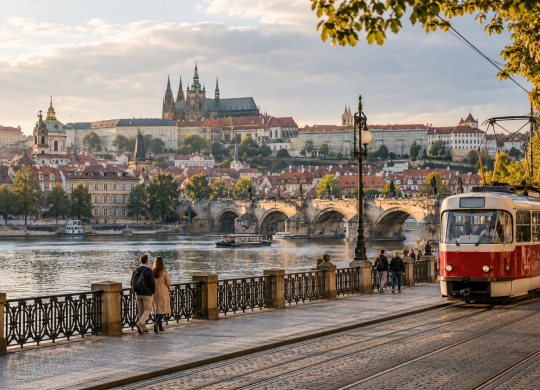
The Czech Republic attracts expats with its high quality of life, well-developed infrastructure, and career opportunities. Learn more about the 5 best cities in the Czech Republic to move to in 2026, their advantages, and what life is like there

More than 1.13 million foreigners live in the Czech Republic, and they already account for over 10% of the country’s population. However, your choice of where to move isn’t limited to Prague. Smaller cities often offer more affordable housing, a more relaxed pace of life, and a comfortable environment for families. Where in the Czech Republic is the best place for expats to live in 2026, and which cities are worth considering for a move? Let’s take a look at five promising destinations with different opportunities for foreigners.
Are you planning to legalize your status in the Czech Republic and want to understand the documents without making unnecessary mistakes?
The Visit World immigration guide contains step-by-step instructions, a complete list of documents, and current requirements for obtaining a residence permit, permanent residence, or citizenship. Order the guide and receive all the necessary information in PDF format by email in a few minutes!

Why is the Czech Republic attracting expats in 2026?
The Czech Republic remains one of the most popular destinations for relocation in Central Europe. According to data from the Czech Ministry of the Interior, as of the end of June 2026, more than 1.14 million foreigners were living in the country, accounting for 10.47% of the population. This indicates a significant international community and demand for long-term residency in the country.
Among the main advantages of the Czech Republic for expats are:
- Central location in Europe. Convenient transportation links to Germany, Austria, Poland, and Slovakia.
- Well-developed infrastructure. Public transportation, intercity railways, and access to healthcare and educational services.
- A diverse job market. Opportunities in IT, manufacturing, logistics, engineering, and the service sector.
- An international environment. Expat communities, international schools and universities, and services to help newcomers settle in.
- A variety of housing options. From the bustling capital to smaller cities with lower housing costs.
At the same time, living conditions vary significantly by region. Therefore, when choosing a city, you should consider not only your budget but also career prospects, housing availability, and personal priorities.
In our previous article, we discussed life in the Czech Republic, living costs, opportunities for foreigners, and conditions for legal residence.
Prague—The Best City in the Czech Republic for a Career and International Lifestyle
Prague is the capital and largest city of the Czech Republic, with a population of over 1.4 million as of mid-2026. It is the country’s main economic, financial, and cultural hub, attracting foreigners with its international atmosphere, well-developed infrastructure, and extensive opportunities for professional growth. According to the Czech Statistical Office, the average monthly pre-tax salary in the second quarter of 2026 was 66,459 Czech korunas. This is one of the indicators of the capital’s economic appeal.
The city is located in central Czechia, on the banks of the Vltava River. Direct trains run from here to Berlin, Vienna, Bratislava, and other European cities. Václav Havel International Airport provides air connections to many countries around the world. Prague also boasts a well-developed public transportation system: three metro lines, trams, buses, and night routes allow you to get around the city comfortably without a car.
Among the main advantages of Prague for expats:
- An international job market. The capital is home to the offices of major corporations, tech companies, financial institutions, and international business centers. The IT, finance, consulting, and business services sectors are particularly promising.
- A variety of neighborhoods to live in. Vinohrad is popular for its coffee shops and tree-lined streets, Karlín for its modern offices and coworking spaces, and Dejvice for its universities, parks, and a more peaceful environment.
- Educational opportunities. Prague is home to Charles University, the Czech Technical University, and international educational institutions, including schools with English-language programs.
- Healthcare and everyday services. The city is home to large university hospitals, private clinics, international medical centers, and services for foreigners.
- Cultural life and recreation. Theaters, museums, concerts, international festivals, and numerous green spaces—including Stromovka and Letná Parks—offer plenty of leisure options.
Prague also has one of the largest international communities in the Czech Republic. There are expat organizations, language schools, professional associations, and counseling centers. For example, the Prague Integration Center helps foreigners with issues related to adaptation, learning the Czech language, and navigating local administrative procedures.
The main drawback of Prague is the high cost of living, particularly housing rent. Demand for apartments is especially high in central districts and near metro stations. In addition, popular tourist neighborhoods are often crowded with visitors, and competition for certain job openings is quite fierce. Despite the widespread use of English in international circles, knowledge of Czech remains an important advantage for everyday life.
Who it’s for: IT professionals, finance specialists, entrepreneurs, international professionals, students, and families seeking career opportunities, a wide range of services, and an active urban lifestyle.
Learn more about the characteristics of the Czech labor market and the most in-demand jobs by following the link.
Brno—the Czech Republic’s technology hub with a comfortable pace of life
Brno is the second-largest city in the Czech Republic, with a population of over 400,000, located in the South Moravian Region. It is considered one of the country’s leading technology and education hubs. The city is a hub for IT, engineering, biotechnology, and scientific research. A large international community has formed here, and foreign professionals have access to counseling on relocation and adaptation.
Brno is located approximately 200 km from Prague and 145 km from Vienna. Convenient rail connections make it easy to travel throughout the Czech Republic, Austria, and Slovakia. At the same time, the city is much more compact than the capital: travel time between residential neighborhoods, universities, and business districts is typically shorter.
Among the main advantages of Brno for expats are:
- Career prospects. Red Hat, Honeywell, Thermo Fisher Scientific, and other international companies operate in the city, creating jobs for technical specialists.
- High-quality education. Masaryk University and the Brno University of Technology offer educational programs, including those taught in English.
- Convenient residential areas. Králové Pole is popular for its proximity to universities, Žabovřesky attracts residents with its quieter atmosphere, and Brno-Stržed is known for its vibrant city life.
- Well-developed public transportation. The network of trams, trolleybuses, and buses allows you to get around comfortably without a car.
- Recreational opportunities. Lužanky Park, the Brno Reservoir, cultural festivals, and proximity to the wine-growing regions of South Moravia.
A particular advantage for foreigners is the Brno Expat Center, which helps skilled professionals and their families navigate administrative procedures, medical services, and the nuances of local life.
Among the drawbacks are a smaller selection of job openings outside the tech sector compared to Prague and high demand for rental housing. English is often sufficient in international companies, but knowledge of Czech makes daily life much easier.
Who it’s for: IT professionals, engineers, researchers, students, and families seeking a balance between career opportunities, well-developed infrastructure, and a more relaxed pace of life.
In our previous article, we discussed how to start a business in the Czech Republic in 2026: taxes, costs, and a step-by-step guide.
Pilsen – High Quality of Life and Proximity to Germany
Pilsen is the fourth-largest city in the Czech Republic and the main economic hub of the western part of the country. It is located approximately 90 km from the German border and 95 km from Prague. Thanks to the D5 highway and international rail connections, residents can easily travel to Munich, Nuremberg, and other German cities. Plzeň is particularly attractive to expats who want to live in a developed European city without the hustle and bustle of a capital city or the high cost of living.
The city has a strong industrial heritage. It was here that the world-famous Pilsner Urquell beer brand and the Škoda engineering company were founded. Today, the local economy encompasses mechanical engineering, the automotive industry, electronics, logistics, and engineering services. Pilsen also attracts foreign investment, and the University of West Bohemia trains specialists in technical and other fields.
Pilsen’s main advantages for expats:
- More affordable housing. Rent is generally cheaper than in Prague, and the selection includes both historic buildings and modern residential complexes.
- Convenient infrastructure. The city has trams, trolleybuses, and buses, and operates an integrated public transportation system.
- Family-friendly amenities. Schools, kindergartens, medical facilities, parks, and cultural institutions are readily available.
- Education and development. The University of West Bohemia offers programs in technical, economic, humanities, and other fields.
- Recreation and nature. The historic center, the zoo, the Techmania Science Center, bike trails, and the forests surrounding the city provide a variety of leisure opportunities
.
Pilsen also offers an important advantage for newly arrived foreigners—the Welcome Center Pilsen Region. The platform provides practical advice on housing, healthcare, education, documentation, and settling in. This makes it easier to handle everyday matters after moving.
Despite its advantages, Pilsen also has its limitations. The international community here is less developed than in Prague or Brno, and there are fewer English-speaking job openings in non-technical fields. Knowledge of the Czech language is often necessary for employment at local companies and for everyday communication. It’s also worth noting that the city is more focused on industry than on international business services.
Who it’s for: engineers, technical specialists, manufacturing and logistics workers, families with children, and expats looking for a quieter city with well-developed infrastructure and convenient access to Germany.
Previously, we wrote about the EU Blue Card in the Czech Republic: requirements, salary, and application process.
Ostrava – Affordable Living and Employment Opportunities
Ostrava is the third-largest city in the Czech Republic, located in the northeast of the country, near the borders with Poland and Slovakia. As of early 2026, the city had a population of about 293,000, of whom nearly 22,000 were foreigners. Ostrava attracts expats primarily with its more affordable housing, developed industrial sector, and the opportunity to live in a large city without the high costs of a capital city.
Historically, Ostrava was a center for coal mining and metallurgy, but today its economy is gradually diversifying. In addition to traditional manufacturing, the automotive industry, mechanical engineering, logistics, IT, and business services are thriving here. The Technical University of Ostrava (VŠB) and the University of Ostrava play an important role, training specialists and participating in international research projects.
Among Ostrava’s main advantages for expats are:
- More affordable housing. Apartment rents are generally cheaper than in Prague and Brno. This makes the city attractive to foreigners on a limited budget.
- Diverse residential areas. Poruba is known for its green neighborhoods and proximity to universities, while Moravian Ostrava is known for its central location, shops, and cultural venues.
- Transportation accessibility. The city has tram, bus, and trolleybus networks, as well as rail connections to Prague, Brno, Poland, and Slovakia.
- Educational opportunities. Universities offer programs in engineering, medicine, economics, and the humanities, including some English-language programs.
- Recreation and culture. The Dolní Vítkovice complex of former industrial facilities, the Colours of Ostrava festival, and the proximity of the Beskydy Mountains provide a variety of leisure activities.
The Ostrava Expat Center serves foreigners in the city, providing free consultations on documentation, employment, healthcare, education, and adaptation. The center also organizes meetings and events for the international community.
Among Ostrava’s drawbacks is a smaller selection of English-speaking job openings compared to Prague and Brno. Due to the region’s industrial past and geographical characteristics, air quality also remains a significant concern, especially during the colder months. At the same time, the city is actively renovating public spaces, developing green infrastructure, and repurposing former industrial sites.
Who it’s for: manufacturing workers, engineers, logistics specialists, students, young families, and expats looking for more affordable housing in a large city with well-developed infrastructure.
Learn more about the cost of living in the Czech Republic in 2026 by following the link.
Olomouc – a cozy university town for students and families
Olomouc is a historic city in the eastern part of the Czech Republic, in the Moravia region, with a population of about 100,000. Unlike industrial Ostrava or business-oriented Prague, education, culture, and university life take center stage here. Olomouc is particularly appealing to those who want to settle in a small European city but aren’t willing to sacrifice quality infrastructure and an active social scene.
An important part of city life is Palacký University—one of the oldest universities in the Czech Republic. According to the institution’s official statistics, 23,132 students were enrolled there in 2025, including 2,677 international students from 88 countries. The university offers programs in medicine, natural sciences, humanities, and other fields, as well as 180 accredited programs taught in foreign languages. This fosters an international academic environment and creates opportunities for students, faculty, and researchers.
Olomouc is known for its well-preserved historic center with Baroque architecture, cozy squares, and pedestrian-friendly streets. Its main landmark is the Holy Trinity Column, a UNESCO World Heritage Site. At the same time, it’s not just a tourist city: university buildings, cafés, libraries, and cultural institutions are part of the daily life of local residents.
What makes Olomouc attractive to expats:
- Compact layout. The historic center, shops, educational institutions, and public spaces are located relatively close to one another. It’s easy to get around the city on foot, by bike, or by tram.
- Comfortable residential neighborhoods. Nové Sady and Povel offer mostly apartment buildings and everyday amenities, while Neržedín attracts residents with its green spaces and a more peaceful atmosphere.
- Cultural life. The Moravian Theater, museums, galleries, student festivals, and regular community events provide a variety of leisure activities.
- Proximity to nature. Smetana Gardens and Bezruč Gardens are ideal for daily walks, and the Litavelské Pomoravie nature reserves are located near the city.
- Convenient rail connections. Olomouc has direct trains to Prague, Ostrava, and other major cities in the Czech Republic, which is especially convenient for regular travel around the country.
Foreigners moving to Olomouc can receive assistance at the Center for the Integration of Foreigners. The center provides counseling on administrative and social issues, organizes Czech language courses, and helps newcomers adapt to local conditions.
However, the city’s small size also has its drawbacks. Job opportunities at international companies are more limited than in major economic hubs. The best career prospects are in education, science, medicine, and local business. For long-term residents, knowledge of the Czech language will be particularly useful, as the English-speaking community is primarily concentrated around the university.
Who it’s for: international students, professors, researchers, families with children, and remote workers who appreciate the historic atmosphere, the city’s walkable infrastructure, and a relaxed lifestyle.
Visit World's Guide to Immigration to the Czech Republic: A Step-by-Step Guide to Legalization
Applying for a residence permit, permanent residence, or citizenship in the Czech Republic is a process with clear requirements, a list of documents, and set deadlines, but it can be difficult to understand all the details on your own. Up-to-date and structured information on the legalization procedure is contained in the Immigration Guide from Visit World — a PDF manual that is sent to your email address within a few minutes after ordering.
The guide covers all the key issues: step-by-step instructions for obtaining a temporary and permanent residence permit, as well as citizenship on various grounds; a complete list of required documents and the cost of processing; requirements for applicants and application processing times; rules for filling out forms; contact information for the relevant authorities in the country; practical advice for adapting and the benefits of resident or citizen status.
Order the Immigration Guide from Visit World and start preparing for your move with a full understanding of what steps await you and how to complete them correctly!
Reminder! The Czech Blue Card is an opportunity for highly qualified workers from non-EU countries to live and work in the Czech Republic. Who is eligible to apply for a Czech Blue Card, what documents are required, and what benefits the card offers — we explain it all here.
Products from Visit World for a comfortable trip:
Checklist for obtaining a visa and necessary documents in Czech Republic;
Legal advice on immigration to Czech Republic;
Travel insurance for foreigners in Czech Republic;
Medical insurance all over the world.
We monitor the accuracy and relevance of our information. Therefore, if you see any error or discrepancy, please write to our hotline.
Recommended articles
4 min
Expats
Życie w Czechach: kompletny przewodnik dla planujących przeprowadzkę
Przeprowadzka do Czech wymaga zrozumienia nie tylko formalnych zasad, ale także rzeczywistych warunków życia, od codzienności po pracę, medycynę i edukację. Kraj przyciąga swoją stabilnością, bezpieczeństwem i jasnymi zasadami, ale ma też swoje specyfikacje, na które warto się przygotować z wyprzedzeniem. Dowiedz się więcej o życiu w Czechach, kosztach, możliwościach dla cudzoziemców i warunkach legalnego pobytu
12 lut. 2026
More details3 min
Expats
Jak założyć firmę w Czechach w 2026 roku: Podatki, koszty i przewodnik krok po kroku
Czechy pozostają jednym z najłatwiejszych krajów UE do założenia firmy: niskie wymagania dotyczące kapitału minimalnego, przejrzyste zasady podatkowe i możliwość rejestracji zdalnej. W praktyce jednak przedsiębiorcy napotykają różne wyzwania, od licencji po księgowość i bankowość. Dowiedz się więcej o warunkach zakupu firmy w Czechach, podatkach i kluczowych ryzykach w 2026 roku
29 kwi. 2026
More details3 min
Work
Praca w Czechach w 2026 roku: Gdzie jest najwięcej ofert pracy?
W Czechach ponad jedna trzecia pracodawców planuje zwiększenie zatrudnienia do końca 2026 roku, ale zapotrzebowanie na pracowników znacznie różni się w zależności od branży. Dowiedz się więcej o sektorach z największą liczbą ofert pracy w Czechach oraz o sytuacji na lokalnym rynku pracy
15 wrz. 2026
More details3 min
Popular
Koszt życia w Czechach w 2026 roku: Ile potrzebujesz miesięcznie?
Ile kosztuje wynajem mieszkania, pokrycie codziennych wydatków i wychowanie dzieci w Czechach? Dowiedz się więcej o wydatkach miesięcznych, różnicach między Pragą, Brnem, Ostrawą a Plzeň oraz budżecie na pierwsze kilka miesięcy po przeprowadzce.
22 paź. 2026
More detailsAll materials and articles are owned by VisitWorld.Today and are protected by international intellectual property regulations. When using materials, approval from VisitWorld.Today is required.