

Pros and Cons of Living in Germany: What You Should Know Before Moving
Table of contents
-
Advantages of living in Germany
- 1. High standard of living
- 2. Career opportunities and decent pay
- 3. Work-life balance
- 4. A safe and orderly country
- 5. High environmental awareness
- 6. Well-developed transport system
- 7. World-class education and universities
- 8. Cultural heritage and diversity
- 9. Travel and nature nearby
- 10. High quality of healthcare
- 11. Good social security
- 12. Integration and friendliness
- Disadvantages of living in Germany
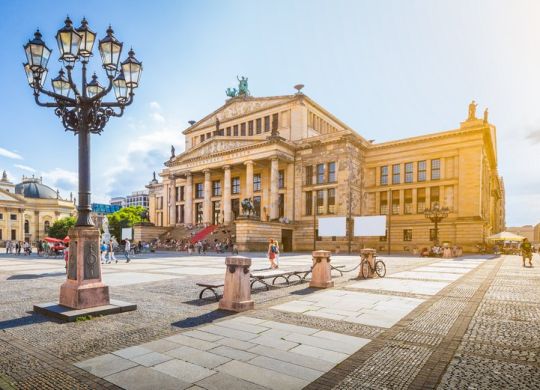
Planning to move to Germany? Learn about the pros and cons of living in this country: high standard of living, career opportunities, education, social security and difficulties for expats. Tips for those planning to move

Germany is one of the most popular countries for migration in Europe. The high standard of living, stable economy, social protection and modern infrastructure attract thousands of professionals, students and families from all over the world, including citizens of Bulgaria, Georgia and Papua New Guinea. Germany is home to over 21 million people with migrant roots, making it one of the countries with the largest number of migrants. At the same time, life in Germany has its difficulties that should be taken into account before making a decision to move.
In this article, we have collected the main advantages and disadvantages of living in Germany from the observations of those who have already settled in this country.
Protect yourself and your family in Germany! Health insurance helps cover the costs of treatment, doctor's consultations and medications. This gives peace of mind and confidence in any unforeseen situation.

The amount of fines for traffic violations is here.
Advantages of living in Germany
1. High standard of living
Germany is among the countries with the best quality of life indicators in the world. A balanced healthcare system, effective education, safe cities and a clean environment create comfortable living conditions.
2. Career opportunities and decent pay
Germany is the economic center of Europe. It has a stable labor market, especially in engineering, IT, finance and the service sector. Knowledge of German significantly increases the chances of a successful career.
List of the best vacancies in Germany for foreigners 2025 in this article.
In Germany, there is an opportunity to find an English-speaking job. However, the chances of finding such a vacancy depend on a number of factors. We tell you who foreigners can work as in Germany, what jobs are offered for English-speaking workers and whether foreigners need a visa to work in Germany.
3. Work-life balance
The average workweek is shorter than in most European countries. Employees have at least 20 paid vacation days, and the corporate culture supports a healthy work-life balance.
In 2025, Germany remains one of the most attractive countries for freelancers and self-employed professionals who want to live and work in Europe legally. This article provides information on how to apply for a freelance visa to Germany in 2025: visa types, documents, cost, benefits, and step-by-step instructions.
4. A safe and orderly country
The crime rate in Germany is low, and the police are trusted by the population. Order, punctuality, and adherence to rules are valued here.
5. High environmental awareness
Clean cities, crystal-clear drinking water, immaculate parks, and nature conservation are all part of the German way of life.
6. Well-developed transport system
Public transport in Germany is considered one of the best in the world. Train, bus and metro lines work clearly, and most cities are easy to get around without a car.
7. World-class education and universities
For EU citizens, university education is free, and for foreigners it is much cheaper than in the USA or the UK. The quality of teaching and the scientific base are at a very high level.
8. Cultural heritage and diversity
In Germany there are more than 40 UNESCO sites, dozens of museums, theatres and festivals. In large cities there is a multicultural environment, tolerant of foreigners.
9. Travel and nature nearby
The Alps, wooded plains, lakes, ancient cities and castles - all this can be seen even during the weekend. Germany also has a convenient location for traveling around Europe.
10. High quality of healthcare
The healthcare system is universal, efficient and accessible. Medical services here are much cheaper than in the USA, and the level of service is one of the best in the world.
Read about the features of health insurance and medical tourism in Germany here.
11. Good social security
German social security ensures that no one is left without a means of livelihood. The country provides assistance in difficult life situations, child benefits and housing subsidies.
Food prices in Germany are reasonable thanks to the large number of grocery chains. Products remain competitive, and thanks to promotions you can save even more.
12. Integration and friendliness
Foreigners can adapt faster thanks to language courses and cultural integration. Germans are known for their friendliness, so it is easy to make friends with colleagues and neighbors.
Germany has abolished “turbo citizenship”: it is no longer possible to obtain a German passport in three years. In this article, what exactly has changed, how this will affect migrants and what requirements are now in place to obtain a German passport.
Disadvantages of living in Germany
1. High taxes and living expenses
The tax system is complex, and the level of taxation is one of the highest in Europe. Germany has a progressive tax system: the richer pay more, and the less well-off pay less or are exempt from taxes altogether.
- Up to €18,000 in annual income, married couples do not pay taxes.
- Up to €30,000 is the minimum rate for professionals.
Incomes over €60,000 for singles or €120,000 for married couples are taxed at a rate of 42%.
2. Complicated bureaucracy
Paperwork is one of the most unpleasant parts of life in Germany. Registration, paperwork, opening a business or bank account can take weeks.
Germans value organization and strictly adhere to the law, so a package of documents collected in advance will help avoid unnecessary stress.
3. The complexity of the German language
German grammar is considered one of the most complex in Europe. Nouns have three genders, four cases, and some verbs are divided into two parts and placed in different parts of the sentence.
In addition, there are numerous regional dialects. Even if you have learned standard Hochdeutsch, communication in Bavaria or other regions can be difficult.
According to surveys, 55% of expats find German difficult to learn, and without knowledge of the language it is difficult to solve everyday problems, especially in government institutions, at the post office or in medical institutions in small towns.
4. The shortage of rental housing in Germany
Finding housing in Germany is often a real challenge - more than half of expats evaluate the experience negatively. Demand far exceeds supply, especially in Berlin, Munich, Stuttgart and Frankfurt, where queues to view apartments can be dozens of people.
Prices are high: a one-room apartment in the suburbs of Munich costs around 1,400 euros, in Heidelberg – 1,000 euros, in small towns or villages – 600–800 euros.
To rent accommodation, you need to have an address registration (Anmeldung) – without it, you cannot get a tax number. They also often require a deposit of 2–3 months’ rent, and most apartments are rented unfurnished.
Read the expat guide to buying property in Germany here.
5. Climate and cloudy weather
Winter in Germany is often grey, rainy and long. For those who are used to the sun, this can be a real test.
6. Slow service
Compared to the USA or even Eastern Europe, customer service in Germany is considered less flexible and not always friendly.
7. Social isolation
Germans can seem reserved, and building friendships often takes longer than in southern countries. However, real trust develops over time.
8. Limited store hours
Most supermarkets close at 8pm, and almost everything is closed on Sundays – part of the national culture of leisure.
9. Too many rules
In Germany, there are rules for literally everything, from sorting trash to parking bicycles. For newcomers, this can be a shock.
10. Complexity of banking services
About 30% of expats are dissatisfied with cashless payments in Germany. Instant transfers between cards are practically impossible, and banks do not process payments on weekends.
The level of digital banking services remains quite limited, especially for those accustomed to modern fintech solutions.
Opening a bank account for newcomers also requires a package of documents, which is sometimes difficult to collect, but without an account it is difficult to pay for housing, education or receive transfers.
Life in Germany is a combination of stability, security and high standards with strict discipline and bureaucracy. The country is great for those who value order, comfort and a long-term perspective. At the same time, it can be difficult for people looking for flexibility, a warm climate and a less formal lifestyle.
Before moving, it is worth honestly assessing your priorities - and then Germany may become exactly the place you will call home.
Planning to move to Germany? A migration specialist will help you collect all the documents for a visa, registration, residence permit and tax number. Our specialist will accompany you through the migration stages step by step so that adaptation in a new country is as simple and safe as possible.

As a reminder! Germany remains one of the most popular destinations for international students. We have already told you how to get a DAAD scholarship in Germany, what programs are available for students, postgraduates and scholars, who can apply, how to properly complete the documents and increase your chances of success.
Photo – Freepik
Products from Visit World for a comfortable trip:
Checklist for obtaining a visa and necessary documents in Germany;
Legal advice on business issues in Germany;
Travel insurance for foreigners in Germany;
Medical insurance around the world.
We monitor the accuracy and relevance of our information, so if you notice any errors or inconsistencies, please contact our hotline.
Frequantly
asked questions
Is it difficult to find housing in Germany?
Do you need to know German to live and work in Germany?
What tax costs await residents of Germany?
Recommended articles
2 min
Travels
Travel to Germany in 2025: Entry Rules, Visa Processing & Top Tourist Attractions
Planning a trip to Germany in 2025? Learn about current entry regulations, visa types, top tourist destinations, useful travel tips, and important safety tips. This guide will help you prepare for your trip and make it as comfortable and safe as possible
01 Jun. 2025
More details1 min
Residence permit
Obtaining a temporary residence permit in Germany is an important step towards legally staying, working or studying in the country. Find out what types of permits are available, the step-by-step application process, what documents are required and other important details.
22 May. 2025
More details1 min
Work
Applying for a work visa in Germany: why might it be refused?
The procedure for obtaining a work visa to Germany is quite complicated and requires the preparation of a large package of documents. Find out why expats may be denied a permit and what to do to prevent this
19 Feb. 2025
More details1 min
Expats
German citizenship in 2025: abolition of the accelerated procedure and new realities for immigrants
Germany is making important changes to its citizenship policy in 2025. Find out which naturalization procedure has been abolished, why the government decided to end this path to citizenship, which procedure remains relevant, and how these changes will affect immigrants planning to apply for citizenship
25 Apr. 2025
More detailsAll materials and articles are owned by VisitWorld.Today and are protected by international intellectual property regulations. When using materials, approval from VisitWorld.Today is required.