

ETIAS Postponed Until 2027: New Entry Rules for Europe and What Travelers Need to Know
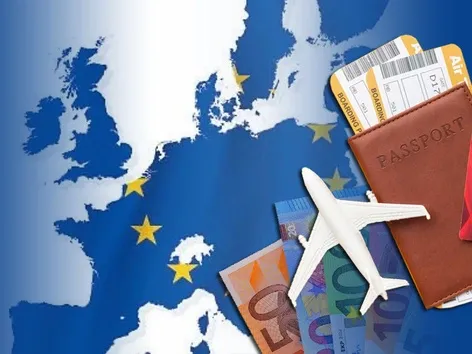
ETIAS will become mandatory from April 2027. Find out who the new rules for entering Europe apply to, how the system will work and what you need to prepare before traveling

Travelers planning to travel to European countries in the coming years should take note of an important update. The European Travel Information and Authorization System (ETIAS) has been postponed again and will not become mandatory until April 2027.
This is the fifth delay in the implementation of the system, which is explained by technical difficulties and the need to synchronize ETIAS with other digital EU border control tools.
Read everything we know about the new European ETIAS system in this article.
Traveling around Europe by car? Don't forget about the electronic vignette.
An e-vignette is a digital confirmation of payment for using toll roads and motorways in EU countries. It replaces paper stickers, is stored in an official database and is automatically checked by car number.
Apply for an electronic vignette in advance and travel without fines and queues.

What is ETIAS and why is it not a visa?
ETIAS is an electronic travel authorization, not a visa. It must be issued by citizens of 59 countries with a visa-free regime with the EU, including: the USA, Great Britain, Canada, Japan, Australia, New Zealand and others
The system works on the principle of the American ESTA and provides for a preliminary check of the traveler before the start of the trip.
How will you need to get ETIAS?
- Fill out an online application;
- Pay 7 euros;
- Get approval to enter 30 countries of the Schengen zone.
Important! Children under 18 years of age and persons over 70 years of age are exempt from paying, but submitting an application is mandatory for them.
For how long is ETIAS issued?
After approval, the authorization is valid for 3 years, or until the expiration of the passport - whichever comes first.
During this period, you can make an unlimited number of short-term trips (up to 90 days within a 180-day period).
Updated ETIAS implementation schedule
The European Union has approved a phased rollout of the systems:
- October 2025 – launch of the Entry/Exit System (EES), which will replace passport stamps with biometric controls.
- April 2026 – EES to be fully operational.
- End of 2026 – launch of ETIAS in test mode (optional, transitional period).
- April 2027 – ETIAS becomes mandatory for most travelers.
- October 2027 – full application of ETIAS throughout the Schengen area.
This approach allows border services, airlines and the tourism sector to adapt to the new rules.
How does ETIAS work together with the EES?
ETIAS and EES (Entry/Exit System) are interconnected, but different systems:
EES
- Collects biometric data (fingerprints, facial image);
- Automatically records dates of entry and exit;
- Detects overstay.
From October 12, 2025, the new EES entry-exit system will be operational in Europe. We have already told you who needs to register, what biometric data is collected, how the control process is carried out, how to prepare for travel and much more useful information.
The new EU Entry/Exit System (EES) has already started operating. Find out the truth about it: we debunk myths about visas, insurance, fees and border crossing for travelers from non-EU countries.
ETIAS
- Performs a pre-trip risk check;
- Reduces the burden on borders;
- Increases the overall level of security.
Together, they form a new digital system for controlling the EU's external borders.
What do travelers need to know about ETIAS now?
Key facts about ETIAS:
1. Mandatory from April 2027;
2. Cost – 7 euros;
3. Valid for up to 3 years;
4. Required for citizens of visa-free EU countries.
The EU has increased the ETIAS application fee to 20 euros. We have already told you who must pay the fee, who is exempted, when the system will start working and how to correctly apply for a permit to travel to the Schengen area.
Important! Beware of scams: The European Commission has already warned about fake websites that claim to accept ETIAS applications.
Official applications can only be submitted via the official EU website after the system is launched.
Although the launch of ETIAS has been postponed again, the system will inevitably become a part of travel to Europe. If you are planning a trip after 2027, it is worth familiarizing yourself with the new rules in advance to avoid denied boarding or problems at the border.
Preparing for a trip to Europe after 2026? Take care not only of your documents, but also of the roads.
The electronic vignette is mandatory for drivers traveling in Europe with their own or rented car. It allows you to quickly confirm payment of road fees without paper documents and stops at the border.
Check the requirements of the destination country and apply for an e-vignette online before leaving.
Reminder! The US Customs and Border Protection has announced significant changes to the ESTA application process. We’ve already covered what new personal information will be required, why social media will be checked, and how it will affect travel to the US.
Photo by Freepik.com
Products from Visit World for a comfortable trip:
Travel guide for 200 countries;
Legal advice from a local specialist on visa and migration issues;
Travel insurance around the world (please select the country of interest and citizenship to receive services);
Medical insurance all over the world.
We monitor the accuracy and relevance of our information, so if you notice any errors or inconsistencies, please contact our hotline.
Frequantly
asked questions
Is ETIAS required for a Schengen visa?
Can I enter the EU without an ETIAS after 2027?
Is ETIAS a one-time permit?
Does ETIAS affect the 90/180 rule?
Recommended articles
1 min
Travels
Europe tourist tax 2026: Italy, France, Spain and Other Countries Increase Travel Costs for Visitors
European countries are introducing new tourist taxes, entrance fees and fines from 2025–2026. Find out where and for what tourists will have to pay more and how to prepare for their trip
26 Dec. 2025
More details1 min
Travels
Where to go in 2026: Europe's most authentic travel destinations
In 2026, travelers are choosing authentic cities, nature and sustainable tourism. Find out which European destinations are worth visiting for an authentic travel experience
30 Dec. 2025
More details1 min
Travels
How to save money when traveling in Europe in 2026: useful tips for travelers
Traveling in Europe can be comfortable and full of impressions even without spending a lot of money - it all depends on the right approach to planning. Find out how to save money while traveling in Europe: when is the best time to go, how to reduce costs on transportation, accommodation, food and entertainment without compromising the quality of the trip
04 Jan. 2026
More details2 min
Travels
13 Best Places for a Spring Trip in Europe 2026: Where to Go in March, April, and May
Planning a spring trip to Europe in 2026? Discover the 13 best destinations for March, April and May – without crowds, with perfect weather and great prices
16 Jan. 2026
More detailsAll materials and articles are owned by VisitWorld.Today and are protected by international intellectual property regulations. When using materials, approval from VisitWorld.Today is required.