

Easy work visa in Europe: TOP countries for labor migration in 2026
Table of contents
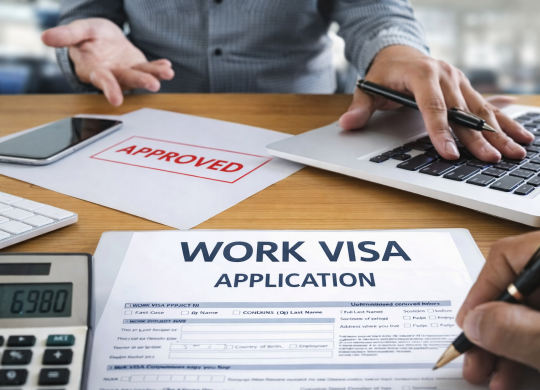
European countries continue to actively attract foreign specialists by offering clear and relatively simple mechanisms for obtaining work visas. In 2026, countries with transparent rules and high chances of approval of applications remain the most accessible for migration. Learn more about the European countries where it is easiest to get a work visa and start a career abroad

The demand for international labor migration in Europe is growing steadily. Thousands of professionals move every year for new opportunities, higher salaries, and a better quality of life. Most European countries have clear visa routes for foreigners, and in some countries, the process of obtaining work visas is much simpler and faster than the EU average. This selection contains countries where it is easier to obtain a work permit in 2026, provided you have a contract or a relevant professional profile.
Are you planning to work abroad in 2026? Visit World's Work Guide will help you quickly understand the requirements for a work permit, the list of necessary documents, and the application procedure. The guide contains current employment rules, the main types of permits, common mistakes made by applicants, and practical advice after moving. You will receive structured information in PDF format within a few minutes after ordering. Check out the guide and prepare for working abroad without any stress.

What is a work visa and how does it differ from a residence permit?
A work visa is a document that gives you the right to enter the country for the purpose of employment for a specified period of time. In most cases, it is tied to a specific employer and position: first, you receive an official job offer, and only then apply for a visa/permit. Unlike a tourist status, a work visa immediately determines the legal basis for work, and violation of the conditions may lead to rejections of future applications.
A residence permit is a different level of document. It gives you the right to live in the country for a longer period of time (often 1 year or more) and is usually tied to work. In many European countries, the process looks like this: first, an entry visa (often type D) is issued, and after arrival, a residence permit is issued for work and long-term stay. Sometimes these documents exist separately, and sometimes the country actually issues a package - the ability to enter and immediately work and live legally in one place.
In the previous article, we analyzed the labor market in Europe in detail: which professions are in demand, where the highest salaries are, and in which countries it is easier to find a job.
Are there any “easy” work visas in Europe and what determines the complexity of the procedure?
The concept of an “easy work visa” in Europe is quite conditional: it is almost always not about the absence of requirements, but about a clearer procedure, transparent rules, and higher chances of approval. In some countries, the process is as formalized as possible: there are clear requirements for the employer, a standard package of documents and predictable processing times. In others, the procedure is more complicated due to quotas, labor market checks, or long waiting periods.
Three factors have the greatest impact on the complexity of the procedure: the existence of a contract with a local employer, the shortage of personnel in a particular field, and the country's migration policy. If the profession is included in the list of in-demand specialties, the chances of a quick approval are much higher. The process is also simplified when the company already has experience in issuing visas for foreigners and accompanies the employee at all stages of the application process.
The type of visa or permit plays a separate role: conditions for highly qualified specialists, startups, or internal corporate transfers are often more lenient than for general work programs. That's why when choosing a country, you should focus not only on general “where it's easier” ratings, but also on which visa route is suitable for your profile and profession.
To learn more about the ranking of minimum wages in Europe in 2026, please follow the link.
1. Estonia
Estonia is often called one of the most convenient countries in Europe for foreigners to start working due to its highly digitalized processes and clear migration rules. The logic of “everything through electronic services” applies here: submission of documents, registration, and most administrative procedures are carried out online or with a minimum number of visits to institutions. For many foreigners, this greatly simplifies the first stage of relocation.
The main requirement for obtaining a work visa or a work permit in Estonia is a contract with a local employer. The company initiates the process and submits some of the documents on its own behalf, and the applicant has to prepare a standard package of confirmations: identity, qualifications, and the absence of serious violations of the law.
Estonia's distinct advantage is its focus on IT specialists, startups, and digital professions, but the country is also open to other specialists who are in short supply in the local labor market. If the employer is interested in the candidate and is ready to support the registration process, the path to legal work in Estonia is usually free of excessive bureaucracy and long deadlines.
2. France
For legal work in France, the key condition is a pre-signed contract with a French employer. It is the company that starts the process of approving the hiring of a foreigner, and this removes most of the bureaucratic issues from the candidate. If the employer has experience in obtaining permits, the processing time is usually predictable, and the risk of errors in the documents is minimal.
France is convenient for those who plan to move with their families: family members can obtain a residence permit together with the employee, and spouses have the right to work without a separate work permit. This is an important advantage for long-term relocation rather than a short contract for a few months.
The easiest procedures are usually in areas where there is a shortage of personnel: IT, engineering, medicine, and certain technical specialties. If the vacancy falls into these categories, the approval process is faster, and employers are more likely to take on full support of the visa process.
3. The Netherlands
The Netherlands has one of the most structured and clear systems for attracting foreign specialists in Europe. For most employees, the key condition is an official job offer from a sponsoring company that has the right to invite foreigners. It is the employer who submits the bulk of the documents, which greatly simplifies the procedure for the candidate and reduces the risk of formal rejections.
Another advantage is special programs for highly qualified specialists and graduates of leading universities. They allow you to legally live and work in the country with minimal administrative barriers and without the need to obtain separate permits for each change of employer during the validity of the status.
The Netherlands is also convenient for those planning a long-term relocation: after obtaining a residence permit, an employee gains access to the social system, the ability to legally rent housing and open bank accounts. This makes the country attractive not only for short-term contracts but also for building a career in Europe.
By the way, in our previous article, we talked about the cheapest countries to live in in 2026.
4. Sweden
To obtain a work visa in Sweden, an official job offer from a Swedish employer is required. It is the company that applies for a work permit on behalf of the employee, so a significant part of the bureaucracy takes place without the candidate's participation. This is convenient for those who receive an invitation from a large or international company with experience in relocating foreigners.
Sweden is focused on attracting specialists in the fields of IT, engineering, medicine, research, and manufacturing. If the vacancy is on the list of those in demand, the verification and approval process is faster, and the requirements for qualification confirmation are clearly spelled out and understandable.
An important practical advantage is the possibility of simultaneously obtaining permits for family members. Once approved, the employee and his or her family are entitled to reside legally in the country, and the spouse is able to work without a separate work permit.
5. Lithuania
Lithuania is attractive for foreign specialists due to its relatively simple employment procedure, provided that there is a confirmed job offer from a Lithuanian employer. In most cases, it is the company that initiates the process of obtaining a work permit, and the applicant has to prepare a standard package of documents. This reduces the number of mistakes and speeds up the application process.
The type of permit depends on the type of employment: simplified rules apply to highly qualified specialists, separate procedures are provided for intra-corporate transfers, and short-term permits are available for seasonal work. This flexibility allows you to choose the best legalization route for a specific profession and work format.
Lithuania's practical advantage is its predictable processing time and clear requirements for documents. The country actively attracts specialists in the fields of IT, engineering, logistics, and manufacturing, so employers often have experience in supporting foreigners in visa matters. This reduces the risk of delays and refusals due to formal inaccuracies.
We tell you where it is best to build a life in the long term — here.
6. Iceland
For legal work in Iceland, the key condition is a pre-existing contract with a local employer. It is the employer who initiates the process of obtaining a work permit, so it is almost impossible to apply without an official offer. If the company has experience in hiring foreigners, the procedure goes smoothly and with a clear list of documents.
Iceland is interested in specialists in the fields of tourism, construction, service, certain technical specialties, and medicine. For such vacancies, employers are usually already familiar with the procedure for attracting foreign workers, which makes the process more predictable for the candidate.
Practical nuance: due to the small size of the labor market, competition for vacancies can be high, but after obtaining a work permit, working conditions and the level of social protection in the country are quite stable. For those who are looking for a legal and structured way to work in Northern Europe, Iceland remains a real option if you have a contract.
7. Latvia
To work in Latvia, a foreigner usually needs a long-term type D visa and a residence permit with the right to work. The process starts with an official offer from a Latvian employer, who submits a part of the documents to the state authorities. This simplifies the application for the candidate and reduces the number of formal errors.
The type of work permit depends on the position and field of activity. The simplest procedure is for specialists in sectors where there is a shortage of personnel (IT, manufacturing, logistics, service professions). For such vacancies, employers often already have experience in relocating foreigners, which speeds up the approval process.
A practical advantage of Latvia is a clear legalization route. After entering on a type D visa, the applicant obtains a residence permit and can work legally for the entire duration of the document.
8. Slovakia
Slovakia has a single residence and work permit format for foreigners, which simplifies the legalization procedure. Instead of several separate documents, the applicant goes through one coordinated process that covers both the right to reside and the right to work. This reduces the number of stages and makes the timeline more predictable.
The main condition is an official job offer from a Slovak employer. The company is involved in approving the hiring of a foreigner, and the process is usually faster for candidates in popular industries (especially IT and technical specialties). If the employer has already worked with relocation, most bureaucratic issues are resolved without the employee's involvement.
The practical advantage of Slovakia is the combination of an affordable cost of living and the demand for specialists in the technology and manufacturing sectors. For professionals who are considering working in Central Europe without overly complicated procedures, this is one of the most pragmatic options.
World Cost of Living Index 2026 — in our previous article.
9. Luxembourg
To be employed in Luxembourg, an official job offer from a local employer is required, after which the procedure for obtaining a residence permit with the right to work is launched. The process is structured and involves the participation of the employer, who registers the vacancy and confirms the need for a foreign specialist. This makes the legalization route more predictable for the candidate.
Luxembourg is suitable for both short-term contracts and long-term work. There are different types of permits depending on the duration of employment and the employee's qualifications. Specialists in the financial sector, IT, engineering, and related fields are usually in the greatest demand, where employers are actively recruiting foreign personnel.
The country's practical advantage is a stable labor market and high salaries that compensate for the relatively high cost of living. If the employer is ready to support the paperwork process, obtaining a work permit in Luxembourg usually does not involve excessive bureaucratic complexity.
10. Ireland
There are several routes for legal work in Ireland for foreigners, but one of the most accessible for young professionals is the Working Holiday Authorization (WHA) program. It allows you to live in the country for a year and work legally, provided you meet the age requirements and basic financial criteria. This is a convenient option for those who want to combine work with the experience of living in an English-speaking environment without complicated bureaucracy.
A long-term career requires a standard work permit, which is issued on the basis of a pre-signed contract with an Irish employer. In this case, it is the company that is involved in approving the hiring of a foreigner, and the applicant submits a package of documents after receiving an official job offer.
The greatest demand for foreign specialists in Ireland is traditionally in IT, finance, pharmaceuticals and engineering. If the vacancy is in short supply, the process of obtaining a permit is usually faster, and employers are more willing to accompany the employee at all stages of relocation.
If you are planning to work abroad in 2026 and want to better understand the rules of employment, work permits, taxes, and basic employee rights, it is worth preparing for the move in advance. Visit World's practical working guide will help you navigate the current requirements, types of work permits, and steps to take upon arrival to avoid common mistakes and feel confident in your new life abroad.
We remind you! New economic indicators show which countries have been able to increase their GDP and which have lost ground due to inflation and slowing growth. Ranking of the richest countries in the world in 2026 — follow the link.
Products from Visit World for a comfortable trip:
Travel guide for 200 countries;
Legal advice from a local specialist on visa and migration issues;
Travel insurance around the world (please select the country of interest and citizenship to receive services);
Medical insurance all over the world.
We monitor the accuracy and relevance of our information, so if you notice any errors or inconsistencies, please contact our hotline
Frequantly
asked questions
Is it possible to get a work visa in Europe without a prior job offer?
Which European country is the easiest to get a work visa in 2026?
How long does it usually take to obtain a work visa to Europe?
Is it possible to move my family after obtaining a work visa?
Can I change my employer after obtaining a work visa?
Recommended articles
3 min
Work
Positive list of professions in Denmark 2026: who is the country ready to hire faster?
In 2026, Denmark will adjust its approach to attracting foreign workers, focusing on specific professions and the real needs of the economy. The updated positive lists show who will find it easier to work legally and build a career in the country in the near future. Learn more about how these changes open up new opportunities for foreign specialists in Denmark
07 Feb. 2026
More details3 min
Work
Open Work Permit in Canada 2026: for whom is the open permit valid after the latest changes
The open work permit in Canada will remain valid in 2026, but the conditions for obtaining it have become much stricter. Many applicants no longer meet the updated criteria due to changes in immigration policy. Learn more about who is currently eligible for an Open Work Permit in Canada
04 Feb. 2026
More details3 min
Work
The US is expanding the H-2B program in 2026: +64,716 visas for temporary workers
In fiscal year 2026, the US government adopted an interim rule that significantly increases the number of H-2B visas for foreign workers in non-agricultural fields. The decision is aimed at covering labor shortages in key industries and supporting businesses. Learn more about the H-2B visa requirements, new quotas, and important filing deadlines in 2026
09 Feb. 2026
More details4 min
Work
Working in Germany in 2026: a step-by-step guide for foreigners
Germany is actively recruiting foreign specialists to fill staff shortages in key sectors of the economy. Simplified visa procedures and high demand for skilled workers make the country one of the most promising destinations for employment in 2026. Learn more about in-demand professions, resources for finding jobs, and requirements for foreign candidates
20 Feb. 2026
More detailsAll materials and articles are owned by VisitWorld.Today and are protected by international intellectual property regulations. When using materials, approval from VisitWorld.Today is required.