

Working in Germany in 2026: a step-by-step guide for foreigners
Table of contents

Germany is actively recruiting foreign specialists to fill staff shortages in key sectors of the economy. Simplified visa procedures and high demand for skilled workers make the country one of the most promising destinations for employment in 2026. Learn more about in-demand professions, resources for finding jobs, and requirements for foreign candidates

Germany remains one of the most attractive labor markets in Europe for foreign specialists. Staff shortages in key sectors of the economy, government programs to attract skilled workers, and a developed social security system make this country a promising destination for employment. Expatica recently prepared a detailed guide to finding employment in Germany.
Below, we discuss in-demand professions, useful resources for finding jobs, visa requirements, and the specifics of starting a career in Germany.
Useful resources and services in Germany for expats — collected here.
Are you planning to work abroad and want to avoid mistakes when applying for a work visa?
The Visit World work guide contains step-by-step instructions, a complete list of documents, and practical advice for obtaining a work permit in any country — the PDF will be sent to your email in a few minutes.

In-demand professions and industries in the German labor market
The German economy is supported by several powerful pillars: the automotive and engineering industries, the chemical and pharmaceutical industries, electronics, the IT sector, renewable energy, and financial services. Among the largest employers are Volkswagen, Mercedes-Benz, BMW, Siemens, Deutsche Bank, and Allianz. In addition to national giants, multinational corporations such as Amazon, Google, Microsoft, IBM, and Apple also have a significant presence in the country. The best jobs in Germany for foreigners are listed at the link.
There is an acute shortage of personnel in the IT sector and software development, engineering (mechanical, electrical, civil), medicine (doctors, nurses, social workers), among skilled workers (plumbers, electricians, carpenters), as well as in education and scientific research — especially in biotechnology and green energy. These areas offer the most opportunities for foreign specialists.
About the pros and cons of living in Germany and what you need to know before moving — find out more at the link.
The role of foreign workers in the German labor market
Statistics show a rapid increase in the proportion of foreigners among new employees: in 2022, approximately 68% of new vacancies were filled by foreign specialists (for comparison, in 2011 this figure was only 21%). By the end of 2023, 419,000 foreigners had temporary work permits in the country.
In 2020, the Skilled Workers Immigration Act (Fachkräfteeinwanderungsgesetz) came into force, which significantly simplified the employment procedure for citizens of non-EU countries.
The law introduced a “skills card” — a points system that takes into account qualifications, professional experience, and language skills. It is worth noting that studies show a wage gap between migrants and local workers, which depends on the region, level of education, and sector of employment.
We remind you that last year, Germany abolished the right to appeal a visa refusal.
Where to look for jobs in Germany: platforms and resources
EU/EFTA citizens can use the EURES portal — the European Job Mobility Portal, which is supported by the European Commission. The state resource of the Federal Employment Agency (Bundesagentur für Arbeit) allows you to register your resume and access job vacancies throughout the country.
Popular general job search platforms: HeyJobs, Indeed Germany, JobStairs, Kimeta, Kununu, Stepstone. For specialists in specific fields, the following are useful: Academics (science and research), Jobware (management and specialists), Staufenbiel (internships and vacancies for graduates). It is also worth considering LinkedIn, Glassdoor, and the German professional network XING, especially for vacancies in large cities such as Berlin, Munich, and Frankfurt.
Visit World services for tourists, migrants, and expats: Insurance | Guides | Legal advice
Working in Germany in English
English-speaking professionals can search for vacancies on specialized platforms: Craigslist, English Jobs, and The Local. Multinational companies and tech startups in Berlin, Munich, and Frankfurt often offer positions with English as the working language. Teaching English remains a popular option — in private schools, corporate courses, or through private tutoring. This requires a degree, experience, and TEFL certification. Teaching vacancies are posted on TEFL Jobs Centre and Go Overseas.
However, for most positions in the German job market, knowledge of German remains an important advantage. Without a basic level of German, access to vacancies is significantly limited, and salaries for English-speaking positions are often lower. There are many language schools in Germany that can help you improve your language skills.
We discussed employment in Germany for English-speaking foreigners in more detail in our previous article.
Employment agencies in Germany and unsolicited applications
Recruitment agencies are another effective channel for finding work. You can find reputable companies in the German yellow pages (Gelbe Seiten) under the heading Arbeitsvermittlung. Agencies that are members of the Federal Association of Personnel Service Providers (Bundesarbeitgeberverband der Personaldienstleister, BAP) are considered reliable. Before signing a contract, it is worth clarifying the cost of services — some agencies charge candidates up to €2,000.
German companies are positive about unsolicited applications (Initiativbewerbung) — applications to employers that are not linked to a specific vacancy.
The main condition is thorough preparation and a clear match between your qualifications and experience and the company's profile.
Internships, volunteering, and freelancing in Germany
Internships in the EU for graduates are available through the European Commission's Internship Office (Bureau de Stages), as well as on the platforms AIESEC, IAESTE, Globalplacement, Go Abroad, and the German resource Praktikum. Volunteer programs lasting up to 12 months for people aged 17–30 are offered by the European Voluntary Service (EVS) and the Concordia organization. Short-term volunteer opportunities can be found on Workaway.
Self-employment and freelancing are common forms of employment: around 4.7 million people are self-employed, with another 764,000 doing so as a second job. EU/EFTA citizens are free to start their own business, while third-country nationals can do so if they have a residence permit or a corresponding permit, one of which is a freelance visa to Germany. You can register as a sole proprietor or as a limited liability company (GmbH). The second option offers more advantages but entails additional tax reporting obligations.
Who is eligible for a DAAD scholarship in Germany — read here.
Visa requirements for working in Germany
EU and EFTA citizens have the right to work in Germany without a permit — a valid passport or ID card and mandatory address registration are sufficient. There are several types of visas for third-country nationals: EU Blue Card (for highly qualified specialists with a job offer and a salary of €48,300 as of 2025), a visa for skilled workers in sectors with labor shortages, a visa for job seekers (up to 6 months' stay), a general work visa, and a visa for freelancers or self-employed persons.
Recognition of qualifications is a mandatory step for regulated professions (about 150 specialties, including doctors, teachers, dentists). You can check your profession on the Recognition in Germany portal and have your foreign diploma confirmed by the Central Office for the Assessment of Foreign Education (ZAB). Qualifications from Bologna Process countries are recognized automatically.
Tax number in Germany, social security, and first steps in a new place
Every employee in Germany receives a social security number (RNVR) — a 12-digit code required to access social services and state pensions.
An 11-digit tax identification number (Steueridentifikationsnummer) is assigned separately. The employer is obliged to register the new employee in the health insurance, pension, and accident insurance systems.
The probationary period in Germany is usually three months (maximum six). During this period, a reduced notice period for dismissal applies. For those looking for work, there is a contribution-based unemployment benefit system. Even without sufficient contribution history, it is possible to receive basic support — details can be clarified at the local employment center. The Federal Employment Agency also offers training courses to improve qualifications.
Everything you need to know about applying for a work visa in Germany — follow the link.
Apply for a work visa without mistakes — with the guide from Visit World!
Before starting a career abroad, most foreign professionals must obtain a work visa. The absence of even one document in the package can lead to delays or rejection. The Visit World work guide is a PDF manual that will be sent to your email address in a few minutes and contains everything you need: step-by-step instructions for applying for a work visa and work permit, a complete list of documents, information about visa fees and processing times, rules for filling out the application form, and practical life hacks.
Order the working guide from Visit World and prepare your application correctly the first time — for any country and citizenship.
Reminder! Temporary residence in Germany is a status that allows a foreigner to legally stay in the country for a specified period. How to obtain a temporary residence permit in Germany, as well as the types of permits, requirements, application stages, and necessary documents — find out more at the link.
Photo: Freepik
Products from Visit World for a comfortable trip:
Checklist for obtaining a visa and necessary documents in Germany;
Legal advice on business issues in Germany;
Travel insurance for foreigners in Germany;
Medical insurance around the world.
We monitor the accuracy and relevance of our information, so if you notice any errors or inconsistencies, please contact our hotline.
Frequantly
asked questions
Is it possible to work in Germany without knowing German?
What visa do I need to work in Germany?
What professions will be most in demand in Germany in 2026?
Recommended articles
2 min
Education
DAAD Scholarship in Germany in 2025: Who Can Get It, What It Covers, Requirements
Germany remains one of the most popular destinations for international students. Find out how to get a DAAD scholarship in Germany, what programs are available for undergraduates, postgraduates and researchers, who can apply, how to properly complete the documents and increase your chances of success
28 Aug. 2025
More details1 min
Expats
Germany has abolished “turbo-citizenship”: it is no longer possible to obtain a German passport in three years. Find out what exactly has changed, how this will affect migrants and what requirements are now in place to obtain a German passport
10 Oct. 2025
More details1 min
Travels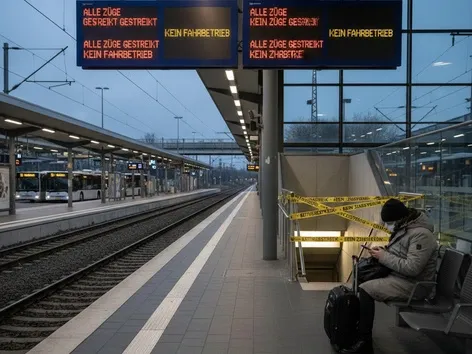
Public Transport Strike in Germany Nears Its End: When Services Will Resume in Major Cities
The massive public transport strike in Germany was short-lived and is now coming to an end. Find out which cities will see traffic resume soon and how it will affect travel
02 Feb. 2026
More details3 min
Air travel
One of Europe's largest aviation hubs has introduced a solution that changes the approach to informing passengers in terminals. The new system makes announcements clearer, calmer, and much more accessible to people with hearing impairments. Learn more about how this technology works, who it will primarily make travel easier for, and why it is considered a step into the future of air travel
08 Feb. 2026
More detailsAll materials and articles are owned by VisitWorld.Today and are protected by international intellectual property regulations. When using materials, approval from VisitWorld.Today is required.