

Italy is introducing new rules for tourists: key changes in 2026
Table of contents
- Why is Italy tightening rules for tourists?
- Capri Imposes Restrictions on Tour Groups
- Florence is tightening controls in the historic center
- Liguria and Cinque Terre are introducing visitor limits
- Rome is restricting access to the Trevi Fountain
- Venice Raises Tourist Tax
- Access to popular locations in the Dolomites will be restricted
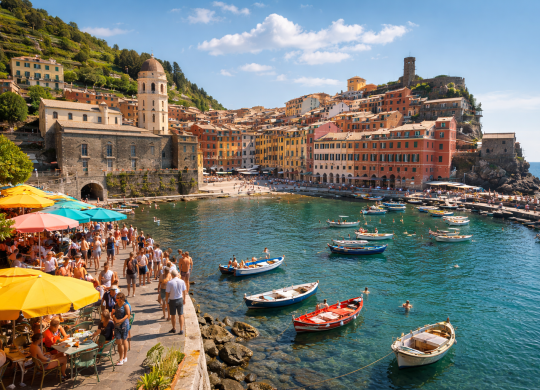
Italy is gradually introducing new restrictions for tourists due to overcrowding at popular destinations. In 2026, these changes will affect Rome, Venice, Florence, Capri, and other regions. Learn more about the new rules and how they will affect travel

Italy, one of Europe’s most popular tourist destinations, is tightening rules for travelers in response to the growing problem of overtourism. According to local authorities and tourism agencies, the excessive influx of tourists is already affecting not only the condition of historical sites but also the quality of life for local residents.
In 2026, a number of the country’s famous cities and regions are introducing new restrictions: from limits on visits to popular locations to increased tourist fees. Some of these changes have been tested before, but now they are becoming systematic and stricter.
Here’s what exactly is changing and what tourists should prepare for.
In a previous article, we discussed new tourist taxes in Europe in 2026 and which countries will require tourists to pay more.
Planning a trip abroad and want to protect yourself from unforeseen situations?
Travel insurance from Visit World will cover medical expenses, flight delays, and lost luggage in any country. Get a policy online in a few minutes and travel with confidence!

Why is Italy tightening rules for tourists?
For several years now, Italy has been grappling with the problem of overtourism—an excessive tourist burden on popular cities and natural sites. The most visited destinations, such as Rome, Venice, and Florence, regularly welcome millions of tourists each year, placing significant strain on infrastructure and cultural heritage.
According to local authorities, the uncontrolled flow of travelers leads to the deterioration of historical sites, overcrowding of public spaces, and a decline in the quality of life for local residents. This is particularly noticeable in narrow historic centers and popular tourist routes, which are physically not designed to handle such volumes of visitors.
This is precisely why authorities are shifting toward a model of controlled tourism. This is not about restricting travel itself, but about managing tourist flows, preserving historical sites, and creating more comfortable conditions for both local residents and travelers alike.
Capri Imposes Restrictions on Tour Groups
The island of Capri, one of Italy’s most popular resorts, is introducing new rules for organized tourist groups in 2026. The reason is the excessive crowding of people in narrow streets and near key locations, which creates discomfort for both tourists and local residents.
Under the new requirements, the number of people in tour groups will be limited to 40. This will help reduce the strain on infrastructure and make movement around the city more manageable.
In addition, the use of loudspeakers during tours will be banned. Instead, guides will be required to use headphones or radio guides to avoid noise and maintain a comfortable atmosphere on the island.
These measures are aimed not only at reducing noise but also at generally improving the tourist experience—free from crowds and chaotic movement.
Learn more about the best European cities for a short budget trip by following the link.
Florence is tightening controls in the historic center
Florence, which welcomes millions of tourists every year, is introducing additional restrictions in the city’s historic center in 2026. The main goal is to reduce the visual and physical impact on cultural heritage and restore the authentic appearance of the city streets.
In particular, the authorities plan to remove summer terraces on dozens of streets in the center.
These are establishments that occupy a significant portion of pedestrian space and create crowds in narrow areas.
Controls over signage and outdoor advertising are also being tightened. The new rules aim to limit the excessive commercialization of historic sites and preserve their architectural appearance.
Fines are imposed for violations of the established requirements, which should encourage businesses to comply with the new regulations and reduce chaotic development in the city center.
Liguria and Cinque Terre are introducing visitor limits
The Liguria region, particularly Cinque Terre, has remained one of Italy’s most overcrowded tourist destinations for several years. Narrow paths, limited space, and popularity on social media have made controlling visitor flow a necessity.
In 2026, access to the most popular routes will be restricted. Some locations will only be accessible by advance reservation, which will allow for the even distribution of tourists throughout the day and help avoid critical crowds.
Special attention is being paid to the famous “Path of Love”—one of the most visited routes in the region. Restrictions are already in place for it, and controls will only be tightened in the future.
These measures are aimed at preserving natural landscapes and improving safety, as excessive crowds on narrow trails pose risks to both tourists and the infrastructure itself.
Earlier, we wrote about the best beach destinations in Europe to visit as early as late spring.
Rome is restricting access to the Trevi Fountain
Rome is also joining the trend of controlled tourism by introducing new rules for visiting one of the city’s most popular landmarks—the Trevi Fountain. Every day, this location attracts thousands of tourists, creating constant crowds and making access to the site difficult.
In 2026, visits to the fountain will become partially paid, and the number of people allowed near it at any given time will be limited to 400. This will help reduce pressure on the area and make the experience more comfortable.
Additionally, a time-slot system is planned. Tourists will be able to visit the site at designated times, which will help avoid chaotic lines and excessive crowding.
These measures aim not only to manage visitor flows but also to preserve the historic landmark, which faces significant strain each year due to mass tourism.
Venice Raises Tourist Tax
Venice has long been a symbol of the fight against overtourism, and in 2026, the city continues to tighten control over visitor flows. The main change is an increase in the tourist tax for day-trippers.
While the fee was previously lower and operated on a trial basis, it is now being raised to €10. This applies to those who visit the city for just one day and do not stay overnight.
This measure serves several purposes: to reduce the number of short-term visits, which place the greatest strain on the city, and to encourage more mindful tourism.
In addition, the funds raised are planned to be directed toward supporting infrastructure and preserving historical heritage.
In our previous article, we provided a detailed account of the introduction of a tourist tax in Venice starting in April 2026.
Access to popular locations in the Dolomites will be restricted
The Dolomite Alps, particularly the Val di Funes region, are also facing a sharp increase in tourist traffic. This is especially true for iconic sites that have gained popularity through social media.
In 2026, access to one of the most famous locations—the Church of Santa Maddalena—will be restricted. Authorities plan to close the access road to most tourist vehicles to reduce the strain on the natural environment and local infrastructure.
The area will be accessible primarily on foot. This approach is intended not only to limit the number of visitors but also to preserve the natural landscape, which has been significantly impacted by mass tourism in recent years.
No matter how well thought-out your itinerary is, there is always room for force majeure when traveling. Unexpected medical expenses, transportation delays, or problems with luggage can ruin your plans and budget. Travel insurance helps you avoid unnecessary worries in such situations. You can apply for a travel insurance policy for a specific trip online at Visit World - quickly and without unnecessary bureaucracy!
Take out a policy online at Visit World and enjoy your trip without any unnecessary worries!
We remind you! Some countries are island states with political neutrality, which means that the likelihood of military conflict is quite low. Read more about the countries that are likely to participate in World War III and the top safest countries in the world.
Products from Visit World for a comfortable trip:
Travel guide for 200 countries;
Legal advice from a local specialist on visa and migration issues;
Travel insurance around the world (please select the country of interest and citizenship to receive services);
Medical insurance all over the world.
We monitor the accuracy and relevance of our information, so if you notice any errors or inconsistencies, please contact our hotline
Frequantly
asked questions
Will there be an admission fee for popular attractions in Italy in 2026?
Can you visit popular places without a prior reservation?
Are there limits on the number of tourists in groups?
Do the new rules mean that traveling in Italy will become more difficult?
Why is Italy introducing these restrictions?
Recommended articles
1 min
Travels
13 best beaches in Italy: where to go to the sea in summer 2026
From Sardinia to Puglia, Italy has beaches to suit every taste. Find out which 13 of the country's most beautiful beaches experts recommend, when to visit them, and what to consider when planning your summer trip
02 Feb. 2026
More details3 min
Expats
Where to live in Italy in 2026: top cities for relocation and work
Not all of Italy’s popular cities are ideal for a comfortable life—high prices and competition for housing often pose a problem. Instead, mid-sized cities are increasingly becoming the best choice for relocation. Learn more about the Italian cities where it will be advantageous to live and work in 2026
30 Mar. 2026
More details2 min
Travels
Starting in April 2026, Venice will once again impose a fee on tourists visiting for a single day. This year, the restrictions will remain in effect for a longer period, and the number of days subject to the fee will increase. Learn more about the new rules, dates, and the cost of visiting the city
31 Mar. 2026
More details2 min
Residence permit
Italy Offers €15,000 Grant for Moving to Sardinia: New Residents Incentive
Dreaming of living on a sunny island with clean beaches and a relaxed atmosphere? Find out about the Sardinia relocation program, a €15,000 grant and additional payments for families looking to settle in the island's small towns
01 Apr. 2026
More detailsAll materials and articles are owned by VisitWorld.Today and are protected by international intellectual property regulations. When using materials, approval from VisitWorld.Today is required.