

Detroit offers up to $15,000 to move: who can get the money and what are the conditions in 2026
Table of contents
- What is this program, and why is Detroit paying for people to move there?
- Who is eligible for $15,000, and what are the participant categories?
- What are the requirements for participants, and who is ineligible?
- What documents are required and how do you apply?
- What can the money be spent on, and what are the restrictions?
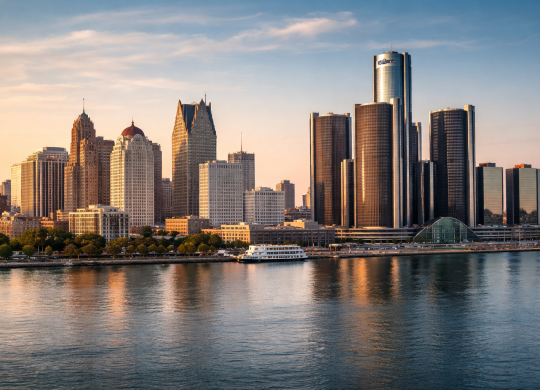
A new program in the United States offers up to $15,000 for moving to Detroit. However, not everyone will qualify — there are strict requirements, a limited number of spots, and a competitive selection process. Here’s who can apply, what the conditions are, and how the program works in 2026

The city of Detroit, Michigan, is launching a new program to attract residents and businesses—participants are promised up to $15,000 in financial assistance for moving to or investing in the city. The initiative, called Make Detroit Your Home, has a total budget of just over $500,000, so spots are limited—approximately 300 participants are expected to be selected.
The program is aimed not only at new residents but also at those who already live in Detroit or are ready to return. However, the terms and amounts of payments vary significantly depending on the applicant’s category: from $1,000 for remote workers to $15,000 for entrepreneurs and homeowners.
Despite the financial appeal, participation in the program comes with a number of requirements and restrictions, and competition is fierce. Below, we break down exactly how this initiative works, who is eligible for the funds, and what you need to prepare to apply.
Are you planning to travel, move or work abroad?
A migration lawyer will help you choose the right type of visa or permit, prepare an error-free package of documents and reduce the risk of rejection. Get professional advice now and save time, money and nerves at every stage of the migration process.

What is this program, and why is Detroit paying for people to move there?
Detroit launched the Make Detroit Your Home program to address several key issues at once: population outflow, the decline of certain neighborhoods, and a lack of new investment. The program primarily targets entrepreneurs, remote workers, and those willing to invest in real estate or local projects.
Back in the 2000s, the city experienced a deep economic crisis due to the decline of the automotive industry. Mass population outflow led to thousands of homes standing empty, and some properties were sold for nominal sums. This dealt a serious blow to the city’s economy and quality of life.
Today, the situation is gradually changing. Crime rates are falling, and certain neighborhoods are actively being revitalized. At the same time, housing here remains significantly more affordable than in most major U.S. cities—even the premium segment costs less than the national average.
That is why the city government, together with business initiatives, has decided to encourage new residents to move in and those who left earlier to return. The program provides not just financial assistance, but an investment in the city’s development—funds must be directed toward housing, business, or the development of the local economy.
At the same time, this is not a mass handout to anyone who wants it. The program’s budget is limited, so selection will be competitive. Priority will be given to candidates who can have a real impact on the city’s development—entrepreneurs, professionals, and investors.
About the H-1B visa to the United States, one of the most popular ways to obtain legal employment, we talked about in our previous article.
Who is eligible for $15,000, and what are the participant categories?
The program in Detroit is not universal—it is designed for several specific categories of participants. The amount of the grant and the eligibility requirements depend directly on which group you belong to.
1. New Residents (Moving to Detroit)
This is one of the program’s main target groups. But there’s a catch: the maximum grant isn’t available to all new participants.
- Remote workers can receive approximately $1,000
- The funds are intended to cover moving expenses
- You must actually relocate to Detroit
In other words, simply applying isn’t enough—you need to actually move and live in the city.
2. Current Detroit residents
The largest payments are reserved for those who already live in the city. The amount can reach up to $15,000. The money is not handed out without conditions: it must be used for specific purposes.
Among the permitted uses:
- Starting or expanding a business
- Down payment on housing
- Home repairs or renovations
- Other housing expenses
In fact, this is not just aid, but a tool for the city’s economic development.
3. Former residents (those returning)
A separate category consists of people who previously lived in Detroit but moved away. They are also eligible for payments of up to $15,000. The conditions are similar to the program for current residents. The main requirement is returning and actively participating in city life.
4. Entrepreneurs and small business owners
This category has the highest priority in the selection process. Preference is given to applicants with business ideas. It is important to demonstrate the potential for job creation. The impact on the city’s economy is evaluated. If you have a business or a plan to launch a project, your chances increase significantly.
Earlier, we reported that the United States has already suspended the issuance of immigration visas for 75 countries.
What are the requirements for participants, and who is ineligible?
Simply submitting an application is not enough to receive payments. The program has basic requirements as well as informal selection criteria that significantly affect your chances.
Basic requirements for applicants
Before submitting an application, you must meet several key conditions:
1. Actual residence or relocation to Detroit. The participant must live in the city or be willing to move there permanently
2. Legal status in the U.S. The program is aimed at those who have the right to work and reside in the country
3. Verified source of income or funding. This is especially important for remote workers and entrepreneurs
4. Willingness to invest funds in the city. The money received must be used for its intended purpose, not spent arbitrarily
5. Participation in the development of the local economy. This can be a business, an investment, or a job that benefits the city
In addition to the basic requirements, there are factors that can significantly increase your chances: having a business plan or startup idea, experience in entrepreneurship or professional work, willingness to buy or renovate a home, and long-term plans to live in Detroit. The more benefit a candidate can bring to the city, the higher their chances.
Who will NOT be eligible for the payment?
There are categories of applicants who will effectively not pass the screening:
- People without legal status in the U.S.
- Those who do not plan to actually move
- Applicants without a stable income or financial plan
- Candidates who cannot explain how they will use the funds
Those who view the program merely as a “one-time payment” with no further obligations also have low chances.
It is important to understand: even formal compliance with the requirements does not guarantee receiving the payment. Due to the limited number of spots, they select those who appear most promising for the city’s development—with a job, a business, or specific investment plans.
What is the Visa Bond programme in the United States 2026 — read here.
What documents are required and how do you apply?
Participation in the program is not automatic—you must submit an application and confirm your eligibility. It is important to prepare not only the basic documents but also a justification explaining why you should be selected.
What documents might be required?
The exact list depends on the participant’s category, but typically you’ll need to provide:
- Proof of identity
- Proof of legal status in the U.S.
- Proof of income or a contract (for remote workers)
- Business information or a business plan (for entrepreneurs)
- Proof of residence or intent to relocate
- A description of how the funds will be used
In some cases, additional financial documents or proof of investment intent may also be requested.
What does the application process look like?
Applications are submitted through a dedicated platform or the operator’s application. The selection process then proceeds in several stages:
- Submission of an online application with basic information
- Verification of documents and compliance with requirements
- Evaluation of the application (experience, plans, potential contribution to the city)
- Final selection of a limited number of participants
Upon approval, the participant may be offered an agreement specifying the terms of use of the funds and the obligation to remain in the city for a certain period.
Important note: payments are not always provided immediately. In some cases, funds may be disbursed in installments or after confirmation that the funds have been used for their intended purpose.
By the way, in our previous article, we talked in detail about the new US citizenship test in 2026.
What can the money be spent on, and what are the restrictions?
Despite the high-profile promise of payments up to $15,000, this money is not issued as “free cash.” Participants cannot simply receive it and spend it on anything—the use of funds is strictly limited by the program’s terms.
In fact, this is targeted funding. The funds must be directed toward activities that directly or indirectly contribute to the city’s development. Most often, this involves starting or scaling a business, investing in local projects, purchasing a home, or renovating existing property. In some cases, other expenses are permitted, but only if they align with the program’s overall objectives.
It’s also important to note that all expenses must be documented. Participants must provide documents proving that the funds were used exactly as intended. Because of this, payments may not be made immediately but in installments—after each stage is verified.
Another important point is the obligation to remain in Detroit for a specified period. If a person receives funding but quickly leaves the city or fails to meet the program’s conditions, they risk losing their right to payments or may even be required to return the funds.
If you are planning to apply for a work visa, temporary employment abroad, or have questions about migration procedures, contacting a professional migration lawyer will help you avoid mistakes and unnecessary delays. Visit World specialists advise on the requirements of different countries, help prepare a package of documents, assess the chances of obtaining a visa, and accompany the application process at every stage: from choosing the grounds for entry to obtaining a permit for legal stay abroad.
We remind you! The United States has introduced new, stricter border crossing rules for non-US citizens. We discuss the new conditions for foreigners entering the US in 2026 here.
Products from Visit World for a comfortable trip:
Checklist for obtaining a visa and necessary documents in the USA;
Legal advice on immigration to the USA;
Travel insurance for foreigners in the USA;
Medical insurance all over the world.
We monitor the accuracy and relevance of our information, so if you notice any errors or inconsistencies, please contact our hotline.
Frequantly
asked questions
Who is eligible for the $15,000 relocation bonus to Detroit?
Can foreigners participate in the program?
Can the money be spent on anything?
Do you have to pay the money back?
How difficult is it to pass the selection process?
Recommended articles
1 min
Employment
H-1B Visa 2027: Registration Dates, New Selection Rules, and Changes in US Fees
The H-1B visa remains one of the most popular paths to legal employment in the U.S. Learn about the H-1B visa filing for FY 2027: key dates, weighted lottery system, possible $100,000 cap, and tips for employers and applicants
03 Feb. 2026
More details3 min
Travels
Due to updates to ESTA application rules, travellers are increasingly facing refusals to enter the United States before they even begin their journey. Even previously approved permits can be revoked due to technical errors in the application, resulting in cancelled flights, cruises and business trips. Learn more about the new ESTA requirements, key risks for tourists, and how to prepare for your trip without unpleasant surprises
05 Feb. 2026
More details3 min
Work
The US is expanding the H-2B program in 2026: +64,716 visas for temporary workers
In fiscal year 2026, the US government adopted an interim rule that significantly increases the number of H-2B visas for foreign workers in non-agricultural fields. The decision is aimed at covering labor shortages in key industries and supporting businesses. Learn more about the H-2B visa requirements, new quotas, and important filing deadlines in 2026
09 Feb. 2026
More details4 min
Work
The United States remains one of the main destinations for labour migration, but in 2026, employment conditions for foreigners have changed significantly — visa fees have increased, screening has become more rigorous, and the H-1B lottery has new selection rules. At the same time, demand for skilled professionals in the technology, medical and financial sectors continues to grow. Learn more about the current requirements for work visas, salaries, sponsoring companies, and a step-by-step strategy for finding a job in the United States
25 Feb. 2026
More detailsAll materials and articles are owned by VisitWorld.Today and are protected by international intellectual property regulations. When using materials, approval from VisitWorld.Today is required.