

Work for foreigners in the Baltic countries in 2026: salaries, working conditions and in-demand jobs
Table of contents
- What is the labor market situation in the Baltic states in 2026?
- Working in Lithuania: Salaries, Job Openings, and Conditions
- Working in Latvia: What’s Available for Foreigners
- Working in Estonia: The Highest Salaries in the Baltics
- Which specialists are in highest demand in the Baltic states?
- What is important to know before finding a job?

The Baltic states remain one of the easiest options for foreigners seeking employment in the EU. There is steady demand here for blue-collar jobs, logistics, and IT, and salaries are gradually rising. Find out which professions are in highest demand in Lithuania, Latvia, and Estonia, and how much you can earn in 2026

Lithuania, Latvia, and Estonia have remained among the most popular destinations for foreign workers in Europe for several years in a row. The reason is simple: a labor shortage, simplified conditions for legal employment, and a transparent job market where it’s actually possible to find a job even without knowing the local language.
By 2026, the situation had changed even more: the economies of the Baltic states had gradually recovered, and demand for workers had grown in several key sectors—from construction and logistics to IT and services. Along with this, salaries rose, especially for skilled professionals and drivers.
At the same time, it’s important to understand that working conditions, income levels, and requirements for candidates vary significantly depending on the country. In places where it’s easier to find a job without knowing the language, salaries may be lower, while in more developed markets—conversely—there are higher requirements but also better opportunities.
In this article, we’ll explore which professions are currently in highest demand in the Baltic states, how much you can realistically earn in 2026, and what to consider before moving.
Earlier, we talked about the European countries where it is easiest to get a work visa and start a career abroad.
Are you planning to work abroad in 2026? Visit World's Work Guide will help you quickly understand the requirements for a work permit, the list of necessary documents, and the application procedure. The guide contains current employment rules, the main types of permits, common mistakes made by applicants, and practical advice after moving. You will receive structured information in PDF format within a few minutes after ordering. Check out the guide and prepare for working abroad without any stress.

What is the labor market situation in the Baltic states in 2026?
The Baltic countries continue to experience a labor shortage, particularly in the manufacturing sector, logistics, and the service industry. This is due to both demographic factors and the migration of the local population to wealthier EU countries. That is why foreigners, particularly Ukrainians, remain an important part of the labor market in the region.
In previous years, a significant portion of job openings was filled by IT specialists, blue-collar workers, and logistics professionals. In 2026, this trend persists, but the market has become more diverse: e-commerce, warehouse logistics, the hospitality industry, and the service sector are actively expanding.
Today, foreigners can find jobs both without high qualifications and in their field of expertise, though income levels directly depend on skills, experience, and language proficiency. It is easiest to find physical or technical work, where knowledge of the local language is often not required, but salaries are lower. In contrast, skilled professionals, especially in IT, engineering, and analytics, can expect significantly higher incomes.
Key Labor Market Trends
As of 2026, several clear trends have emerged in the Baltic countries:
1. Stable demand for blue-collar professions (construction, manufacturing, agriculture);
2. A significant shortage of drivers, logistics specialists, and warehouse workers;
3. An increase in the number of job openings in the service sector (hotels, restaurants, cleaning);
4. Active growth of the IT sector, particularly in Estonia and Latvia;
5. An increase in part-time and flexible-schedule job opportunities.
Salary levels in the region
Salaries in the Baltic countries are gradually rising, but still vary by country:
1. Estonia – highest earnings in the region: the average salary in 2026 is approximately €1,900–2,100 gross;
2. Latvia – average level: approximately €1,400–1,700 gross;
3. Lithuania – slightly lower figures: around €1,300–1,600 gross.
For unskilled labor, real wages start at €800–1,000, while in technical and blue-collar professions, you can earn €1,200–1,800. In the logistics sector (especially for long-haul truck drivers), earnings can reach €2,000–3,000 and more.
By the way, in our previous article, we talked about the cheapest countries to live in in 2026.
What influences income levels?
To expect a higher salary, it is important to consider several factors:
1. Work experience and specialized expertise;
2. Knowledge of English or the local language;
3. Willingness to work overtime or in shifts;
4. Possession of verified diplomas or certificates;
5. City of employment (salaries are significantly higher in capital cities).
As a result, the Baltic states remain attractive destinations for work: the barrier to entry into the labor market is relatively low here, yet there is potential for income growth and advancement to more skilled positions.
To learn more about the ranking of minimum wages in Europe in 2026, please follow the link.
Working in Lithuania: Salaries, Job Openings, and Conditions
Lithuania remains one of the easiest options for foreigners to find employment in the EU. The country actively recruits workers due to a labor shortage, particularly in manufacturing, construction, and logistics. For many, this is a “gateway” to the European labor market, as requirements here are relatively low and language proficiency is often not required at the outset.
The Lithuanian labor market is geared toward quickly filling vacancies, so employers are willing to offer additional perks—housing, partial reimbursement of expenses, or assistance with paperwork.
What kinds of professionals are in demand in Lithuania?
The main demand in Lithuania is focused on blue-collar professions and manual labor. This is because local workers often move to other EU countries, and businesses need to fill vacancies here and now. That is why foreigners are actively recruited even without experience or language skills.
The most in-demand sectors:
- Construction and renovation
- Manufacturing and factories
- Logistics and drivers
- Agriculture
- Warehouse work and packaging
At the same time, there is also demand in Lithuania for qualified specialists, but such vacancies are significantly fewer. This primarily refers to IT, engineering, and certain technical fields.
What will salaries be like in Lithuania in 2026?
Salaries in Lithuania have risen noticeably in recent years, but they remain lower than in Estonia. The minimum wage in 2026 exceeds €1,100 gross, and the average income in the country ranges from €2,000 and up.
For foreigners, the reality looks a bit different. Most start with entry-level positions, where pay is lower, but even there, incomes are already significantly higher than a few years ago. While simple jobs used to pay €500–700, that is now the market floor.
On average, you can expect the following figures:
- Unskilled labor – €800 to €1,200
- Manufacturing and construction – €1,200–€1,800
- Drivers and logistics – from €1,500 to €3,000+
- Service sector – €900–1,300
The highest incomes are traditionally earned by international truck drivers and technical specialists, while the lowest are found in seasonal or support roles.
Working conditions and requirements for foreigners
Employment conditions in Lithuania are quite favorable, especially for blue-collar jobs. In many cases, employers do not require knowledge of the Lithuanian language, which makes getting started much easier. At the same time, for more skilled positions, knowledge of English or the local language is mandatory.
Key features include:
1. For most entry-level positions, basic skills are sufficient without a degree
2. In regulated professions (medicine, education, law), you must undergo a degree recognition process
3. Employers often provide housing or reimburse its cost
4. Partial or full coverage of relocation expenses is possible
It’s worth noting that without language skills, it’s difficult to immediately find a job in your field, so many foreigners start with entry-level positions and gradually move on to higher-paying ones.
Learn more about professions that offer the best chances for employment in the EUby following the link.
Working in Latvia: What’s Available for Foreigners
Latvia offers a slightly different job market than Lithuania. There are more opportunities here for those with experience or at least basic qualifications, but at the same time, higher requirements for candidates. Most job openings are concentrated in major cities, primarily in Riga, which is the country’s economic hub.
Due to the outflow of the local population to other EU countries, employers are actively seeking foreign workers, especially in sectors facing labor shortages. At the same time, salary levels in Latvia are slightly higher than in Lithuania, but competition for the best positions is also more intense.
Popular job openings in Latvia
In Latvia, the demand for workers is more balanced: in addition to manual labor, there are many opportunities for mid-level professionals. The largest number of job openings is concentrated in construction, transportation, and the service sector.
Key sectors where foreigners are most frequently sought:
- Construction and renovation
- Logistics, transportation, and drivers
- Manufacturing and technical specialties
- Service sector (hotels, restaurants, retail)
- IT and analytics
The transportation sector deserves special mention: long-haul truck drivers remain among the most in-demand workers, and employers are often willing to offer attractive terms to fill these positions.
Salaries in Latvia: How Much Can You Earn
In 2026, salary levels in Latvia continue to rise, though they still lag behind Estonia. The minimum wage exceeds €700 gross, and the average income in the country ranges from €1,400 to €1,700.
For foreigners, actual earnings look like this:
- Entry-level positions – €800 to €1,100
- Construction and technical work – €1,200–€1,800
- Transportation and logistics – €1,400–€2,500
- Service sector – €900–€1,300
- IT – from €1,800 and significantly higher
The highest salaries are traditionally offered in Riga and tourist cities, where there are more job openings and more active business. At the same time, seasonal work, for example in resort areas, can provide additional income during the summer.
Employment specifics
Employment in Latvia has its own nuances that should be considered before moving. Unlike in Lithuania, employers here often require at least a basic knowledge of the local language or English, especially if the job involves interacting with customers.
Key features:
- A visa or residence permit is required to work
- In some cases, social benefits are available after employment
- Employers may assist with paperwork
- Housing is sometimes provided or partially subsidized
It is also important to note that employers often expect candidates to have work experience and be willing to work in a team. This opens up more opportunities for qualified professionals, but it can make the job search more difficult for beginners.
In our previous article, we discussedthe procedure for obtaining a work visa in Latvia.
Working in Estonia: The Highest Salaries in the Baltics
Estonia is considered the most developed economy among the Baltic countries, which is why the labor market here is more competitive but also more favorable for employees. It is here that the highest salaries in the region are offered, especially for qualified specialists.
At the same time, Estonia isn’t the easiest country to get started in. Requirements for candidates are higher than in Lithuania or Latvia, and knowledge of English is often a mandatory minimum. Despite this, foreigners are actively finding work here, especially in manufacturing, logistics, and the service sector.
Who are employers looking for?
The labor market in Estonia is more technology-driven than in neighboring countries. A significant portion of job openings is in the IT sector, but demand for blue-collar professions also remains consistently high.
The most in-demand fields:
- IT and software development
- Manufacturing and technical professions
- Warehouse logistics
- Service sector
- Agriculture and seasonal work
At the same time, a significant portion of foreign workers are employed outside their field of expertise. Due to the language barrier and employer requirements, many start in entry-level positions—in warehouses, manufacturing, or the service sector—and only transition to more skilled roles over time.
Salary levels in 2026
Estonia offers the highest incomes among the three countries. In 2026, the average salary exceeds €1,900–2,100 gross, and in certain sectors—significantly more.
For foreigners, approximate incomes are as follows:
- Unskilled labor – €900–1,300
- Manufacturing and technical work – €1,300–2,000
- Logistics and warehousing – €1,200–1,800
- Service sector – €1,000–1,400
- IT – from €2,500 and significantly higher
The highest salaries are traditionally found in the technology sector, as well as in management and engineering. At the same time, entry-level positions are paid at a level comparable to Latvia, but often offer better working conditions.
Working conditions for foreigners
Employment conditions in Estonia are generally favorable but more demanding. Most positions require knowledge of English, and in some cases, Estonian as well.
Key features:
- Foreigners can work under the same conditions as Estonian citizens
- Employers sometimes assist with paperwork
- Housing may be provided or partially subsidized
- Seasonal jobs are available, but they do not always offer social benefits
It’s worth noting that competition for well-paying jobs here is higher than in Lithuania or Latvia. Therefore, without experience or language skills, it’s harder to secure a high salary right away.
We previously discussed how to obtain a work visa and where most foreigners work in Estonia.
Which specialists are in highest demand in the Baltic states?
Despite the differences in the economies of Lithuania, Latvia, and Estonia, the demand for workers in these countries follows a very similar pattern. The main shortage persists in sectors requiring physical labor, technical skills, or a willingness to work rotating shifts. That is why foreigners most often find jobs in manufacturing, construction, and logistics—these are sectors where employers are less demanding regarding language skills and hire workers more quickly.
The transportation sector deserves special mention. International truck drivers remain among the most in-demand professionals across the entire region, and this trend is only intensifying. Companies compete for experienced drivers by offering high salaries, bonuses, and expense coverage, which is why this profession often provides the opportunity to earn significantly more than the average wage.
At the same time, demand for service sector workers is steadily growing. Following the recovery of tourism, the Baltic countries are actively developing the hotel and restaurant industry, creating additional job openings for waitstaff, cooks, housekeepers, and other personnel. This is one of the fastest ways to find a job, but income levels here are typically lower than in technical fields.
At the same time, the highest salaries are offered in the technology sector. IT, analytics, engineering, and digital professions remain the most promising fields, especially in Estonia and Latvia. However, this segment has the highest entry barrier: without experience, knowledge of English, and relevant skills, it is difficult to break into this field.
We tell you where it is best to build a life in the long term — here.
What is important to know before finding a job?
Before traveling to the Baltic countries, it is worth realistically assessing your capabilities and expectations. Despite relatively easy access to the labor market, foreigners often face the same challenges: the language barrier, a mismatch between job requirements and qualifications, and the need to start in entry-level positions.
The first thing to pay attention to is your documents. To work legally, you need a basis for staying in the country: temporary protection, a residence permit, or a work visa. Without this, formal employment is impossible, and informal work significantly increases the risks.
The second important point is language. In Lithuania, it is still possible to find a job without knowing the language, but in Latvia and Estonia, the requirements are stricter. For customer-facing roles or positions in the service sector, a basic knowledge of the local language or English is practically mandatory. Without this, the range of available jobs narrows significantly and is limited to manual labor.
It’s also worth noting that work in your field isn’t always available right away. For a number of professions, you need to have your degree verified, pass exams, or obtain a license. This takes time, so many foreigners initially choose simpler jobs to secure an income and only later transition to more skilled positions.
Another important issue is working conditions. In the Baltic countries, employers often offer additional benefits: housing, meals, or relocation assistance. However, these conditions can vary significantly depending on the employer, so it’s important to carefully review all the details before signing a contract.
If you are planning to work abroad in 2026 and want to better understand the rules of employment, work permits, taxes, and basic employee rights, it is worth preparing for the move in advance. Visit World's practical working guide will help you navigate the current requirements, types of work permits, and steps to take upon arrival to avoid common mistakes and feel confident in your new life abroad.
We remind you! New economic indicators show which countries have been able to increase their GDP and which have lost ground due to inflation and slowing growth. Ranking of the richest countries in the world in 2026 — follow the link.
Products from Visit World for a comfortable trip:
Travel guide for 200 countries;
Legal advice from a local specialist on visa and migration issues;
Travel insurance around the world (please select the country of interest and citizenship to receive services);
Medical insurance all over the world.
We monitor the accuracy and relevance of our information, so if you notice any errors or inconsistencies, please contact our hotline
Frequantly
asked questions
Is it possible to find a job in the Baltic states without knowing the language?
Which Baltic country is best for working in 2026?
How much can you earn in the Baltic countries?
Is it realistic to work in your field of study?
Do employers provide housing?
Recommended articles
2 min
Work
Jobs in Europe 2026: Best Job Search Platforms and Tips for Foreigners
Planning to work abroad and don't know where to start? Find out where to look for work in EU countries in 2026. Overview of the best platforms, tips for foreigners and effective strategies for finding work in Europe
15 Apr. 2026
More details3 min
Expats
Best Countries for Digital Nomads in 2026: Expert Ranking
Digital nomads are increasingly choosing countries with an affordable cost of living, fast internet, and special visas for remote work. In 2026, experts identified the top destinations offering the best conditions for remote professionals. Learn more about which countries made the list and what makes them attractive to digital nomads
15 Apr. 2026
More details3 min
Popular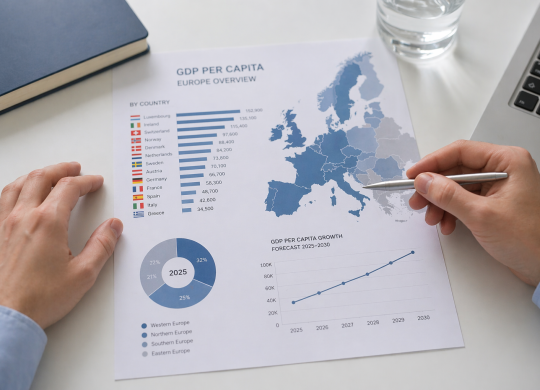
Europe's Richest Countries by 2030: Rankings, IMF Forecasts, and Income Gaps
By 2030, most European economies will be growing, but the balance of power will remain largely unchanged. The leaders will remain the same, while the gap between wealthy countries and EU candidate nations will only widen. Learn more about which European countries will become the wealthiest and what this means for living and working abroad
25 Apr. 2026
More details1 min
Residence permit
Immigration to the Baltic States 2026: How to Get Residence in Estonia, Latvia, and Lithuania
The Baltic States are opening up new opportunities for living and working in the EU. Find out how to get a residence permit in Estonia, Latvia and Lithuania, what visa options are available and what you need to move
26 Apr. 2026
More detailsAll materials and articles are owned by VisitWorld.Today and are protected by international intellectual property regulations. When using materials, approval from VisitWorld.Today is required.