

Happiest Cities in the World in 2026: Where People Live With Less Stress
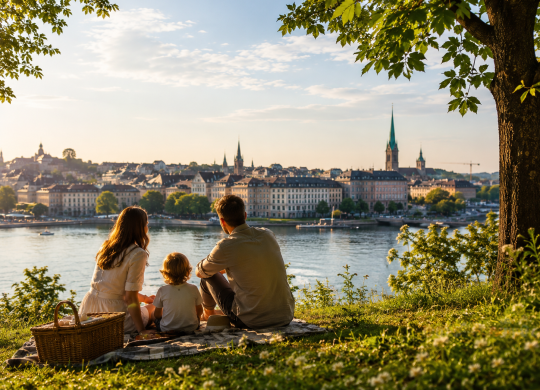
In 2026, the key factors for a comfortable life were no longer salaries or popularity with tourists, but low stress levels, safety and a good work-life balance. We reveal which cities topped the Happy City Index, why major cities are losing ground, and where people feel happiest today

Just a few years ago, the best cities to live in were usually considered to be major cities with high salaries, a thriving business sector and a fast-paced lifestyle. However, in 2026, the situation is changing: more and more people are choosing not the ‘city of opportunity’, but a place where they can live without constant stress, exhaustion and chaos.
The new Happy City Index does not assess a city’s tourist appeal or the number of skyscrapers, but rather how comfortable people find daily life there. The focus is on transport, the environment, safety, access to healthcare, digital services and the work-life balance. That is why the leaders include not only major capitals but also quiet, medium-sized towns where the system operates stably and predictably.
Earlier, we talked about the European countries where it is easiest to get a work visa and start a career abroad.
Planning to move to Europe or apply for a residence permit? Migration legislation is changing rapidly, and even a minor error in the documents can cost months of waiting or refusal.
Consultation with a migration lawyer will help you assess your chances, choose the optimal type of visa and prepare for filing without risks.
Sign up for a consultation and get a clear action plan now.

The top 10 happiest cities in the world in 2026
According to the Happy City Index 2026, these are the cities currently considered the most liveable thanks to low stress levels, a healthy environment, safety and a balanced pace of life:
1. Copenhagen, Denmark
2. Helsinki, Finland
3. Geneva, Switzerland
4. Uppsala, Sweden
5. Tokyo, Japan
6. Trondheim, Norway
7. Bern, Switzerland
8. Malmö, Sweden
9. Munich, Germany
10. Aarhus, Denmark
The second ten of the Happy City Index 2026 includes Zurich, Barcelona, Espoo, Oslo, The Hague, Ballarat, Aalborg, Yokohama, Lugano and Reykjavík. Most of these cities also score highly in terms of safety, the environment and the quality of urban infrastructure. Interestingly, the list is dominated not by global megacities, but by quieter cities with a comfortable pace of life and a well-organised urban environment.
The ranking is dominated by cities in Northern Europe, where particular attention is paid to the quality of the urban environment, the environment, transport and the work-life balance. At the same time, the list also includes Tokyo and Munich – major cities that have managed to maintain a high level of organisation and comfort for their residents.
Find out more about Time Out’s Top 10 Cities in the World for Travel by following the link.
Why has Copenhagen once again become the happiest city in the world?
Copenhagen has remained among the world leaders in quality of life for several years running. In 2026, the city once again topped the Happy City Index thanks to a combination of safety, stable infrastructure and a comfortable pace of life.
One of the main reasons for its success is the transport system. Copenhagen has a well-developed cycling infrastructure – hundreds of thousands of people cycle here every day. This not only reduces traffic congestion but also has a positive impact on the environment and stress levels in the city.
The work-life balance also plays a significant role. In Denmark, there is traditionally less of a ‘workaholic’ culture, and residents have more time for leisure, family and sport. It is precisely this factor that is increasingly becoming a key element in global happiness rankings.
In addition, Copenhagen received high marks for safety, access to healthcare, digital services and the level of trust in the city’s administration. For many residents, comfort here lies not in luxury, but in the predictability and stability of daily life.
We previously wrote about the best cities in Europe to live in 2026.
Why are major metropolises gradually losing ground in happiness rankings?
Paris, London and New York remain among the world’s most famous cities, yet in the 2026 Happy City Index they no longer feature among the leaders. The main reason is high levels of daily stress.
In large cities, people are more likely to face overcrowded transport, expensive housing, noise and a lack of personal space. For example, London ranked only 48th, Paris 25th, and New York found itself as low as 207th in the rankings.
Researchers note that by 2026, people are increasingly choosing stability and tranquillity over the ‘wow factor’ of a big city. This is precisely why the ranking is dominated by medium-sized cities, where infrastructure operates reliably and residents spend less time on commuting and everyday hassles.
At the same time, this does not mean that megacities have become less attractive for living or careers. They remain centres of business, culture and opportunity, but when it comes to everyday comfort, they are increasingly giving way to the quieter cities of Northern Europe.
In our previous article, we provided information on the world’s most expensive cities to live in for 2026, according to the Numbeo ranking.
What does the Happy City Index actually measure?
The Happy City Index does not assess a subjective “sense of happiness”, but rather specific factors that influence the quality of everyday life. In 2026, researchers analysed 64 different indicators: from transport and healthcare to the environment and digital services.
Key criteria included:
- Safety levels in the city;
- Housing affordability;
- Air quality and the environment;
- Efficiency of public transport;
- Access to healthcare;
- Work-life balance;
- Digitalisation of urban services;
- Quality of city governance.
Particular attention was paid to day-to-day comfort. For example, how quickly residents can get to work, whether they have access to parks and public spaces, how much time they spend on bureaucratic matters, and whether they feel safe.
That is precisely why tourist popularity or the number of skyscrapers no longer guarantees a high ranking. A modern happy city is, first and foremost, a city where people feel comfortable living day-to-day, not just visiting on holiday.
If you are planning to legalize, apply for a residence permit or submit migration documents abroad, the assistance of specialized migration lawyers can significantly simplify the process. Specialists will help you assess your chances of obtaining legal status, prepare a package of documents, avoid common mistakes, and accompany you at all stages of the migration procedure: from the initial consultation to obtaining a decision from the migration authorities.
We remind you! New economic indicators show which countries have been able to increase their GDP and which have lost ground due to inflation and slowing growth. Ranking of the richest countries in the world in 2026 — follow the link.
Products from Visit World for a comfortable trip:
Travel guide for 200 countries;
Legal advice from a local specialist on visa and migration issues;
Travel insurance around the world (please select the country of interest and citizenship to receive services);
Medical insurance all over the world.
We monitor the accuracy and relevance of our information, so if you notice any errors or inconsistencies, please contact our hotline
Frequantly
asked questions
Which city was named the happiest in the world in 2026?
Which countries feature most frequently in the rankings of the happiest cities?
Why are large metropolises slipping down the happiness rankings?
What does the Happy City Index assess?
Why are people increasingly choosing quieter cities to live in?
Recommended articles
1 min
Residence permit
Immigration to the Baltic States 2026: How to Get Residence in Estonia, Latvia, and Lithuania
The Baltic States are opening up new opportunities for living and working in the EU. Find out how to get a residence permit in Estonia, Latvia and Lithuania, what visa options are available and what you need to move
26 Apr. 2026
More details1 min
Expats
Digital Nomad Visas Without Tax Residency: 15 Countries for Remote Work in 2026
Digital nomad visas will allow you to live abroad without tax residency in 2026. Find out which countries offer such programs and what the conditions are
30 Apr. 2026
More details2 min
Expats
Global Travel Safety Guide 2026: What Every Tourist Should Know
Travel safety in 2026 depends on preparation, mindfulness, and good decisions. Learn about basic rules, insurance, risks in different countries, and emergency actions
03 May. 2026
More details1 min
Residence permit
Easiest Countries to Get Residency in 2026: Complete Guide
Obtaining a residence permit abroad has become more accessible than ever before. Find out which countries are easiest to obtain a residence permit in 2026, what requirements you need to meet, and which programs to choose
07 May. 2026
More detailsAll materials and articles are owned by VisitWorld.Today and are protected by international intellectual property regulations. When using materials, approval from VisitWorld.Today is required.