

Europe’s wealthiest cities and regions in 2026: where incomes and living standards are highest
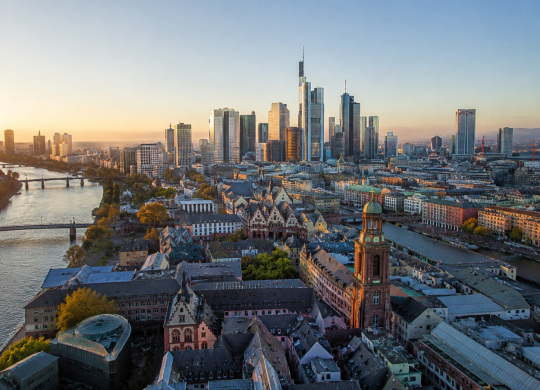
The economic divide between different parts of Europe continues to widen. Whilst some regions are enjoying record revenues, high wages and a strong influx of investment, others still lag significantly behind in terms of living standards and economic development. We look at which European cities and regions have become the wealthiest in 2026, what lies behind their success, and where the continent’s main financial centres are concentrated today

Europe has long been one of the world’s leading economic centres, yet the level of prosperity across the continent is highly uneven. Whilst some regions are home to multinational corporations, financial hubs and investments worth billions, others continue to lag behind in terms of income, wages and rates of development. This disparity has become particularly noticeable following the pandemic, the energy crisis and the wave of inflation in recent years.
According to Eurostat, the wealthiest regions of the European Union are now concentrated mainly around financial and technological hubs – Luxembourg, Ireland, Paris, Brussels and major German cities. It is here that the highest GDP per capita, high wages and high levels of investment are recorded. At the same time, in parts of Southern and Eastern Europe, the figures remain several times lower.
In this article, we explore which European cities and regions have become the wealthiest by 2026, why they have emerged as leaders, and how economic inequality is reshaping the map of modern Europe.
Earlier, we talked about 7 neutral countries outside of conflicts that are ideal for living and relocation.
Are you planning to work abroad in 2026? Visit World's Work Guide will help you quickly understand the requirements for a work permit, the list of necessary documents, and the application procedure. The guide contains current employment rules, the main types of permits, common mistakes made by applicants, and practical advice after moving. You will receive structured information in PDF format within a few minutes after ordering. Check out the guide and prepare for working abroad without any stress.

Europe’s wealthiest regions in 2026: who made the top
Today, the wealthiest regions of the EU are centred around financial centres, international business, technology companies and major investment hubs. The top of the ranking is occupied by regions in Ireland, Luxembourg, Prague, Brussels and several economically powerful areas in Germany and the Netherlands.
Ireland’s dominance is particularly striking – two of its regions have made it into the top three. Experts attribute this to the significant presence of international corporations and IT companies, as well as the country’s tax system. At the same time, cities in Central and Eastern Europe are appearing more and more frequently in the ranking, notably Prague, Bucharest, Budapest and Warsaw.
Top 20 richest EU regions by GDP per capita:
1. Eastern and Midland, Ireland — €107,200
2. Luxembourg — €97,700
3. Southern Region, Ireland — €86,500
4. Hamburg, Germany — €78,300
5. Prague, Czech Republic — €76,600
6. Brussels, Belgium — €76,000
7. Bucharest-Ilfov, Romania — €75,000
8. Capital Region of Denmark — €70,100
9. North Holland, Netherlands — €69,900
10. Upper Bavaria, Germany — €67,700
11. Budapest, Hungary — €67,200
12. Utrecht, Netherlands — €64,900
13. Bolzano – South Tyrol, Italy — €64,200
14. Île-de-France, France — €64,000
15. Warsaw, Poland — €62,800
16. Walloon Brabant, Belgium — €61,900
17. Stuttgart, Germany — €61,300
18. Stockholm, Sweden — €61,100
19. Bratislava Region, Slovakia — €61,000
20. Darmstadt, Germany — €59,200

Ranking of the wealthiest EU regions by GDP per capita. Source: Statista / Eurostat
Why have these particular regions become the wealthiest?
Most of the regions at the top of the ranking share several common features: a concentration of international business, a strong financial sector, well-developed infrastructure and high levels of investment. It is these factors that enable them to significantly outperform the EU average in terms of income and economic productivity.
For example, Ireland has for many years remained one of Europe’s main hubs for technology corporations. It is home to the offices of Google, Meta, Apple, Microsoft and dozens of international pharmaceutical companies. As a result, GDP per capita figures in certain regions of the country are rising significantly. At the same time, economists have repeatedly noted that part of these figures is linked specifically to the profits of multinational businesses, rather than solely to the actual incomes of the population.
Luxembourg maintains a high ranking thanks to its status as one of Europe’s leading financial centres. The banking sector, investment funds and international financial companies form a significant part of the country’s economy. At the same time, almost half of Luxembourg’s workforce commutes daily from France, Belgium and Germany, which also affects GDP statistics.
Among German regions, Hamburg, Upper Bavaria, Stuttgart and Darmstadt stand out in particular. These regions are home to the automotive industry, logistics, engineering, IT and high-tech manufacturing. For example, Upper Bavaria is home to Munich — one of Germany’s main technological and financial hubs.
At the same time, the capitals of Central and Eastern Europe are performing increasingly well in the rankings. Prague, Warsaw, Budapest and Bucharest have become important hubs for outsourcing, IT, finance and international business. In recent years, these cities have actively attracted foreign investment and major international companies, which has helped them significantly narrow the economic gap with Western Europe.
In our previous article, we discussed the IMF’s forecast of the richest countries in Europe by 2030.
Europe’s richest cities: where money and business are concentrated today
In most cases, Europe’s wealthiest regions are centred around major cities and capitals. It is these metropolises that remain the hubs of finance, technology, international trade and innovation. This is where corporate headquarters, major banks, universities and investment funds are located.
Paris remains one of Europe’s main economic hubs. The Île-de-France region, which includes the French capital, generates nearly a third of France’s economy.
Thousands of international companies operate here, and the offices of LVMH, BNP Paribas, AXA and other global brands are also located here.
Dublin plays an equally important role. It is the Irish capital that has become one of Europe’s largest technology hubs thanks to the presence of American IT giants. High salaries in the technology and finance sectors have made the city one of the most expensive in the EU.
In Germany, Munich is considered one of the wealthiest cities. It is home to BMW, Siemens, Allianz and a large number of technology companies and start-ups. Meanwhile, Hamburg remains an important logistics and trade centre thanks to one of Europe’s largest ports.
Among the cities of Central and Eastern Europe, Prague, Warsaw and Bucharest are growing particularly rapidly. Over the last ten years, they have become major centres for international business and IT outsourcing. In some sectors, salaries here are already approaching Western European levels, although the cost of living remains lower.
Find out more about the richest and poorest countries in Europe in 2026 by following the link.
The economic divide in Europe remains wide
Despite the EU’s overall economic growth, the gap between Europe’s richest and poorest regions remains very pronounced. Whilst the leaders in the per capita GDP rankings exceed the EU average by more than double, in certain regions of Southern and Eastern Europe these figures are still significantly below the European average.
The widest gap is observed between financial and technological hubs and agricultural or industrial regions, which are adapting more slowly to the modern economy. Furthermore, large cities continue to ‘draw’ resources, investment and labour from less developed areas.
Experts also point out that a high GDP does not always translate into an equally high standard of living for all residents. For example, in Dublin, Paris or Luxembourg, high incomes are accompanied by very expensive housing, high service prices and significant living costs. In some cases, the population’s real purchasing power is not growing as fast as the economic indicators themselves.
At the same time, Central European countries continue to gradually close the gap. Poland, the Czech Republic, Hungary, Romania and Slovakia are actively attracting investment in manufacturing, IT and infrastructure. This is precisely why the capitals of these countries are appearing more and more frequently in rankings of the wealthiest regions of the European Union.
If you are planning to work abroad in 2026 and want to better understand the rules of employment, work permits, taxes, and basic employee rights, it is worth preparing for the move in advance. Visit World's practical working guide will help you navigate the current requirements, types of work permits, and steps to take upon arrival to avoid common mistakes and feel confident in your new life abroad.
We remind you! Which countries became the richest in the world in 2026 and how did the global ranking change over the year? New economic indicators show who was able to increase their GDP and who lost ground due to inflation and slowing growth. The ranking of the richest countries in the world in 2026 and the main changes of the year can be found at the link.
Products from Visit World for a comfortable trip:
Travel guide for 200 countries;
Legal advice from a local specialist on visa and migration issues;
Travel insurance around the world (please select the country of interest and citizenship to receive services);
Medical insurance all over the world.
We monitor the accuracy and relevance of our information, so if you notice any errors or inconsistencies, please contact our hotline.
Frequantly
asked questions
Which region of Europe is the wealthiest in 2026?
Why is Luxembourg considered one of the richest places in Europe?
Which cities in Central Europe are getting richer the fastest?
Does a high GDP mean a high standard of living?
Which European countries have the most affluent regions?
Recommended articles
3 min
Popular
Europe's Richest Countries by 2030: Rankings, IMF Forecasts, and Income Gaps
By 2030, most European economies will be growing, but the balance of power will remain largely unchanged. The leaders will remain the same, while the gap between wealthy countries and EU candidate nations will only widen. Learn more about which European countries will become the wealthiest and what this means for living and working abroad
25 Apr. 2026
More details3 min
Popular
The Highest Business Taxes in Europe: Where It Costs Companies the Most to Operate
The tax burden is one of the key factors influencing a business’s decision to enter new markets. In Europe, corporate income tax rates vary significantly, ranging from a low of 9% to over 30%. Learn more about which countries have the highest corporate tax rates and where it is most advantageous to set up a company
04 May. 2026
More details1 min
Residence permit
Easiest Countries to Get Residency in 2026: Complete Guide
Obtaining a residence permit abroad has become more accessible than ever before. Find out which countries are easiest to obtain a residence permit in 2026, what requirements you need to meet, and which programs to choose
07 May. 2026
More details3 min
Popular
Happiest Cities in the World in 2026: Where People Live With Less Stress
In 2026, the key factors for a comfortable life were no longer salaries or popularity with tourists, but low stress levels, safety and a good work-life balance. We reveal which cities topped the Happy City Index, why major cities are losing ground, and where people feel happiest today
08 May. 2026
More detailsAll materials and articles are owned by VisitWorld.Today and are protected by international intellectual property regulations. When using materials, approval from VisitWorld.Today is required.